
Molecular marking method for predicting and identifying length of sheep wool
A molecular marker, sheep technology, applied in the direction of biochemical equipment and methods, microbial determination/inspection, etc., to achieve the effect of accelerating the breeding process, high accuracy, and simple operation
Patent Information
- Authority / Receiving Office
- CN · China
- Patent Type
- Patents(China)
- Current Assignee / Owner
- Publication Date
- 2014-07-16
- Estimated Expiration
- Not applicable · inactive patent
Smart Images
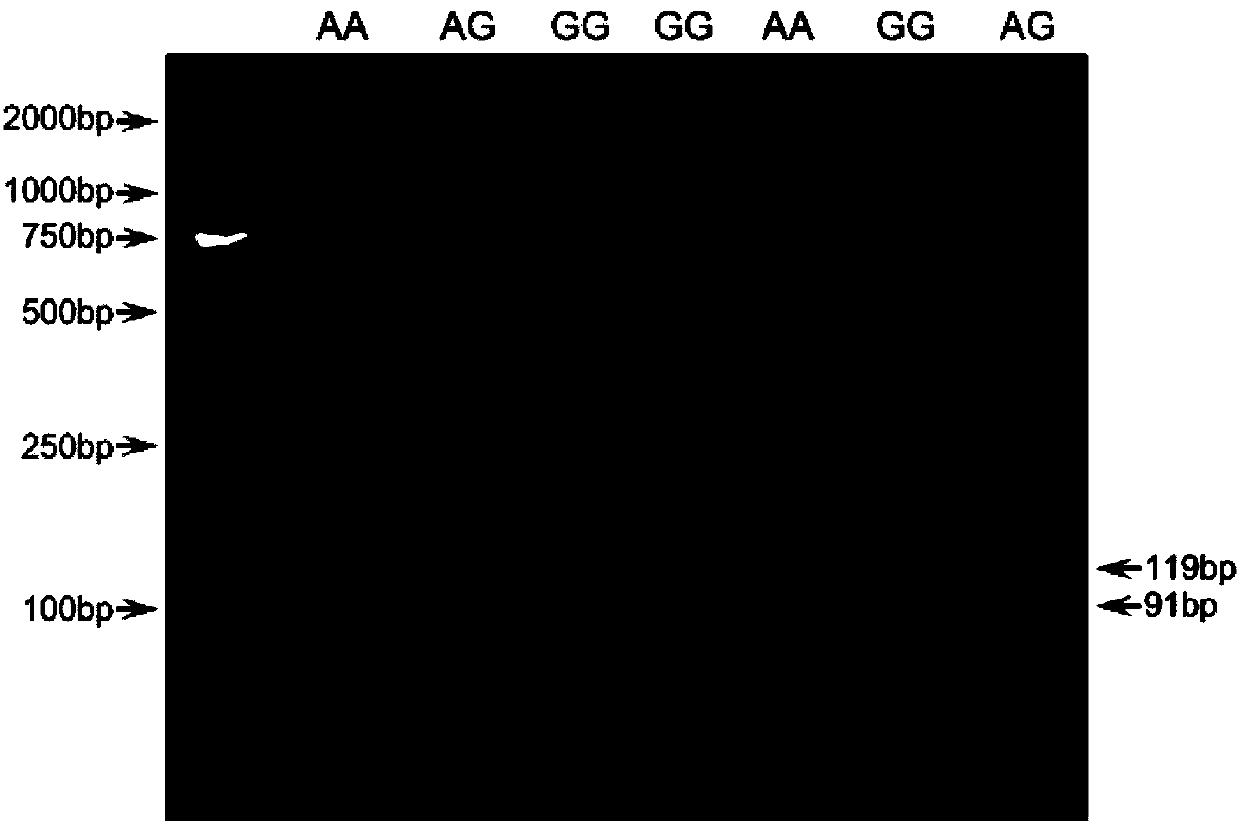
Figure 1 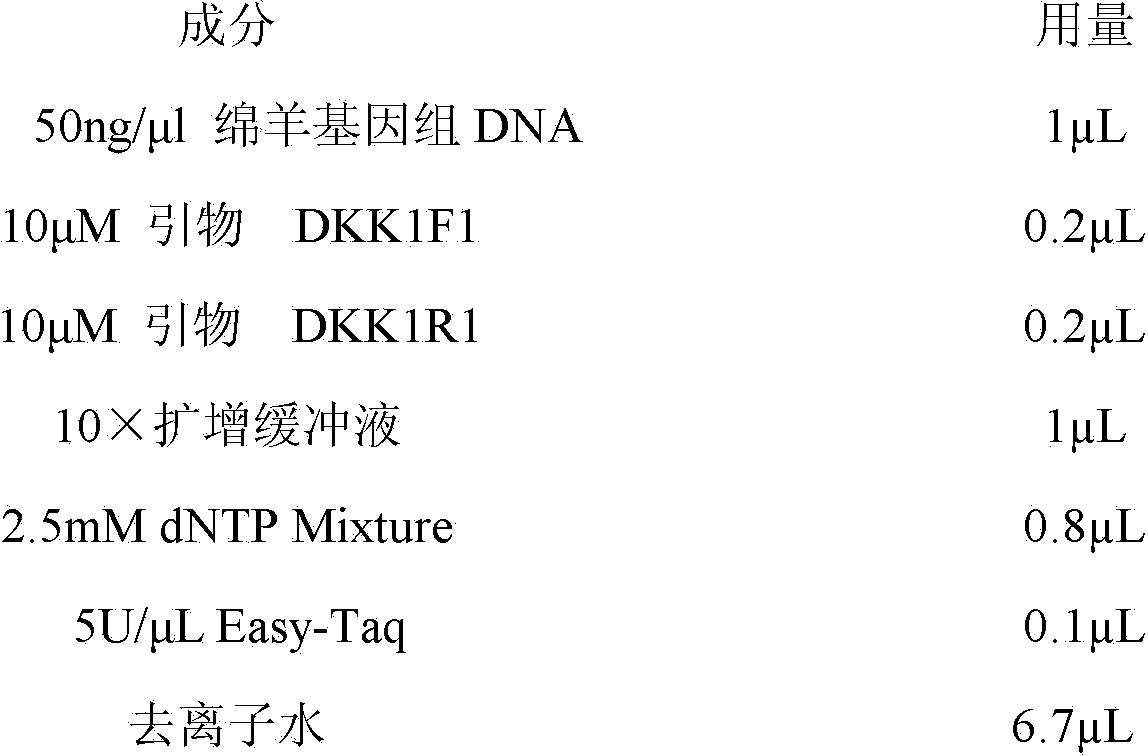
Figure 2 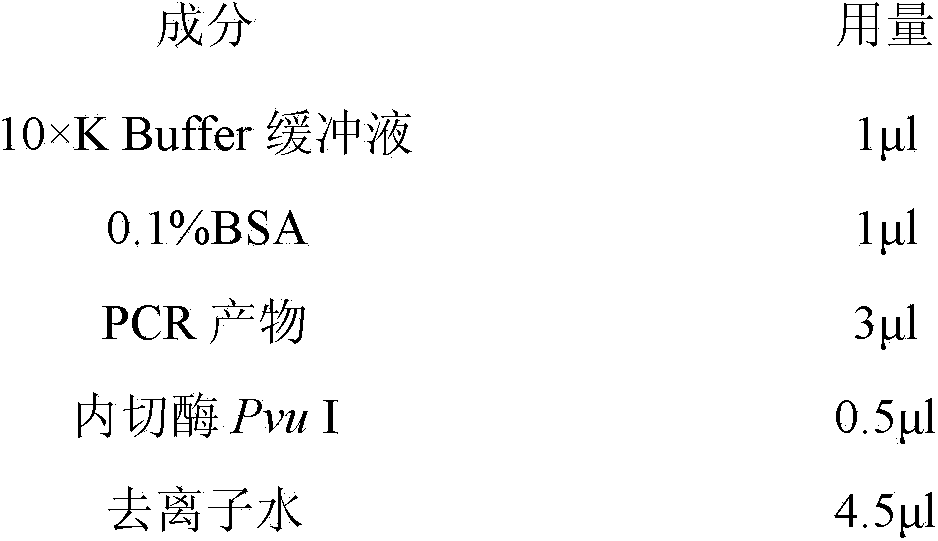
Figure 3
Abstract
Description
technical field
[0001] The invention relates to a molecular marking method. Background technique
[0002] Fine-wool sheep occupy an important position in my country's animal husbandry industry, and the main product of fine-wool sheep is wool. As an important textile raw material, fine wool has high economic value. The production of fine-wool sheep is not only related to the economic development and social stability of the producing areas, but also to the development of my country's wool spinning industry and the balance of import and export trade. With the increasing demand for wool at home and abroad, the cultivation of high-quality fine-wool sheep has become an urgent problem to be solved in the field of wool production and sheep breeding.
[0003] The breeding of Chinese Merino sheep (Xinjiang military reclamation type) began in 1972, and has successively bred six strains, namely military reclamation type A strain, military reclamation type B strain, ultra-fine strain, ...
Examples
specific Embodiment approach 1
[0021] Embodiment 1: In this embodiment, the molecular marker method for predicting and identifying the length of sheep wool is carried out according to the following steps:
[0022] 1. Using the phenol / chloroform method to extract sheep genomic DNA from the ear tissue of Chinese Merino sheep, design primers DKK1F1 and DKK1R1 according to the c.576A>G site of the fourth exon region of the sheep DKK1 gene, and then analyze the sheep genome Carrying out PCR amplification of the DNA to obtain a PCR amplification product, and then digesting the PCR amplification product with endonuclease Pvu I to obtain a digestion product;
[0023] 2. Use agarose gel with a concentration of 2.5% to electrophoresis separate the digested products, and then determine the genotype according to the electrophoresis separation results. The criteria for determination: ① Electrophoresis presents a band with a size of 119bp, which means that the sheep DKK1 gene is 4th The c.576A>G site in the exon region w...
specific Embodiment approach 2
[0054] Specific embodiment two: the difference between this embodiment and specific embodiment one is that the reaction system for PCR amplification in step one is a 10 μL reaction system, which consists of the following components:
[0055]
[0056] PCR amplification conditions were: 94°C pre-denaturation for 5 min, 94°C denaturation for 30 s, 52°C annealing for 30 s, 72°C extension for 8 s, a total of 33 cycles, 72°C extension for 7 min, and 4°C incubation. Others are the same as in the first embodiment.
specific Embodiment approach 3
[0057] Specific embodiment three: the difference between this embodiment and specific embodiment one or two is that the enzyme digestion system in step one is as follows:
[0058]
[0059] Enzyme digestion conditions are: 37 ° C enzyme digestion 1-2h. Others are the same as in the first or second embodiment.
[0060]