
A method for preparing titanium-polyethylene porous titanium coating on the surface of titanium alloy substrate
A titanium alloy and polyethylene technology, applied in prosthesis, medical science, pressure inorganic powder coating, etc., can solve the problems of low forming efficiency, unfavorable promotion and application, etc., achieve short production cycle, improve long-term stability, good The effect of biomechanical compatibility
Patent Information
- Authority / Receiving Office
- CN · China
- Patent Type
- Patents(China)
- Current Assignee / Owner
- Publication Date
- 2016-08-03
Smart Images
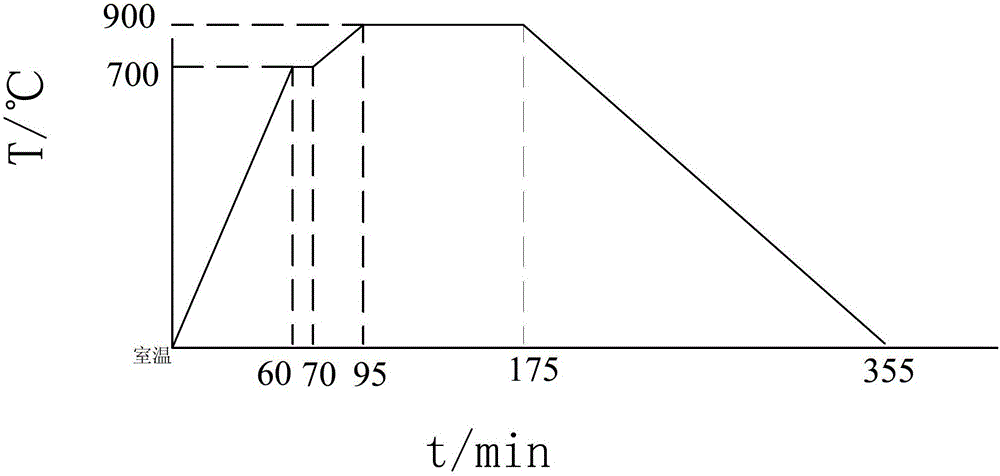
Figure 1 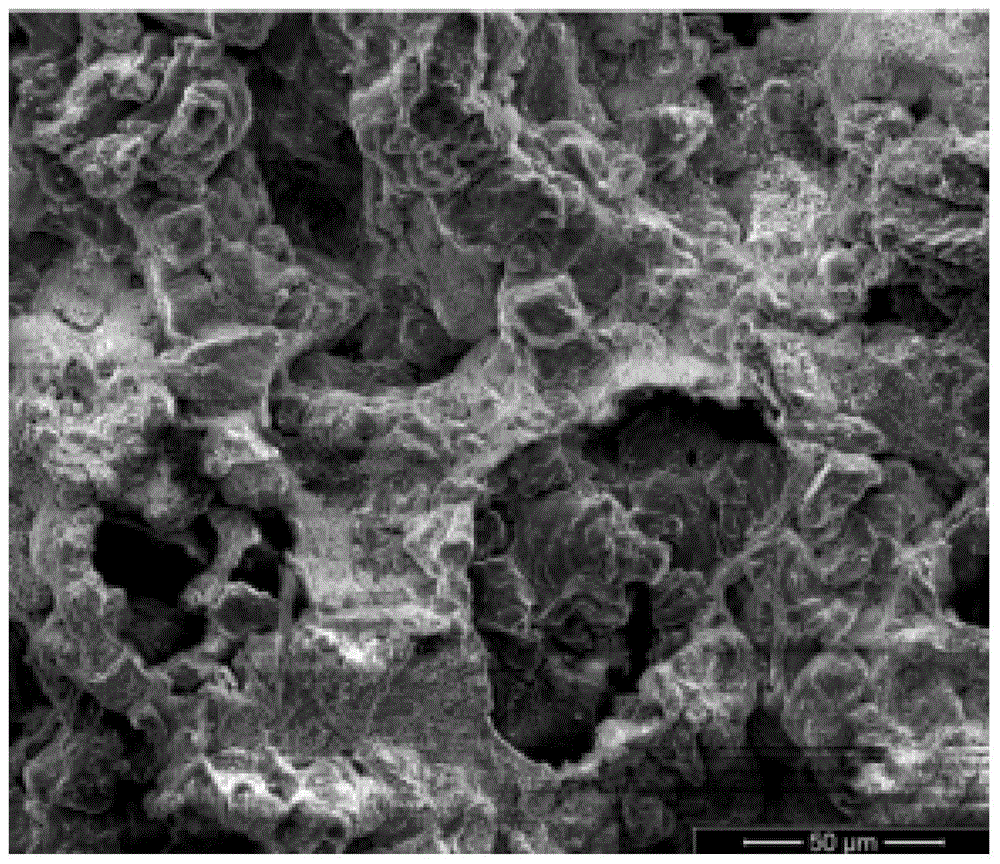
Figure 2 
Figure 3
Abstract
Description
technical field
[0001] The invention belongs to the technical field of surface processing and modification, and relates to a preparation process for preparing a dental implant and a bone graft on the surface of a titanium alloy substrate, in particular to a method for preparing a titanium-polyethylene porous titanium coating on the surface of a titanium alloy substrate method. Background technique
[0002] The materials currently used for bone tissue repair and replacement mainly include metals and alloys, bioceramics, polymers, composite materials, and bone-derived products of humans and animals. In view of the complex biomechanical requirements of the bone and joint system, the biomaterials used must have sufficient mechanical strength and be firmly combined with the host bone in addition to having the biosafety of other materials such as non-toxic side effects. In this context, pure titanium and its alloys have been clinically favored due to their elastic modulus similar...
Examples
Embodiment 1
[0015] (a) Mechanically mix polyethylene powder with a particle size of 150 mesh and titanium powder with a particle size of 325 mesh to prepare titanium-polyethylene mixed powder, wherein the content of polyethylene powder is 10%.
[0016] (b) Planarize the surface of the titanium alloy substrate, remove surface rust and oil stains with sandpaper and acetone, and then roughen it by sandblasting.
[0017] (c) Spray the powder prepared in step (a). The spraying process is as follows: the working gas pressure is 2.5MPa, the working gas temperature is 150°C, and the spraying distance is 20mm.
[0018] (d) Vacuum sintering the coating obtained in step (c) with a degree of vacuum of 5×10 -3 Pa, the sintering temperature is 800°C, and the temperature gradient is controlled, the temperature is raised from room temperature to 700°C, kept for 10 minutes, and then raised to 800°C at a speed of 8°C / min, and the sintering time is 80 minutes, so as to remove the coating. The polyethylene ...
Embodiment 2
[0022] (a) Mechanically mix polyethylene powder with a particle size of 200 mesh and titanium powder with a particle size of 325 mesh to prepare titanium-polyethylene mixed powder, wherein the content of polyethylene is 20%.
[0023] (b) Planarize the surface of the titanium alloy substrate, remove surface rust and oil stains with sandpaper and acetone, and then roughen it by sandblasting.
[0024] (c) Spray the powder prepared in step (a). The spraying process is as follows: the working gas pressure is 3.0MPa, the working gas temperature is 180°C, and the spraying distance is 22mm.
[0025] (d) Vacuum sintering the coating obtained in step (c) with a degree of vacuum of 5×10 -3 Pa, the sintering temperature is 850°C, and temperature gradient control is carried out, the temperature is raised from room temperature to 650°C, kept for 15 minutes, and then raised to 850°C at a speed of 10°C / min, and the sintering time is 2.5 hours, so as to remove the coating The polyethylene com...
Embodiment 3
[0029] (a) Mechanically mix polyethylene powder with a particle size of 250 mesh and titanium powder with a particle size of 325 mesh to prepare titanium-polyethylene mixed powder, wherein the content of polyethylene is 30%.
[0030] (b) Planarize the surface of the titanium alloy substrate, remove surface rust and oil stains with sandpaper and acetone, and then roughen it by sandblasting.
[0031] (c) Spray the powder prepared in step (a). The spraying process is as follows: the working gas pressure is 3.25MPa, the working gas temperature is 200°C, and the spraying distance is 25mm.
[0032] (d) Vacuum sintering the coating obtained in step (c) with a degree of vacuum of 5×10 -3 Pa, the sintering temperature is 900°C, and the temperature gradient is controlled. The temperature is raised from room temperature to 550°C, kept for 5 minutes, and then raised to 900°C at a speed of 15°C / min, and the sintering time is 3 hours, so as to remove the coating. The polyethylene component...