

Hydrophilic modification method of methyl cellulose
A technology of methyl cellulose and hydrophilic modification, applied in the field of hydrophilic modification of methyl cellulose, can solve the problems of polymer solution dehydration, viscosity reduction, and restrictions on the application of methyl cellulose, and achieve easy operation, The process is simple and the effect of eliminating the phenomenon of macroscopic phase separation
Patent Information
- Authority / Receiving Office
- CN · China
- Current Assignee / Owner
- Publication Date
- 2016-05-25
Smart Images
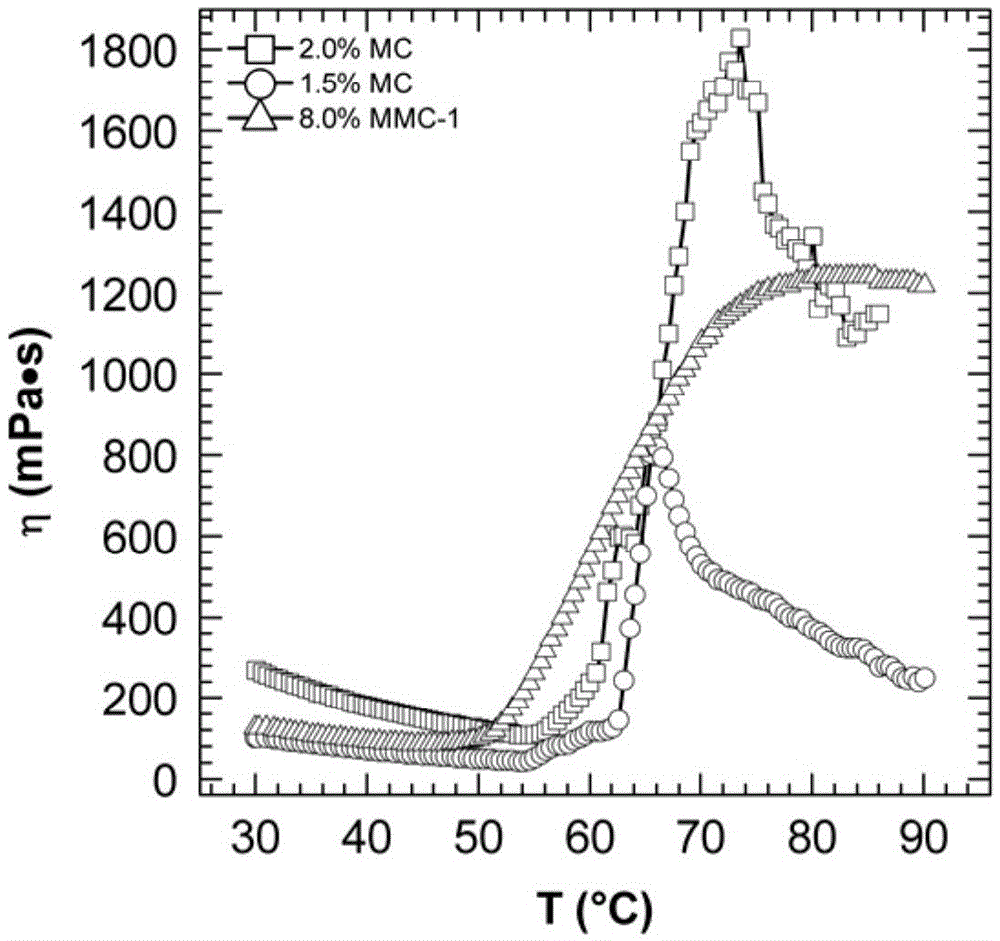
Figure 1 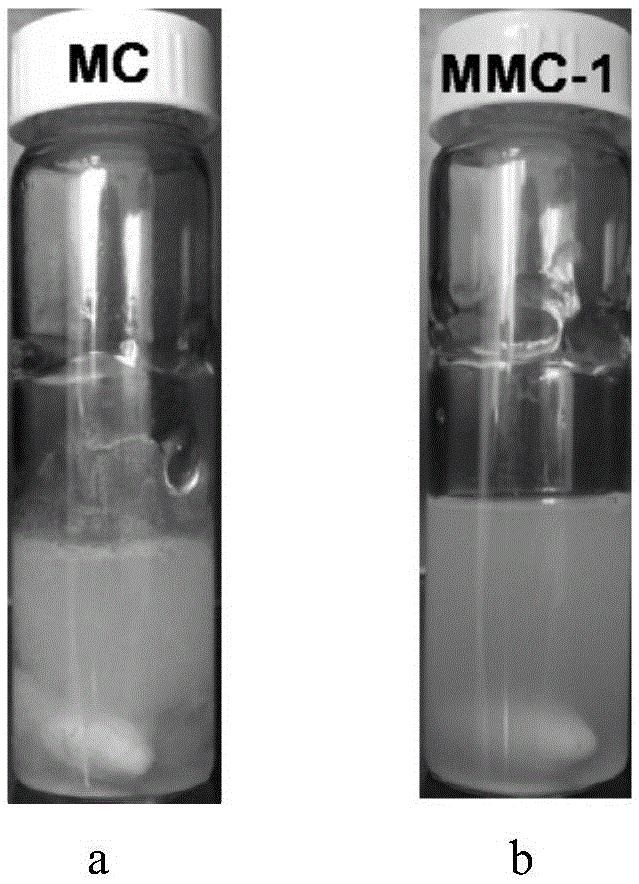
Figure 2 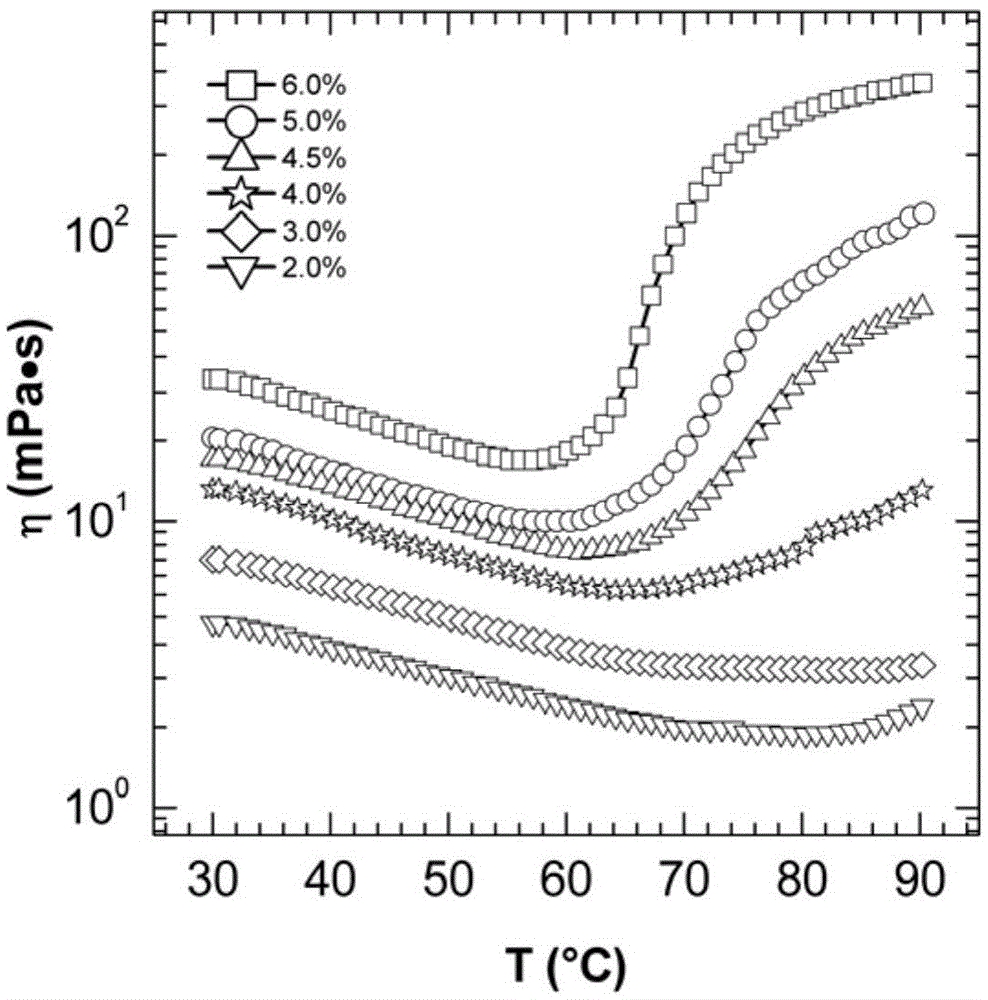
Figure 3
Abstract
Description
technical field
[0001] The invention belongs to the field of modification of water-soluble polymer materials, and in particular relates to a method for hydrophilic modification of methyl cellulose. Background technique
[0002] Cellulose is a kind of linear polysaccharide compound, the most abundant natural polymer compound in the world, and also an inexhaustible renewable resource for human beings. Due to the presence of a large number of intramolecular and intermolecular hydrogen bonds, cellulose neither dissolves nor melts, severely limiting its applications. Cellulose derivatives with wide application value can be prepared through chemical modification, such as cellulose ether, cellulose ester, cellulose ether ester, etc. Among them, cellulose ether can be dissolved in water, dilute alkali solution and organic solvent, and has various categories and excellent performance. It is widely used in construction, cement, petroleum, food, medicine and other industries. [0003...
Examples
Embodiment 1
[0027] (1) Methylcellulose (MC) is dissolved in the NaOH solution that mass concentration is 6.0% and is mixed with the 100g methylcellulose solution that methylcellulose mass concentration is 2.0%, in the gained methylcellulose solution, add 8.67g of acrylamide monomer was stirred until dissolved to form a mixed solution, then stirred and reacted at 25°C for 24 hours, after the reaction was completed, hydrochloric acid was added to the obtained reaction solution to neutralize the reaction solution to neutrality, and then excess ethanol was added to obtain a precipitate. The filter cake was obtained by filtration, washed with deionized water for 3 times, and then vacuum-dried to obtain an intermediate product.
[0028] (2) the NaOH solution of 0.8% mass concentration is made into the solution of intermediate product mass concentration 2.0% by the NaOH solution of gained intermediate product, in gained solution, add 1gNaClO and mix homogeneously, then at 25 ℃ of reaction under s...
Embodiment 2
[0030] (1) Methylcellulose (MC) is dissolved in the NaOH solution that mass concentration is 8.0% and is mixed with the 100g methylcellulose solution that methylcellulose mass concentration is 2.0%, in gained methylcellulose solution, add 8.67g of acrylamide monomer and stirred until dissolved to form a mixed solution, then stirred and reacted at 35°C for 18 hours, after the reaction was completed, added hydrochloric acid to the obtained reaction solution to neutralize the reaction solution to neutrality, and then added excess absolute ethanol to obtain a precipitate , and filtered to obtain a filter cake, which was washed with deionized water for 3 times and then vacuum-dried to obtain an intermediate product.
[0031] (2) the NaOH solution of 0.8% mass concentration is made into the solution of intermediate product mass concentration 2.0% by the NaOH solution of gained intermediate product, in gained solution, add 1gNaClO and mix homogeneously, then in 15 ℃ of reactions under...
Embodiment 3
[0033](1) Methyl cellulose (MC) is dissolved in the KOH solution that mass concentration is 8.0% and is mixed with the 100g methyl cellulose solution that methyl cellulose mass concentration is 2.0%, in the gained methyl cellulose solution, add Stir 5g of acrylamide monomer until dissolved to form a mixed solution, then stir and react at 20°C for 48 hours, add sulfuric acid to the resulting reaction solution to neutralize the reaction solution after the reaction is complete, then add excess absolute ethanol to obtain a precipitate, filter Obtain a filter cake, wash the filter cake with deionized water 3 times, and then vacuum-dry to obtain an intermediate product.
[0034] (2) the NaOH solution of 0.8% mass concentration is made into the solution of intermediate product mass concentration 1.0% by the NaOH solution of gained intermediate product, in gained solution, add 20gNaClO and mix homogeneously, then at 25 ℃ of reaction under stirring, lucifuge condition, After 4 h of rea...