
Preparation method and application of hypercrosslinked resin with controllable polarity and pore structure
A technology of ultra-high cross-linked resin and pore structure, which is applied in chemical instruments and methods, alkali metal oxides/hydroxides, inorganic chemistry, etc., and can solve problems such as difficult control of pore size and complicated production steps
Patent Information
- Authority / Receiving Office
- CN · China
- Current Assignee / Owner
- Publication Date
- 2016-09-07
- Estimated Expiration
- Not applicable · inactive patent
Smart Images
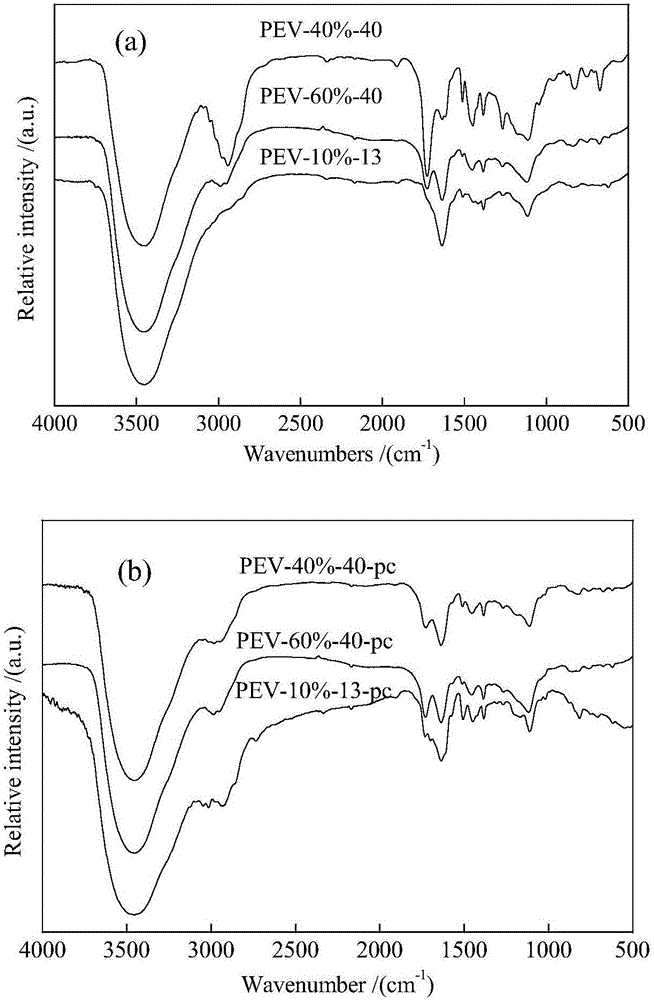
Figure 1 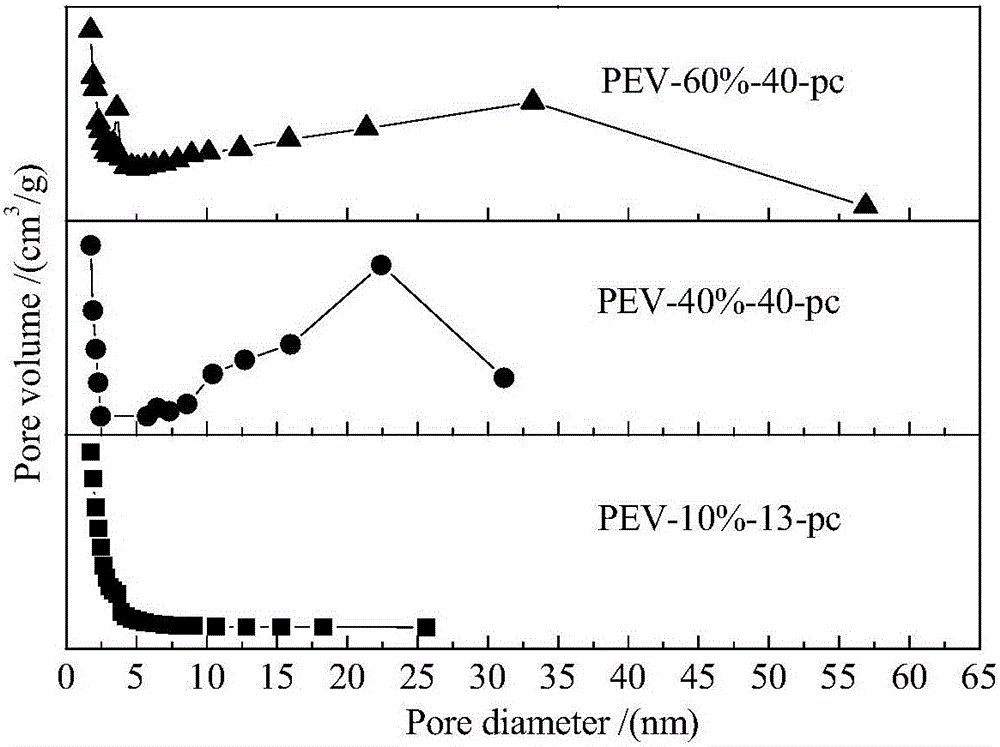
Figure 2 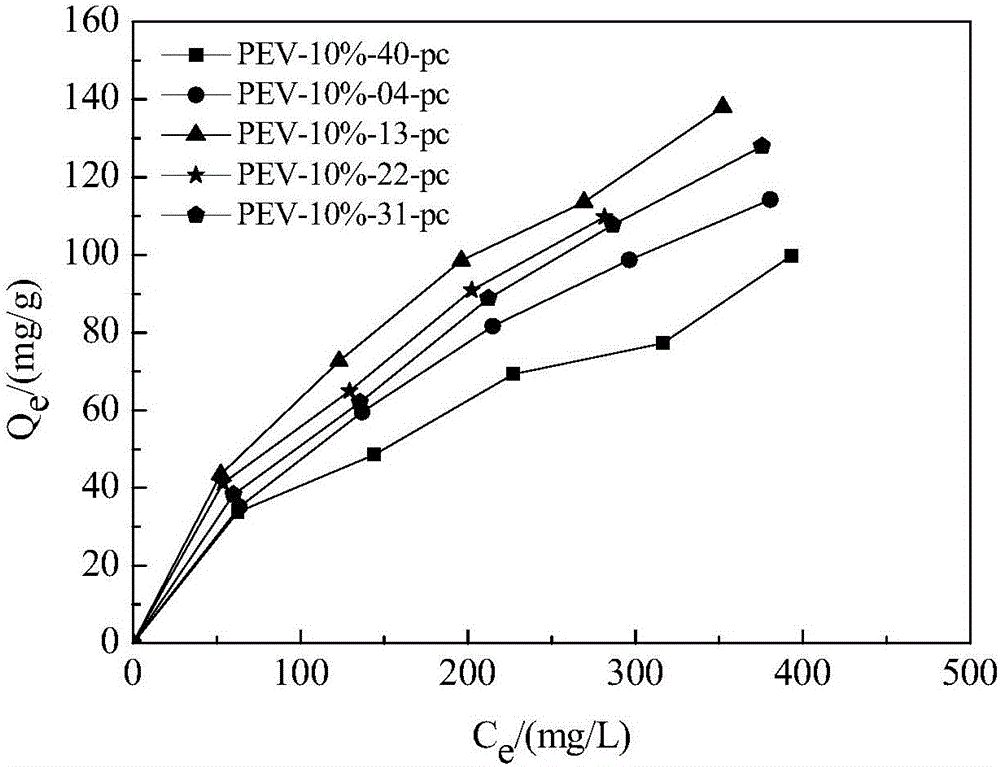
Figure 3
Abstract
Description
technical field
[0001] The present invention relates to a preparation method of ultra-high cross-linked resin, in particular to a controllable preparation method of ultra-high cross-linked resin, and the application of ultra-high cross-linked resin in the adsorption of polar aromatic organic compounds, which belongs to macromolecule synthetic field. Background technique
[0002] In the early 1970s, Davankov et al cross-linked linear polystyrene or low-crosslinked polystyrene through the Friedel-Crafts reaction to form a class of porous polymers with unique structures and excellent properties. Higher degree, also known as ultra-high cross-linked resin. Ultra-highly cross-linked resins usually have structural characteristics such as large specific surface area, small average pore size, narrow pore size distribution, and good mechanical strength. At present, they have shown broad application prospects in the treatment of toxic organic wastewater, storage and separation of gase...
Examples
Embodiment 1
[0041] 1) Preparation of precursor resin:
[0042] Place a 500mL three-necked round-bottomed flask on a water bath equipped with a mechanical stirrer, a condenser, and a thermometer. Add a total of 40 g of oil-o-xylene and benzyl alcohol, a total of 20 g of ethylene glycol dimethacrylate (EGDMA) and 4-vinylbenzyl chloride (VBC), and 0.2 g of azobisisobutyronitrile (AIBN). Heat to 45°C, adjust to a suitable stirring speed and stir for 30min, raise the temperature to 75°C for 2h, raise the temperature to 85°C for 3h, continue to raise the temperature to 95°C for 3h. After cooling, the resin was alternately washed with absolute ethanol, hot water, and cold water until the washing solution was clear, extracted with petroleum ether for 12 h in a Soxhlet extractor, and dried in vacuum for 24 h to obtain the precursor resin PEV-x-ab, (where , x is the mass percent of the crosslinking agent ethylene glycol dimethacrylate; a:b is the relative mass ratio of o-xylene and benzyl alcohol ...
Embodiment 2
[0048] 1) Preparation of precursor resin:
[0049] Place a 500mL three-necked round-bottomed flask on a water bath equipped with a mechanical stirrer, a condenser, and a thermometer. Add a total of 40g of oil ophthalmic xylene and benzyl alcohol, a total of 20g of 1,4-butanediol dimethacrylate (BDDMA) and 4-vinylbenzyl chloride (VBC), and 0.2g of azobisisobutyronitrile (AIBN) . Heat to 45°C, adjust to an appropriate stirring speed and stir for 30 minutes, raise the temperature to 75°C for 3 hours, raise the temperature to 85°C for 4 hours, and continue to raise the temperature to 95°C for 5 hours. After cooling, alternately wash the resin with absolute ethanol, hot water, and cold water until the washing liquid is clear, extract it with petroleum ether in a Soxhlet extractor for 12 hours, and dry it in vacuum for 24 hours to obtain the precursor resin PBV-x-ab: represented by x The crosslinking agent is 1,4 butanediol dimethacrylate by mass percentage, a:b is the relative ma...
Embodiment 3
[0055] 1) Preparation of precursor resin:
[0056] Place a 500mL three-necked round-bottomed flask on a water bath equipped with a mechanical stirrer, a condenser, and a thermometer. Add a total of 40 g of oil ophthalmic xylene and benzyl alcohol, a total of 20 g of glycerol dimethacrylate (PGDMA) and 4-vinylbenzyl chloride (VBC), and 0.2 g of azobisisobutyronitrile (AIBN). Heat to 45°C, adjust to a suitable stirring speed and stir for 30 minutes, raise the temperature to 75°C for 5 hours, raise the temperature to 85°C for 3 hours, and continue to raise the temperature to 95°C for 3 hours. After cooling, the resin was alternately washed with absolute ethanol, hot water, and cold water until the washing liquid was clear, extracted with petroleum ether in a Soxhlet extractor for 12 hours, and dried in vacuum for 24 hours to obtain the precursor resin PPV-x-ab.
[0057] 2) Friedel-Crafts reaction:
[0058] Add 15g of precursor resin PPV-10%-ab and 90mL of 1,2-dichloroethane int...