
Fluorescence detection test paper for quickly detecting nitroaromatic explosives, preparation method and application thereof
A technology of fluorescence detection and nitrobenzene, which is applied in the field of detection and analysis of explosives, can solve the problems of reducing the sensitivity of test paper, loss or dilution of materials, weakening of fluorescence intensity of test paper, etc., and achieves the advantages of simple production method, simple equipment and fast detection speed Effect
Patent Information
- Authority / Receiving Office
- CN · China
- Current Assignee / Owner
- Publication Date
- 2017-09-15
- Estimated Expiration
- Not applicable · inactive patent
Smart Images
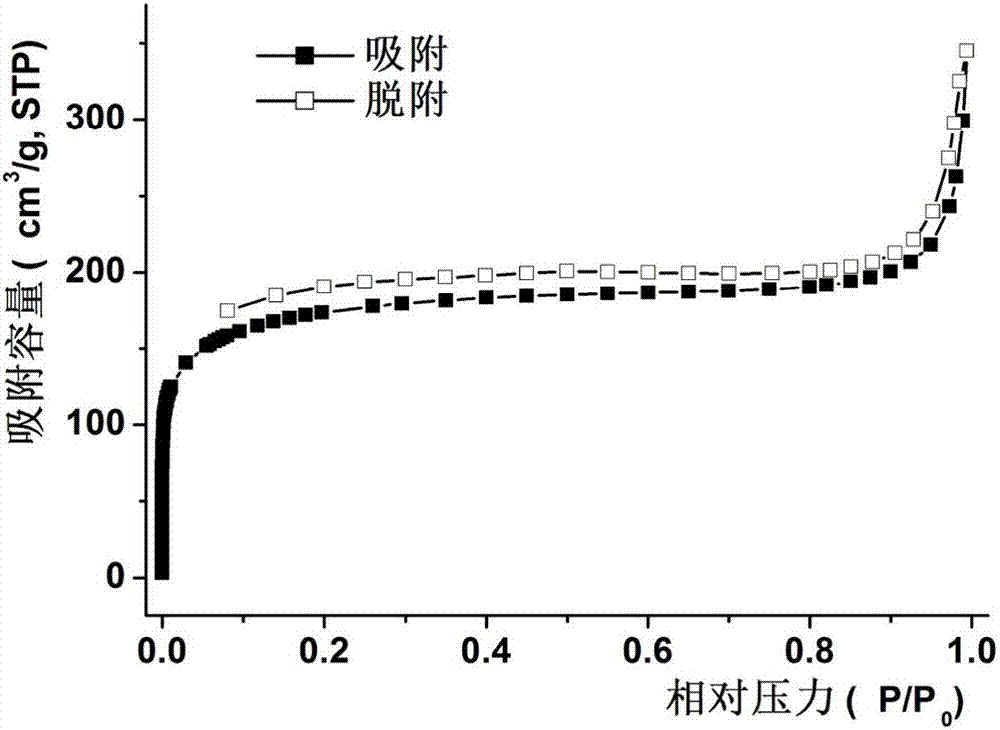
Figure 1 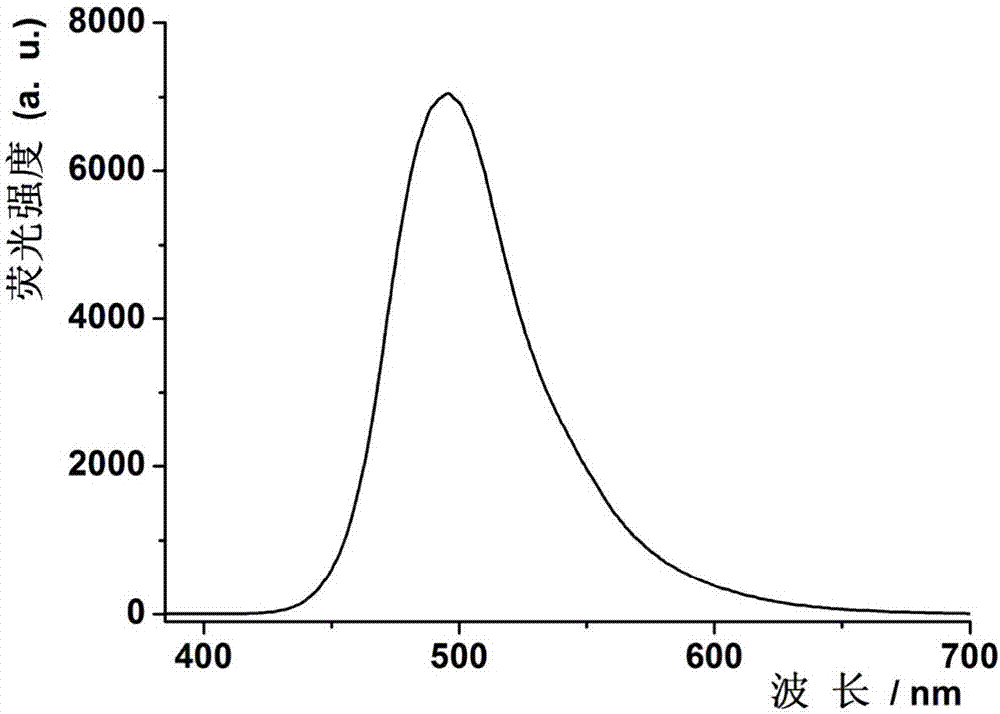
Figure 2 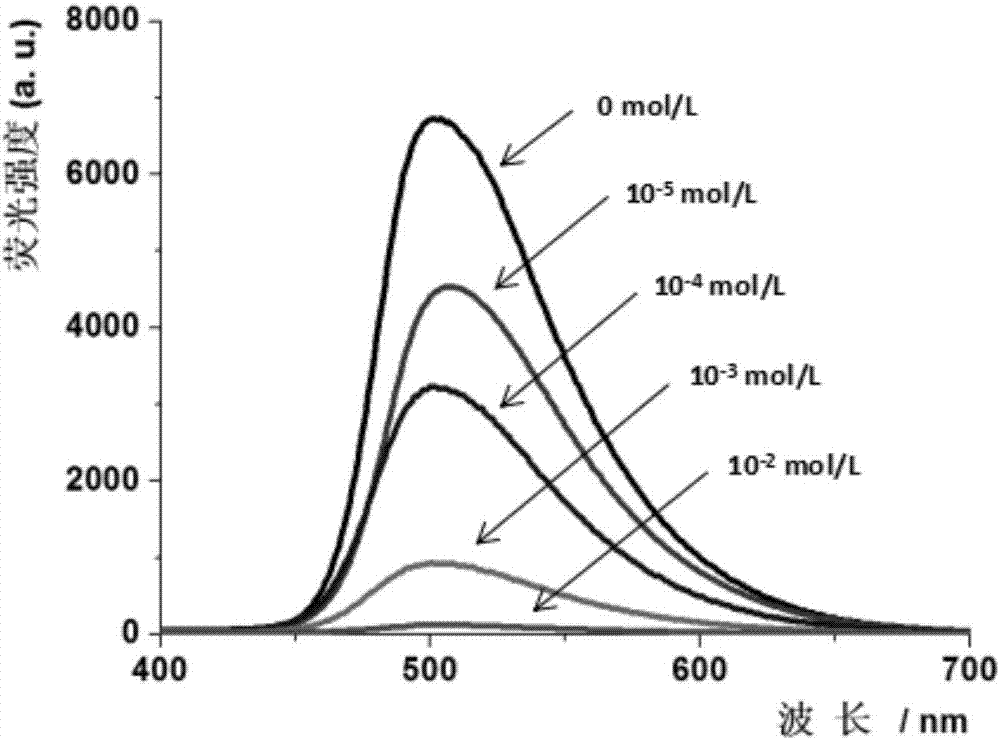
Figure 3
Abstract
Description
technical field
[0001] The invention relates to a fluorescence detection test paper for rapidly detecting nitrobenzene explosives, a preparation method and application thereof, and belongs to the technical field of detection and analysis of explosives. Background technique
[0002] Nitrobenzene explosives are a common class of dangerous explosives, most of which are extremely explosive. Currently the most widely used nitrobenzene explosives are mainly used in military production and industrial blasting. They are highly toxic carcinogens to humans. During the production and transportation of explosives, they can easily penetrate into soil and groundwater. The environment will have a great negative impact, and it will also cause great harm to the health of the people. When humans inhale such compounds, they can cause diseases such as liver lesions, aplastic anemia, and cataracts, and even death in severe cases. Therefore, it is very important to study the impact of trace exp...
Examples
Embodiment 1
[0052] 1. Taking octavinyl cage silsesquioxane (OVS) and 2,2',7,7'-tetrabromo-9,9'-spirobifluorene as an example to prepare fluorescent porous polymer:
[0053] The synthetic route is as follows:
[0054]
[0055] The method for preparing fluorescence detection test paper with octavinyl cage silsesquioxane (OVS) and 2,2',7,7'-tetrabromo-9,9'-spirobifluorene, the steps are as follows:
[0056] (1) Preparation of fluorescent porous material HPP-1:
[0057] Under argon protection, OVS (633mg, 1mmol) and catalyst Pd (OAc) 2 (90mg, 0.4mmol), cocatalyst P(o-CH 3 Ph) 3 (193mg, 0.94mmol), acid absorbent Et 3 N (15mL) was dissolved in dry DMF (45mL), stirred magnetically at room temperature for 0.5h, then added 2,2',7,7'-tetrabromo-9,9'-spirobifluorene (1.264g, 2mmol) , Reaction at 120°C for 72h. Post-processing: Suction filtration, washing with THF, chloroform, water, methanol, acetone respectively, then Soxhlet extraction with THF and methanol respectively for 24 hours, vacu...
Embodiment 2
[0065] The method for preparing fluorescent detection test paper with octavinyl cage silsesquioxane (OVS) and 4,4'-dibromobiphenyl, the synthetic route is as follows:
[0066]
[0067] Proceed as follows:
[0068] (1) Preparation of fluorescent porous material HPP-2:
[0069] Under argon protection, OVS (633mg, 1mmol) was mixed with catalyst Pd(OAc) 2 (90mg, 0.4mmol), cocatalyst P(o-CH 3 Ph) 3 (193mg, 0.94mmol), acid absorbent K 2 CO 3 (2.2g, 16mmol) was dissolved in dry DMF (45mL), stirred magnetically at room temperature for 0.5h, then added 4,4'-dibromobiphenyl (1.248g, 2mmol), and reacted at 120°C for 72h.
[0070] Post-processing: suction filtration, washing with THF, chloroform, water, methanol, and acetone respectively, and then Soxhlet extraction with THF and methanol for 24 hours, and vacuum drying at 70°C for 48 hours to obtain a white solid. The yield is about 100%.
[0071] The specific surface area and porosity of HPP-2 were analyzed with a fully automat...
Embodiment 3
[0076] Octavinyl cage silsesquioxane (OVS) and tetrakis (4-bromophenyl) ethylene prepare the method for fluorescence detection test paper, and the synthetic route is as follows:
[0077]
[0078] Proceed as follows:
[0079] (1) Preparation of fluorescent porous material HPP-3:
[0080] Under argon protection, mix OVS (633mg, 1mmol) with catalyst [Pd(PPh 3 ) 4 ] (63.3mg, 0.055mmol), acid absorbent Et 3 N (15 mL) was dissolved in dry DMF (45 mL), stirred magnetically at room temperature for 0.5 h, then added tetrakis(4-bromophenyl)ethylene (1.29 g, 2 mmol), and reacted at 120°C for 72 h.
[0081] Post-processing: Suction filtration, washing with THF, chloroform, water, methanol, acetone respectively, then Soxhlet extraction with THF and methanol respectively for 24 hours, vacuum drying at 70°C for 48 hours to obtain a yellow solid. The yield is about 100%.
[0082] The specific surface area and porosity of HPP-3 were analyzed with a fully automatic specific surface area...