
Mortise and tenon type cervical vertebra intervertebral fixer
A fixator, mortise and tenon technology, applied in the field of mortise and tenon cervical intervertebral fixation, can solve the problems of poor stability and reliability, difficult operation, complex structure of cervical intervertebral fixation, etc., to achieve stability and reliability Good results
Patent Information
- Authority / Receiving Office
- CN · China
- Current Assignee / Owner
- Publication Date
- 2017-10-17
Smart Images
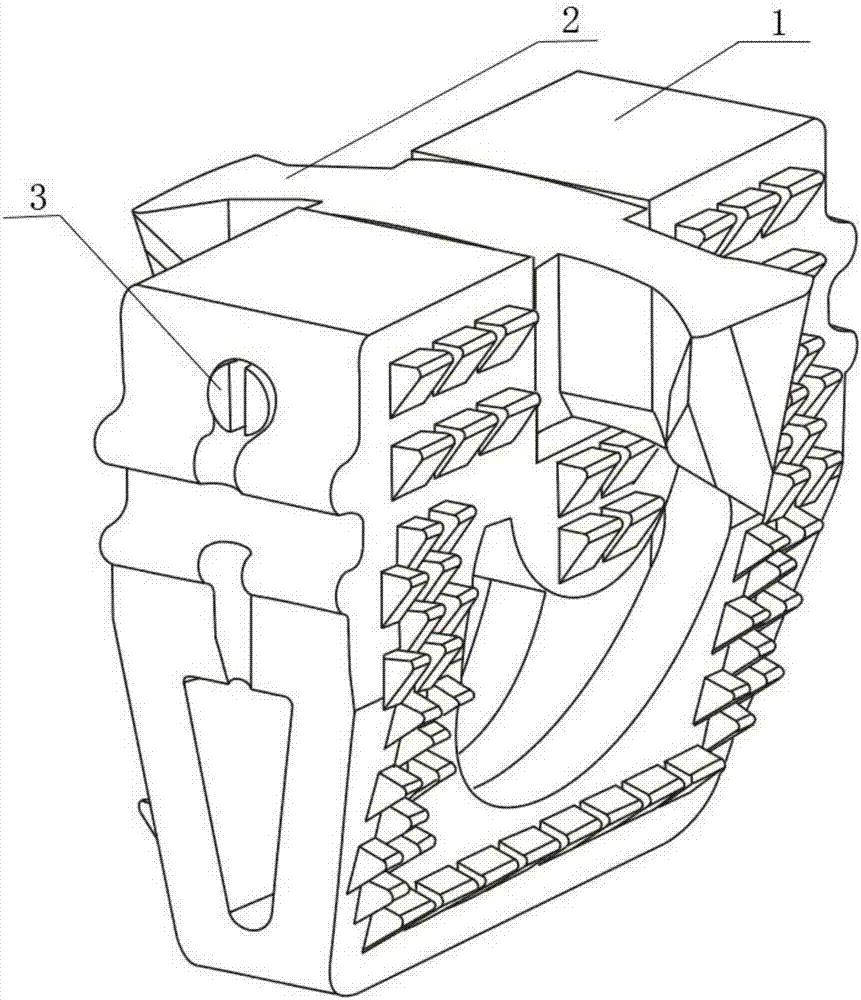
Figure 1 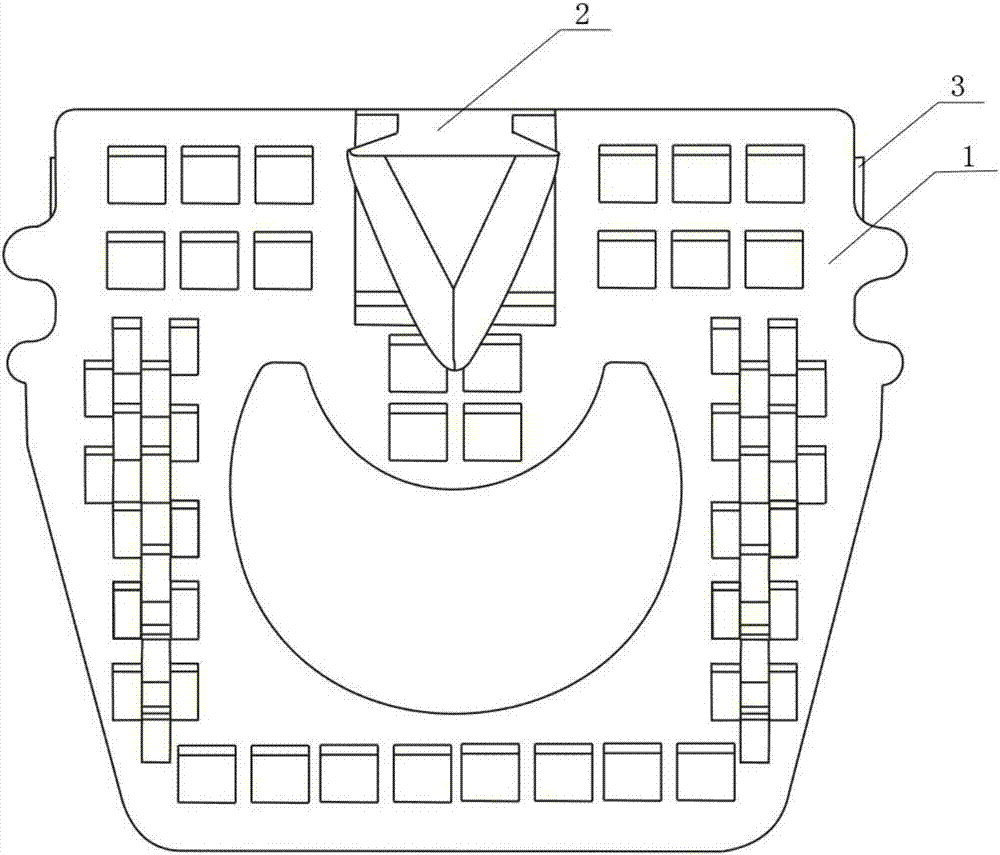
Figure 2 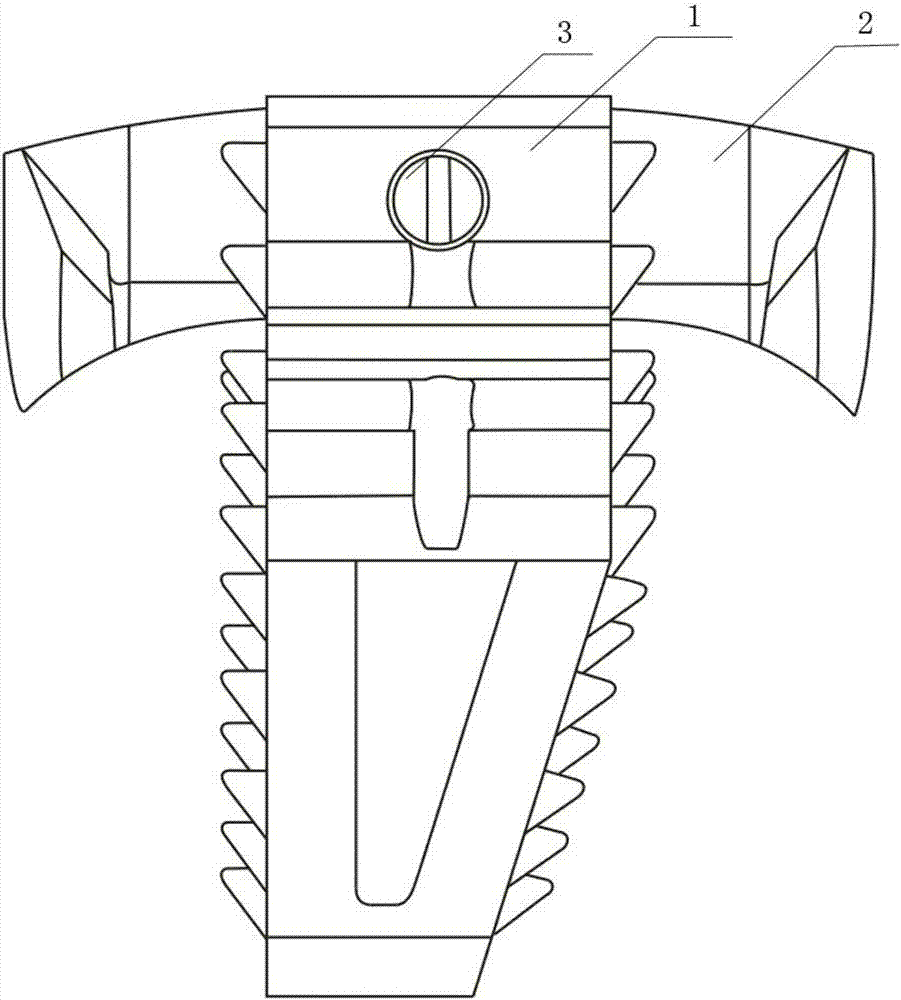
Figure 3
Abstract
Description
technical field
[0001] The invention relates to the field of medical devices, in particular to a mortise and tenon type cervical intervertebral fixator. Background technique
[0002] The main pathological basis of cervical spondylosis is the degeneration and protrusion of the intervertebral disc, the formation of osteophytes at the posterior border of adjacent vertebral bodies, and the thickening or ossification of the posterior longitudinal ligament, resulting in compression of the spinal cord, nerve roots and blood vessels. Surgery for cervical spondylosis mainly focuses on the intervertebral space. The classic surgical operation is to remove the degenerated and protruding intervertebral disc, clean up the osteophyte at the posterior edge of the vertebral body, remove the thickened or ossified posterior longitudinal ligament and its adhesions, sometimes decompress the nerve root at the same time, and then implant bone in the intervertebral body fusion. This cervical deco...
Examples
Embodiment Construction
[0030] The present invention will be described in further detail below.
[0031] Such as Figure 1 to Figure 4 As shown, the mortise and tenon type cervical intervertebral fixator includes an intervertebral fixator body 1 for insertion into the intervertebral space of the cervical spine, and a vertical wing-shaped part 2 that is rotatably connected to one end of the intervertebral fixator body, as Figure 5 to Figure 7 As shown, the vertical wing part 2 includes a bearing 2-1 and a tenon 2-2. The bearing 2-1 is used to limit the rotation connection with the intervertebral fixator body 1. The bearing 2-1 extends along the length direction of the cervical spine to the intervertebral Tenons 2-2 extend from both sides of the fixture body 1 respectively. After adopting this structure, during the operation, the bone knife chisels out the bone groove at the front edge of the upper and lower vertebral bodies in the intervertebral space of the operating segment to make a mortise. -2 ...