
Free-running single-photon detection system for high-speed quenching and recovery
A single-photon detection, high-speed technology, applied in the field of single-photon detection and quantum communication, can solve the problems of long dead time, the potential of detector detection efficiency and count rate cannot be fully realized, and high detection efficiency cannot be satisfied, and achieve suppression. After-pulse probability, the effect of improving detection efficiency and counting rate
Patent Information
- Authority / Receiving Office
- CN · China
- Patent Type
- Patents(China)
- Current Assignee / Owner
- Publication Date
- 2019-01-04
Smart Images
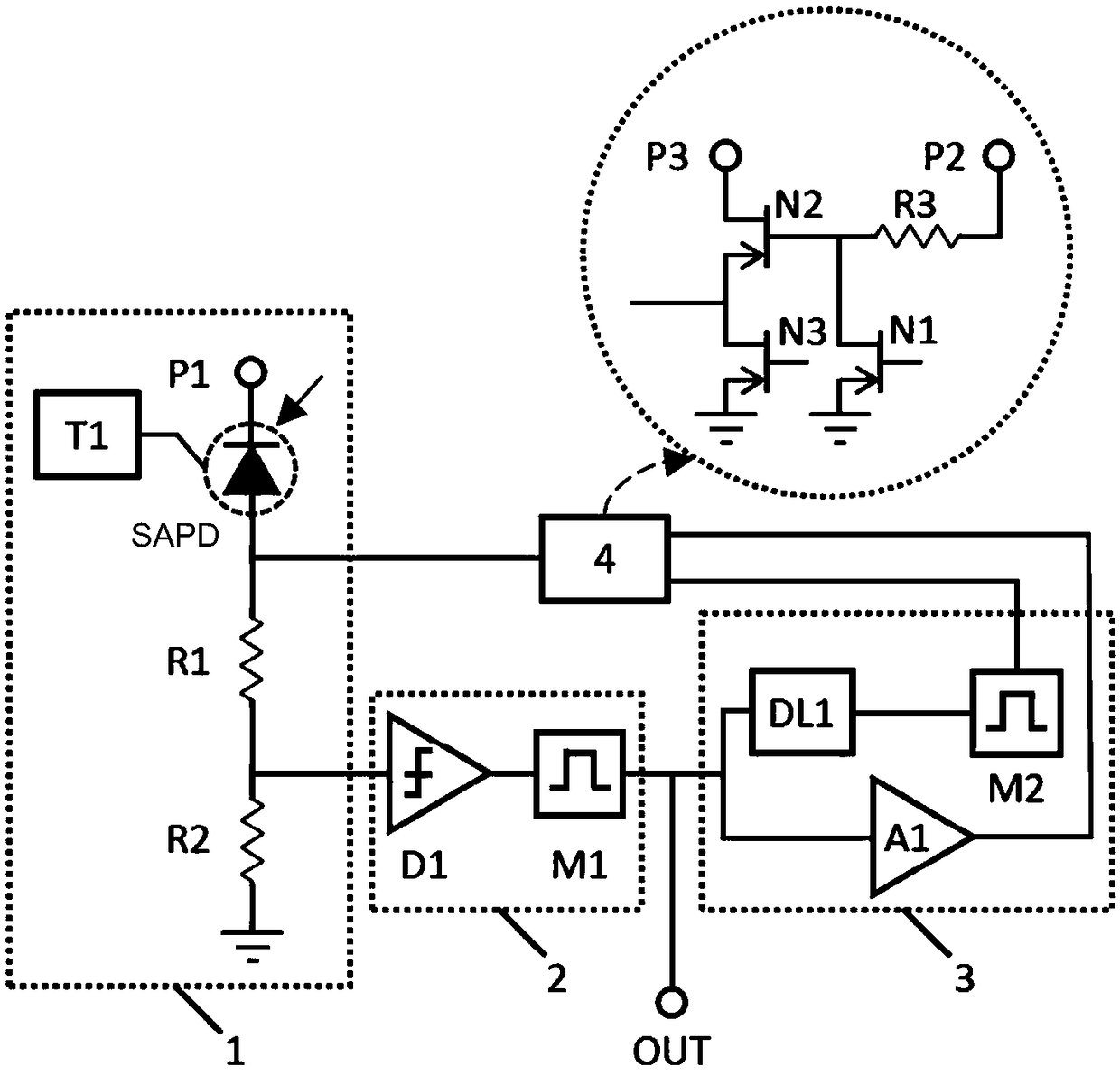
Figure 1 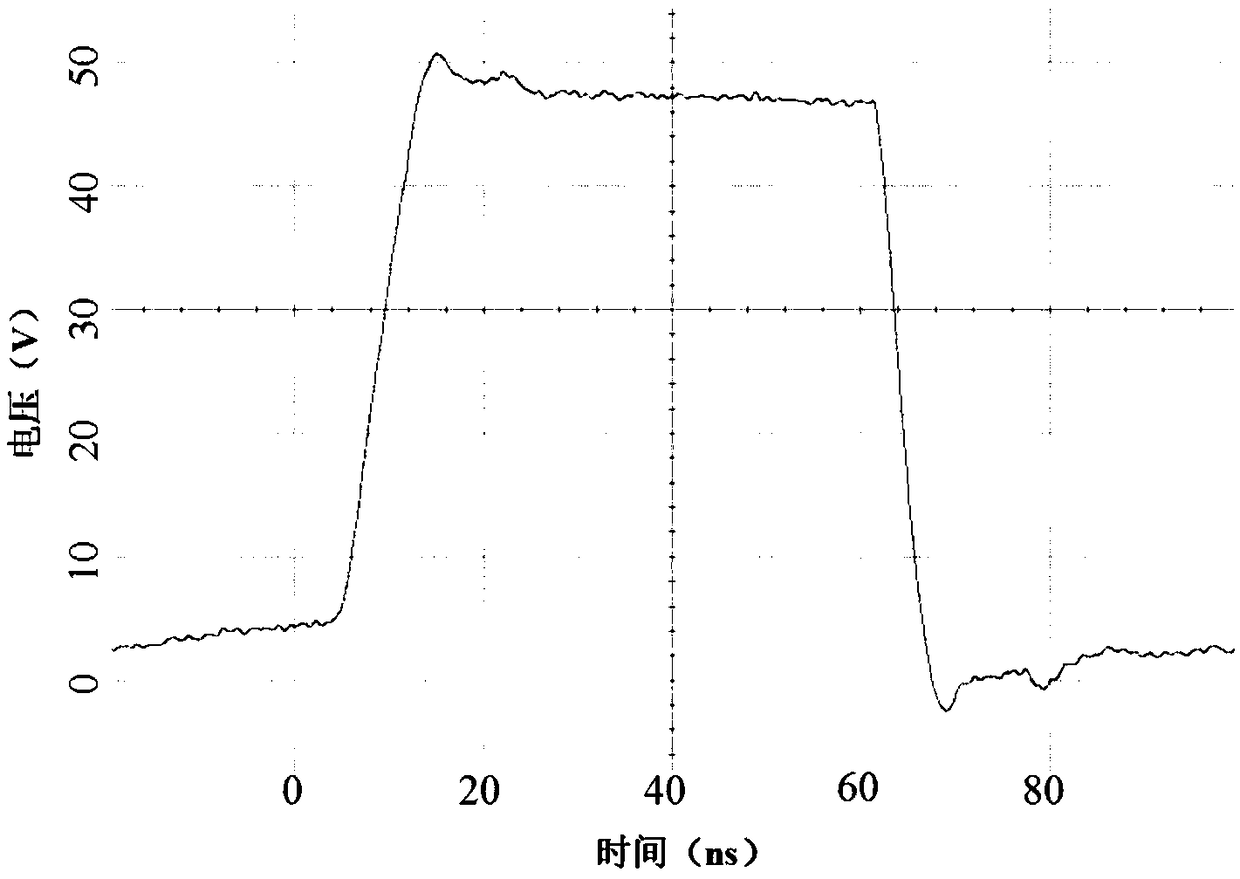
Figure 2
Abstract
Description
technical field
[0001] The invention relates to the technical fields of single-photon detection and quantum communication, in particular to a free-running single-photon detection system with high-speed quenching and recovery. Background technique
[0002] Semiconductor single-photon detectors are essential tools for ultra-weak light detection, and have a wide range of application requirements in many fields. The basic working principle of the semiconductor single photon detector is that the single photon avalanche photodiode (SPAD) works in the Geiger mode, that is, the reverse bias voltage of the SPAD exceeds its avalanche breakdown voltage. When the incident single photon is absorbed, a pair of carriers will be generated. Due to the impact ionization effect, the carriers form an avalanche effect and finally output a macroscopic current. After detecting the avalanche signal, the back-end quenching circuit will output a detection signal, and at the same time reset the circu...
Examples
Embodiment Construction
[0025] The technical solutions in the embodiments of the present invention will be clearly and completely described below in conjunction with the accompanying drawings in the embodiments of the present invention. Obviously, the described embodiments are only some of the embodiments of the present invention, not all of them. Based on the embodiments of the present invention, all other embodiments obtained by persons of ordinary skill in the art without making creative efforts belong to the protection scope of the present invention.
[0026] figure 1 A schematic structural diagram of a high-speed quenching and recovery free-running single-photon detection system provided by an embodiment of the present invention. Such as figure 1 As shown, it mainly includes: SPAD and its peripheral circuit module 1, screening and shaping module 2, delay and amplification module 3, and active quenching and recovery module 4; where:
[0027] SPAD and its peripheral circuit module 1 extract the ...