
Method and device for carrying out feedback on downlink data
A technology of downlink data and feedback timing, which is applied in the field of communication, and can solve problems such as the inapplicability of feedback timing information
Patent Information
- Authority / Receiving Office
- CN · China
- Current Assignee / Owner
- Publication Date
- 2018-02-23
Smart Images
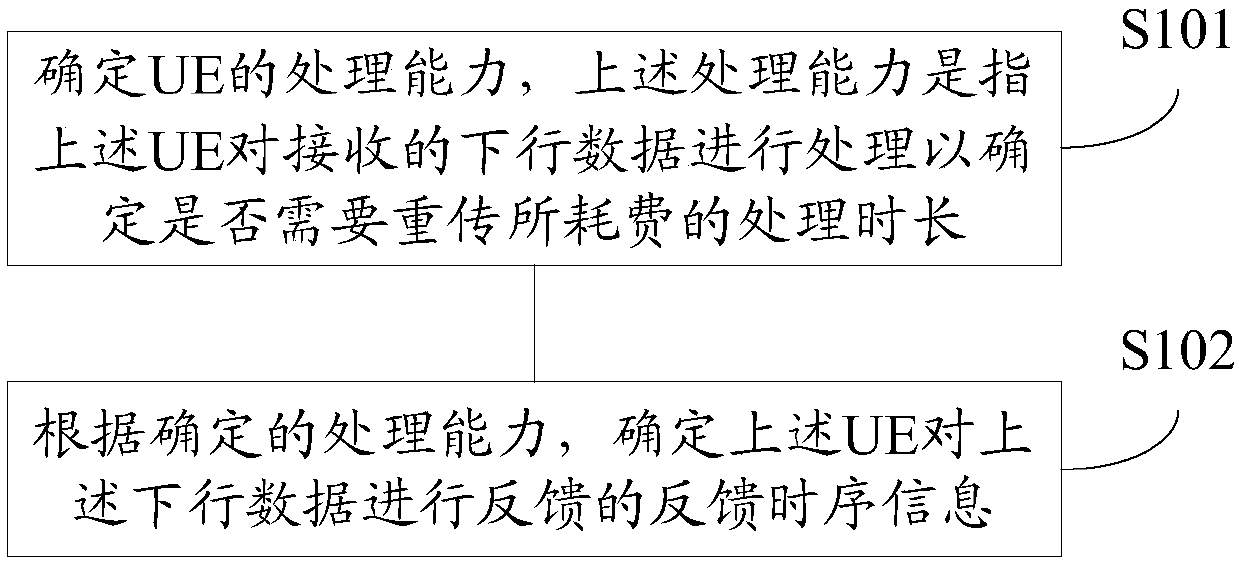
Figure 1 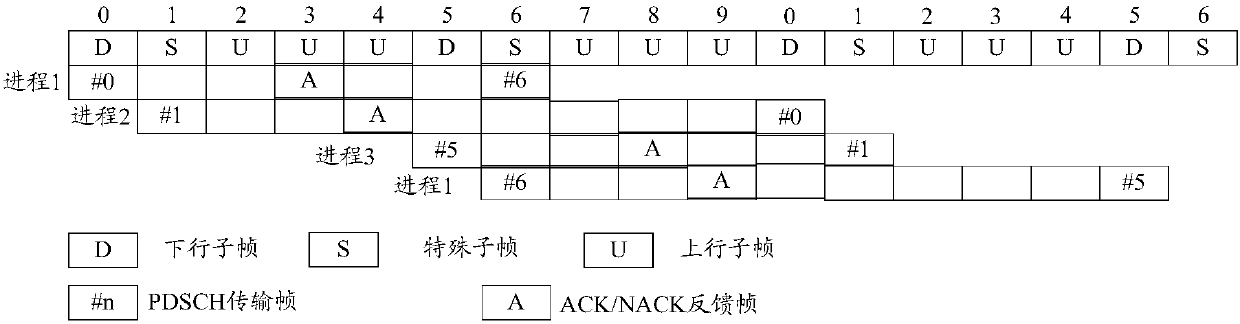
Figure 2 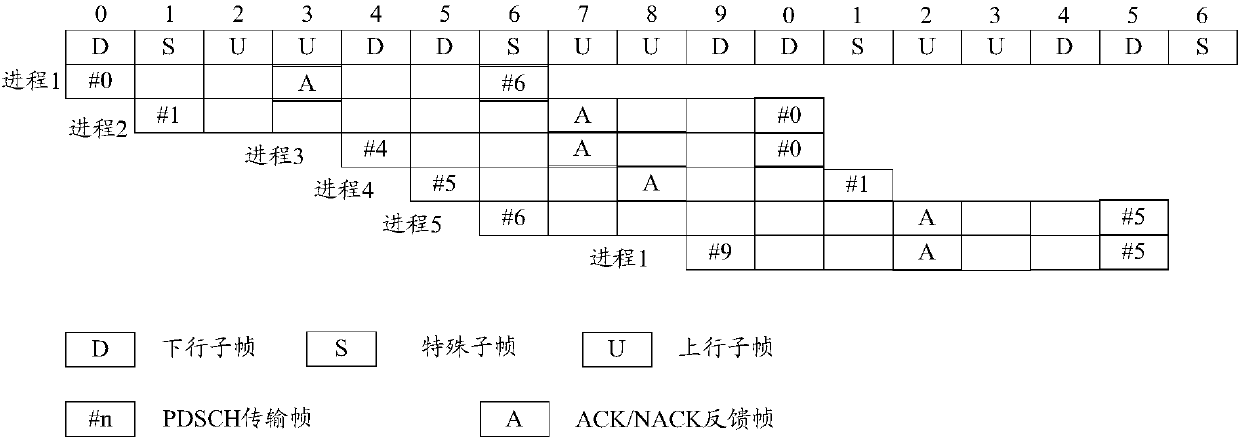
Figure 3
Abstract
Description
technical field
[0001] The present application relates to the technical field of communications, and in particular to a method and device for feeding back downlink data. Background technique
[0002] With the development and change of mobile communication service requirements, many organizations such as the International Telecommunication Union (International Telecommunication Union, ITU) have defined higher user plane delay performance requirements for future mobile communication systems. Without changing the transmission time interval (Transmission Time Interval, TTI) (the TTI is 1 millisecond at this time), the processing performance of the user equipment (User Equipment, UE) can be improved, and the processing time can be shortened, thereby improving the user plane delay performance.
[0003] Table 1 shows an uplink and downlink configuration mode of a subframe in a time division duplex (Time Division Duplexing, TDD) mode in a long term evolution (Long Term Evolution, L...
Examples
Embodiment 1
[0056] Embodiment 1 of the present application provides a method for feeding back downlink data, the flow chart of which is as follows figure 1 As shown, specifically, the following steps may be included:
[0057] S101. Determine the processing capability of the UE, where the processing capability refers to the processing time it takes for the UE to process the received downlink data to determine whether retransmission is required;
[0058] S102. According to the determined processing capability, determine feedback timing information for the UE to feed back the downlink data.
[0059] In actual implementation, both the user equipment UE and the network side equipment (such as a base station) may serve as the subject of execution of the solution provided by Embodiment 1 of the present application.
[0060] When the UE acts as the execution subject, the UE determines the feedback timing information applicable to itself according to its own processing capabilities and the feedba...
Embodiment 2
[0086] When the processing time corresponding to the processing capability of the UE to process the received downlink data is 2 subframes, and the configuration number corresponding to the uplink and downlink configuration information is 0, in the uplink subframe n, the received data in subframe n-k+10β Feedback of the downlink data, when n is 3, 4, 8 or 9, k is 3; where, β is 0;
[0087] According to the above processing capability and uplink and downlink configuration information, determine that the number of HARQ processes when the above UE feeds back the above downlink data is 3;
[0088] For subframe 0, subframe 1, subframe 5, and subframe 6, determine the PUCCH implicit resources for sending feedback information indicated by high-level signaling, or determine the PUCCH implicit resources for sending feedback information according to predefined rules. resource.
[0089] figure 2 Shown is a schematic diagram of UE feeding back downlink data in three processes in the solut...
Embodiment 3
[0091] When the processing time corresponding to the processing capability of the UE to process the received downlink data is 2 subframes, and the configuration number corresponding to the uplink and downlink configuration information is 1, in the uplink subframe n, the received data in subframe n-k+10β When n is 2 or 7, k is 3 and 6, when n is 3 or 8, k is 3; where, when n
[0092] According to the above processing capability and uplink and downlink configuration information, determine that the number of HARQ processes when the above UE feeds back the above downlink data is 5;
[0093] For subframe 1 and subframe 6, share the PUCCH implicit resource for sending feedback information with the UE whose processing duration is 3 subframes;
[0094] For subframe 0, subframe 4, subframe 5, and subframe 9, determine the PUCCH implicit resources for sending feedback information indicated by high-level signaling, or determine the PUCCH implicit resources f...