
A kind of method for mass-breeding Lime wasps based on yacon as host plant
A technology of Liphid wasps and host plants, which is applied in the field of biological control of agricultural and forestry pests, can solve the problems of development and utilization without relevant research reports, and achieve the effects of shortening the breeding cycle, high parasitism rate and eclosion rate, and increased egg production
Patent Information
- Authority / Receiving Office
- CN · China
- Patent Type
- Patents(China)
- Current Assignee / Owner
- Publication Date
- 2021-04-20
- Estimated Expiration
- Not applicable · inactive patent
Smart Images
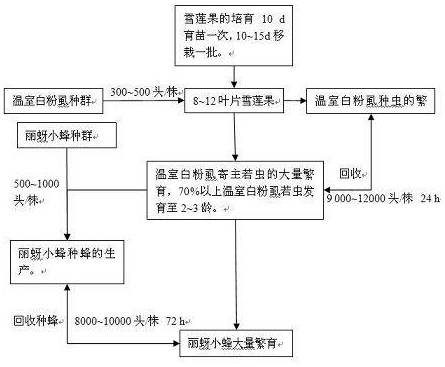
Figure 1 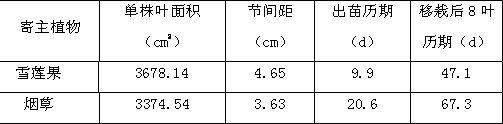
Figure 2
Abstract
Description
technical field
[0001] The invention discloses a method for multiplying a large amount of aphid wasps based on yacon as a host plant, relates to a new method for breeding aphid wasps, and belongs to the field of biological control of agricultural and forestry pests. Background technique
[0002] Whitefly belongs to Hemiptera (Hemiptera), whitefly family (Aleyrodidae), and is one of the important pests in a class of agricultural production. Biological control of whitefly pests is considered to be the safest and most effective means of control. Lithium aphid Encarsia formosa Gahan against whitefly Bemisia tabaci (Gennadius) and the greenhouse whitefly Trialeurodes vaporariorum (Westwood) is considered to be one of the most classic control cases of biological control. Since the introduction of Lepidopteris from the United Kingdom in 1978, my country has done a lot of preliminary research on it and organized relevant units to produce and release it. Compared with chemical ...
Examples
Embodiment 1
[0026] In this implementation case, tobacco is used as a control plant to breed Limas aphids. Except for the cultivation of tobacco, other breeding processes are consistent with yacon. The main steps of this implementation case are as follows:
[0027] (1) Cultivation of healthy host plants
[0028] Cultivation of yacon: grow seedlings of yacon balls in a cultivation pot, and after emergence, 4 leaves grow (3~4 leaves with a single leaf area of 10~15cm 2 ), transplanted into containers and grown to 8-12 leaves for later use. During the cultivation process, the nutrient solution is poured once every 15-20 days (the composition of the nutrient solution is urea and diammonium phosphate, the ratio of the two fertilizers is 3:1, and the dilution is 25-30 times.) Every 10 days, a batch of seedlings is raised, and every 10 ~15 days to transplant a batch to ensure sufficient supply of plants. The climate conditions in the nursery room are 18-28°C, 40-60% R.H., and the light condit...
Embodiment 2
[0067] This example is the same as Example 1, the only difference being that the time for inoculation of Limephid wasps was changed from 24 h to 48 h.
Embodiment 3
[0069] This example is the same as Example 1, the only difference is that the time for inoculation of Liphid wasps was changed from 24 h to 72 h.