
A kind of synthetic method of the intermediate of Sofosbuvir
A synthesis method and a technology for intermediates, applied in the field of synthesis of pharmaceutical intermediates, can solve problems such as hair loss, thinning of nails, sensitization of sodium hypochlorite, etc., and achieve the effects of increasing reaction intensity, saving production costs, and huge industrial production prospects.
Patent Information
- Authority / Receiving Office
- CN · China
- Patent Type
- Patents(China)
- Current Assignee / Owner
- Publication Date
- 2022-06-24
Smart Images
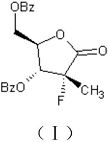
Figure 1 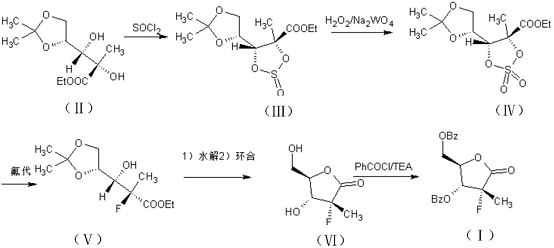
Figure 2 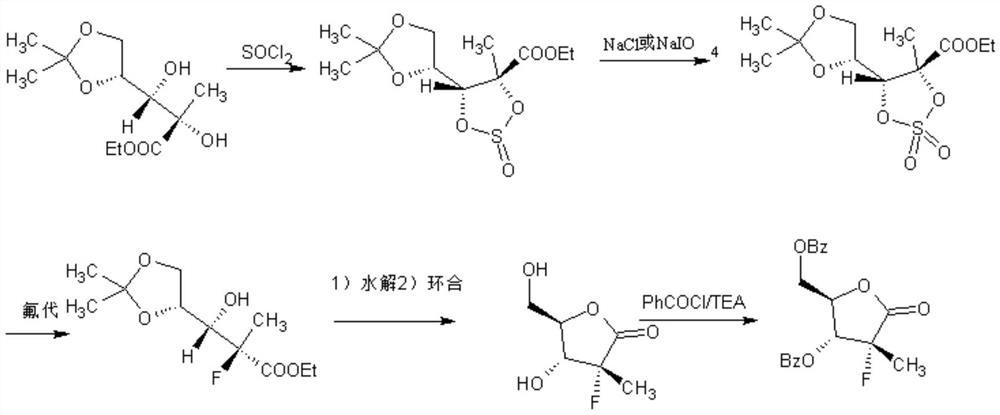
Figure 3
Abstract
Description
technical field
[0001] The invention relates to a method for synthesizing a pharmaceutical intermediate, in particular to a method for synthesizing an intermediate of sofosbuvir.
[0002] technical background
[0003] Sofosbuvir (also translated as Sofosbuvir, English name Sofosbuvir, trade name Sovaldi) is a new drug developed by Gilead for the treatment of chronic hepatitis C. It was approved by the U.S. Food and Drug Administration (FDA) on December 6, 2013. ) was approved for marketing in the United States, and was approved for marketing in EU countries by the European Medicines Agency (EMEA) on January 16, 2014. Not yet listed in China. The drug is the first to safely and effectively treat some types of hepatitis C without the need for combined interferon. Clinical trials have demonstrated an overall sustained virological response rate (SVR) of up to 90% in combination with peginterferon and ribavirin for hepatitis C type 1 and 4; for hepatitis C type 2, the drug in co...
Examples
Embodiment 1
[0026] A kind of synthetic method of sofosbuvir intermediate (I), concrete steps are as follows:
[0027] Step 1, synthesis of compound (III): under the condition of 0~5℃, add compound (II) 24.8g (0.1mol), dichloromethane 200g and triethylamine 20.2g (0.2mol) into a dry three-necked flask, stir To 0°C, slowly add 17.9g (0.15mol) of thionyl chloride dropwise, after 30min of reaction, add 100g of ice water, 200g of dichloromethane, stir for 30min, separate the organic layer, and then use 100g of water and 20% The organic layer was washed with brine to obtain a dichloromethane solution of compound (III).
[0028] Step 2: Synthesis of compound (IV): add 1.65 g (0.05 mol) of sodium tungstate dihydrate to the dichloromethane solution of compound (III) in step one, and add 28.3 g of 30% hydrogen peroxide dropwise at 23° C. (0.25mol), continue to react for 9h after dripping until compound (III) disappears, filter and recover sodium tungstate dihydrate, and the filtrate is washed with...
Embodiment 2
[0033] A kind of synthetic method of sofosbuvir intermediate (I), concrete steps are as follows:
[0034] Step 1, synthesis of compound (III): under the condition of 0~5℃, add compound (II) 22.6g (0.09mol), dichloromethane 180g and triethylamine 18.2g (0.18mol) into a dry three-necked flask, stir To 0°C, slowly add 15.5g (0.13mol) of thionyl chloride dropwise, after 20min of reaction, add 100g of ice water, 200g of dichloromethane, stir for 30min, separate the organic layer, and then use 100g of water and 20% The organic layer was washed with brine to obtain a dichloromethane solution of compound (III).
[0035]Step 2, the synthesis of compound (IV): add 15 g (0.045 mol) of sodium tungstate dihydrate to the dichloromethane solution of the compound (III) in step one, and at 20° C., add dropwise 26.4 g of 35% hydrogen peroxide ( 0.27mol), continue to react for 8h until compound (III) disappears after dropping, and recover sodium tungstate dihydrate by filtration. The filtrate i...
Embodiment 3
[0040] A kind of synthetic method of sofosbuvir intermediate (I), concrete steps are as follows:
[0041] Step 1, the synthesis of compound (III): under low temperature conditions, add compound (II) 29.76g (0.12mol), dichloromethane 230g and triethylamine 21.2g (0.21mol) into a dry three-necked flask, stir to 0°C , slowly add 18.6g (0.156mol) of thionyl chloride dropwise, after 40min of reaction, add 100g of ice water, 200g of dichloromethane, stir for 30min, separate the organic layer, then wash with 100g of water and 20% brine respectively The organic layer was obtained as a dichloromethane solution of compound (III).
[0042] Step 2, the synthesis of compound (IV): add 1.75 g (0.053 mol) of sodium tungstate dihydrate to the dichloromethane solution of compound (III) in step one, and add 29.9 g of 25% hydrogen peroxide dropwise at 25°C (0.22mol), continue to react for 10h after dripping until compound (III) disappears, filter and recover sodium tungstate dihydrate, and the ...