
Method for reducing emission of potent greenhouse gas N2O in sludge earthworm composting
A technology of greenhouse gases and earthworms, applied in the field of reducing N2O emissions of strong greenhouse gases from sludge earthworm composting, can solve the problems of reduced fertilizer efficiency of compost products, achieve the effects of increasing agricultural value and economic benefits, improving product quality, and strong adaptability
Patent Information
- Authority / Receiving Office
- CN · China
- Patent Type
- Applications(China)
- Current Assignee / Owner
- Publication Date
- 2019-03-22
- Estimated Expiration
- Not applicable · inactive patent
Smart Images
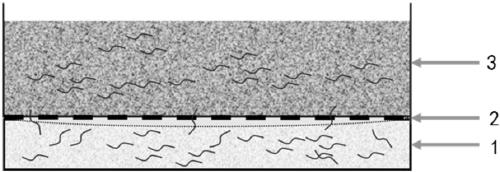
Figure 1 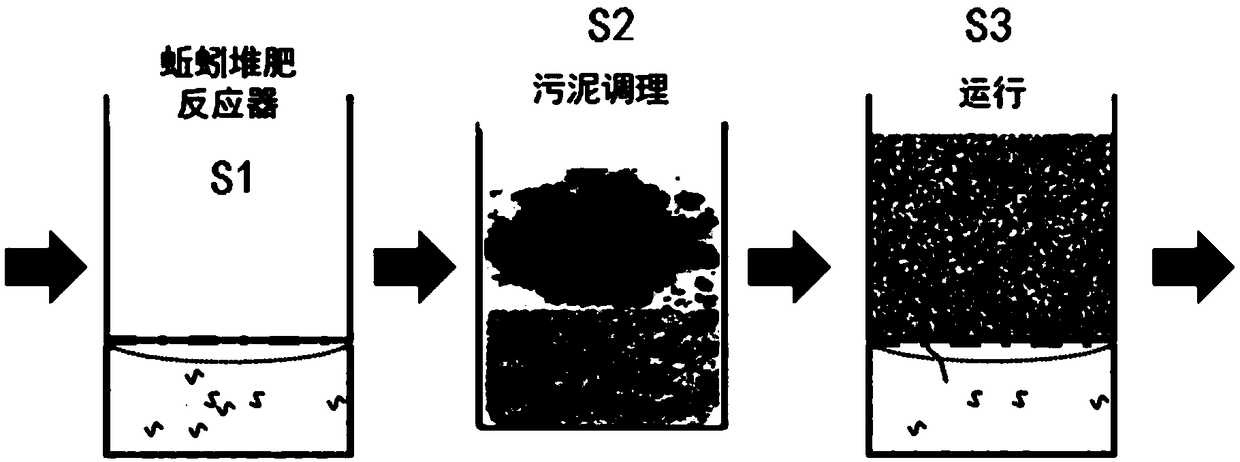
Figure 2 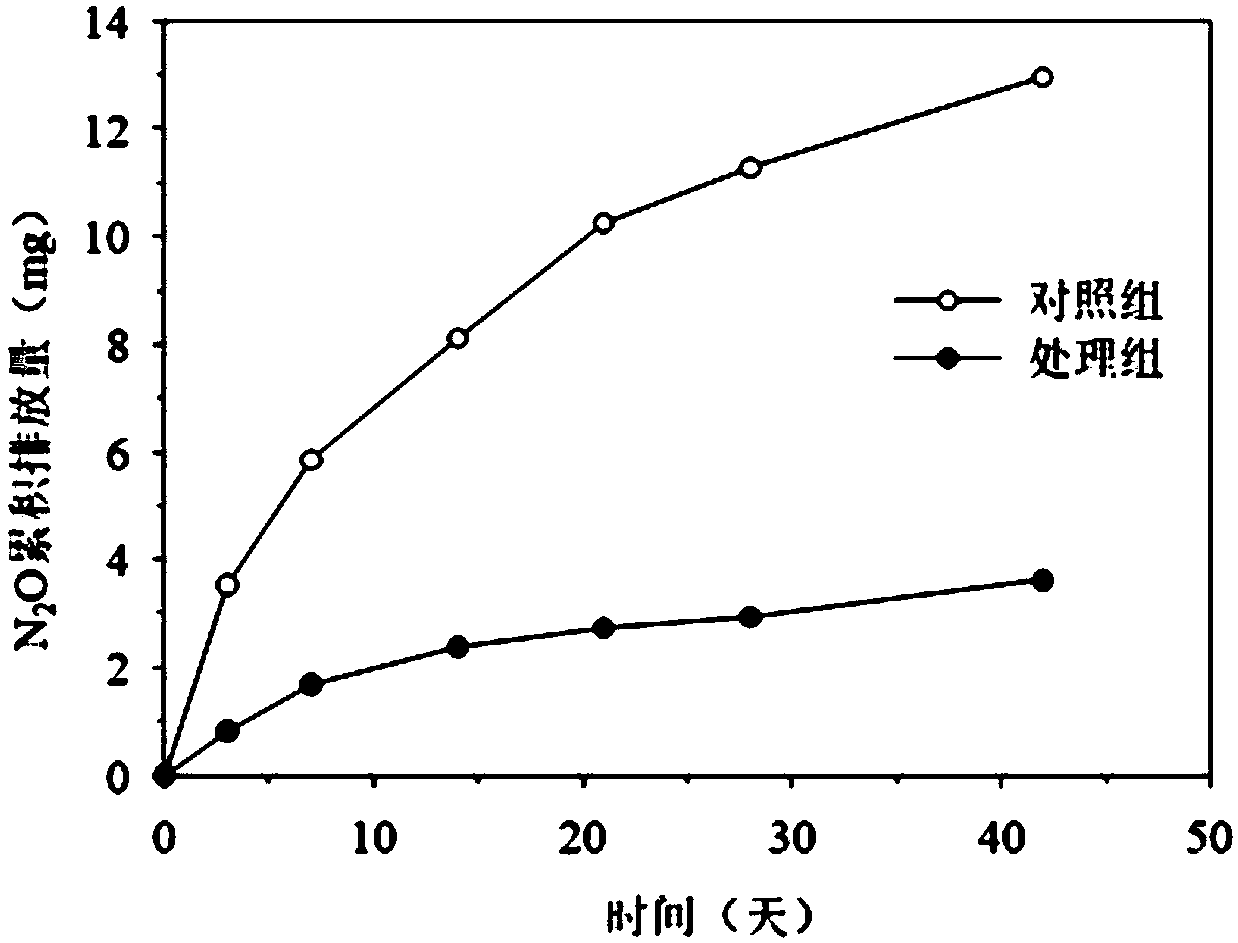
Figure 3
Abstract
Description
technical field
[0001] The invention belongs to the field of environmental protection and relates to the problem of secondary pollution in sludge vermicomposting, in particular to a method for reducing the strong greenhouse gas N of sludge vermicomposting 2 O emission method. Background technique
[0002] With the continuous and rapid development of my country's economy and society, the sewage treatment capacity has been continuously improved, and the sludge production has also increased sharply. As of 2016, the annual output of surplus sludge in the country has reached 30 million tons. Composting is an important technology for treating sludge and making it a resource.
[0003] Through composting, the available nutrients formed after the decomposition of organic matter in the sludge are more conducive to plant absorption, and the humus produced can also improve the soil. Vermicomposting relies on the synergy between earthworms and microorganisms to decompose organic matte...
Examples
Embodiment 1
[0048] 1. Set up a buffer layer. The thickness of the buffer layer is about 5cm. It is composed of cow dung, pig manure and other substrates that earthworms like, and its conductivity is lower than 5.0mS / cm. The density of earthworms in the buffer layer is 1.2kg / m 2 .
[0049] 2. An isolation net is set on the buffer layer. The isolation net is made of hard plastic with an aperture of 0.5 cm, which is convenient for earthworms to move up and down.
[0050] 3. Take the remaining sludge after dehydration, add straw, adjust the carbon-nitrogen ratio to 20:1, and the moisture content to 70%. The mixed material should be placed in a cool place for 5 days to deodorize. After there is no obvious ammonia smell, it will be added to the reaction area.
[0051] 4. Add the deodorized sludge material directly to the isolation net with a thickness of 15cm, and cover the rear sunshade net on the top of the reaction zone. After adding materials, stimulated by fresh materials, the earthworm...
Embodiment 2
[0054] 1. Set up a buffer layer. The thickness of the buffer layer is about 5cm. It is composed of chicken, duck, goose droppings and other substrates that earthworms like, and its conductivity is lower than 5.0mS / cm. The density of earthworms in the buffer layer is 2.0kg / m 2 .
[0055] 2. An isolation net is set on the buffer layer. The isolation net is made of hard plastic with an aperture of 0.5 cm, which is convenient for earthworms to move up and down.
[0056] 3. Take the remaining sludge after dehydration, add sawdust, adjust the carbon-nitrogen ratio to 30:1, and the moisture content to 75%. The mixed material should be placed in a cool place for 5 days to deodorize. After there is no obvious ammonia smell, it will be added to the reaction area.
[0057] 4. Add the deodorized sludge material directly to the isolation net with a thickness of 10cm, and cover the rear sunshade net on the top of the reaction zone. After adding materials, stimulated by fresh materials, t...