
A broadband antenna
A technology of dipoles and radiators, applied in the field of broadband antennas, to achieve the effect of improving scanning angle performance and side lobe performance, improving flexibility, and high degree of freedom
Patent Information
- Authority / Receiving Office
- CN · China
- Patent Type
- Applications(China)
- Current Assignee / Owner
- Publication Date
- 2019-12-20
Smart Images
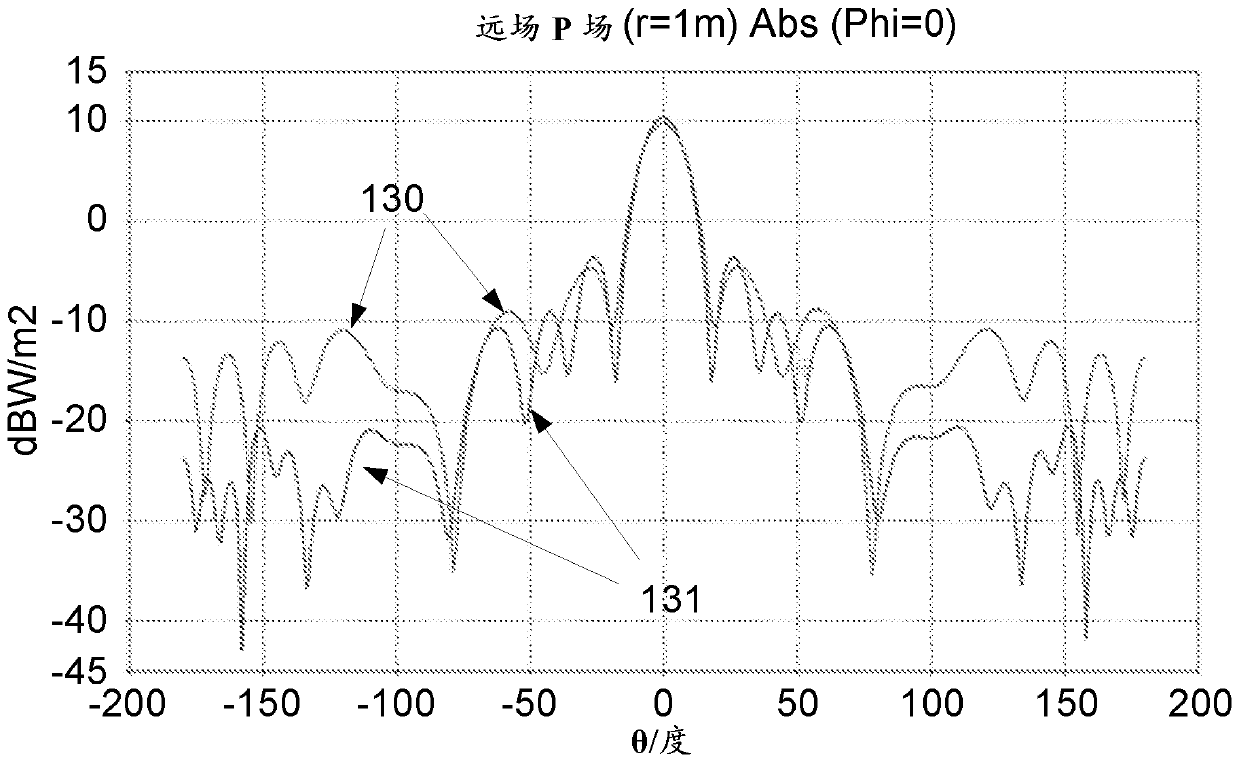
Figure 1 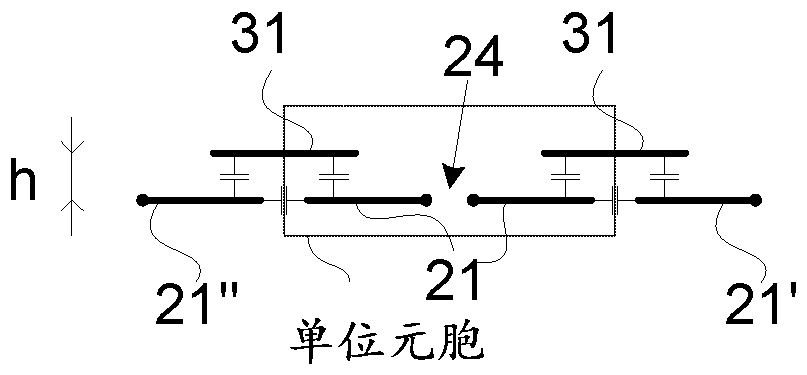
Figure 2 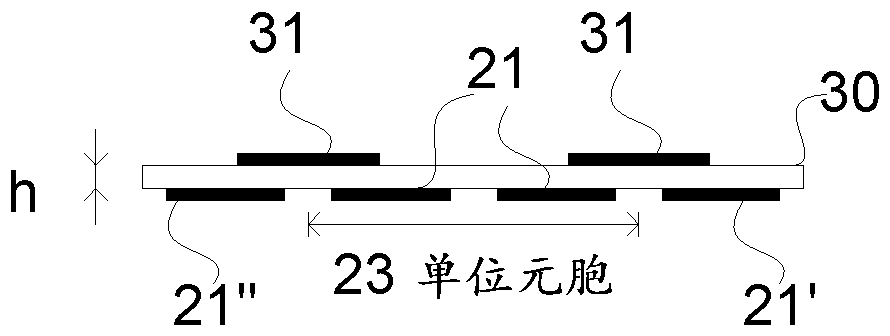
Figure 3
Abstract
Description
technical field
[0001] The present disclosure relates to the field of wireless communications. In particular, the present disclosure relates to broadband antennas comprising asymmetric dipoles in an array of strongly coupled dipoles. Background technique
[0002] Nodes in a wireless communication network need antennas for communication between the network and user equipment UE, and the number of antennas varies depending on the number of frequencies used, the type of antennas used and how to achieve spatial diversity. A typical number of antennas per site is nine, with three per sector. Current typical antennas are narrowband and are divided into two categories: low-band antennas and mid / high-band antennas. Low band covers the 700-900 MHz frequency range, while mid / high band covers 1700-2600 MHz. Operators often lease site space for antennas from building landlords and tower owners, and the number of antennas, antenna size and weight are factors in determining the cost of...
Examples
Embodiment Construction
[0057] Aspects of the disclosure will be described more fully hereinafter with reference to the accompanying drawings. Antennas disclosed herein may, however, be implemented in many different forms and should not be construed as limited to the aspects set forth herein. Like reference numerals refer to like elements throughout the drawings.
[0058] The terminology used herein is for the purpose of describing particular aspects of the disclosure only and is not intended to be limiting of the invention. As used herein, the singular forms "a, an" and "the" are intended to include the plural forms as well, unless the context clearly dictates otherwise.
[0059] Voltage standing wave ratio VSWR is used to illustrate the efficiency of example embodiments. VSWR is a function of the reflection coefficient, which describes the power reflected from the antenna. If the reflection coefficient is given by Γ, then VSWR is defined by:
[0060]
[0061] Reflection coefficient is also k...