
Circulation type bidirectional assembly line
An assembly line and assembly line technology, applied in transportation and packaging, conveyors, metal processing, etc., can solve the problems of underutilized space, long assembly/processing interval, and excessively long material handling, so as to improve assembly/processing. Efficiency, shorter assembly/machining intervals, effect of reduced material handling strokes
Patent Information
- Authority / Receiving Office
- CN · China
- Patent Type
- Applications(China)
- Current Assignee / Owner
- Publication Date
- 2020-02-11
Smart Images
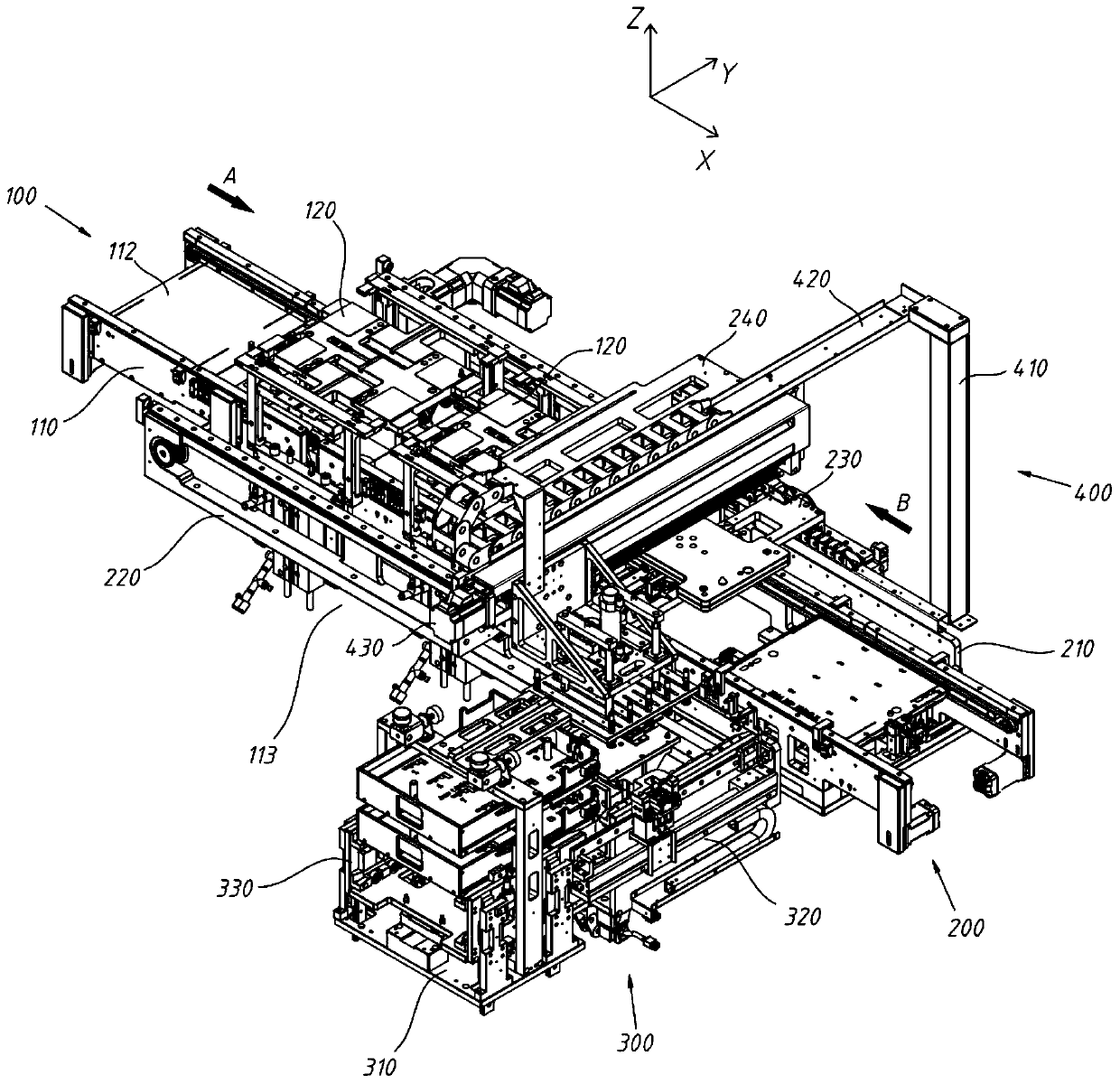
Figure 1 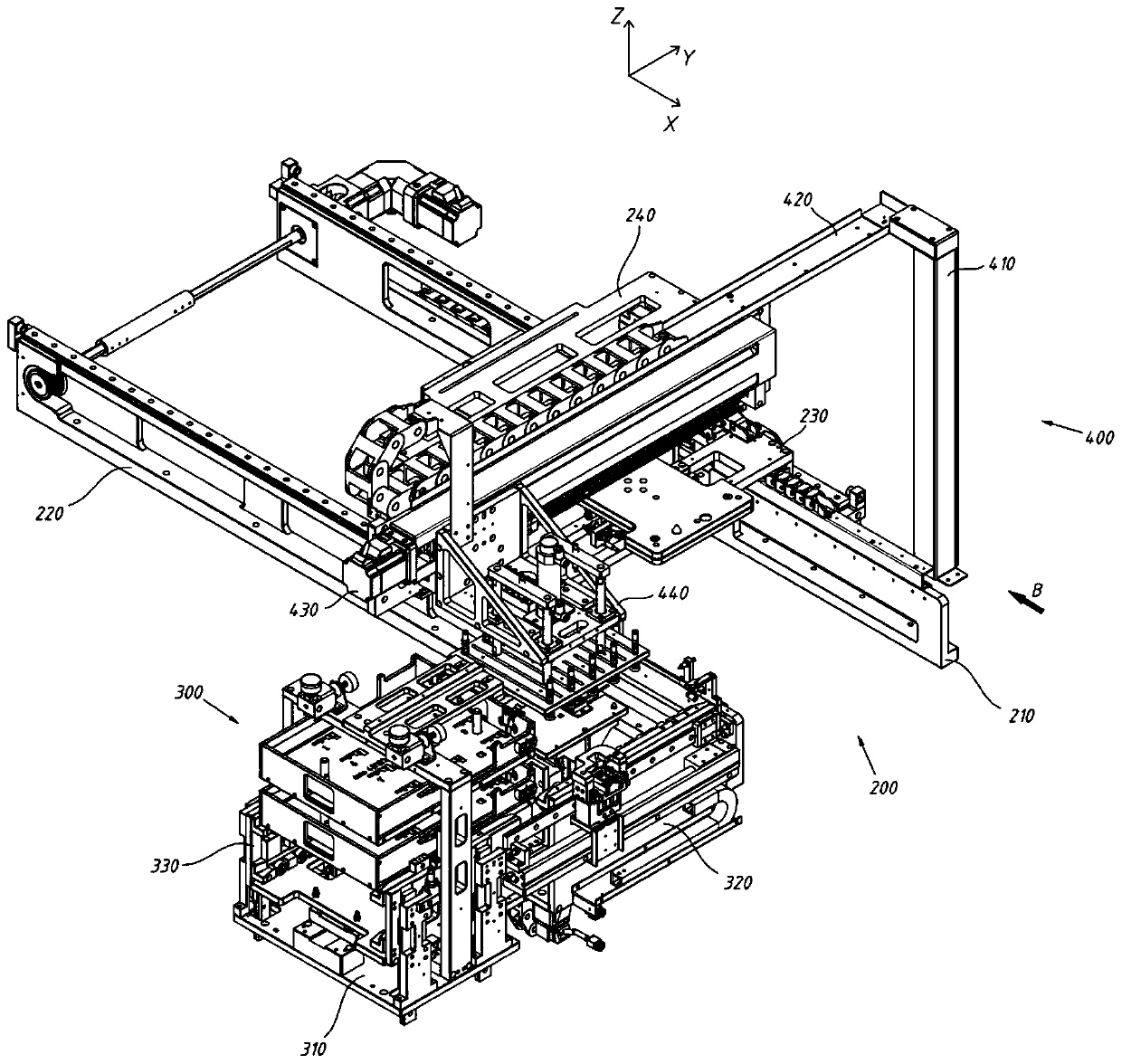
Figure 2 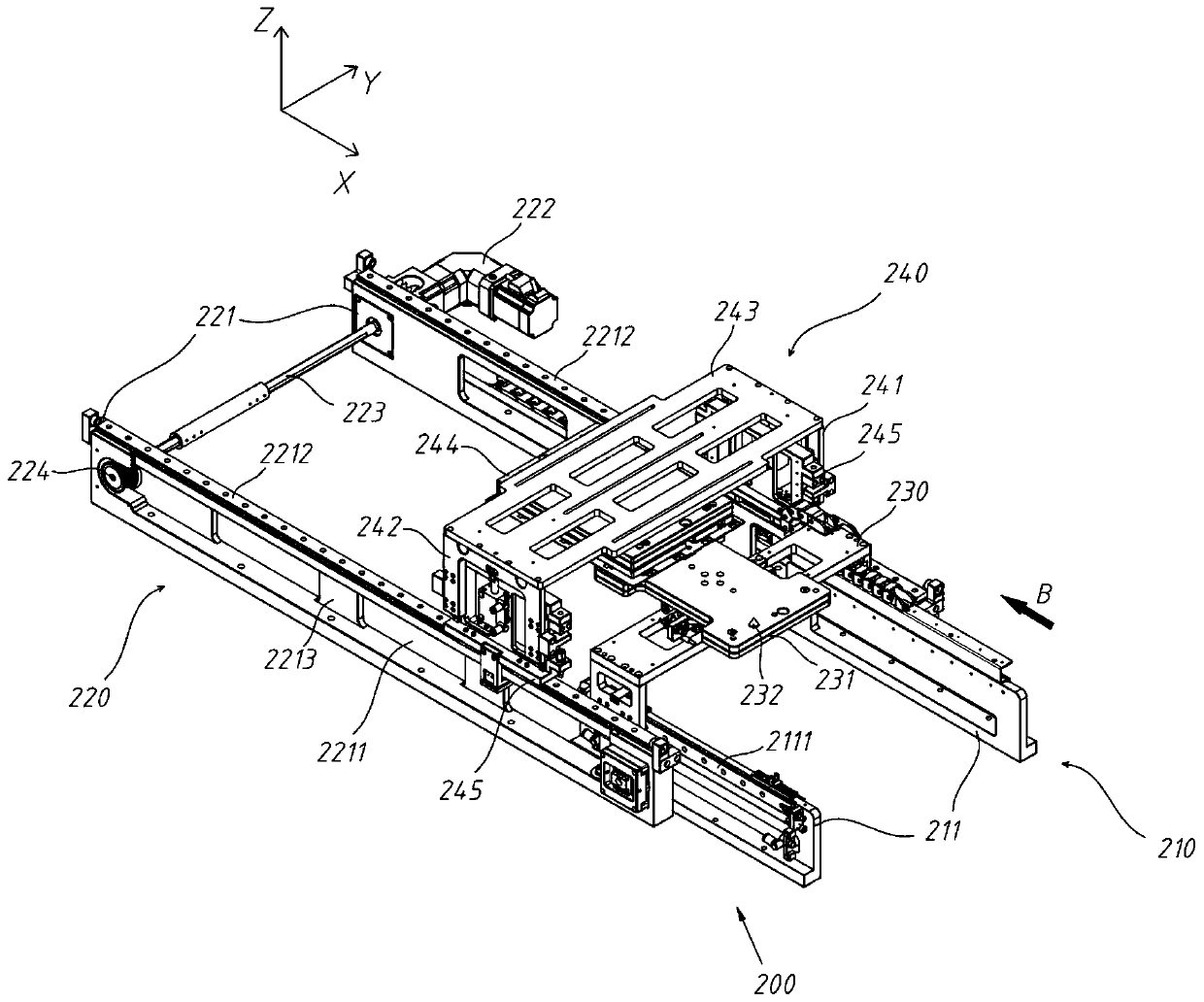
Figure 3
Abstract
Description
technical field
[0001] The invention relates to the field of non-standard automation, in particular to a turnover type bidirectional assembly line. Background technique
[0002] In the non-standard automated production process, it is often necessary to use an assembly line that assembles at least two materials into one or sequentially processes two groups of materials.
[0003] The existing assembly line has the following problems: First, the traditional assembly line uses the same set of handling mechanism, that is, only after one material is transported, the next material will be transported, because the material spare parts area is far away from the assembly station And materials need to be positioned before assembly, resulting in too long intervals between two adjacent assemblies / processing, resulting in low assembly / processing efficiency; Long, which further leads to low assembly / processing efficiency; thirdly, the degree of automation is low, and there are many steps ...
Examples
Embodiment Construction
[0064] The present invention will be further described in detail below in conjunction with the accompanying drawings, and the aforementioned and other objects, features, aspects and advantages of the present invention will become more apparent, so that those skilled in the art can implement them with reference to the description.
[0065] In the drawings, the shapes and dimensions may be exaggerated for clarity, and the same reference numerals will be used throughout to designate the same or like parts.
[0066] In the following description, terms such as center, thickness, height, length, front, back, rear, left, right, top, bottom, upper, lower, etc. are defined with respect to the configuration shown in each drawing , in particular, "height" is equivalent to the dimension from top to bottom, "width" is equivalent to the dimension from left to right, and "depth" is equivalent to the dimension from front to back. They are relative concepts, so it may be based on It changes co...