
Microbial traceability method for pig manure pollution
A technology for microorganisms and pig feces, which is applied in the field of microbial traceability of pig feces pollution, can solve the problems of false positives, interference of microbial traceability detection, and false negative test results.
Patent Information
- Authority / Receiving Office
- CN · China
- Patent Type
- Applications(China)
- Current Assignee / Owner
- Publication Date
- 2020-07-24
- Estimated Expiration
- Not applicable · inactive patent
Smart Images
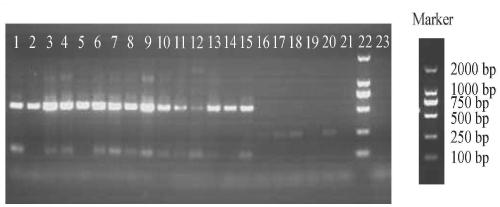
Figure 1 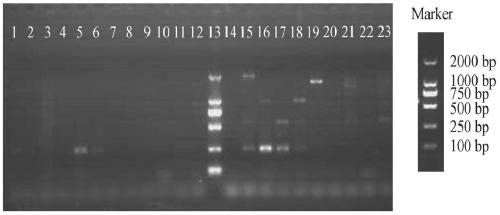
Figure 2 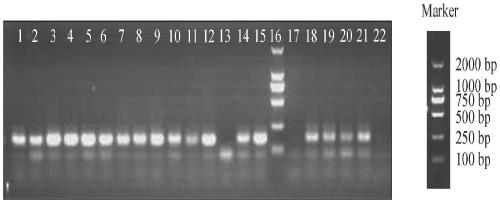
Figure 3
Abstract
Description
technical field
[0001] The invention relates to the technical field of microorganism traceability, in particular to a method for traceability of microorganisms contaminated by pig feces. Background technique
[0002] Fecal pollution of surface water bodies is one of the main environmental pollution problems caused by livestock and poultry farming. In China's breeding industry, pig farming not only produces the largest amount of feces, but also often leaks and sneaks because it is difficult to handle, which leads to fecal pollution of environmental water bodies. Accurate identification of fecal pollution from pigs will help the environmental management department to thoroughly control the fecal pollution from pigs from the source.
[0003] Microbial source tracking (MST) technology provides an effective means to trace the source of pig fecal pollution, which mainly locates the source of pollution based on the specific relationship between the source indicator microorganism a...
Examples
Embodiment 1
[0033] Sample DNA Extraction
[0034] Fecal samples were directly used with FastDNA TM Spin Kit for Soil (MP Biomedicals, Solon, OH, USA) kit was used to extract DNA; after the environmental water samples were filtered through a 0.45 μm vacuum filter, the microorganisms were all trapped on the filter membrane, the filter membrane was cut into pieces, and then used FastDNA TMSpin Kit for Soil (MP Biomedicals, Solon, OH, USA) kit was used to extract DNA.
Embodiment 2
[0036] Primer screening:
[0037] 1 set of primers:
[0038] Forward primer PF163F: 5'-GCGGATTAATACCGTATGA-3', shown in SEQ ID NO:1;
[0039] Reverse primer Bac708R: 5'-CAATCGGAGTTCTTCGTG-3', shown in SEQ ID NO:2.
[0040] The target microorganism is porcine-specific Bacteroides, and the target fragment is a partial fragment of the 16S rRNA gene, with a size of 563bp.
[0041] 2 sets of primers:
[0042] Forward primer PS422F: 5'-CGGGTTGTAAACTGCTTTTATGAAG-3', shown in SEQ ID NO:3;
[0043] Reverse primer Bac581R: 5'-CGCTCCCTTTAAACCCAATAAA-3', shown in SEQ ID NO:4.
[0044] The target microorganism is porcine-specific Bacteroides, and the target fragment is a partial fragment of the 16S rRNA gene, with a size of 150bp.
[0045] 3 sets of primers:
[0046] Forward primer Bac41F: 5'-TACAGGCTTAACACATGCAAGTCG-3', shown in SEQ ID NO:5;
[0047] Reverse primer PS183R: 5'-CTCATACGGTATTAATCCGCCTTT-3', shown in SEQ ID NO:6.
[0048] The target microorganism is porcine-specific B...
Embodiment 3
[0073] Screening of reaction conditions
[0074] One set of primers in Example 2 was used, the reaction system remained unchanged, and the annealing temperature was increased by gradient (1°C) to screen for the most suitable reaction conditions.
[0075] The results showed that the best reaction conditions for PCR were: 95°C for 3min, 30 cycles: 95°C for 30s, 62°C for 1min, 72°C for 30s, and finally 72°C for 10min.