
Magnetic sandwich material based on nanocrystalline soft magnetic thin film and its preparing method
A nanocrystalline soft magnetic and sandwich technology, applied in the field of information storage, can solve problems affecting data security, hindering the development of spintronic devices, and reducing the magnetoresistance effect, achieving superior flip characteristics, superior soft magnetic properties, and reducing the overall The effect of thickness
Patent Information
- Authority / Receiving Office
- CN · China
- Current Assignee / Owner
- Publication Date
- 2007-02-28
- Estimated Expiration
- Not applicable · inactive patent
Smart Images
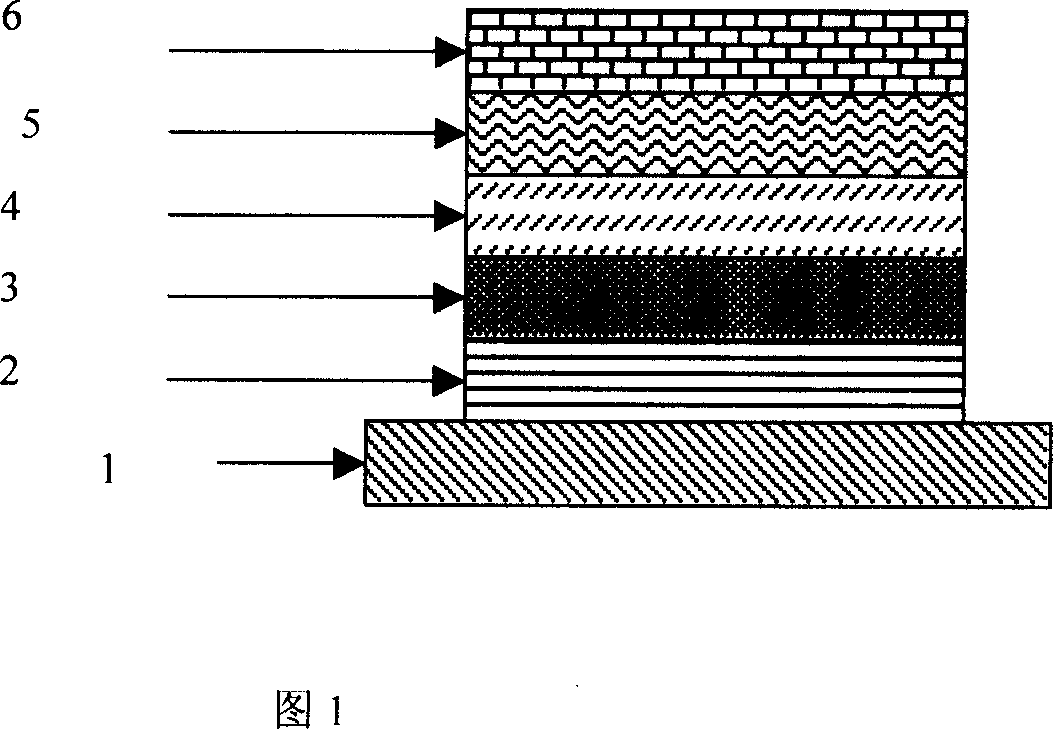
Figure 1 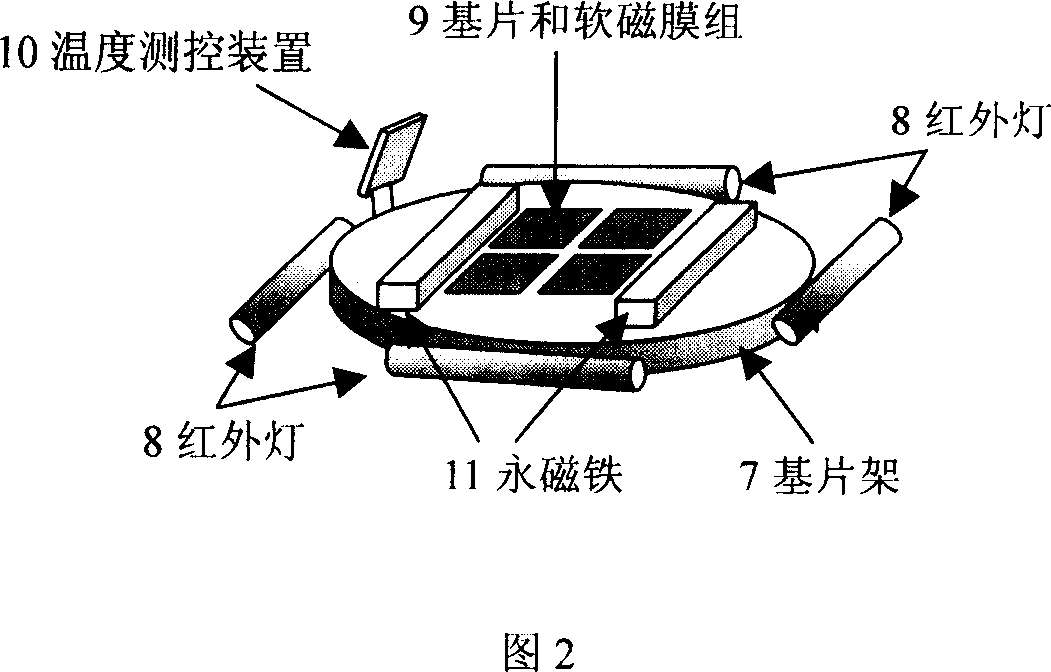
Figure 2 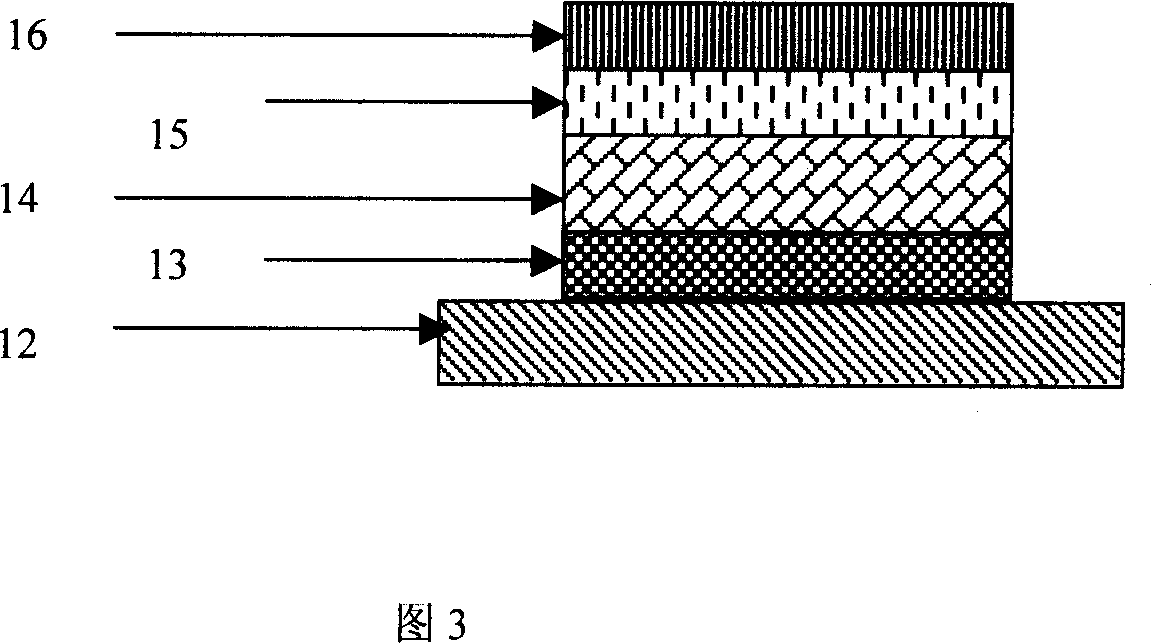
Figure 3
Abstract
Description
technical field
[0001] The invention belongs to the technical field of information storage, and particularly relates to the preparation technology of a novel high-performance giant magnetoresistance material used in an ultra-high-density non-volatile magnetic memory (MRAM). Background technique
[0002] In spintronic devices such as giant magnetoresistive heads, nonvolatile magnetic memories, and spin transistors, magnetic information is transmitted from one end of the device to the other via mesomagnets (nanoscale magnetic units). This process requires mesoscopic magnets to "encode" magnetic information into itinerant electron spin channels and then rapidly read them out. This decoding process can be controlled by remagnetizing the mesoscopic magnet, so that the realization of the function of the spintronic device can be controlled by the change of the external magnetic field. At present, the core mesoscopic magnet component of spintronic devices is the "ferromagnetic laye...
Examples
Embodiment Construction
[0047] The following will take the nanocrystalline CoNbZr / Cu / Co structure as an example to illustrate the preparation method of the magnetic sandwich material proposed by the present invention.
[0048] 1. Cleaning and handling of substrates
[0049] Prepare 10×10mm 2 Square single crystal Si(100) substrate, boiled with concentrated sulfuric acid to remove surface stains and impurities, ultrasonically cleaned with acetone, then soaked in hydrofluoric acid for 30 minutes to remove the surface oxide layer, ultrasonically cleaned with deionized water, and ultrasonically cleaned with acetone; then placed Dry on the filter paper, place on the substrate holder 7, and finally send it into the vacuum chamber of the sputtering station.
[0050] 2. Deposition and nanocrystallization of amorphous soft magnetic layer
[0051] Evacuate the sputtering table vacuum chamber to 1 × 10 -5 Pa, argon Ar is introduced as the working gas, and the partial pressure of argon is 0.2Pa. Add 50W sput...