
Cathode active material for lithium secondary battery and lithium secondary battery comprising the same
a cathode active material and lithium secondary battery technology, which is applied in the direction of batteries, cell components, electrochemical generators, etc., can solve the problems of significant deterioration of thermal properties, deterioration of lifespan characteristics, and still has thermal stability problems, so as to facilitate the storage of lithium ions into and release of primary particles, the effect of capacity, output and lifespan characteristics of the battery including the cathode active material
Patent Information
- Authority / Receiving Office
- US · United States
- Patent Type
- Patents(United States)
- Current Assignee / Owner
- Publication Date
- 2020-07-14
Smart Images
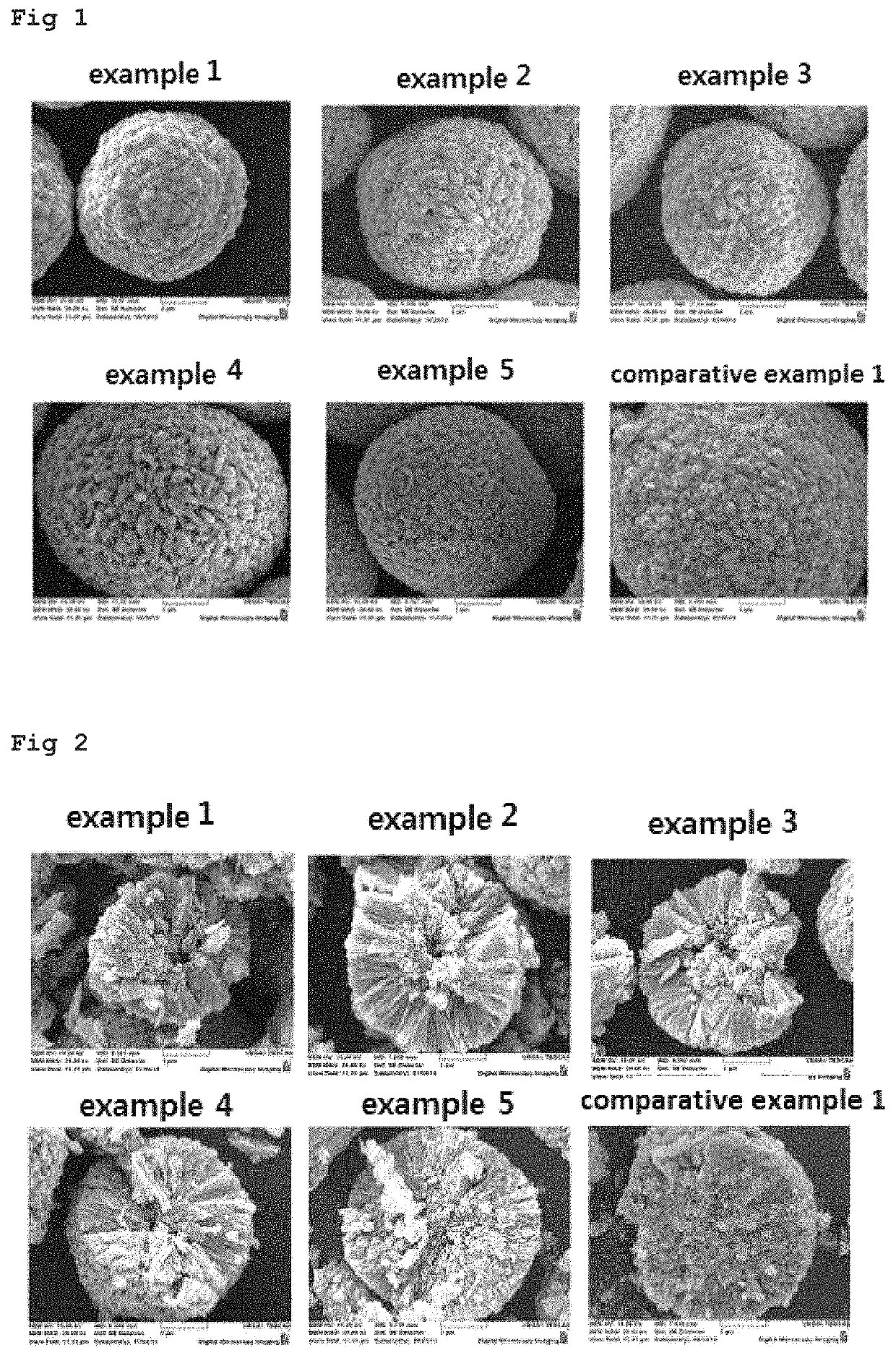
Figure 1 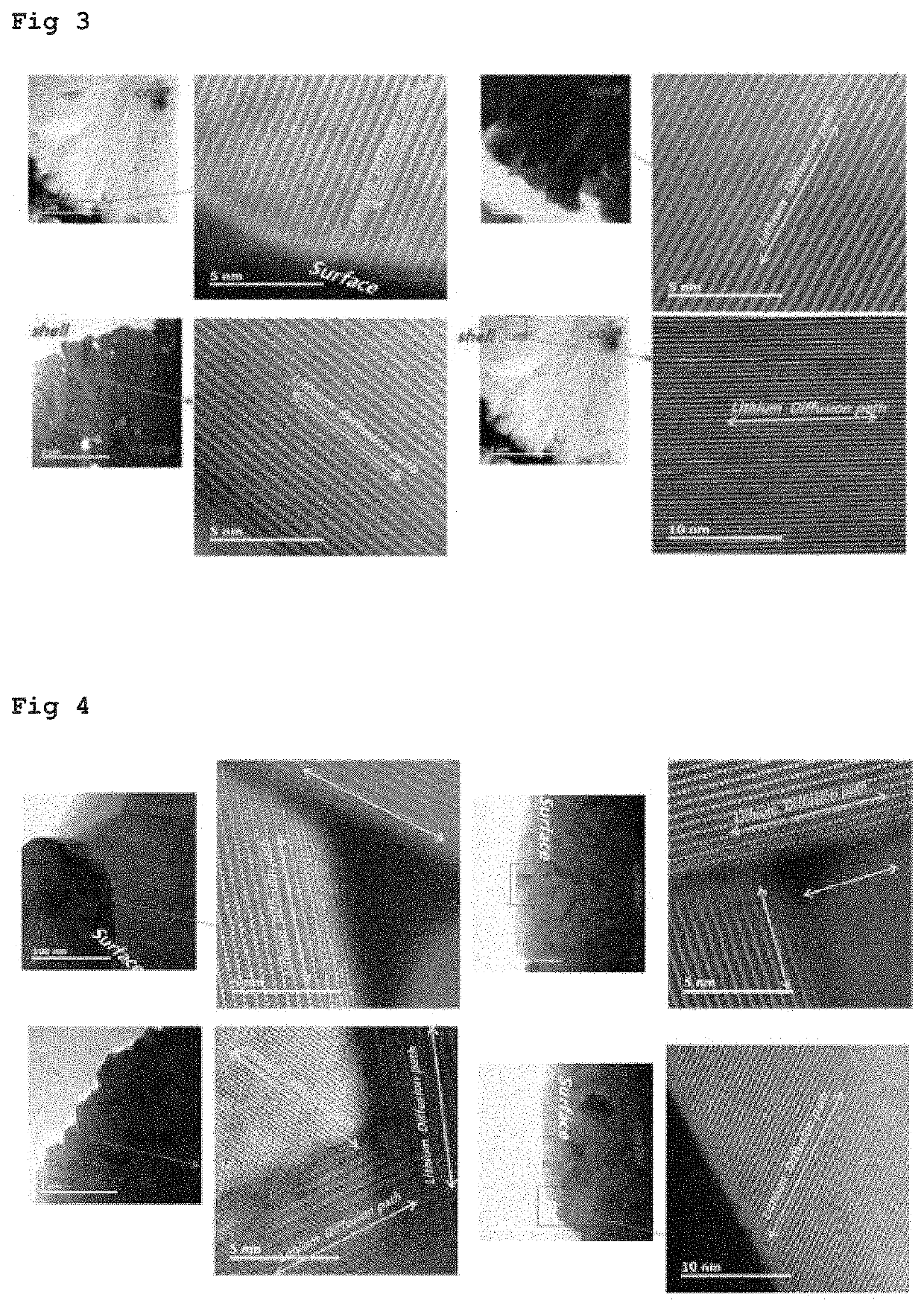
Figure 2 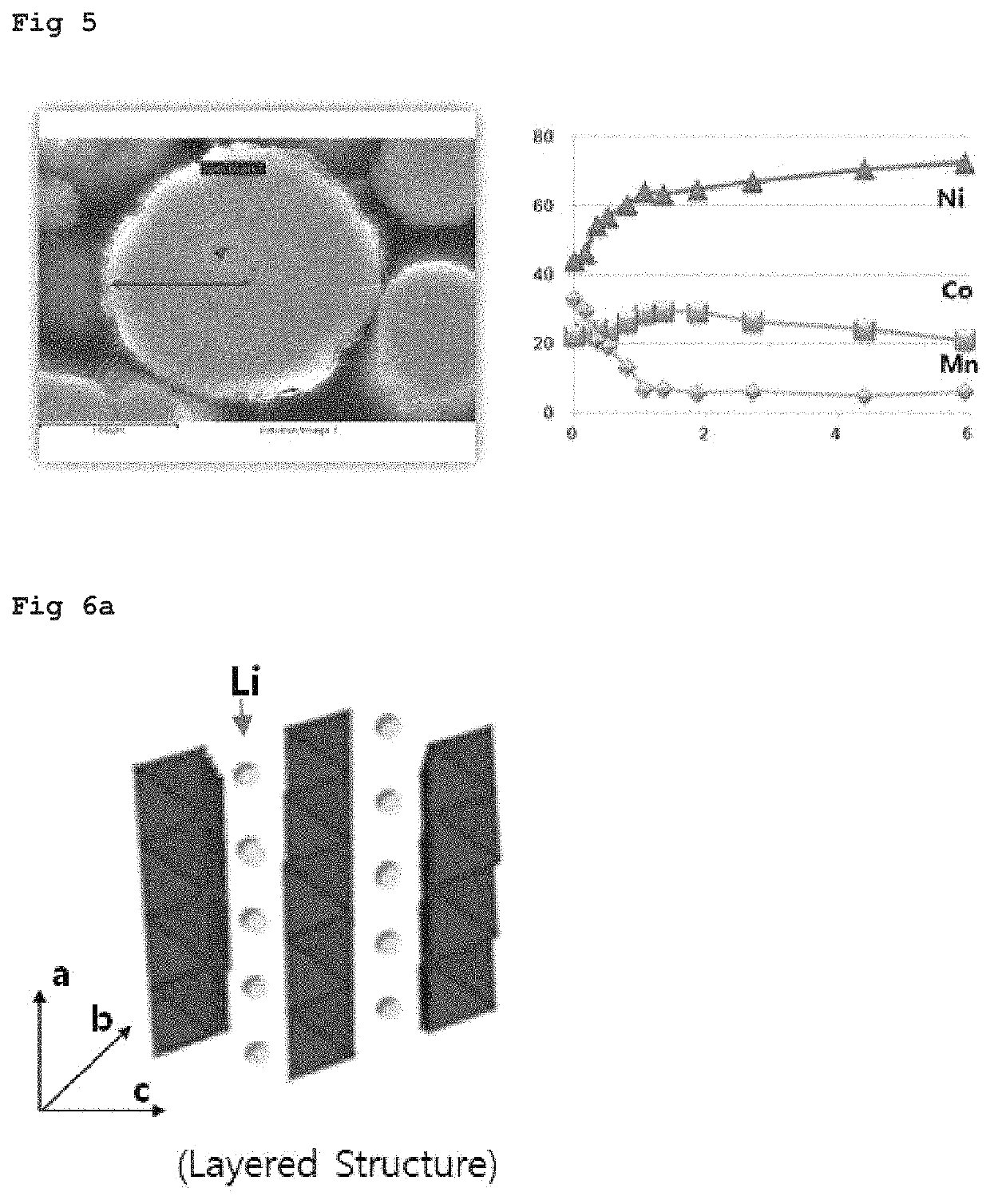
Figure 3
Abstract
Description
CROSS-REFERENCE TO RELATED APPLICATION
[0001] This application is the U.S. national stage application of International Patent Application No. PCT / KR2015 / 000646, filed Jan. 21, 2015, which claims priority to Korean Application No. 10-2014-0101843, filed Aug. 7, 2014, the disclosures of each of which are incorporated herein by reference in their entirety.TECHNICAL FIELD
[0002] The present invention relates to a cathode active material for lithium secondary battery and a lithium secondary battery including the same, and more specifically it relates to a cathode active material for lithium secondary battery in which the lithium ion diffusion paths in the primary particles and secondary particles of the cathode active material having a layered structure are formed to exhibit directivity in a specific direction, and a lithium secondary battery including the same.BACKGROUND ART
[0003] Recently, interest in the energy storage technology has been increased. The effort to research and develop an el...
Examples
example 1
[0035]As the first step, 20 L of distilled water and 1000 g of ammonia as a chelating agent were introduced into a co-precipitation reactor (output of rotary motor: 80 W or more) having an internal volume of 100 L and stirred at from 300 to 1000 rpm using the motor while maintaining the internal temperature of the reactor at from 40 to 50° C.
[0036]As the second step, a 2.5 M aqueous solution of the first precursor prepared by mixing nickel sulfate, cobalt sulfate, and manganese sulfate at a molar ratio of 80:20:0 and a 28% aqueous ammonia solution were continuously introduced into the reactor at a rate of 2.2 L / hr and 0.15 L / hr, respectively. In addition, in order to adjust the pH, a 25% aqueous solution of sodium hydroxide was supplied thereto so that the pH was maintained at from 11.3 to 11.4. The impeller speed was adjusted to from 300 to 1000 rpm. The aqueous solution of the first precursor, ammonia, and the aqueous solution of sodium hydroxide were continuously introduced into ...
example 2
[0041]The powder of a cathode active material was produced by the same method as in Example 1 except that the composition of the inner core layer was Li(Ni0.70Co0.30)O2 and the composition of the outer shell layer had a continuous concentration gradient from Li(N0.70Co0.30)O2 to Li(Ni0.4Co0.2Mn0.4)O2.
example 3
[0042]The powder of a cathode active material was produced by the same method as in Example 1 except that the composition of the inner core layer was Li(Ni0.80Co0.20)O2 and the composition of the outer shell layer had a continuous concentration gradient from Li(Ni0.80Co0.20)O2 to Li(Ni0.35Co0.35Mn0.3)O2.