
Plasticized terephthalate-based polyester blends containing fatty acids or esters thereof
a technology of polyester blends and fatty acids, applied in the field of polymer blend compositions, can solve the problems of high cost of recycling process, waste often going to landfill, and material degradation risk, and achieve the effects of enhancing processability, reducing melt processing temperature, and reducing the viscosity of the mel
Patent Information
- Authority / Receiving Office
- US · United States
- Patent Type
- Patents(United States)
- Current Assignee / Owner
- Publication Date
- 2022-03-22
Smart Images
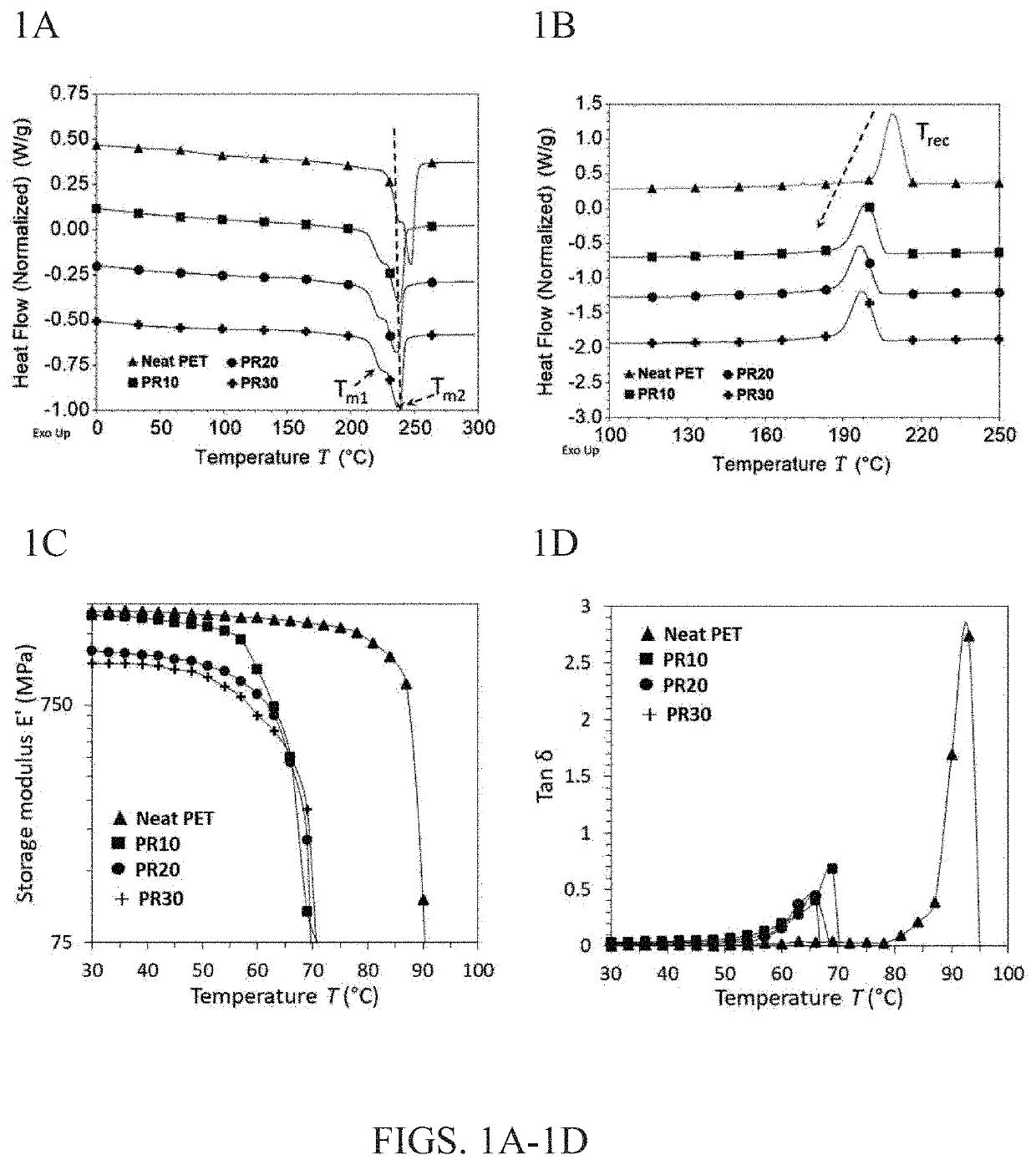
Figure 1 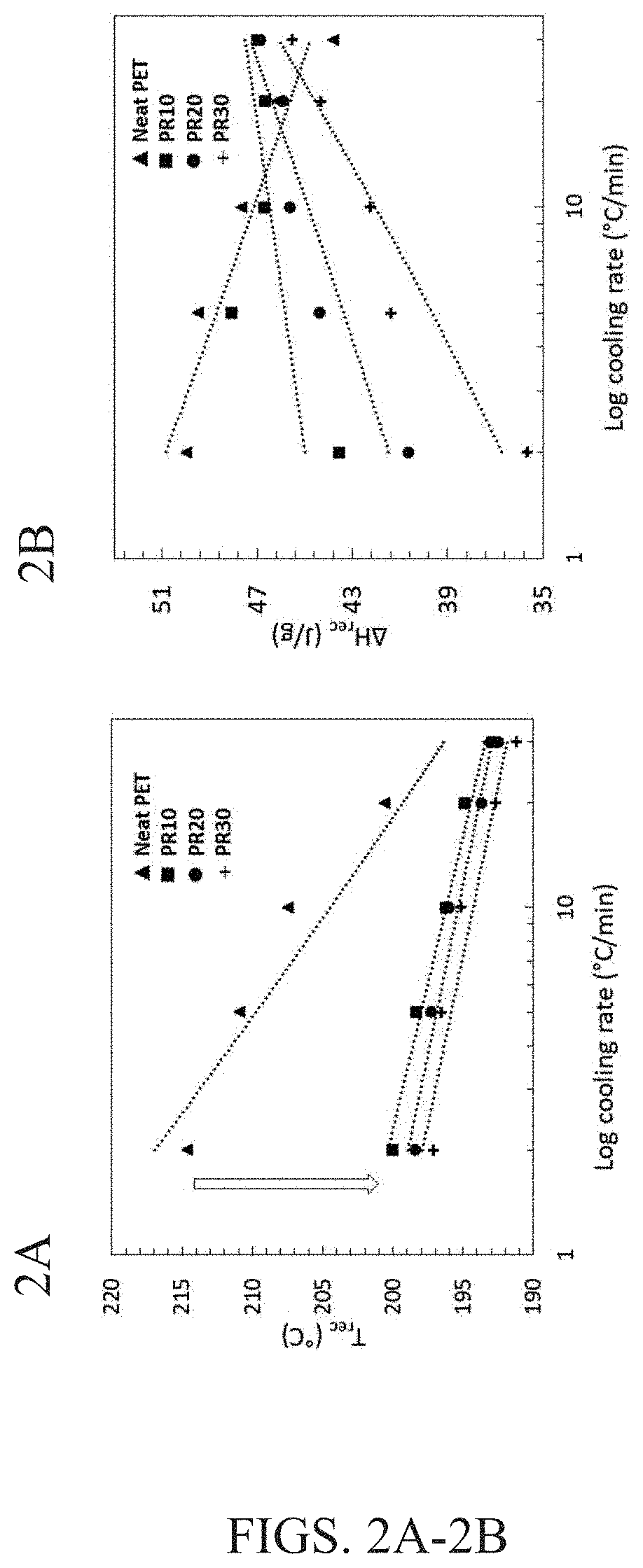
Figure 2 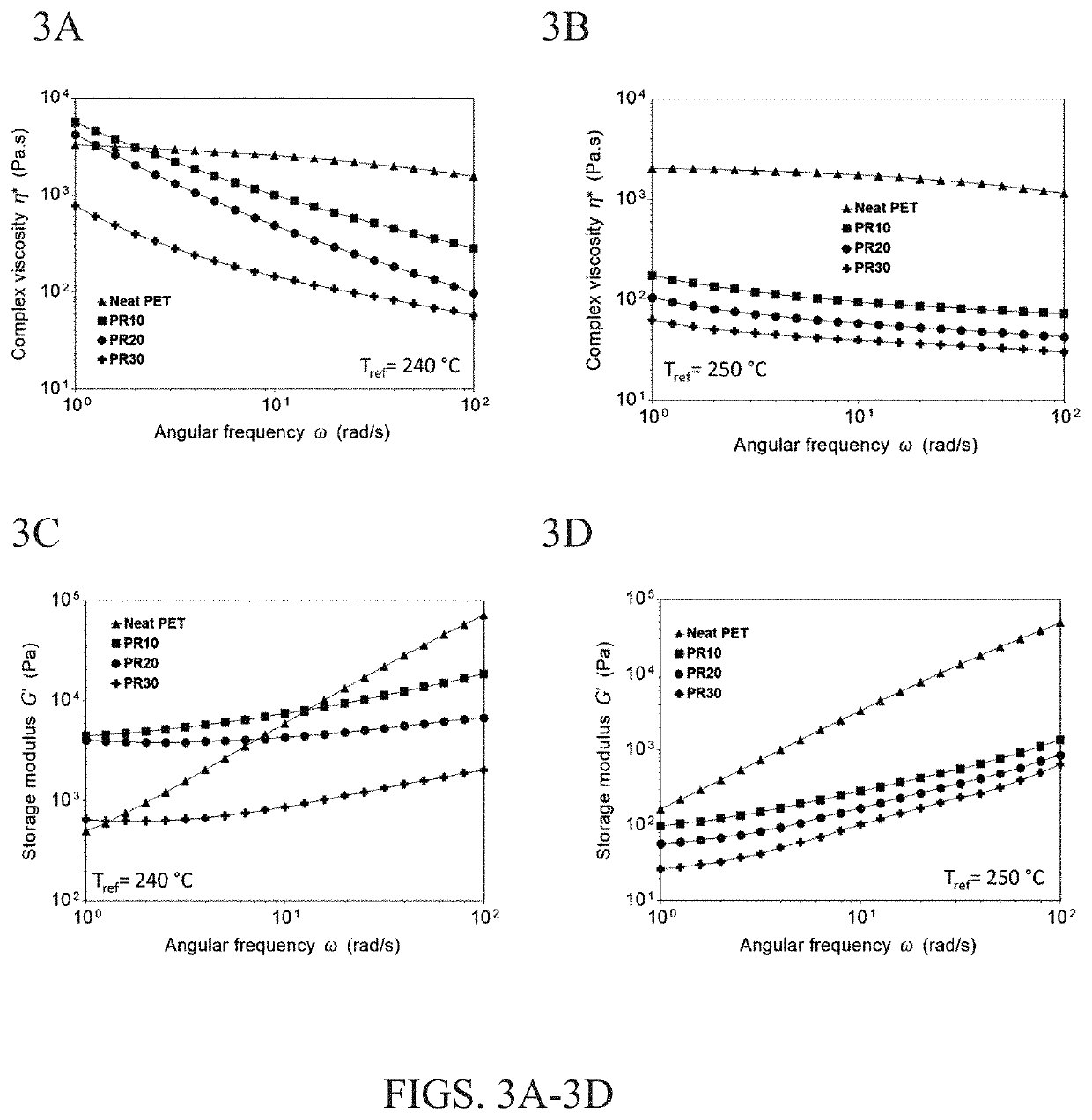
Figure 3
Abstract
Description
CROSS REFERENCE TO RELATED APPLICATIONS
[0001] The present application claims benefit of U.S. Provisional Application No. 62 / 703,586, filed on Jul. 26, 2018, all of the contents of which are incorporated herein by reference.STATEMENT REGARDING FEDERALLY SPONSORED RESEARCH
[0002] This invention was made with government support under Prime Contract No. DE-AC05-00OR22725 awarded by the U.S. Department of Energy. The government has certain rights in the invention.FIELD OF THE INVENTION
[0003] The present invention relates generally to polymer blend compositions, and more particularly, to polyester blend compositions in which a plasticizer is included.BACKGROUND OF THE INVENTION
[0004] Polyethylene terephthalate (PET) is a semi-crystalline commodity thermoplastic polyester broadly used in the packaging and apparel industries. It is estimated that 389 billion individual PET bottles were produced globally in 2010, and the number is forecasted to grow over the next 5 years (Orset, C., et al., Waste...
Examples
example 1
Materials
[0048]Thermoplastic polyester PET was received from Eastman Chemicals USA. It is scrap from the resin manufacturing facility and supplied as white powder. Melt flow rate (MFR) measured was 55 g / 10 min (2.16 Kg at 280° C.). The PET was dried under vacuum at 130° C. for 8 hours to avoid hydrolytic degradation during melt processing. The tall oil fatty acid (TOFA) was acquired from Westvaco Chemicals, Charleston S.C. It is Westvaco L-5 Tall oil fatty acid (CAS #61790-12-3). The specifications of the TOFA were reported as: Acid number (min 190), rosin acids (max 5%) and color or Gardner (max 7).
Blending of Post-Industrial Polyester and TOFA
[0049]Dried polyester PET and TOFA were melt mixed at 240° C. in a Haake MiniLab co-rotating twin-screw extruder. TOFA was added in 3 different wt. % (10, 20 and 30). The extruder has one zone heated with screws length of 110 mm. The blends were processed at a screw rotation speed of 30 rpm. The extrudates were collected for further analysis....
example 2
[0066]In these experiments, melt-based blending techniques were used to develop sustainable polymer blends of post-manufacturing PET waste and an organosolv lignin, a low-priced natural polymer obtained from biomass. In general, normal processing temperatures (265° C. to 280° C.) of post-manufacturing PET are deemed detrimental for nanoscale dispersion of lignin without thermal degradation of the lignin phase. For this reason, lignin can be thermally treated to remove low molecular weight volatile materials and improve its heat resistance during blending. It also helps to avoid devolatilization that negatively impacts the blend morphology (by creating porosity) and properties. Based on the lesson learned from EXAMPLE 1, a renewable plasticizer-tall oil fatty acid (TOFA) that is essentially oleic acid enriched oil—at 10 wt. % relative to PET was added to help soften PET chains and to reduce its melt-processing temperatures by 20° C. TOFA is another co-product (apart from lignin) of t...