
Tissue sensor
Patent Information
- Authority / Receiving Office
- US · United States
- Current Assignee / Owner
- Publication Date
- 2003-01-16
- Estimated Expiration
- Not applicable · inactive patent
Smart Images
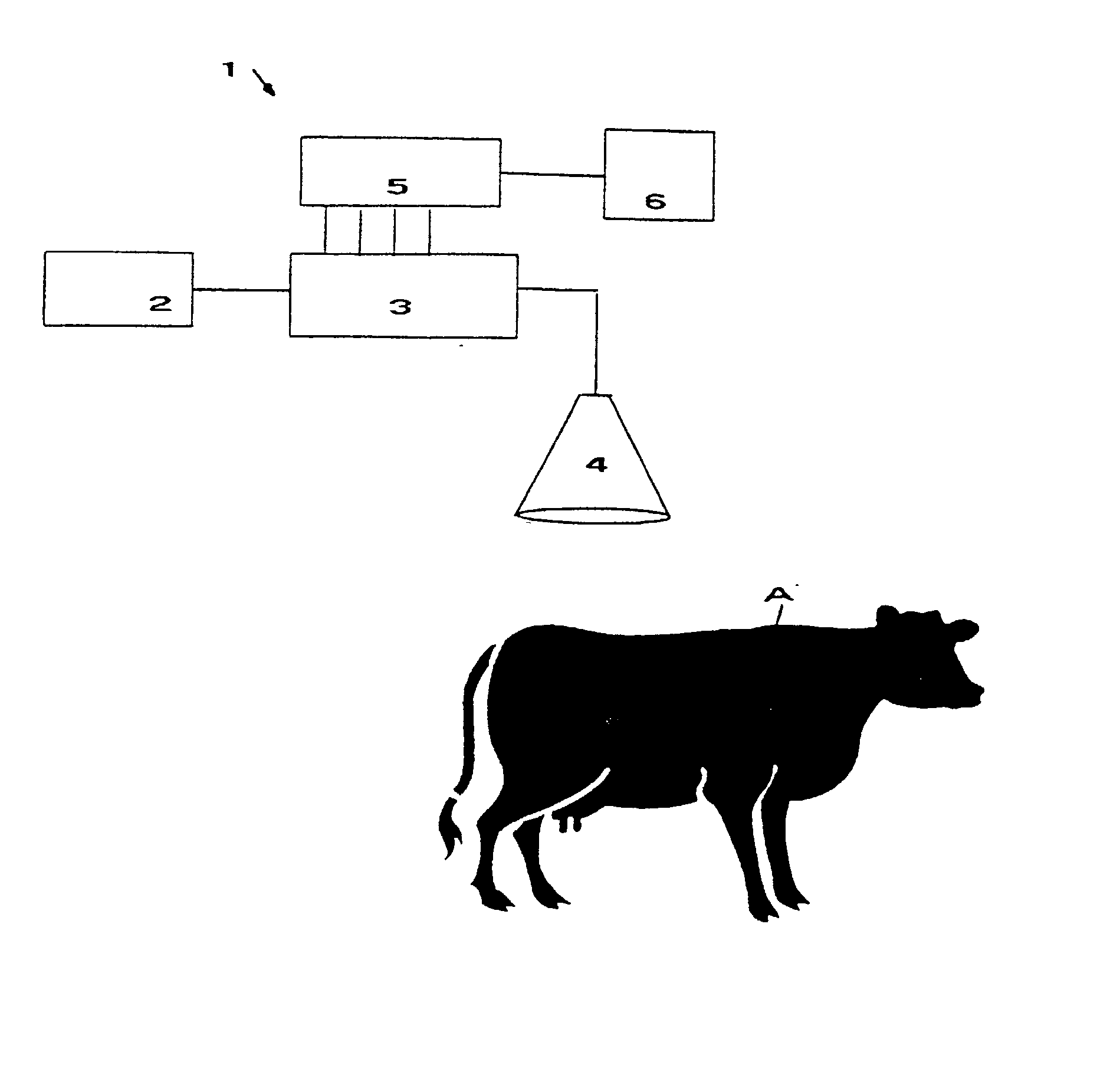
Figure 1 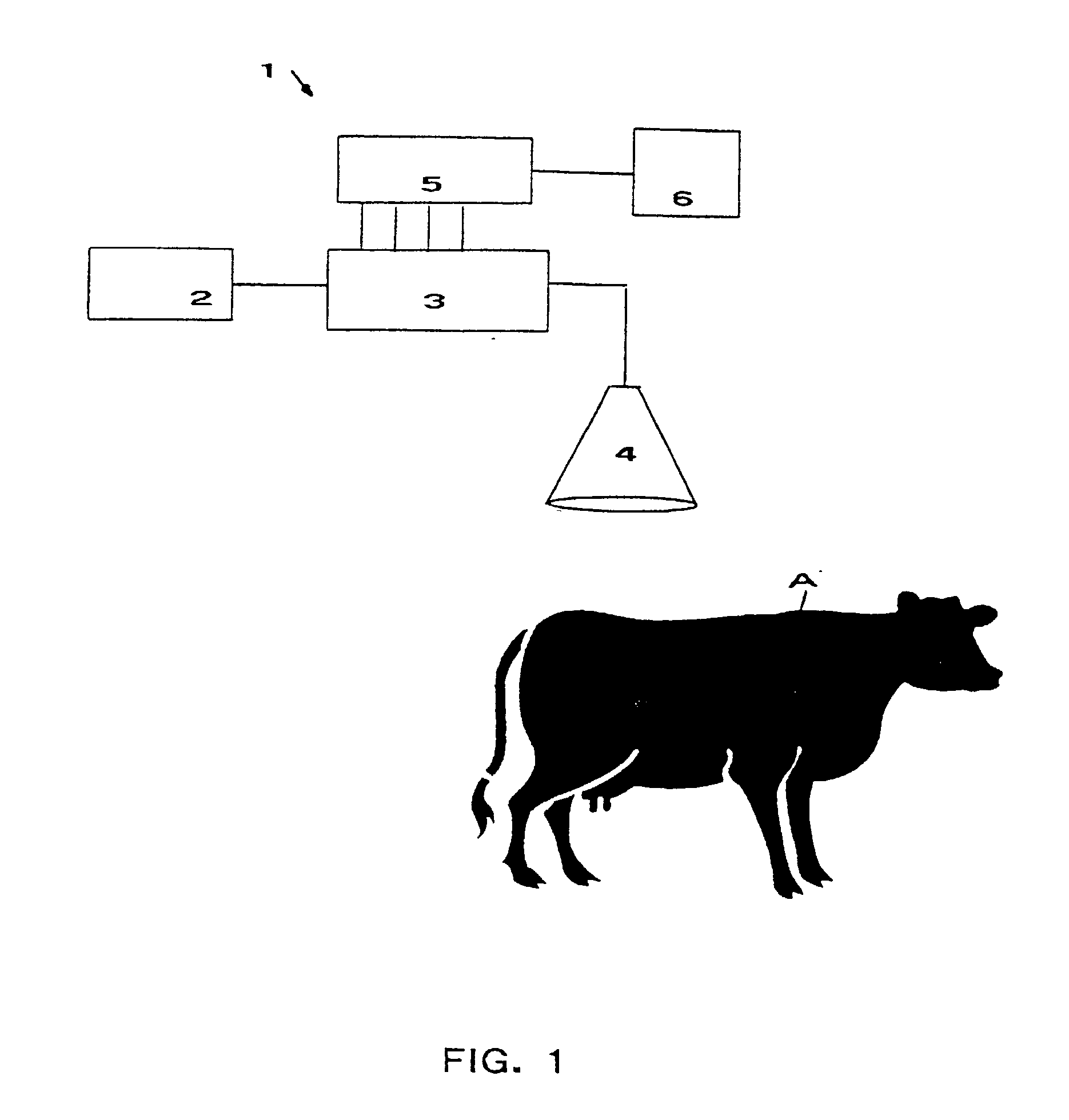
Figure 2 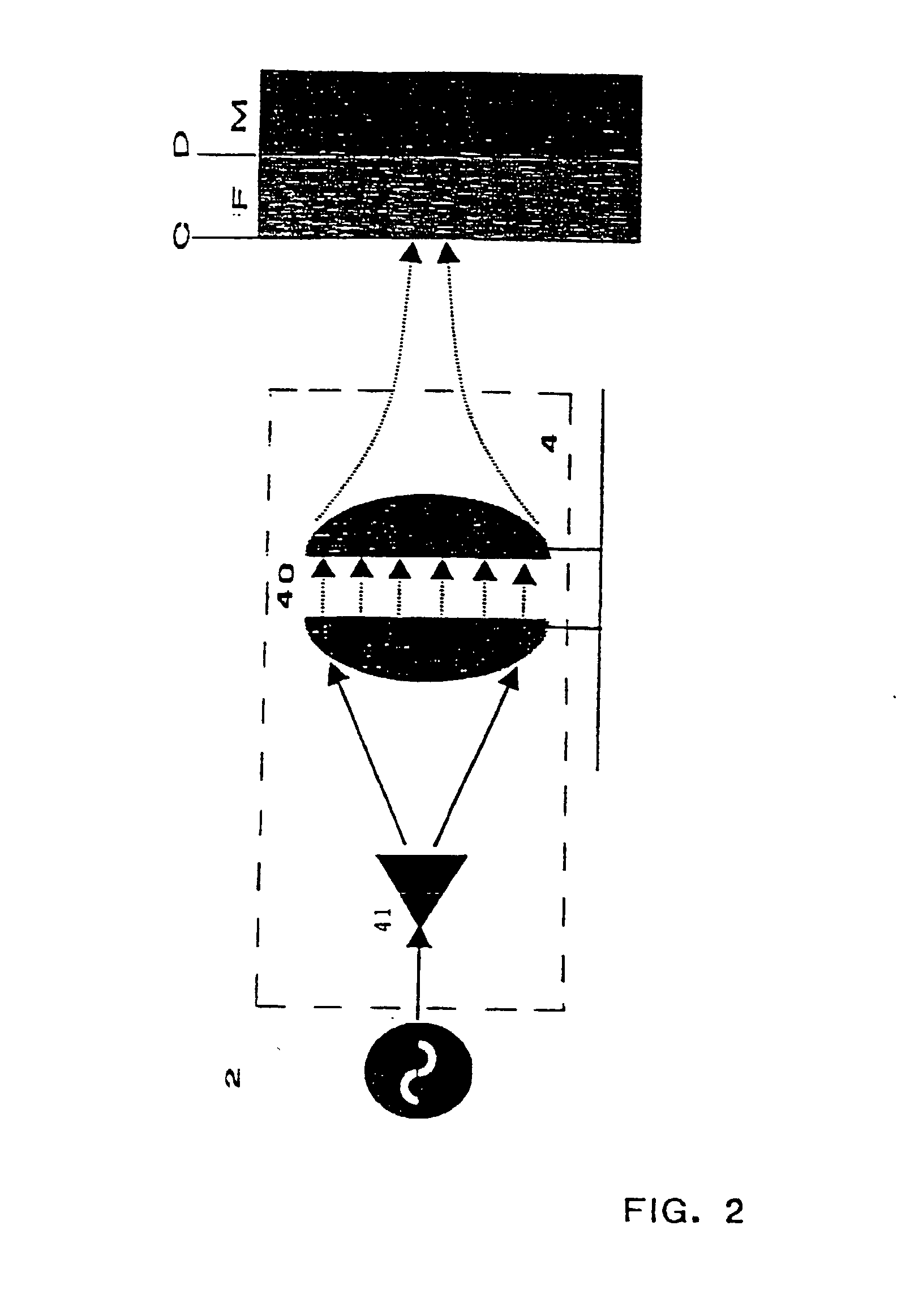
Figure 3
Abstract
Description
[0001] This invention relates to a method and apparatus for determining the properties of animal tissue and in particular, but not exclusively to a method and apparatus of determining the thickness of a layer of fat on meat.
[0002] The meat industry is becoming increasingly automated with the goal of becoming more efficient. Automated accurate measurement of the properties of animal tissue is therefore important to ensure efficient operation.
[0003] In particular, the accurate measurement of the composition and structure of meat carcasses, including fat depth, bone location and muscle thickness, is typically required. The measurement process is preferably non-contact to allow easier and faster measurement and assist in avoiding problems with contamination and cleaning.
[0004] Electromagnetic sensors, in particular microwave sensors have been used to detect the properties of animal tissue. Typical problems associated with the use of microwave energy include the need to focus the energy ...
Examples
Embodiment Construction
[0045] Referring first to FIG. 1, a block diagram of a sensor 1, according to one aspect of the invention is shown. An animal carcass A, represented in FIG. 1 by a cow, which is to be measured to ascertain the depth of the fat layer F (see FIG. 2) is positioned near the sensor 1.
[0046] The sensor includes a microwave source 2 to generate microwave signals and communicate them to a sixport reflectometer 3 through a waveguide. The sixport reflectometer 3 communicates the microwave signals to a focussing antenna 4, which focuses the microwave signals onto a portion of the animal tissue.
[0047] Traditionally, the microwave source 2 would be used to generate a relatively wideband signal and the reflected energy would be analysed using Fourier Transform techniques. However, to reduce the effects of spurious reflections, provide a high resolution measurement and minimise the computational burden and associated cost and complexity, the present invention uses three discrete narrow-band signal...