
Macrolide analogs and methods for identifying same
a technology of macrolide and analogs, applied in the field of macrolide analogs and methods for identifying same, can solve the problems of hampered therapeutic use of these respective actin-capable proteins, inability to identify and rationally design macrolide functional derivatives,
Patent Information
- Authority / Receiving Office
- US · United States
- Patent Type
- Applications(United States)
- Current Assignee / Owner
- Publication Date
- 2004-12-23
- Estimated Expiration
- Not applicable · inactive patent
Smart Images
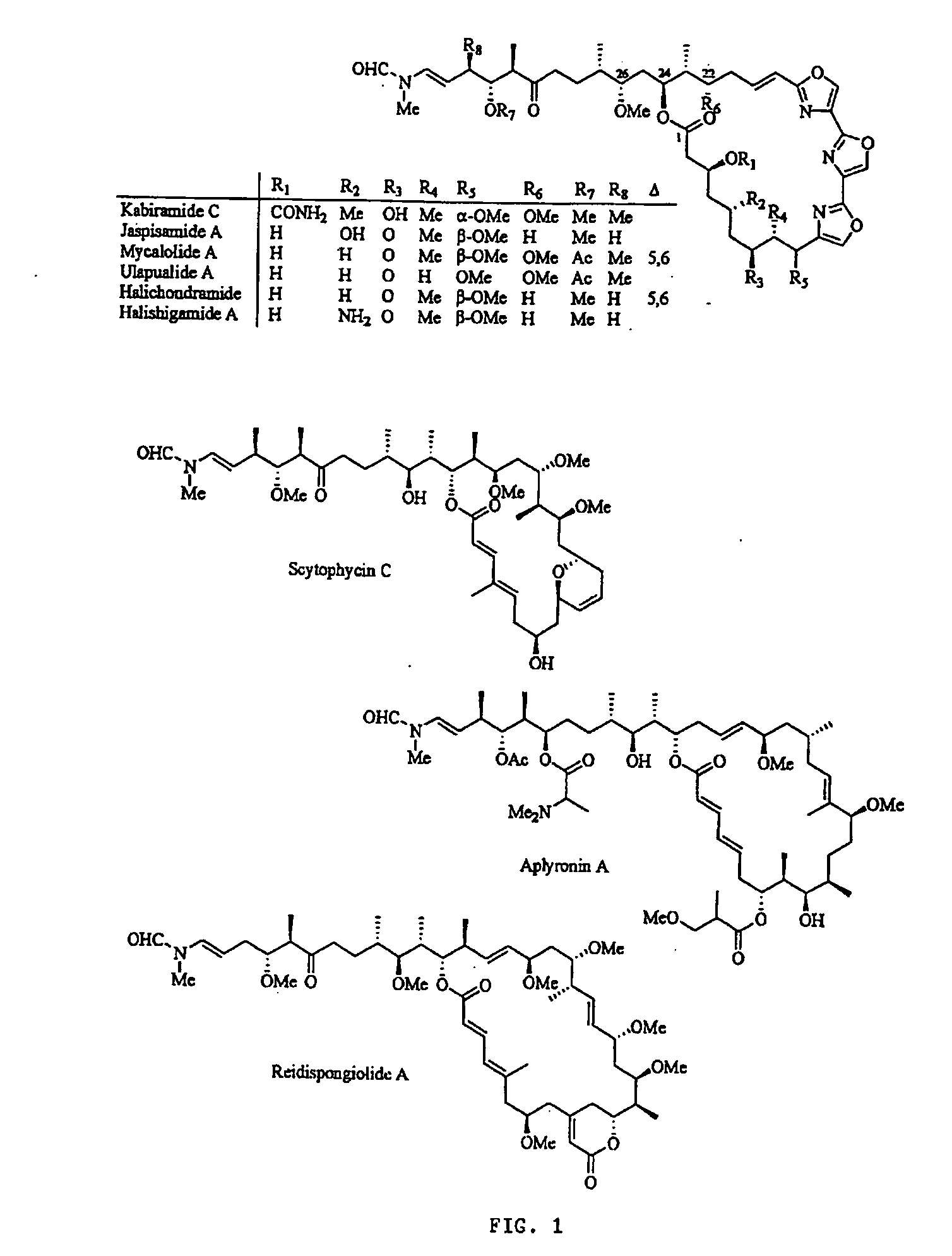
Figure 1 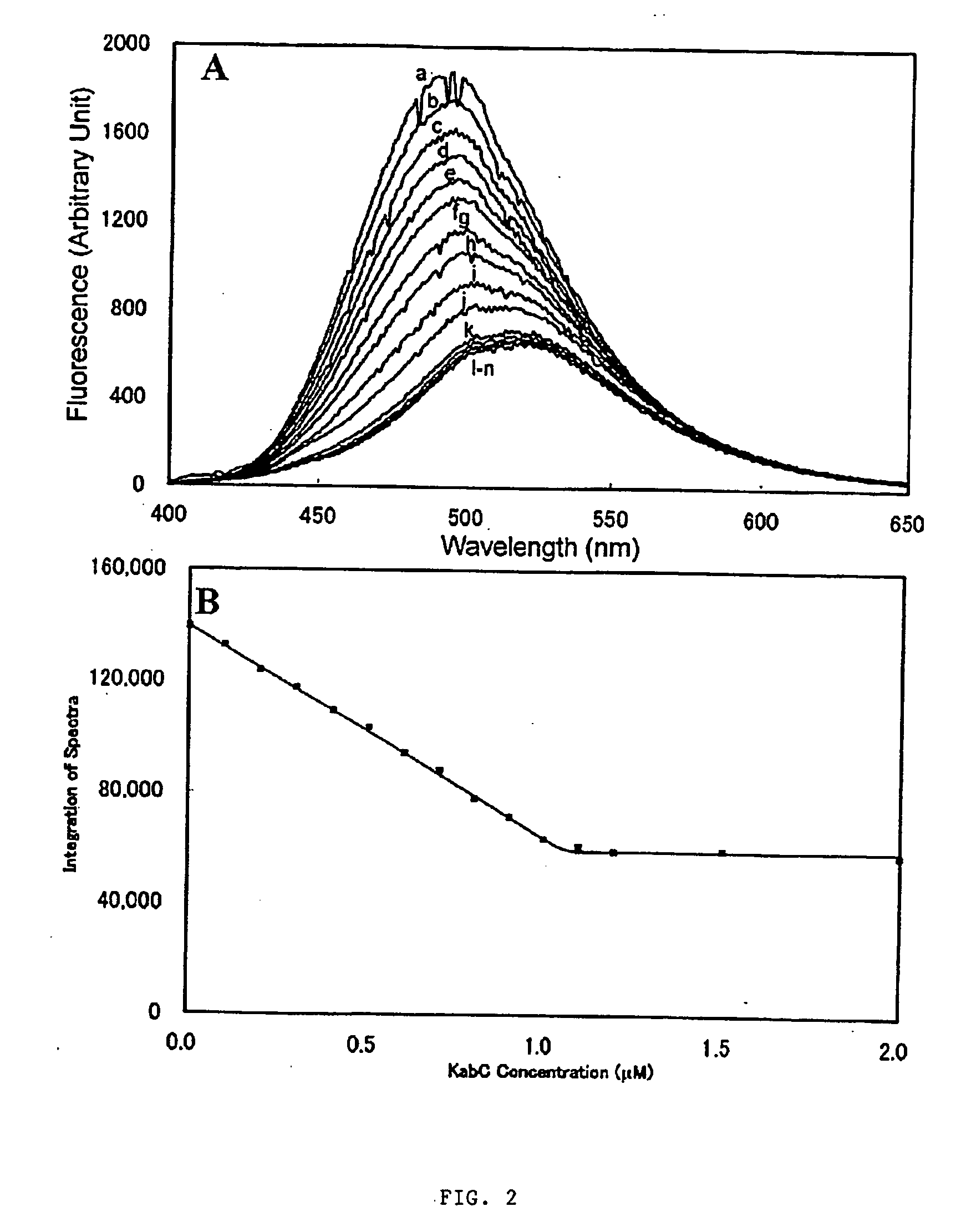
Figure 2 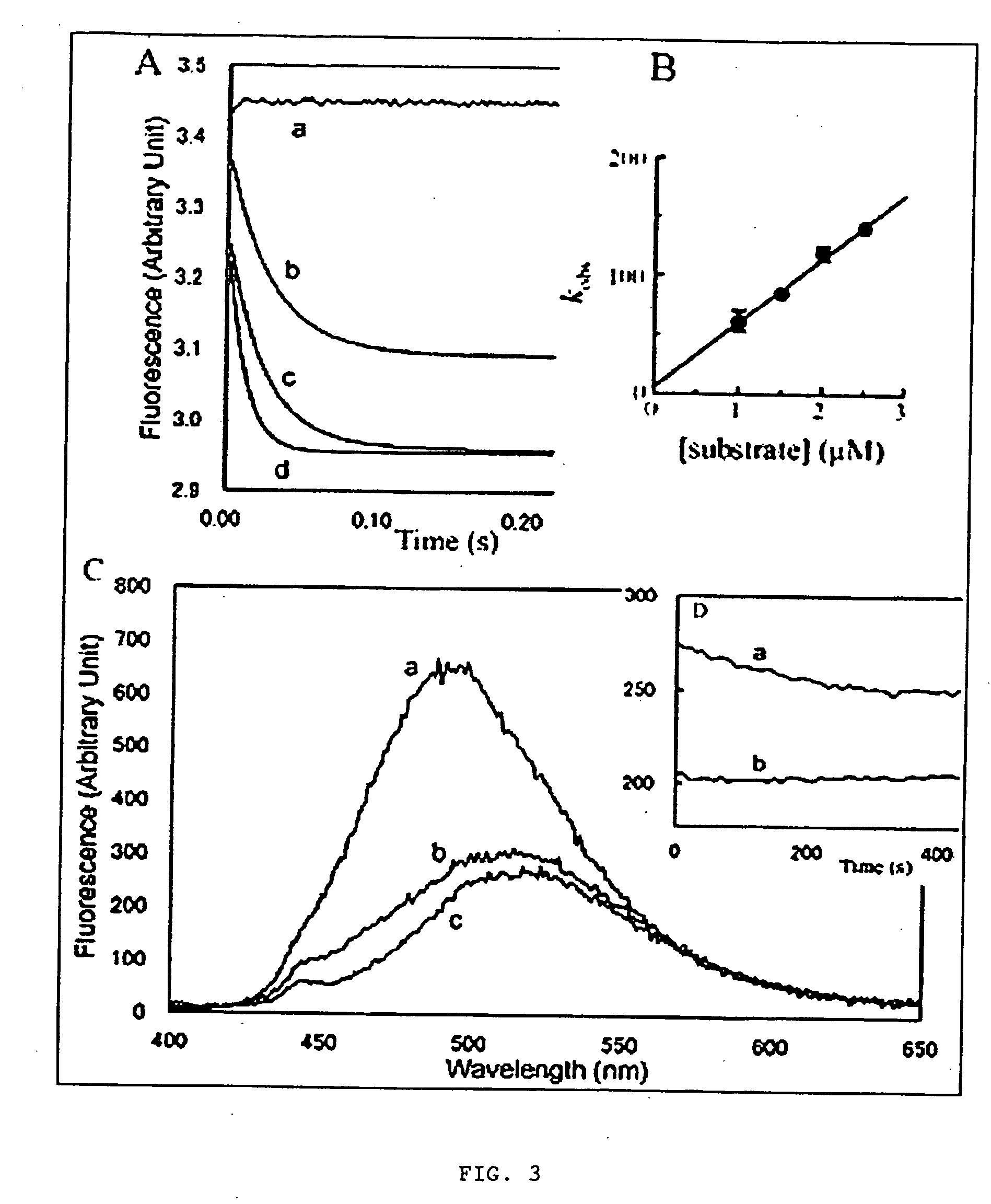
Figure 3
Abstract
Description
CROSS REFERENCE TO A RELATED APPLICATION
[0001] The present application seeks priority from U.S. Provisional Application No. 60 / 479,770, filed on Jun. 19, 2003, which is incorporated by reference in its entirety.
[0002] This invention relates generally to inhibitors of actin filament dynamics useful in treating actin-related diseases or injuries. In particular, this invention is directed to macrolide analogs and methods for identifying macrolide analogs capable of unregulated inhibition of actin filament dynamics.
[0003] The assembly of actin filaments represents a dynamic biological process essential for an organism's survival. For example, actin filament dynamics provide the foundation for cellular motility necessary in the wound healing response and the neutralization of bacteria by neutrophils (Bamburg and Wiggin, 2002; Asch et al, 1996). Actin filament dynamics have further been identified as playing a key role in various pathologies including tumor metastasis, cystic fibrosis, or...
Examples
Embodiment Construction
[0060] INTRODUCTION: The molecular regulation of cell protrusion is a complex process involving as many as 100 different proteins and signaling molecules. In order to understand how the activities of these biomolecules are temporally and spatially regulated within the lamellipodium, it is necessary to use molecular tools and techniques to specifically perturb and monitor interactions related to G-actin and actin filaments. One approach, developed in the inventor's laboratory, uses light directed activation of caged ABPs to rapidly turn on the activity of specific ABPs at defined locations within a motile cell (Marriott et al, 1992; Roy et al, 2001; Marriott et al, 2003). A second approach employs pharmacological probes to specifically inhibit the activity or interactions of specific proteins within the actin cytoskeleton (Forscher and Smith, 1988).
[0061] In this disclosure, the present inventor establishes the actin-binding and inhibitory mechanisms for a family of cytotoxic, marine...