
Method for purifying (meth)acrylic acid
a technology of acrylic acid and purification method, which is applied in the preparation of carboxylic compounds, evaporation, and separation processes, etc., can solve the problems of reducing the polymerization degree or coloring of the polymerized product, not easy to remove by distillation impurities, and removal of maleic acid and/or maleic anhydrid
Patent Information
- Authority / Receiving Office
- US · United States
- Patent Type
- Applications(United States)
- Current Assignee / Owner
- Publication Date
- 2005-08-11
- Estimated Expiration
- Not applicable · inactive patent
Smart Images
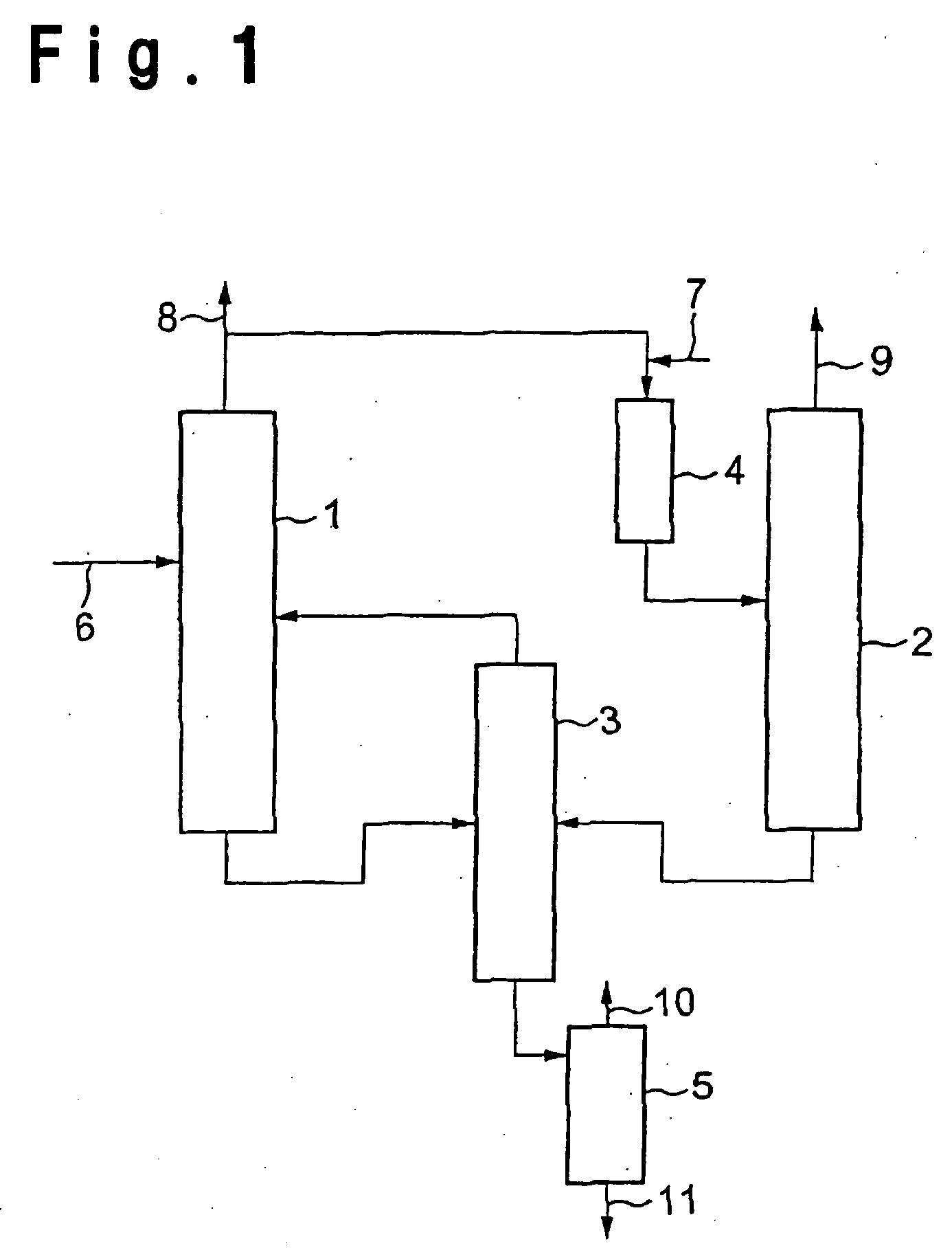
Figure 1 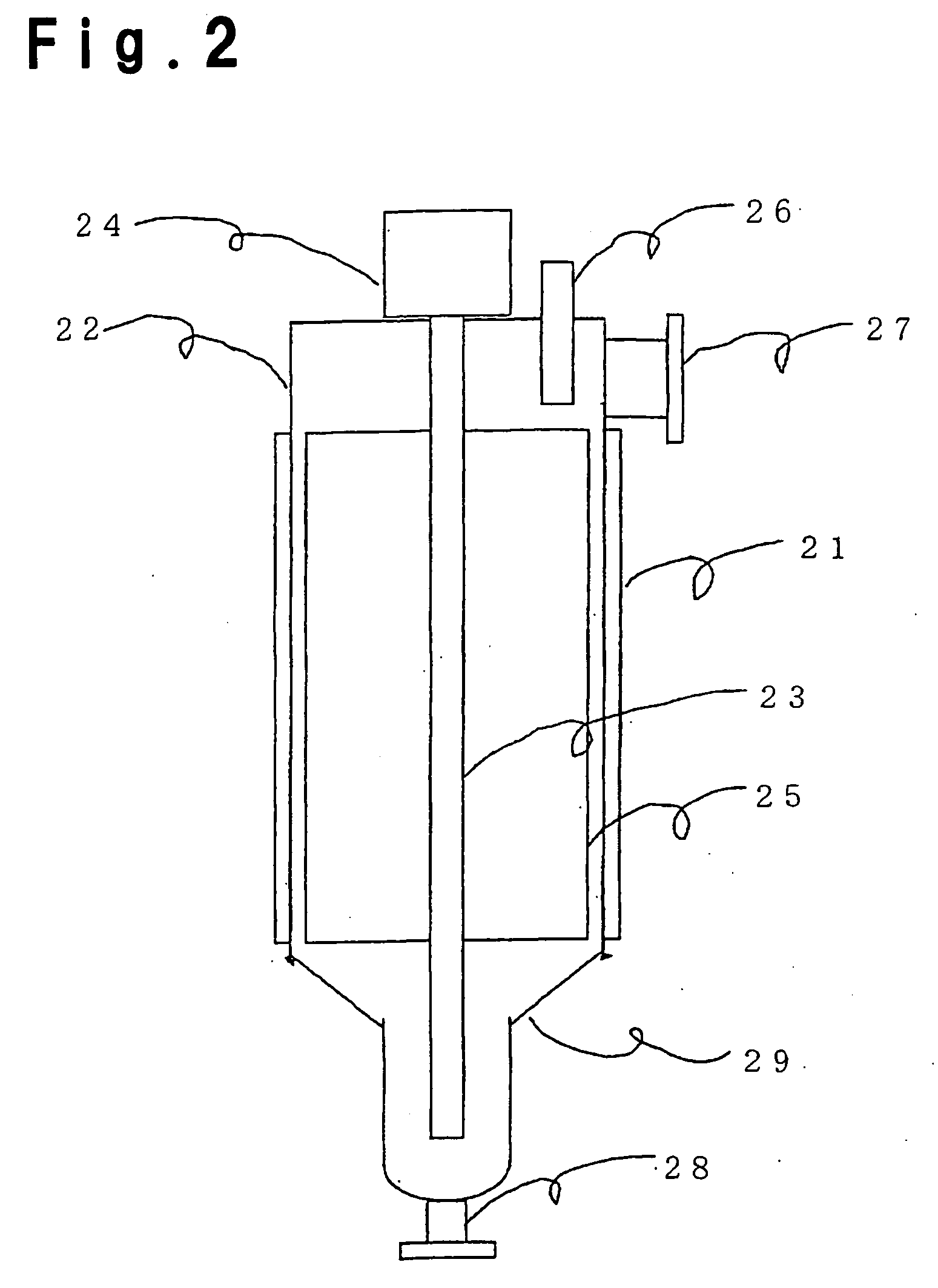
Figure 2 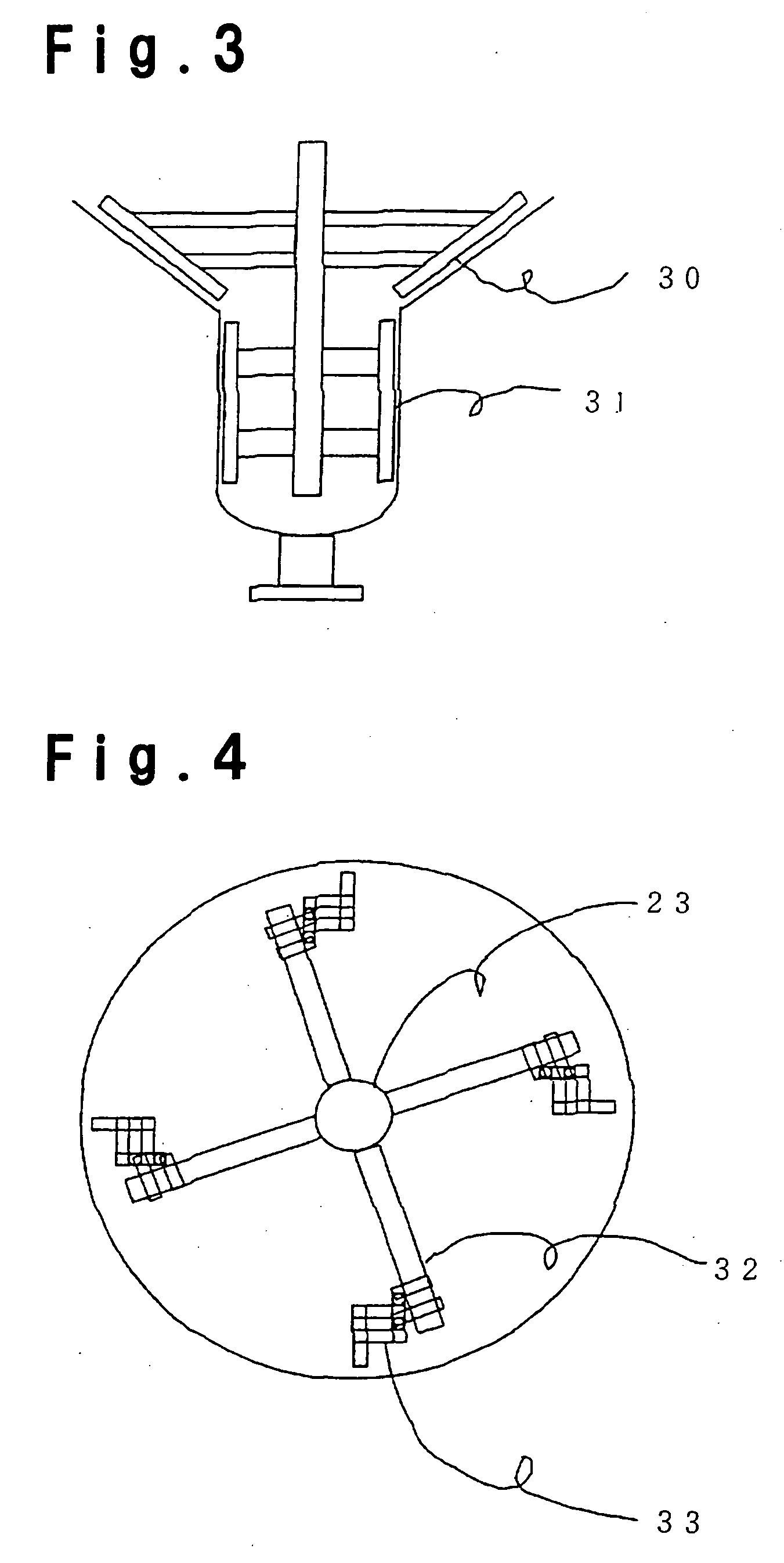
Figure 3
Abstract
Description
BACKGROUND OF THE INVENTION
[0001] 1. Field of the Invention
[0002] The present invention relates to a method for purifying (meth)acrylic acid, particularly to a method for purifying a crude (meth)acrylic acid obtained by vapor phase catalytic oxidation, by distillation to obtain highly pure (meth)acrylic acid which is useful for the production of a highly water absorptive resin and for the production of a (meth)acrylic ester. In this specification, (meth)acrylic acid means acrylic acid or methacrylic acid.
[0003] 2. Discussion of Background
[0004] a. As a method for producing (meth)acrylic acid, a method of hydrolyzing the corresponding nitrile compound may, for example, be mentioned. However, at present, a vapor phase catalytic oxidation method of the corresponding hydrocarbon such as propylene or isobutylene, is mainly employed. Recently, a study has been made also on a vapor phase catalytic oxidation method using an inexpensive corresponding alkane as the starting material inste...
Examples
embodiment a
[0102] In the present invention, the vapor phase catalytic oxidation and the subsequent preliminary purification may be carried out by conventional methods. For example, in the case of acrylic acid, a method for obtaining acrylic acid by a one step oxidation method of propane by means of a Mo—V—Te double oxide catalyst or a Mo—V—Sb double oxide catalyst, or a one step oxidation method of oxidizing propylene directly to acrylic acid, and a two step oxidation method of converting propylene to acrolein and then oxidizing acrolein to acrylic acid, are known, and any one of the methods may be employed. Further, acrylic acid formed by the vapor phase catalytic oxidation is usually absorbed in water to form an aqueous acrylic acid solution, and recovery of crude acrylic acid from this aqueous acrylic acid solution may also be carried out by a conventional method. For example, a method may be employed wherein after dehydration by azeotropic distillation, distillation is further carried out ...
embodiment b
[0109] In order to solve the conventional problems in continuous production of high purity acrylic acid on an industrial scale, the present inventors have conducted extensive studies on the relation, etc. of the aldehyde-removing agent, various additives and their amounts, formation of sludge and its thermal stability, and the amounts of impurities remaining in purified acrylic acid, and as a result, have found the following facts. Namely, usually, when crude acrylic acid having a concentration of maleic acids being at least 2000 ppm, was used and reacted with a hydrazine, solid would precipitate, and if such a starting material was fed to the side of a distillation column, continuous distillation was impossible due to clogging by the precipitated solid. Whereas, when the starting material is reacted with hydrazine prior to feeding it to the side of the distillation column, followed by heat treatment at a temperature lower than 80° C., it becomes possible to suppress re-formation of...
embodiment c
[0128] The (meth)acrylic acid to be used here, is one obtained by vapor phase catalytic oxidation of propane, propylene and / or acrolein, or isobutylene and / or methacrolein. For example, it may be acrylic acid which is obtained by vapor phase oxidation of propane by means of a Mo—V—Te double oxide catalyst or a Mo—V—Sb double oxide catalyst, or acrylic acid or methacrylic acid which is obtained by vapor phase catalytic oxidation of propylene or isobutylene in the presence of a Mo-Bi double oxide catalyst to form acrolein or methacrolein, which is further subjected to vapor phase catalytic oxidation in the presence of a Mo—V double oxide catalyst. Here, the preliminary reaction of oxidizing propylene to form mainly acrolein and the subsequent reaction of oxidizing acrolein to form mainly acrylic acid, may be carried out in separate reactors, respectively, or the catalyst for the preliminary reaction and the catalyst for the subsequent reaction may simultaneously be packed into one rea...