
Methods and compositions for the treatment of fibrotic conditions & impaired lung function & to enhance lymphocyte production
a technology for fibrotic conditions and compositions, applied in the direction of angiogenin, peptide/protein ingredients, peptide sources, etc., to achieve the effects of improving and/or normalizing lung function, pulmonary compliance, blood oxygenation, and/or ph
Patent Information
- Authority / Receiving Office
- US · United States
- Patent Type
- Applications(United States)
- Current Assignee / Owner
- Publication Date
- 2006-02-02
- Estimated Expiration
- Not applicable · inactive patent
Smart Images
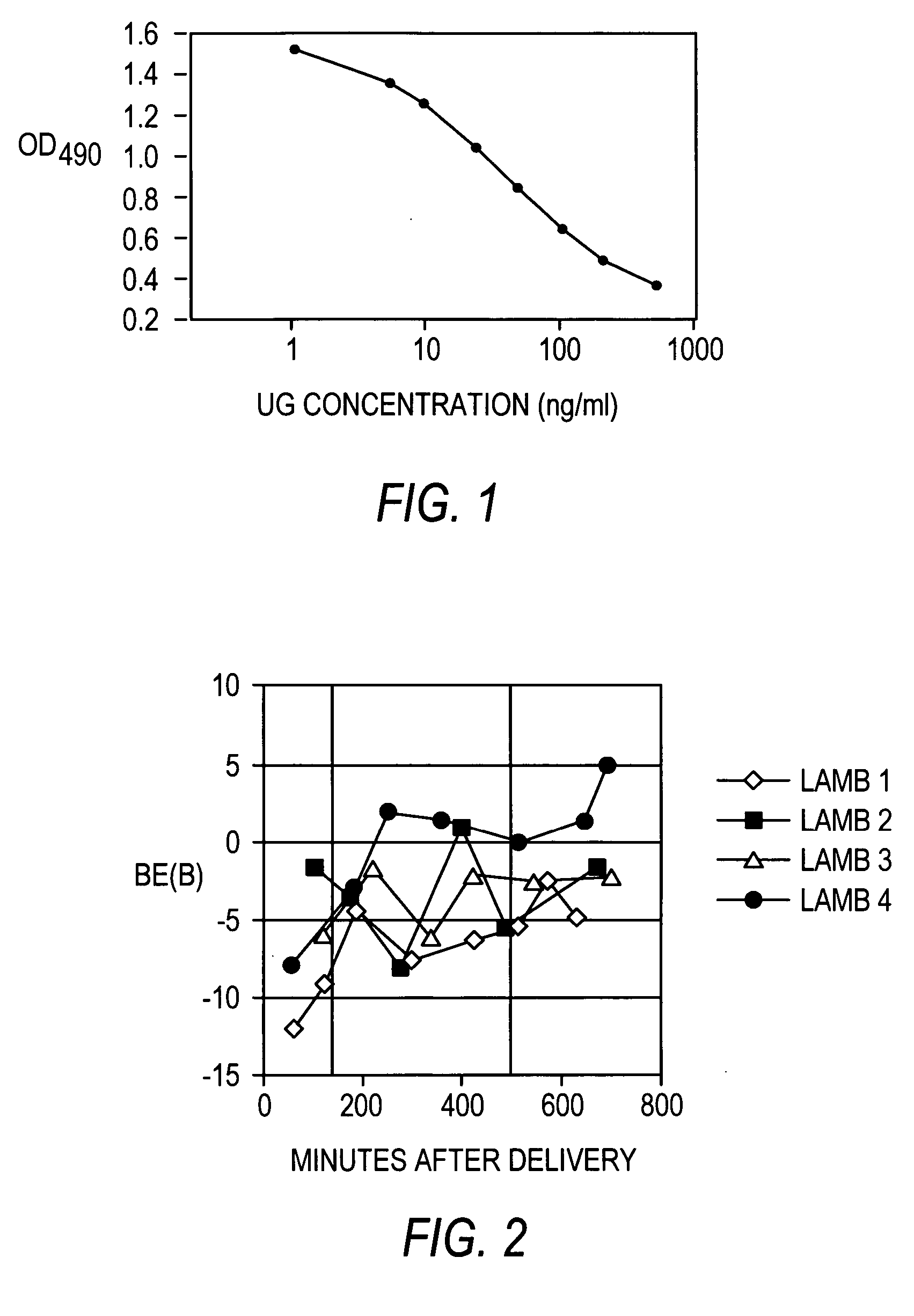
Figure 1 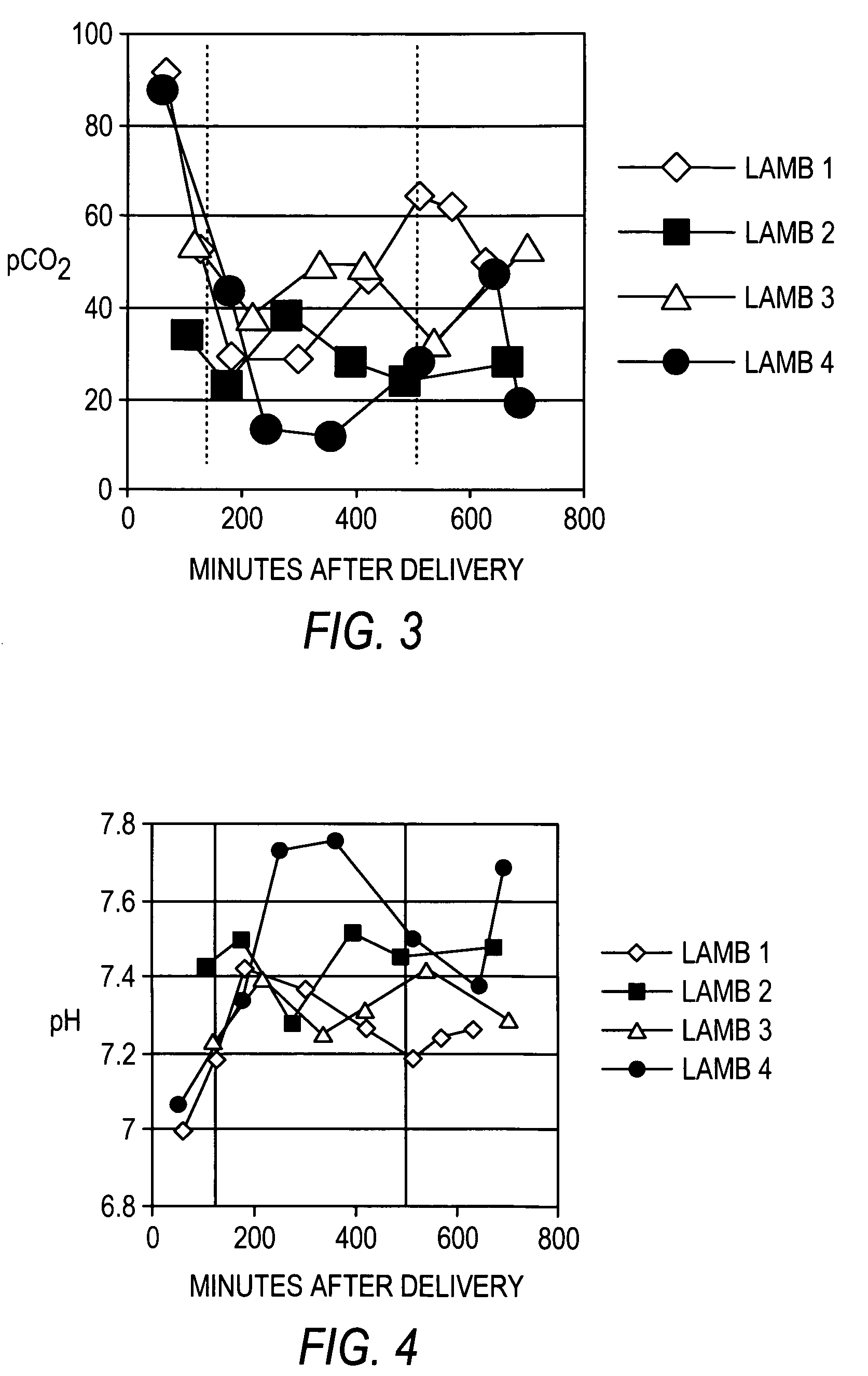
Figure 2 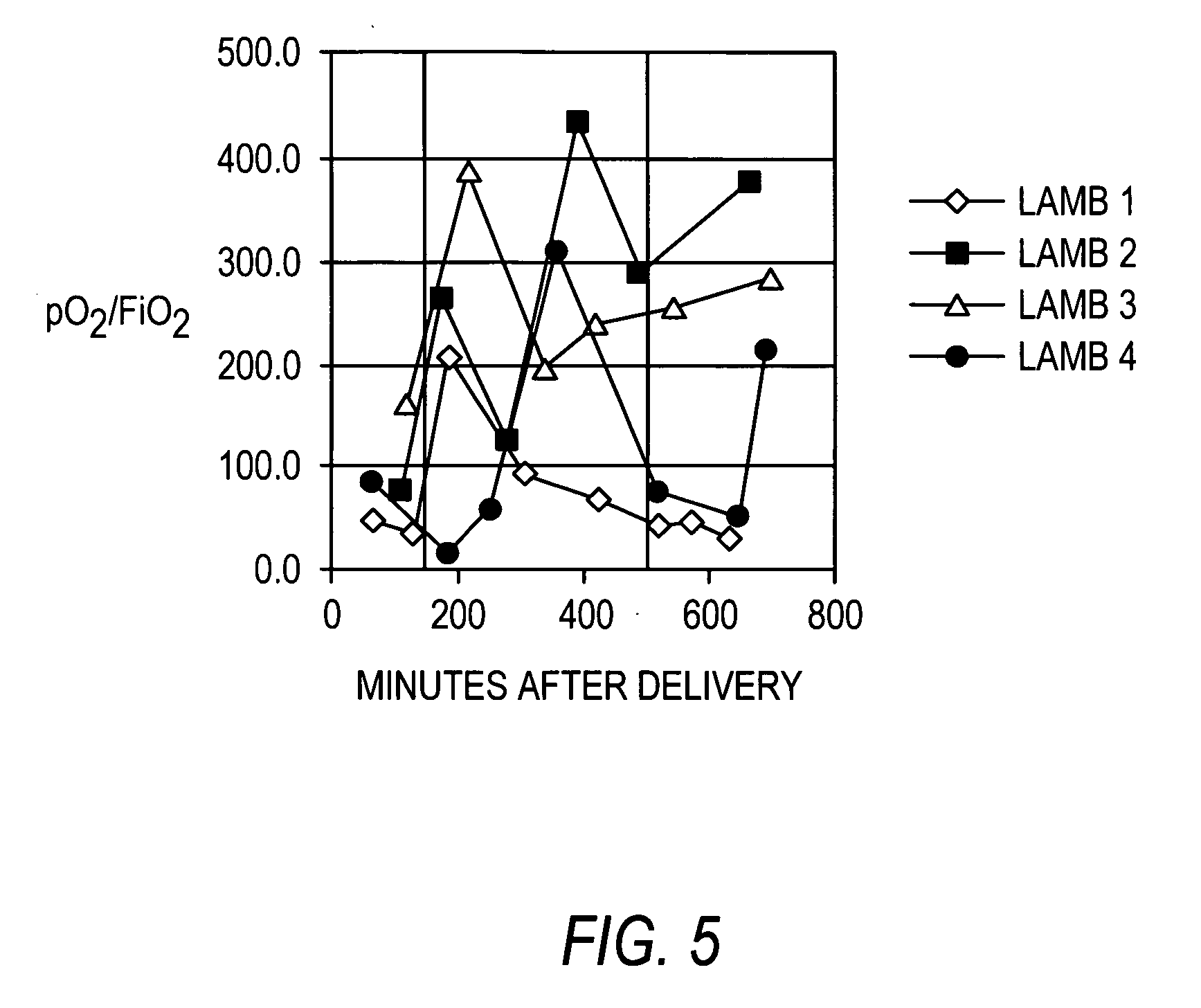
Figure 3
Abstract
Description
CROSS-REFERENCE TO RELATED APPLICATIONS
[0001] This application is a continuation-in-part of the following applications: U.S. application Ser. No. 09 / 549,926, filed Apr. 14, 2000, which is a continuation-in-part of U.S. application Ser. No. 09 / 120,264, filed Jul. 21, 1998, which is a continuation-in-part of U.S. application Ser. No. 09 / 087,210, filed May 28, 1998, which is a continuation-in-part of U.S. application Ser. No. 08 / 864,357, filed May 28, 1997. The disclosures of each of the aforementioned applications are incorporated herein by reference.FIELD OF THE INVENTION
[0002] The present invention relates to the use of human uteroglobin or recombinant human uteroglobin in the treatment of fibrotic conditions, to increase lymphocyte production in vivo, to improve and / or normalize lung function, pulmonary compliance, blood oxygenation, and blood pH to inhibit inflammatory processes, to stimulate or inhibit pro-inflammatory and immune cells, and to to inhibit migration of vascular e...
Examples
example 1
[0142] Recombinant human uteroglobin was administered to several mammalian species via several routes of administration to determine the safety and biological activity of the protein. The protein was given to rats in order to assess pharmacokinetics, bioavailability, and tissue distribution when administered intravenously, intranasally, and by stomach gavage. It was also given intratracheally to very young animals of three large animal species, including premature baboons, premature lambs and newborn piglets. The biological activity of recombinant human uteroglobin and its effect on various aspects of lung function was evaluated in these animal studies. The concentrations of recombinant human uteroglobin in all species were determined using an ELISA assay that is specific for human uteroglobin.
[0143] a. Purification of Recombinant Human Uteroglobin
[0144] Recombinant human uteroglobin was cloned and expressed by a method similar to that described in copending U.S. application Ser. ...
example 2
[0200] Binding of UG to Fibronectin
[0201] The demonstration of the binding interaction between human fibronectin and recombinant human uteroglobin prompted the development of a non-radioactive assay for this interaction that could be used as a measure of recombinant human uteroglobin biological activity. Therefore, two ELISA-based assay formats for the uteroglobin-fibronectin binding interaction were tested, as shown in FIGS. 17A-17B. Briefly, in the first of these assay methods recombinant human uteroglobin was used to coat the wells of a microtiter dish, which was followed by fibronectin binding and detection of the bound fibronectin with an anti-fibronectin monoclonal antibody (Life Technologies, Inc.; product #12062-014). In the second assay, purified human fibronectin was used to coat the wells of a microtiter dish, followed by recombinant human uteroglobin binding and detection of the bound recombinant human uteroglobin with an anti-uteroglobin antibody (Dako, USA). Both form...
example 3
[0218] Inhibition of Cell Adhesion to Fibronectin by rhUG
[0219] The discovery that recombinant human uteroglobin binds to human fibronectin in solution has profound implications (See U.S. Ser. No. 08 / 864,357). In addition, the ability of recombinant human uteroglobin to prevent fibronectin aggregation in vitro, fibronectin-mediated fibrillogenesis in cell culture, and renal fibronectin deposition in vivo, demonstrates the important physiological role of endogenous uteroglobin in all mammals. Fibronectin is one of the most well characterized mediators of cell adhesion, and is involved in several physiologic processes, including platelet aggregation (thrombosis), wound healing, fibrosis, inflammatory cell and fibroblast adhesion, tumor metastases, and extracellular basement membrane formation. However, these processes involve the insoluble form of fibronectin, not the soluble form. It would be desirable to prevent the conversion of fibronectin from its soluble form to its insoluble f...