
Leveling device
Patent Information
- Authority / Receiving Office
- US · United States
- Current Assignee / Owner
- Publication Date
- 2006-11-30
- Estimated Expiration
- Not applicable · inactive patent
Smart Images
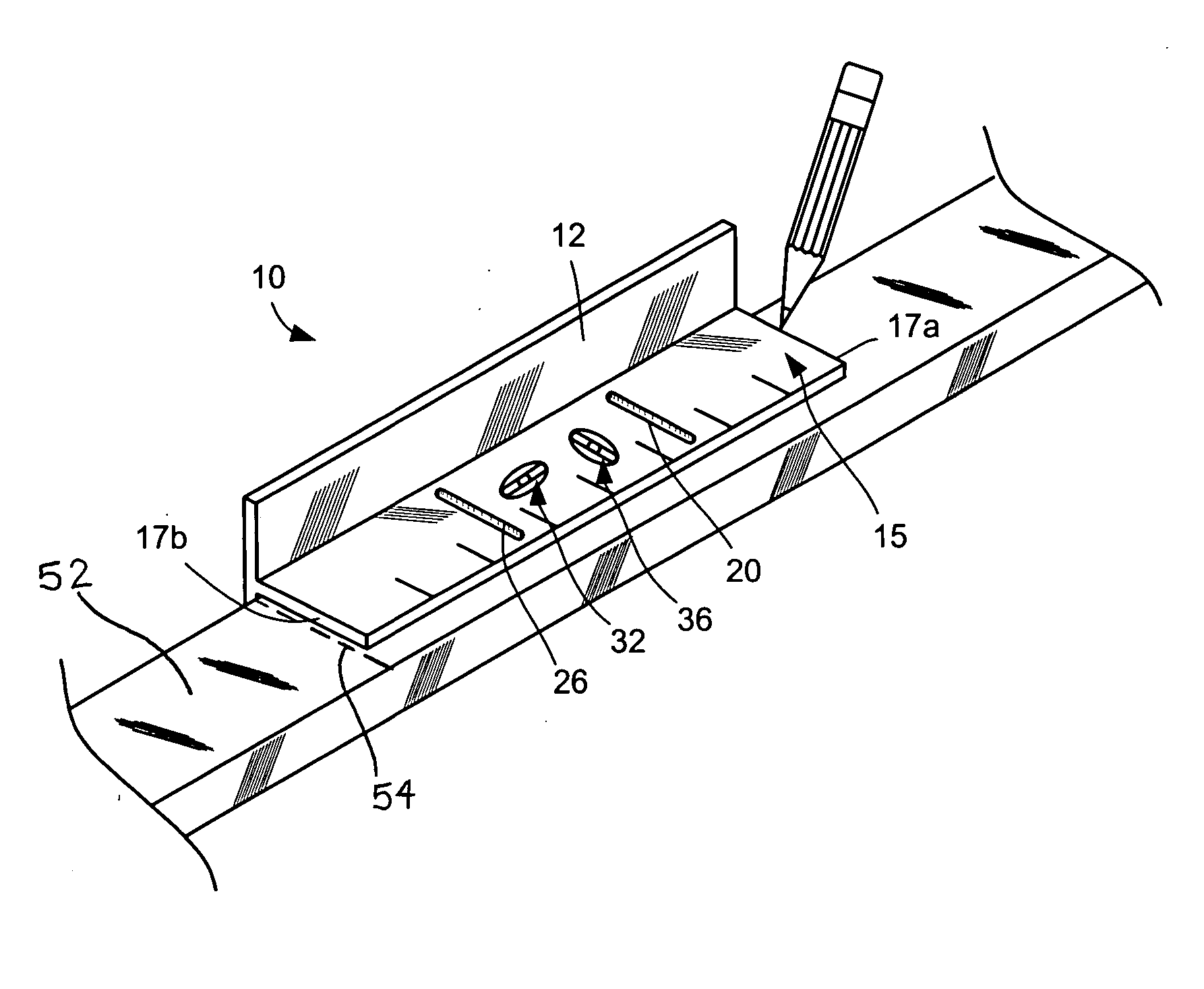
Figure 1 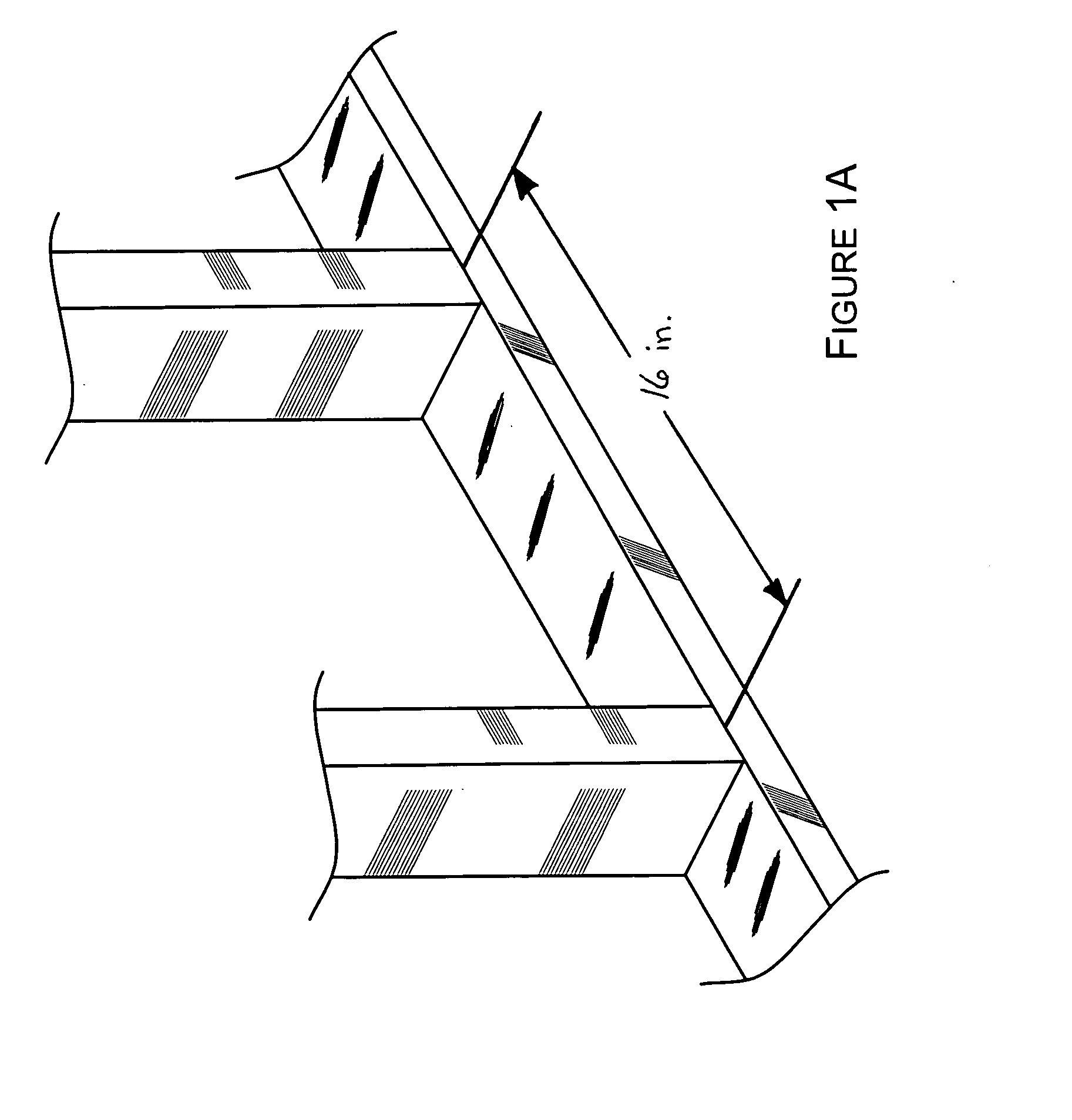
Figure 2 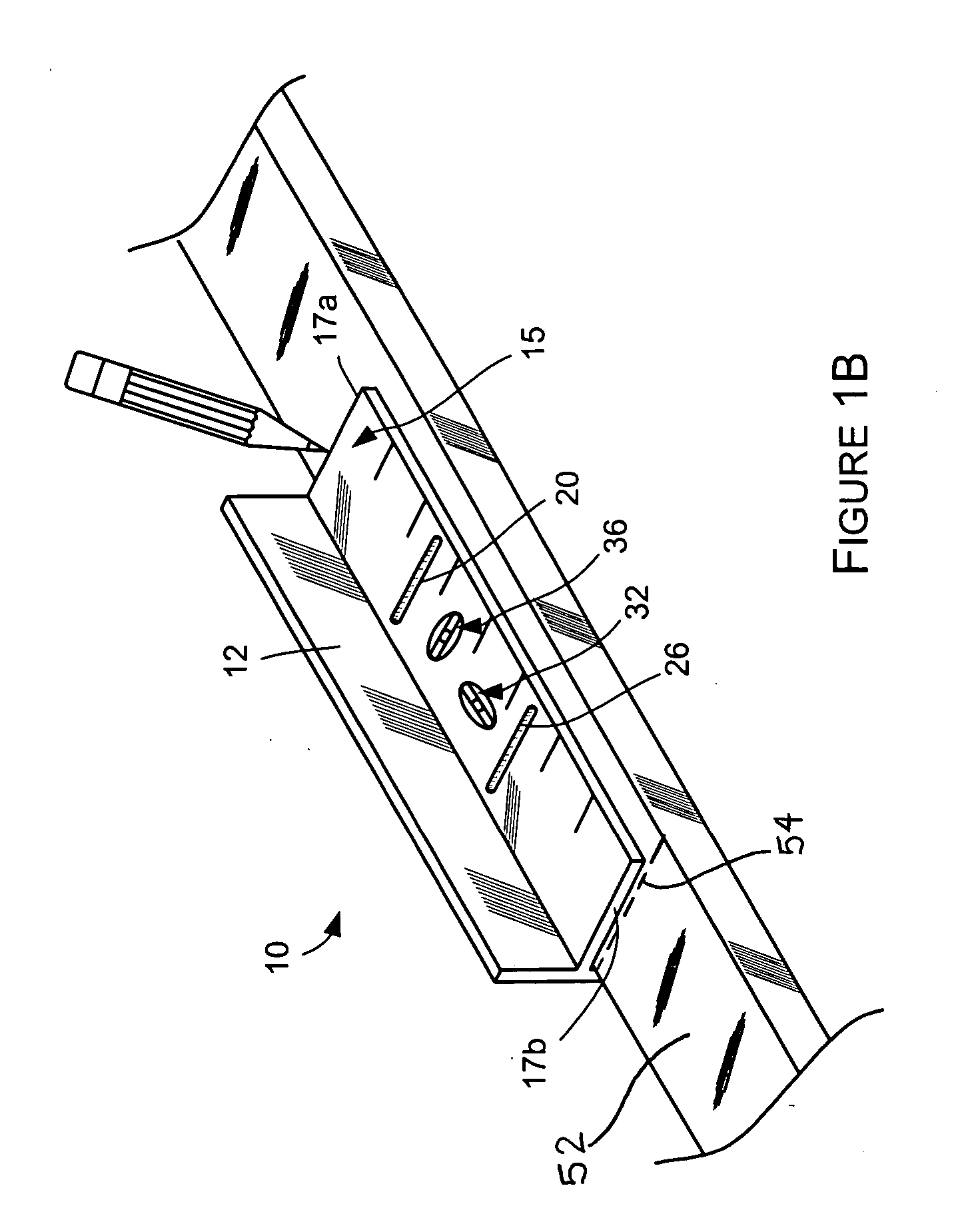
Figure 3
Abstract
Description
CROSS-REFERENCE TO RELATED APPLICATIONS
[0001] This application claims the benefit of U.S. Provisional Application No. 60 / 683,730, filed on May 24, 2005.BACKGROUND OF THE INVENTION
[0002] 1. Field of the Invention
[0003] The present invention is directed generally to a measuring device, and more specifically, to a measuring device for repeatedly performing the same or similar measurements of a predetermined distance.
[0004] 2. Description of Related Art
[0005] Traditionally, when framing a wall or other structure being built, support members commonly referred to as “studs” must be spaced from each other such that their centers are located 16 inches apart, as shown in FIG. 1A. The studs can be load bearing, and provide support for the drywall or other wall covering, which gives the wall a finished appearance. To layout the location of the studs, a measuring device such as a tape measure is commonly used to measure from the center of a stud at one end of the wall along a base plate th...
Examples
Embodiment Construction
[0019] Certain terminology is used herein for convenience only and is not to be taken as a limitation on the present invention. Relative language used herein is best understood with reference to the drawings, in which like numerals are used to identify like or similar items. Further, in the drawings, certain features may be shown in somewhat schematic form.
[0020]FIG. 2 is a schematic illustration of a measuring device for rapidly performing repetitive measurements, such as spacing adjacent framing studs apart 16 inches on center. An example of a framing stud is a piece of lumber sold as a 2 inch×4 inch piece of lumber having any desired length, wherein said piece of lumber is referred to herein as a “stud” and a “2×4.” Although sold as lumber having the dimensions of 2 inches (thickness) by 4 inches (width), 2×4s are not actually 2 inches by 4 inches. When each 2×4 is first rough sawn from the log, its dimensions are a true 2 inches by 4 inches. But the drying process and subsequen...