
Radio channel allocation and link adaption in cellular telecommunication system
Patent Information
- Authority / Receiving Office
- US · United States
- Current Assignee / Owner
- Publication Date
- 2007-07-26
Smart Images
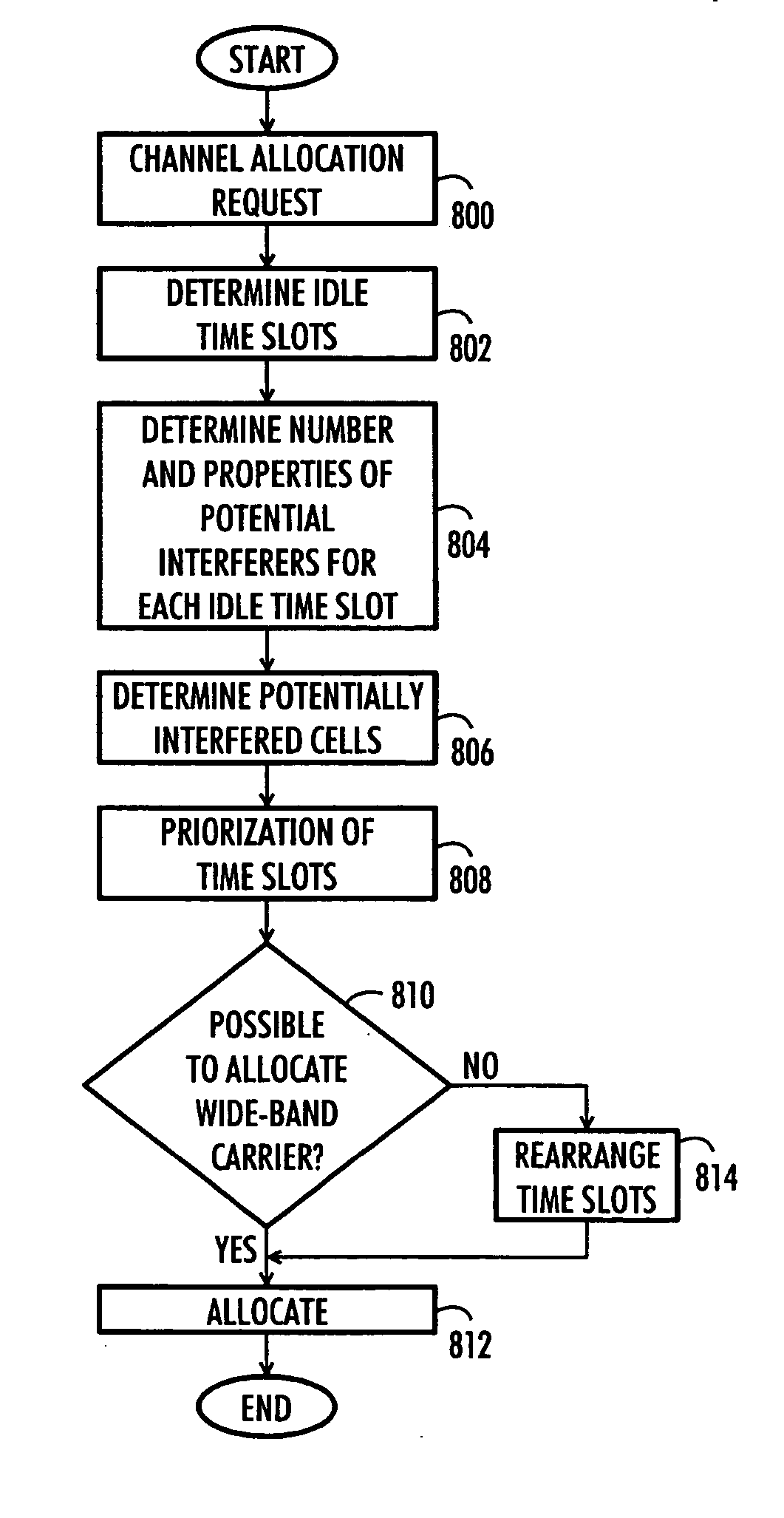
Figure 1 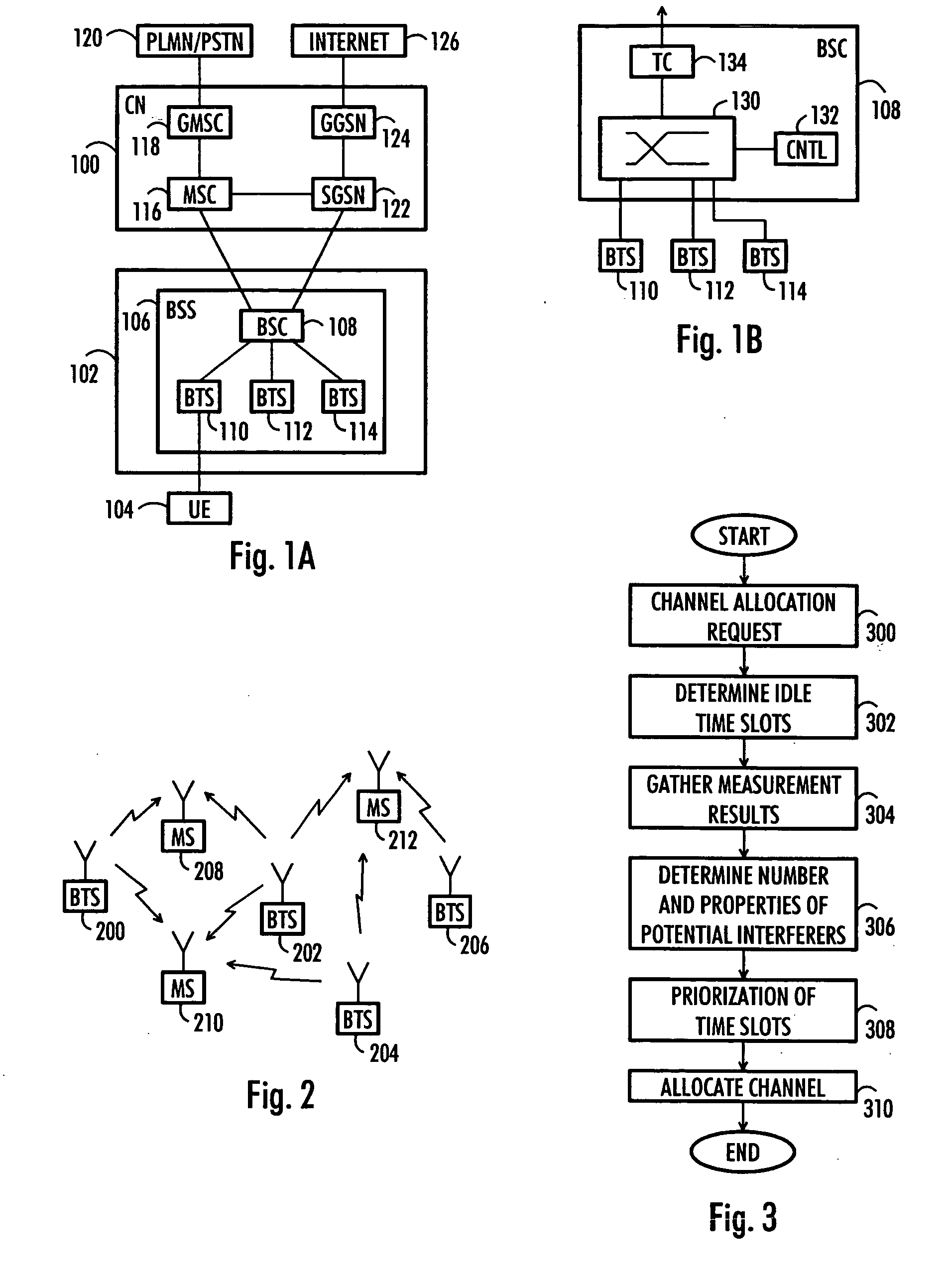
Figure 2 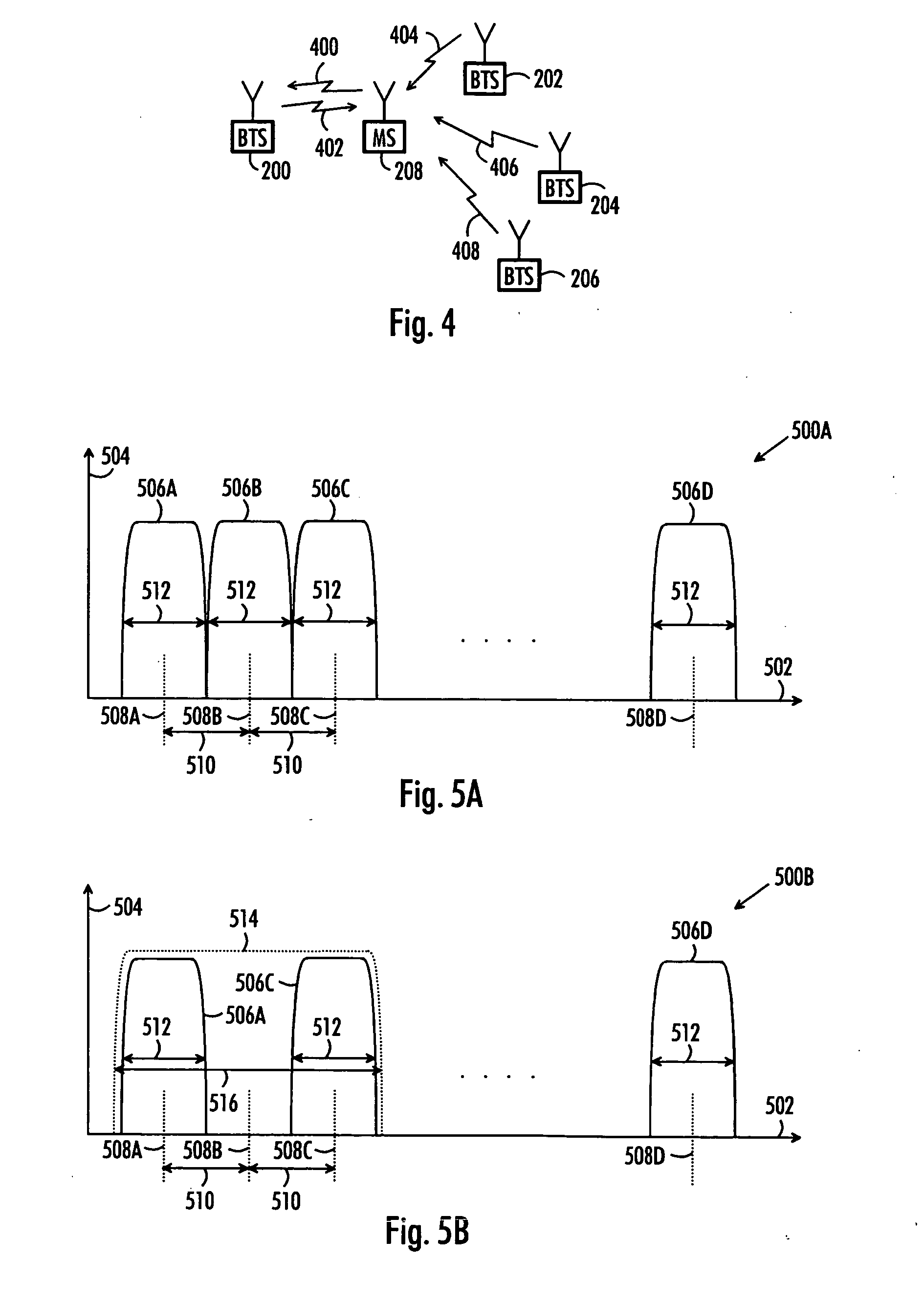
Figure 3
Abstract
Description
FIELD
[0001] The invention relates to radio channel allocation and link adaptation in a cellular telecommunication system. BACKGROUND
[0002] One of the key problems in constructing and maintaining cellular radio networks is the limited scope of available radio spectrum. Careful planning of the use of radio frequencies aims at utilizing the available frequencies as efficiently as possible but simultaneously at minimizing co-channel interference and adjacent channel interference. By means of various models, available frequencies are divided into different cells so as to minimize the interference occurring in radio connections and thus maximize the network capacity. In a cell repeat pattern, the same or adjacent frequencies must not be too close to one another, because this causes excessive interference in the system. On the other hand, the tighter the repeat pattern, the more efficient the usage of the frequencies.
[0003] In known mobile systems, the allocation of a radio channel to a...
Examples
Embodiment Construction
[0033] The present invention is applicable in various telecommunication systems, in which terminals are provided with different radio path properties. In the embodiments of the invention, the users are typically separated from each other in time domain and several frequency carriers are in use. Typical examples of a system in which the invention can be applied are cellular telecommunication systems such as GSM and GSM / EDGE based systems and evolutions of third generation systems such as 3.9G, also called LTE (Long Term Evolution) or EUTRAN (Enhanced UMTS Terrestrial Radio Access Network).
[0034] Let us take a closer look at FIG. 1A, which illustrates an example of the structure of a cellular telecommunication system. FIG. 1A is a simplified block diagram describing the most important cellular telecommunication system parts at network element level and the interfaces between them. The structure and operation of the network elements are not described in detail, since they are commonly...