
Method of discriminating between an internal arc and a circuit-breaking arc in a medium or high voltage circuit breaker
Patent Information
- Authority / Receiving Office
- US · United States
- Current Assignee / Owner
- Publication Date
- 2001-05-22
- Estimated Expiration
- Not applicable · inactive patent
Smart Images
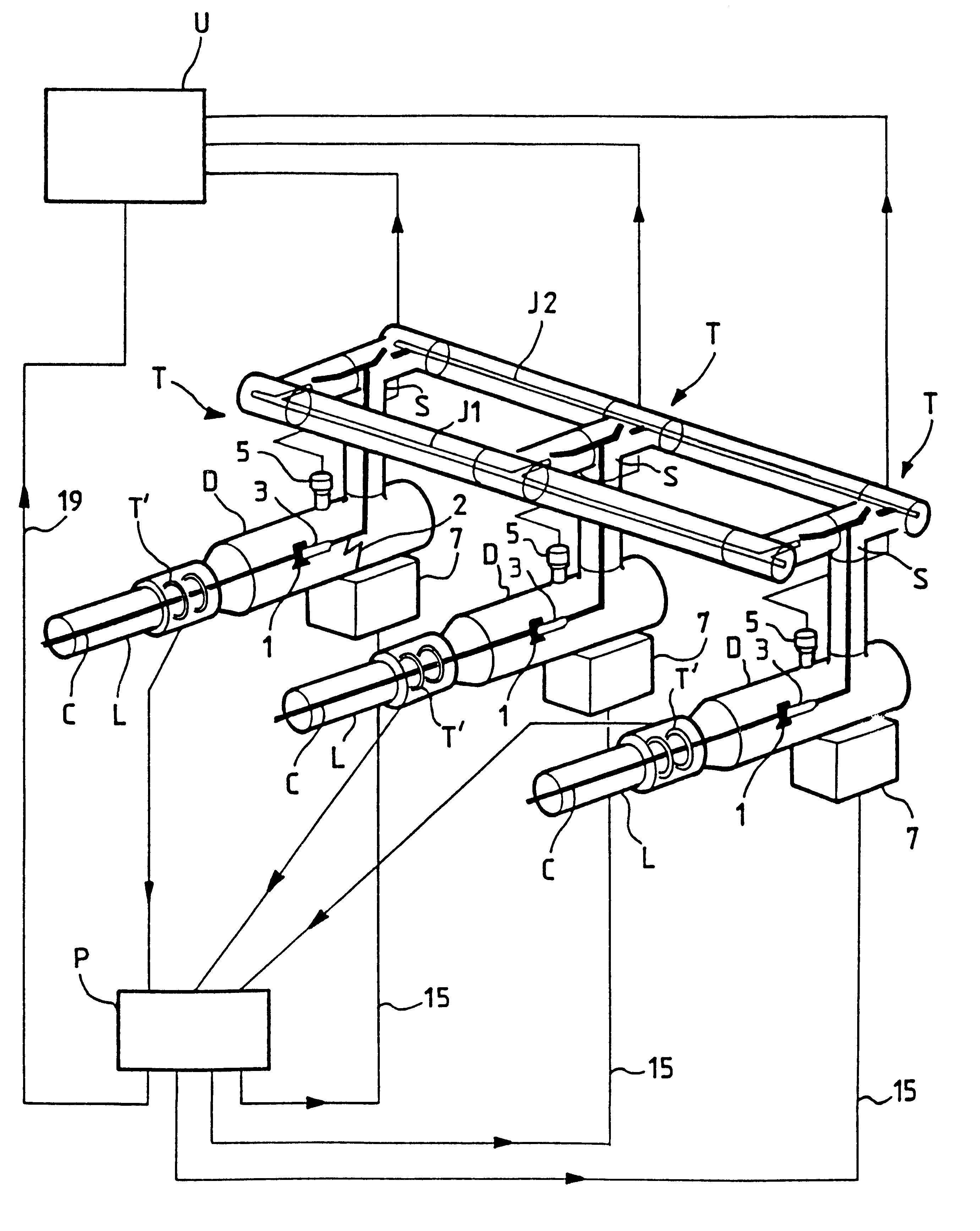
Figure 1 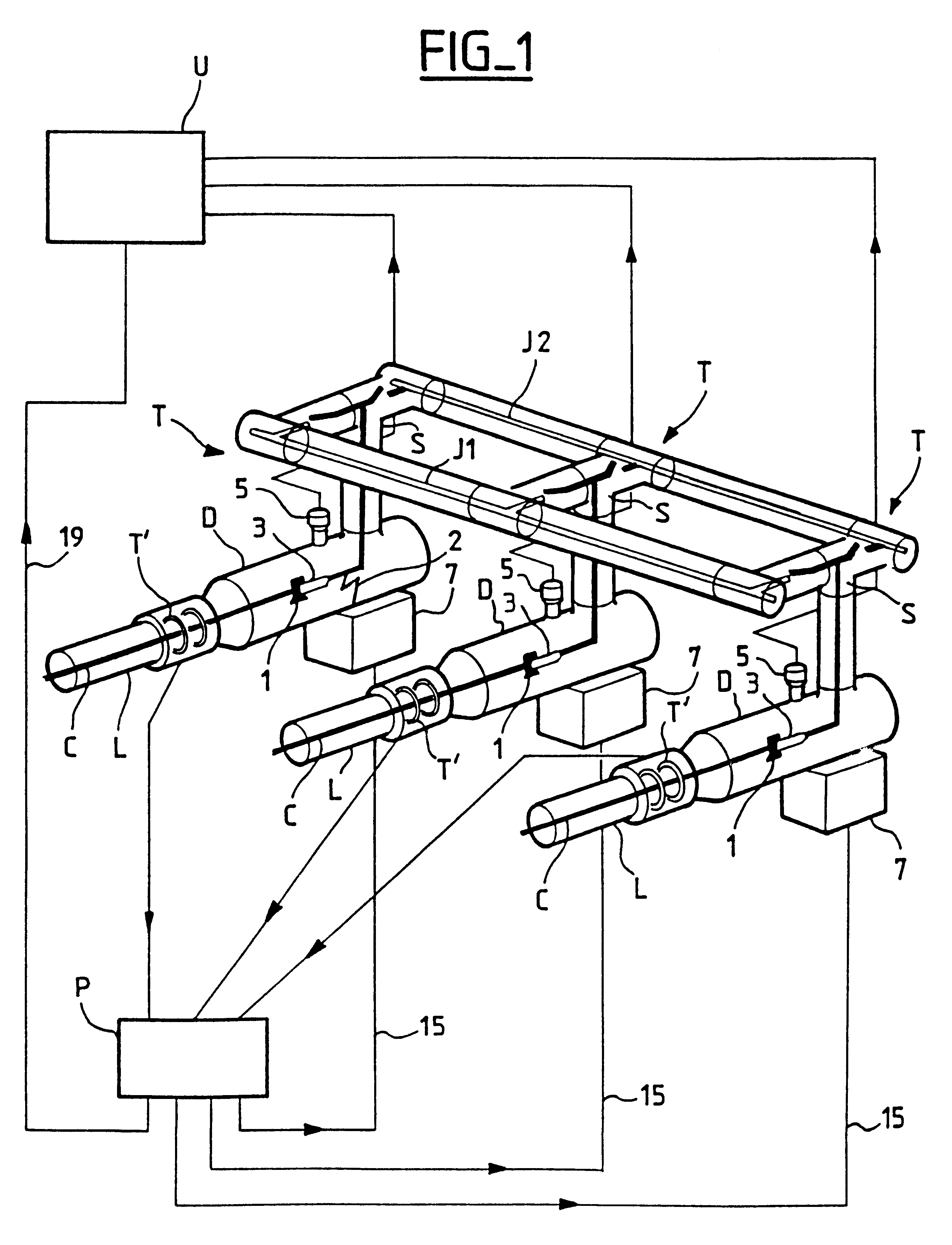
Figure 2 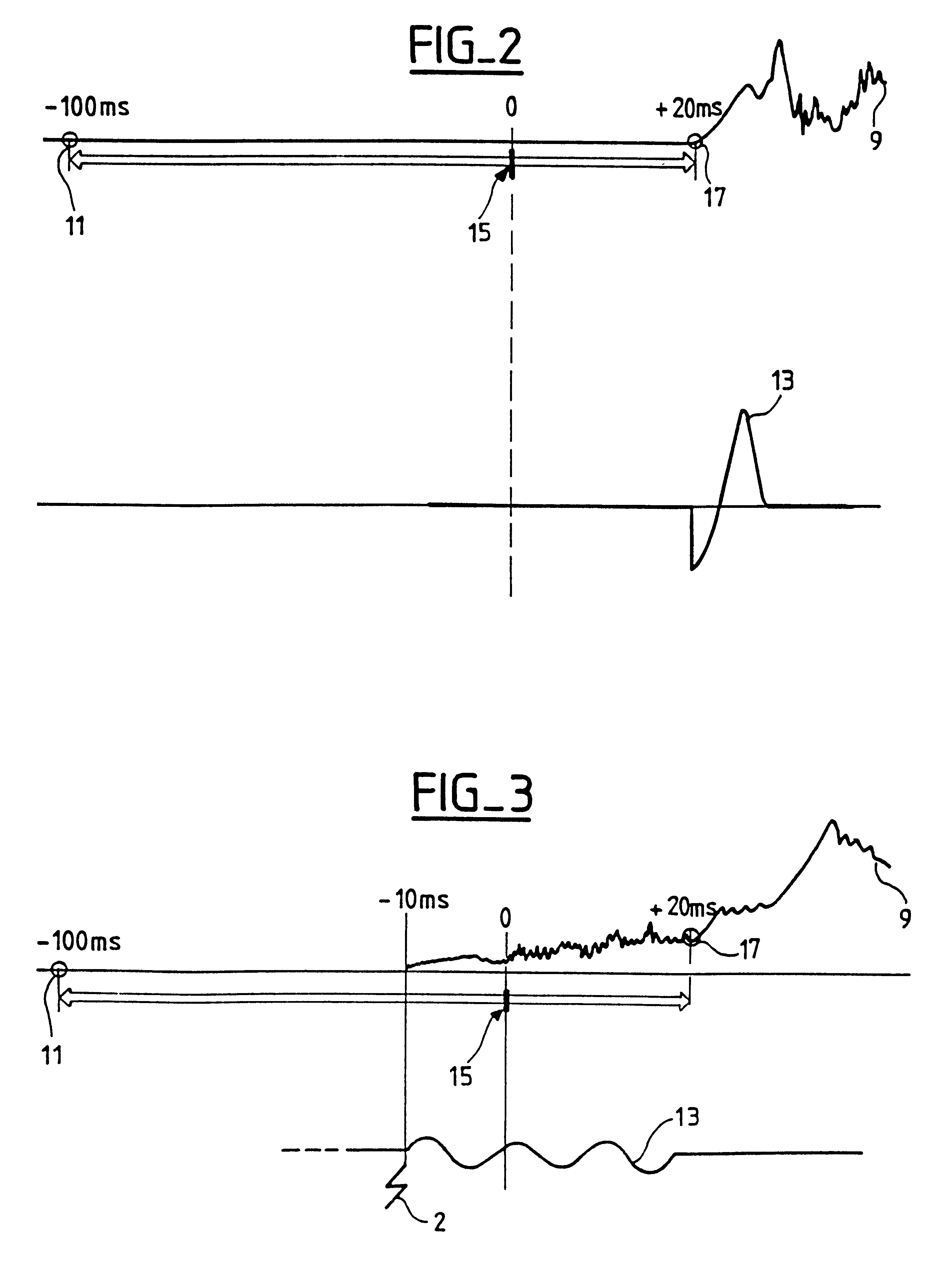
Figure 3
Abstract
Description
The invention relates to a method of discriminating between an internal arc and a circuit-breaking arc, generally of greater amplitude than the circuit-breaking arc, which can become established in the enclosure of a circuit breaker in a bay of a medium or high voltage metal-clad substation, and to do so by measuring the pressure of the dielectric gas inside the enclosure of the circuit breaker, in which the appearance of an internal arc is detected by a protection system which responds thereto by transmitting a disengagement order to the circuit breaker to cause its contacts to separate, the separation causing a circuit-breaking arc to appear.Such a metal-clad substation is constituted by a plurality of bays which are connected in parallel by a set of feeder busbars, each including in series with the circuit breaker a busbar disconnector (or selector switch disconnector) and an outgoing feeder. Each piece of gear in a bay is enclosed in a gastight enclosure filled with a dielectric...
Examples
Embodiment Construction
As shown in FIG. 1, the method of the invention is implemented in a medium or low voltage metal-clad electricity substation having three bays T which are of the single phase type in this case, that are interconnected by two sets of busbars J1 and J2, with each bay being constituted by a circuit breaker D, a selector switch disconnector S connected to the set of busbars, and by an outgoing feeder L. These various items of gear constitute a corresponding number of different compartments that are leakproof relative to one another. Each of these compartments comprises a metal enclosure filled with a dielectric gas under pressure, for example sulfur hexafluoride SF.sub.6, for the purpose of maintaining a potential difference relative to a conductor C located inside the enclosure.
Each circuit breaker has two contacts 1 and 3 disposed inside the enclosure having the conductor C passing therethrough. The enclosure of the circuit breaker is thus filled with a dielectric gas under pressure an...