
Wafer-scale image archiving and receiving system
Patent Information
- Authority / Receiving Office
- US · United States
- Current Assignee / Owner
- Publication Date
- 2008-07-17
- Estimated Expiration
- Not applicable · inactive patent
Smart Images
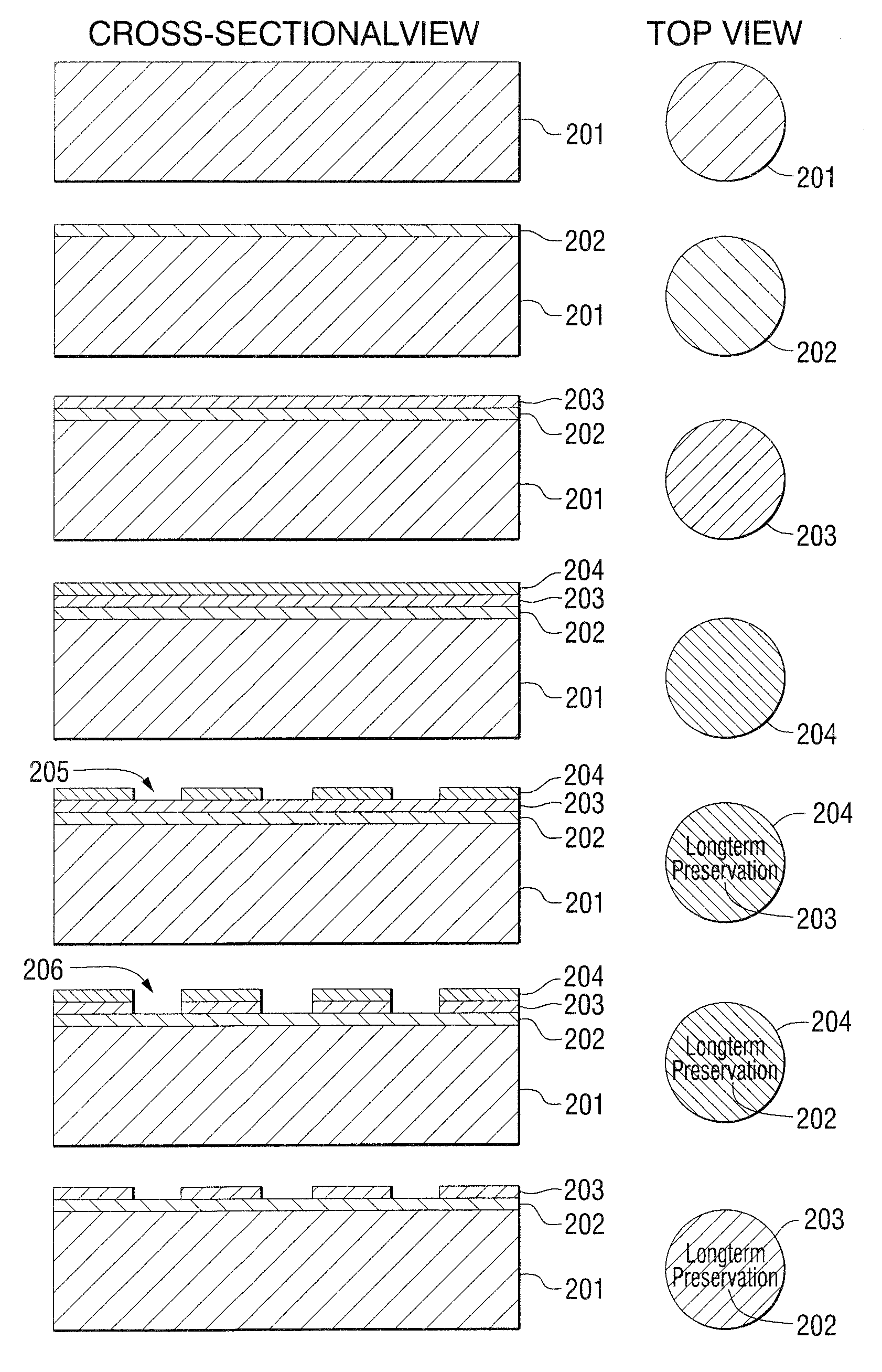
Figure 1 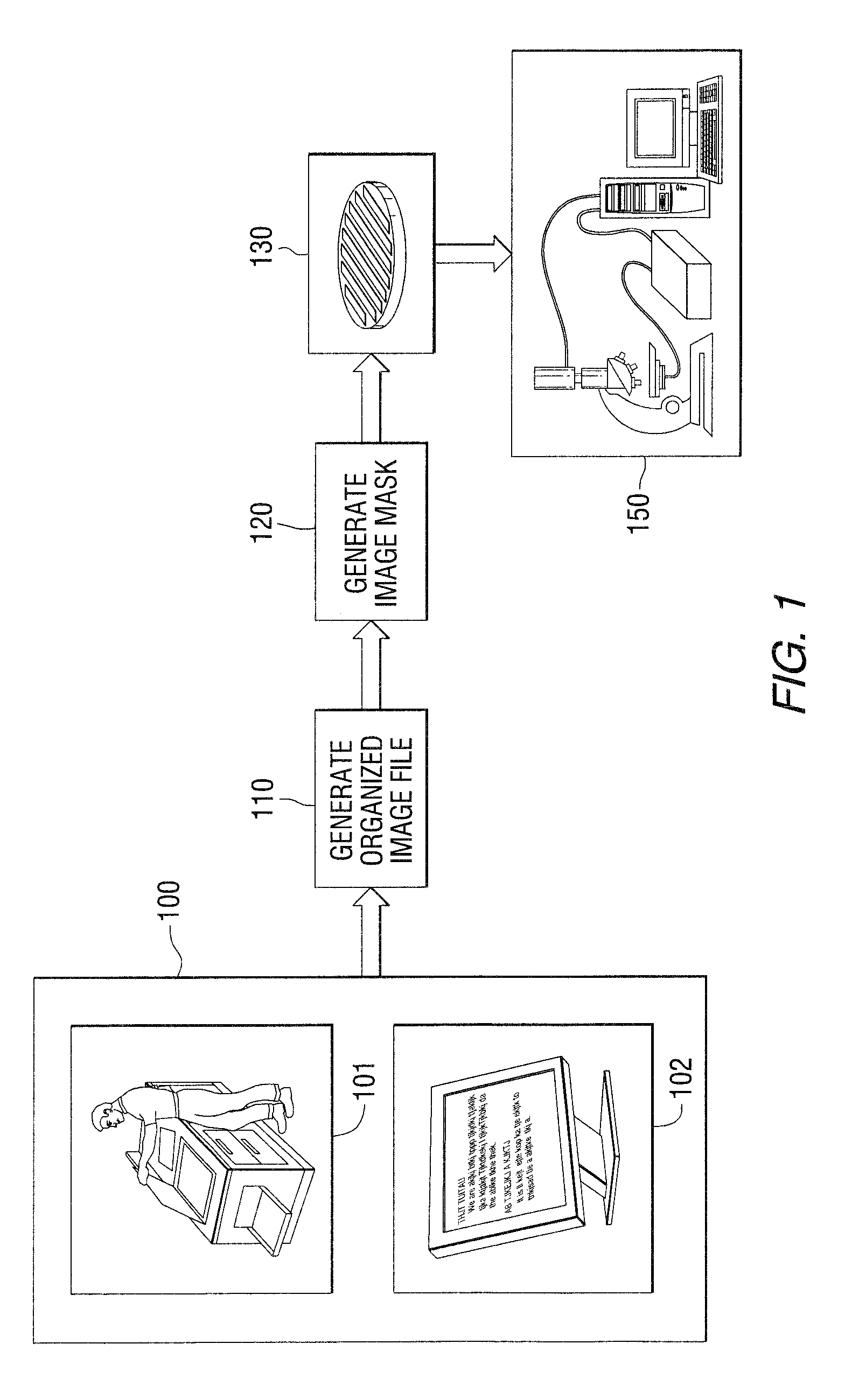
Figure 2 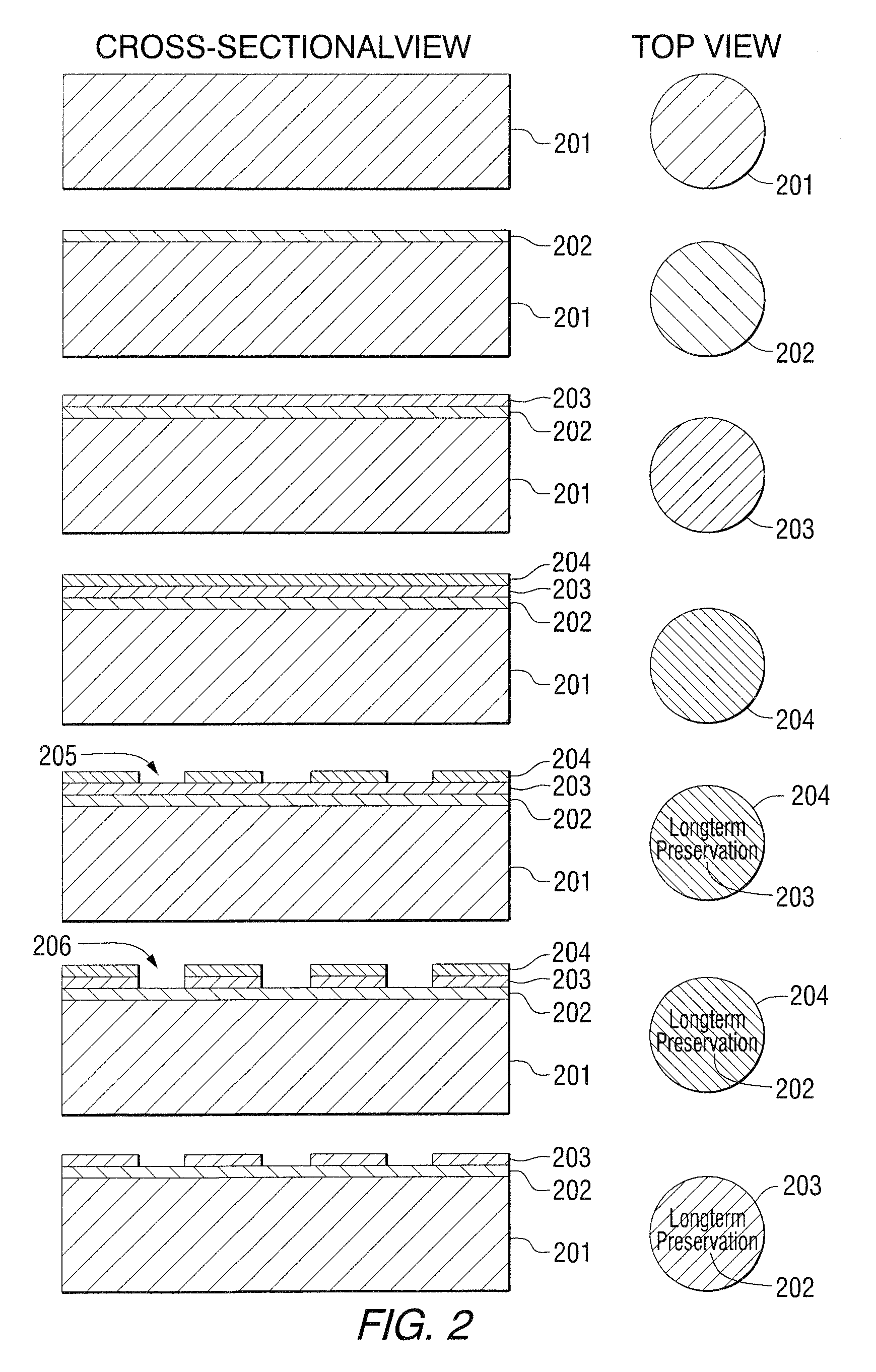
Figure 3
Abstract
Description
CROSS-REFERENCE TO RELATED APPLICATIONS
[0001] This application claims priority from U.S. Provisional Patent Application Ser. No. 60 / 884,768, titled PRESERVATION / STORAGE OF DATA AS IMAGES ON SILICON WAFERS USING NANOTECHNOLOGY, filed Jan. 12, 2007, which is hereby incorporated by reference.FIELD OF THE INVENTION
[0002] This invention relates to the long-term storage of images on substrates that can be processed using semiconductor fabrication techniques, and more particularly to the long-term storage of images on silicon wafer substrates. The invention further relates to the high-speed retrieval of images stored on silicon wafer substrates.BACKGROUND OF THE INVENTION
[0003] As unique documents are created and the desire to back-up information is increased the need effectively to archive data increases. On an individual level, information such as letters, property papers, financial documents, photographs and such are preserved for sentimental, personal, and financial reasons. Federal insti...
Examples
Embodiment Construction
[0021]This invention relates to storing data as images on semiconductor substrates, particularly for long-term preservation using imaging and semiconductor fabrication techniques. In this technique, data are stored in such a way that it is visible to the human eye usually with magnification, though it is possible to view large-scale images without magnification. The data from printed documents, digital files, or any other media are converted to images. These images, with the help of photolithography tools and fabrication techniques, are then imprinted and etched on semiconductor substrates, such as silicon wafers. The use of silicon makes the information resistant to both high temperatures up to 400° C. and water exposure ensuring longevity, which is very useful in preserving documents. Since the stored data are not processed or digitized before storing, the data can be stored for long periods without degrading over time. One advantage of this technique is retrieval of the data can ...