
Traffic independent survivability analysis
Patent Information
- Authority / Receiving Office
- US · United States
- Current Assignee / Owner
- Publication Date
- 2009-02-26
Smart Images
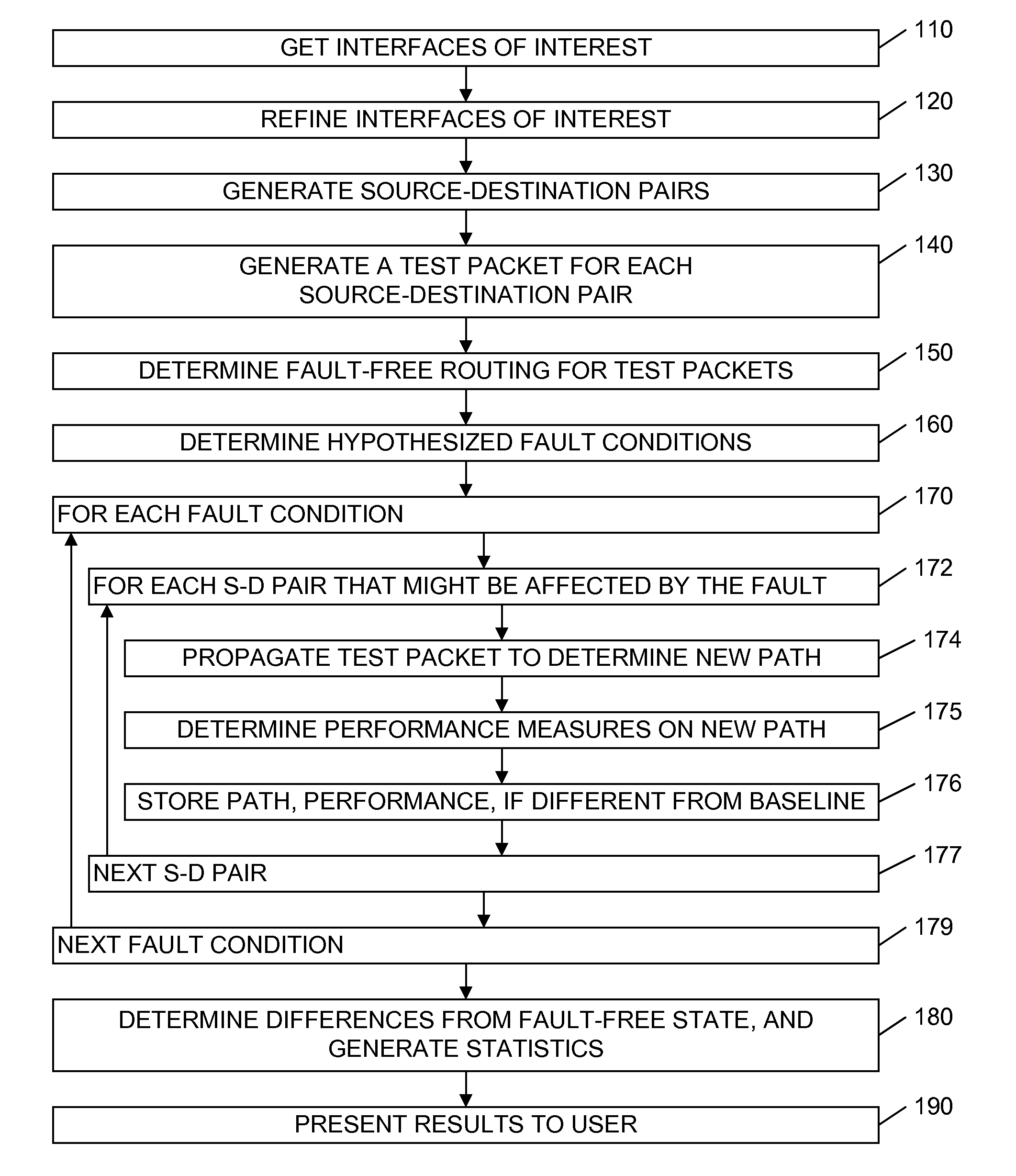
Figure 1 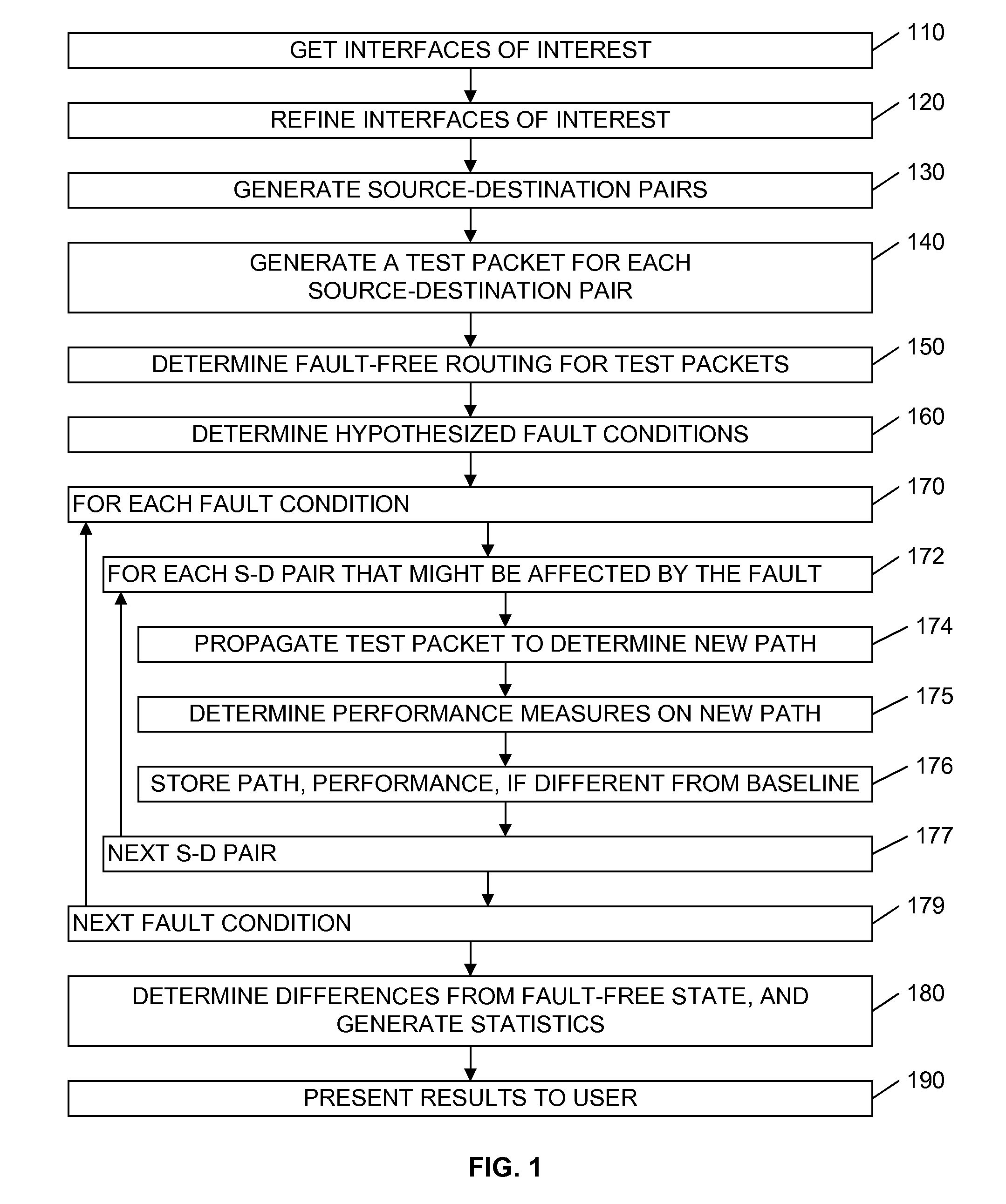
Figure 2 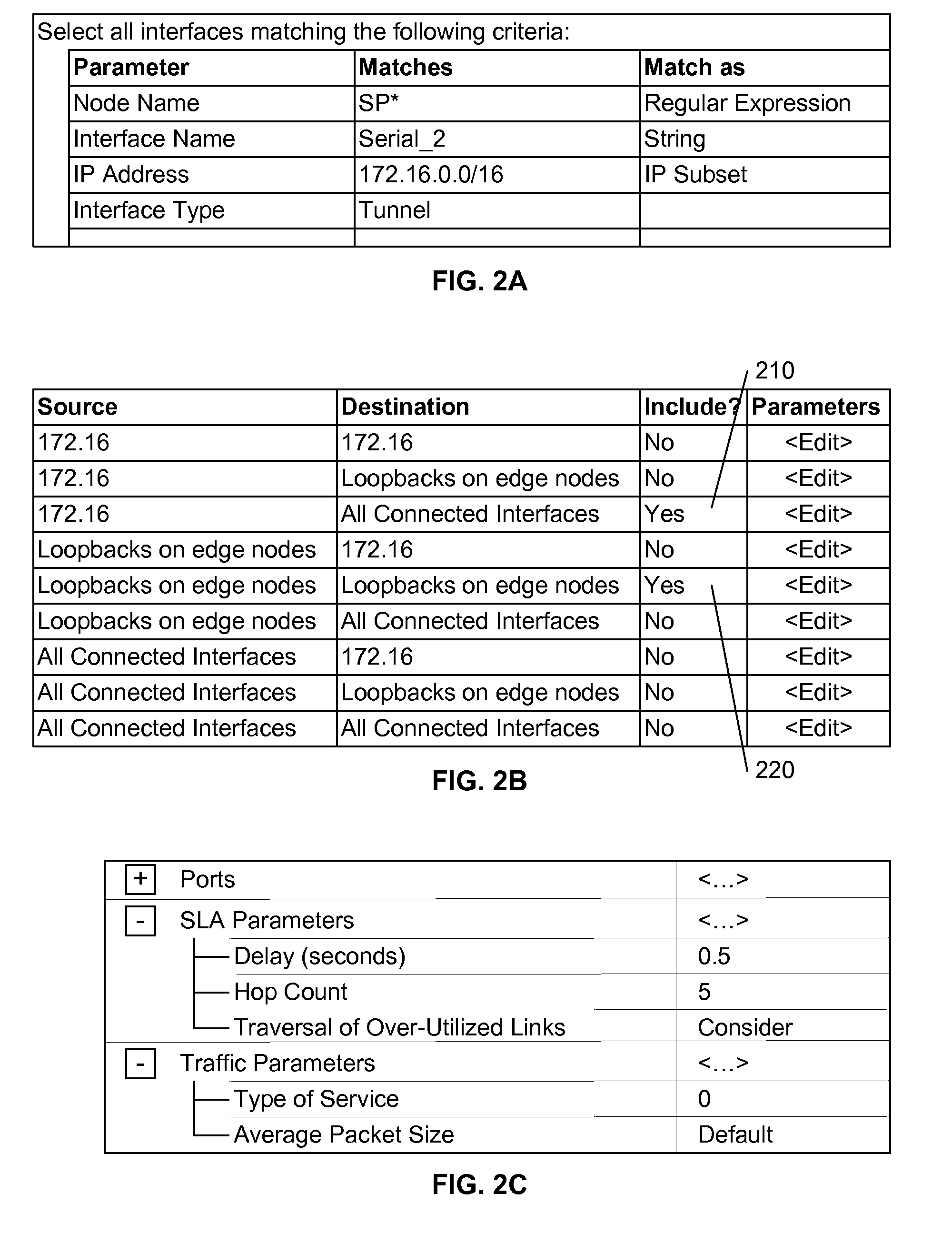
Figure 3
Abstract
Description
[0001] This application claims the benefit of U.S. Provisional Patent Application 60 / 968,024, filed 24 Aug. 2007.BACKGROUND AND SUMMARY OF THE INVENTION
[0002] This invention relates to the field of network analysis, and in particular to a method and system for assessing the survivability of a network under a variety of fault conditions.
[0003] Network simulators are commonly used to assess the effects of changes to an existing network. Proposed additional equipment to the network can be simulated on a model of the network to determine whether the addition achieves the intended goals; possible additional traffic demands can be simulated to determine the degradation of service that can be expected; modified configurations can be simulated to determine whether the modification improves or degrades the network's performance; and so on. In each of these scenarios, models of the traffic being handled, or expected to be handled, are used to simulate the operation of the network with the given ...
Examples
Embodiment Construction
[0016]In the following description, for purposes of explanation rather than limitation, specific details are set forth such as the particular architecture, interfaces, techniques, etc., in order to provide a thorough understanding of the concepts of the invention. However, it will be apparent to those skilled in the art that the present invention may be practiced in other embodiments, which depart from these specific details. In like manner, the text of this description is directed to the example embodiments as illustrated in the Figures, and is not intended to limit the claimed invention beyond the limits expressly included in the claims. For purposes of simplicity and clarity, detailed descriptions of well-known devices, circuits, and methods are omitted so as not to obscure the description of the present invention with unnecessary detail.
[0017]This invention is premised on the observation that attempting to perform an exhaustive survivability analysis on large networks using mode...