
Self-drilling fastening element
Patent Information
- Authority / Receiving Office
- US · United States
- Current Assignee / Owner
- Publication Date
- 2010-11-11
- Estimated Expiration
- Not applicable · inactive patent
Smart Images
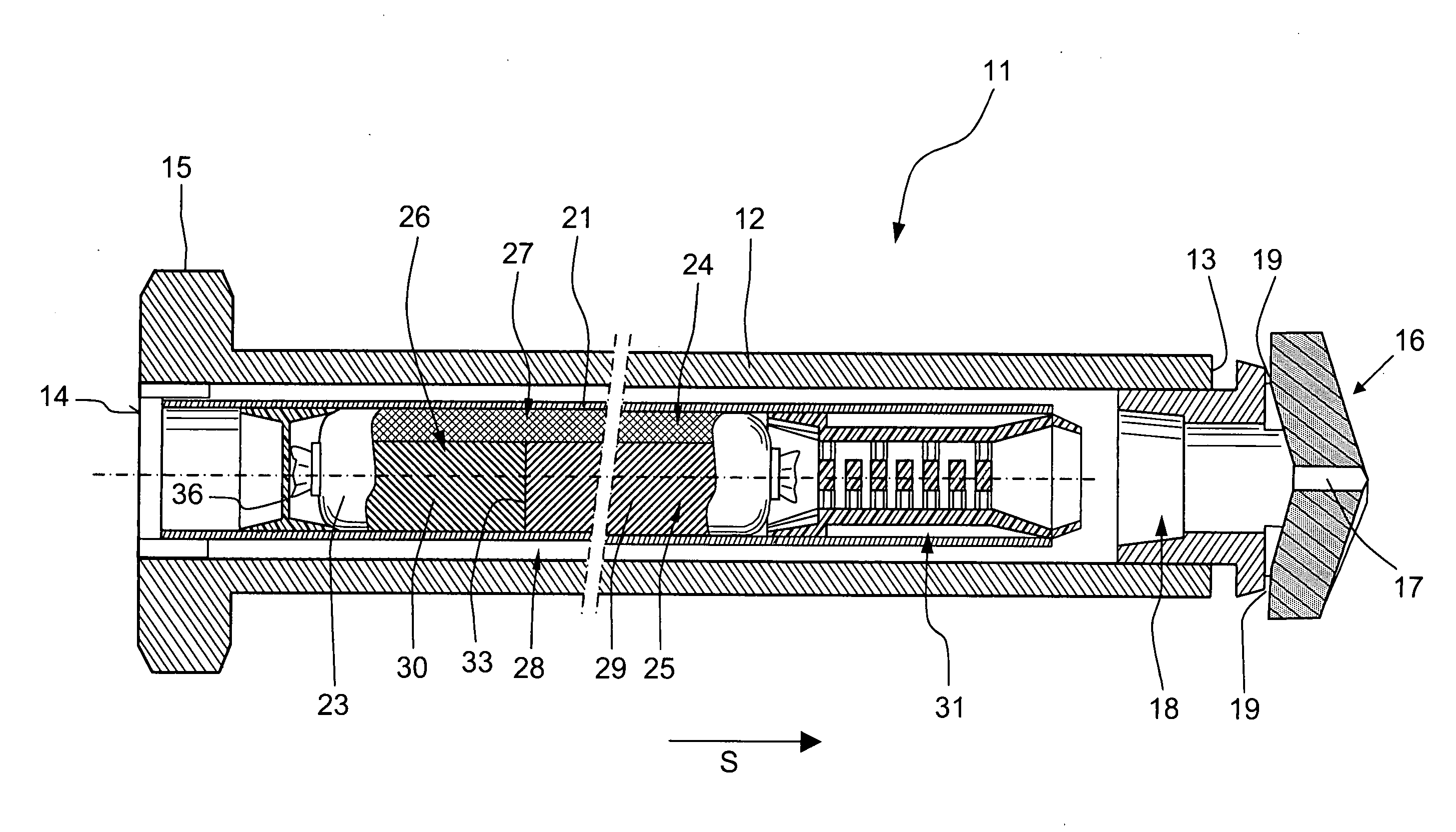
Figure 1 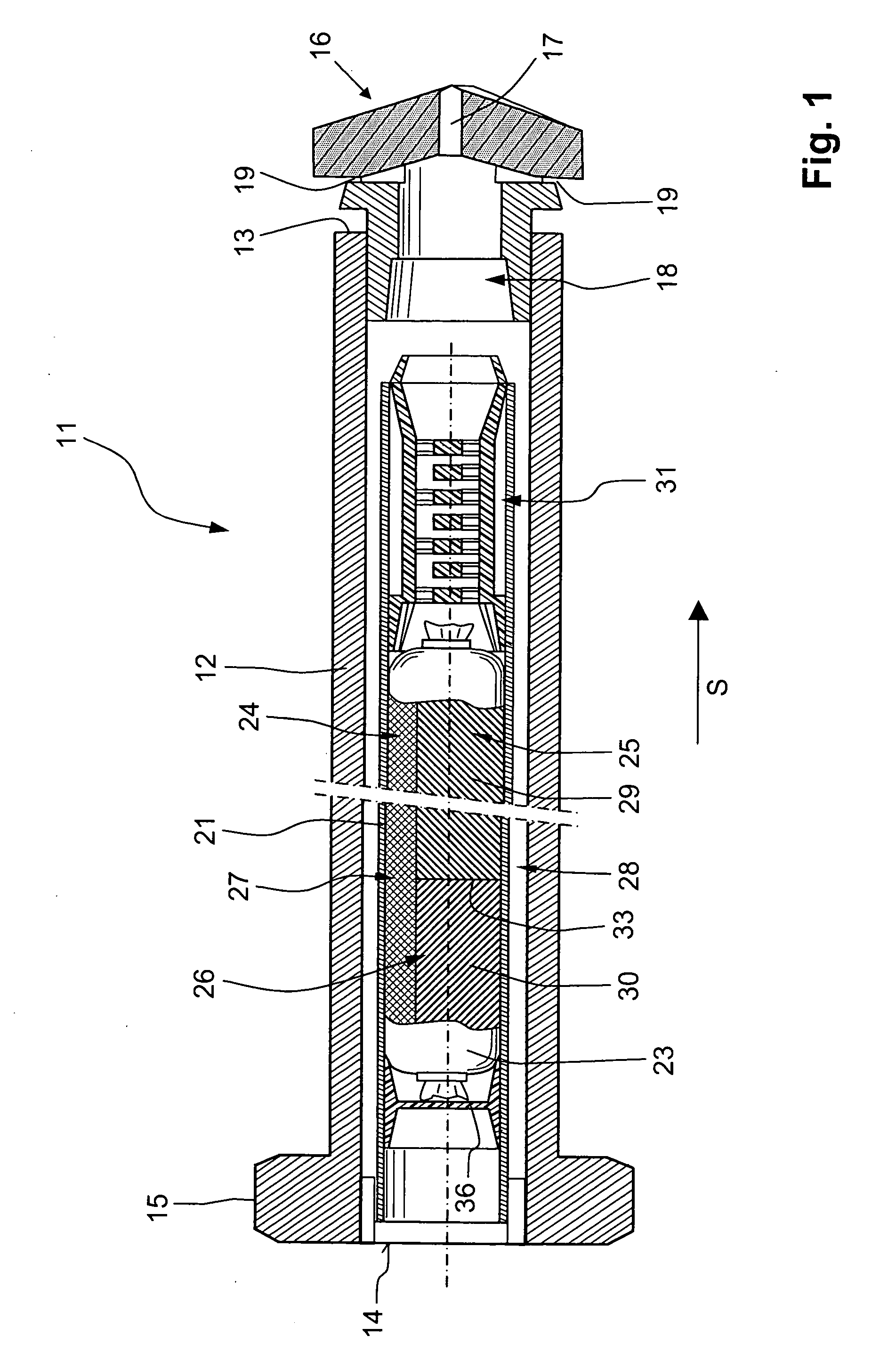
Figure 2 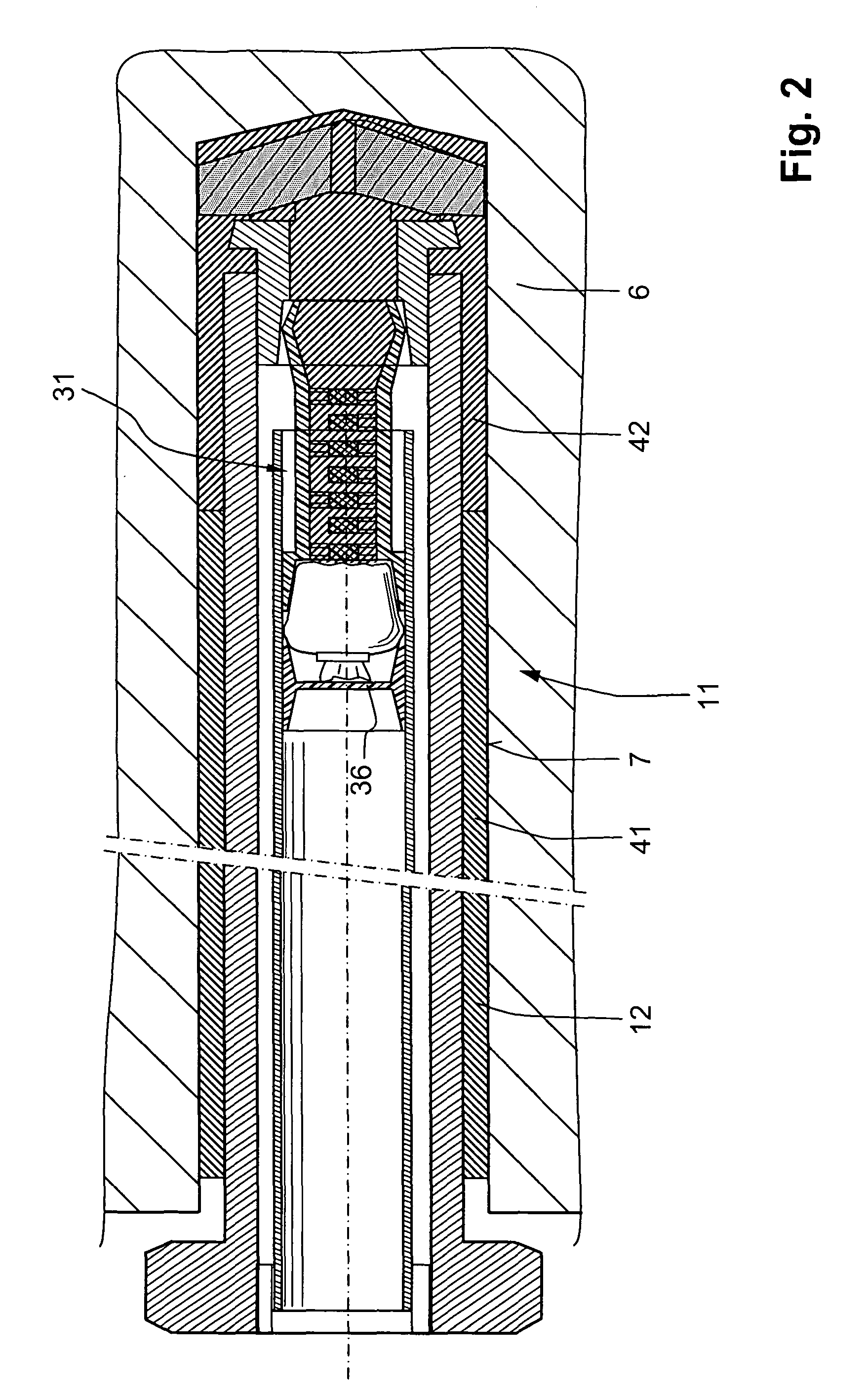
Figure 3
Abstract
Description
BACKGROUND OF THE INVENTION
[0001] 1. Field of the Invention
[0002] The present invention relates to a self-drilling fastening element, in particular, to a self-drilling rock anchor to be chemically anchored in a constructional component such as, e.g., a rock or a constructional part, formed of a mineral material such as concrete or masonry.
[0003] 2. Description of the Prior Art
[0004] Fastening elements of the type described above, e.g., a rock anchor, serve for stabilization of hollow spaces such as tunnels, galleries, and the like and, namely, for attaching walls of adjacent rock regions to each other.
[0005] In many cases, it is proceeded from the premise that the regions in the immediate vicinity of the walls have, as a result of formation of hollow spaces, reduced mechanical characteristics, in particular, a reduced load carrying capacity than further, remotely located, non-damaged rock regions, and should be attached to the remotely located regions. Under the term “walls of a hollow s...
Examples
Embodiment Construction
[0032]A self-drilling fastening element 11, which is shown in FIG. 1 and is formed as a rock anchor, has a hollow cylindrical receiving body 12 provided, at its end 13 facing in a setting direction S, with a drilling head 16 and, at its opposite end 14, with rotation transmitting means 15, e.g., in form of a polygon connectable with a drilling tool, not shown. The drilling head 16 has a first through-opening 17 and two, opening radially outwardly, second openings 19. There is further provided, in the drilling head 16, a funnel-shaped receptacle 18 narrowing toward the free end of the drilling head 16.
[0033]An inner tube 21 is arranged in the receiving body 12. A film container in form of a tubular film bag 23, which is packed with an ejectable, hardenable, multi-component mass, is located in the inner tube 21. The multi-component mass 26 includes a reactive resin 28 and a hardener 27 which are kept separated from one another and which harden in a mixed condition. The hardener 27 is ...