
Antenna device for vehicle
Patent Information
- Authority / Receiving Office
- US · United States
- Current Assignee / Owner
- Publication Date
- 2021-03-11
Smart Images
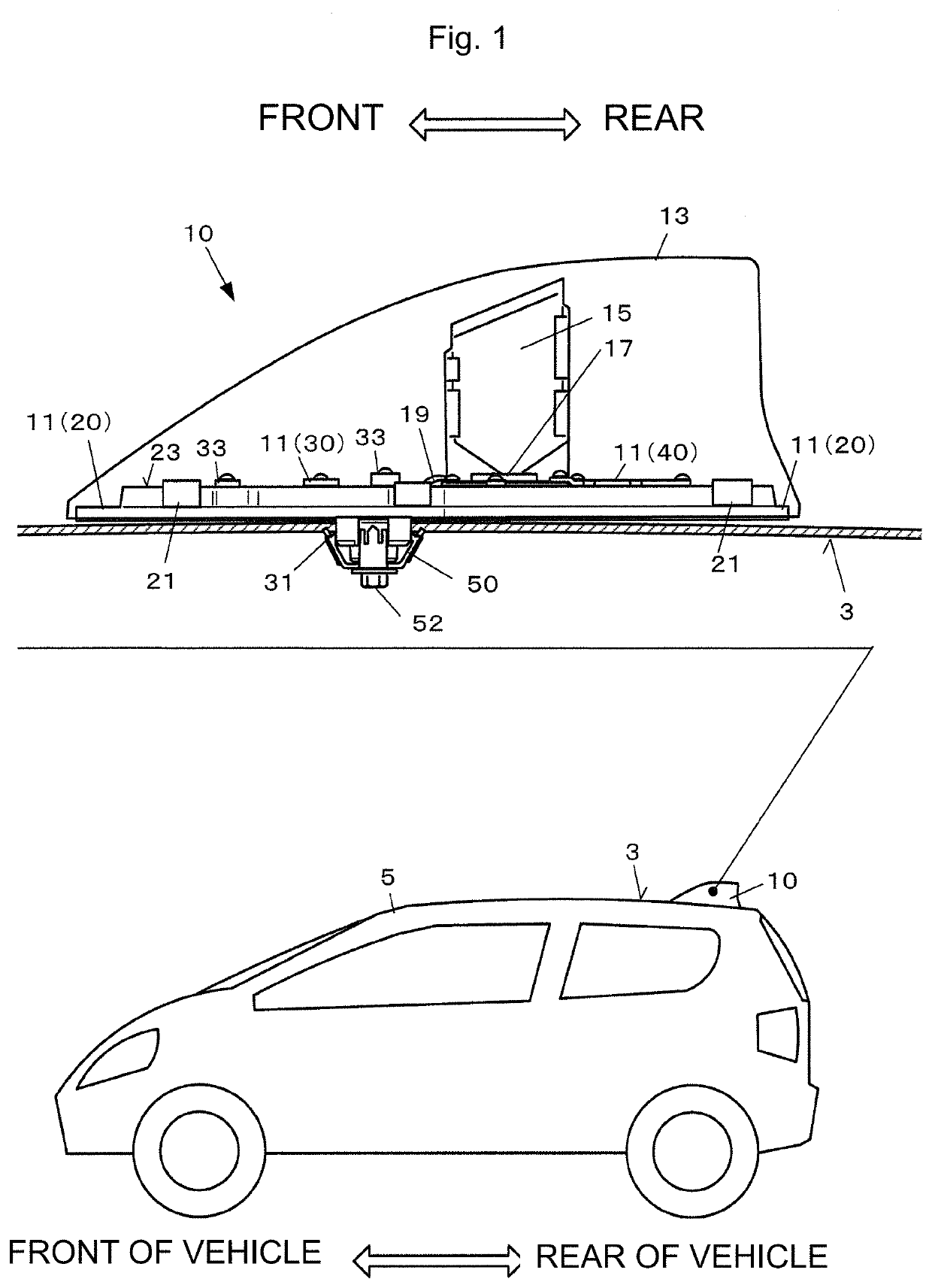
Figure 1 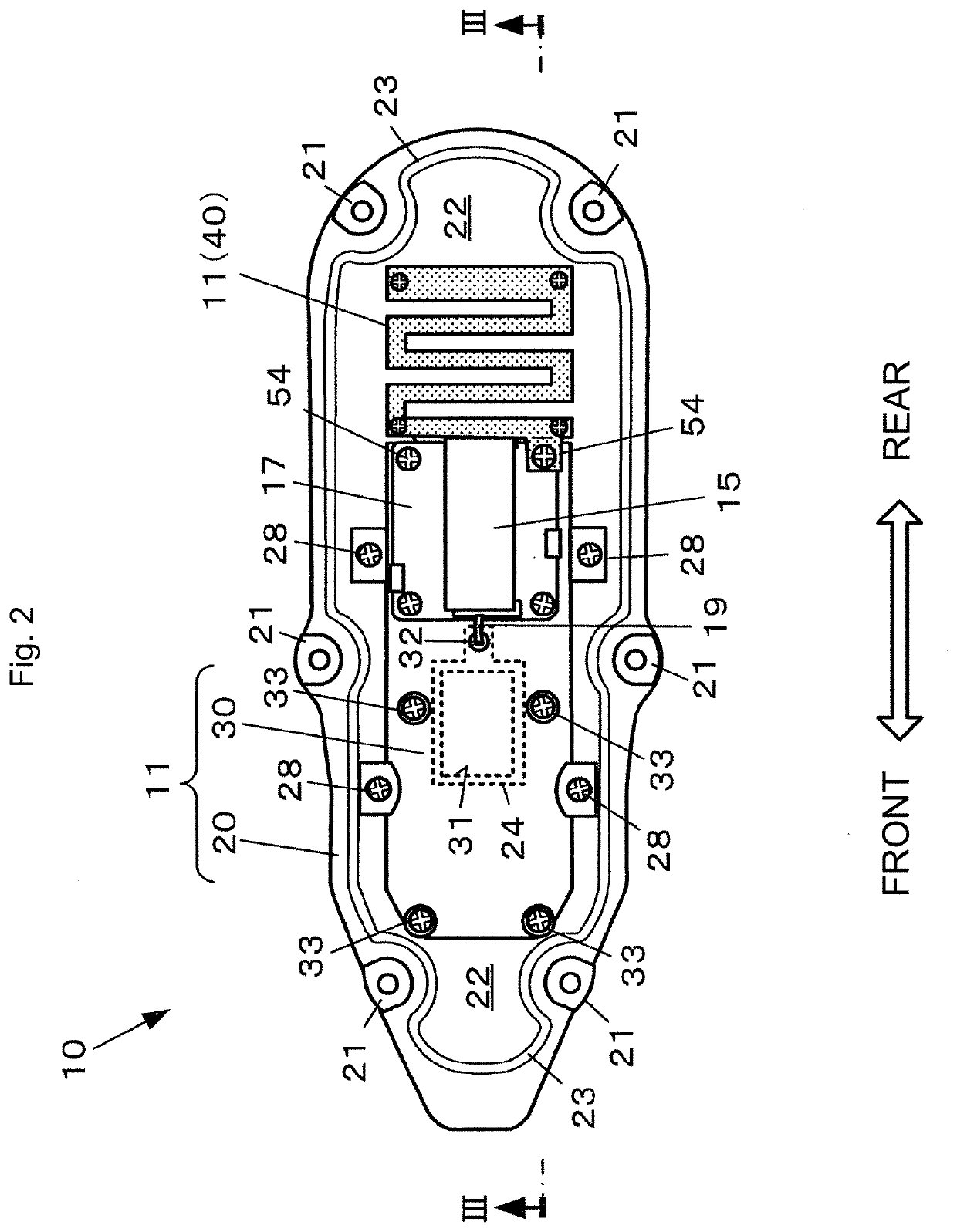
Figure 2 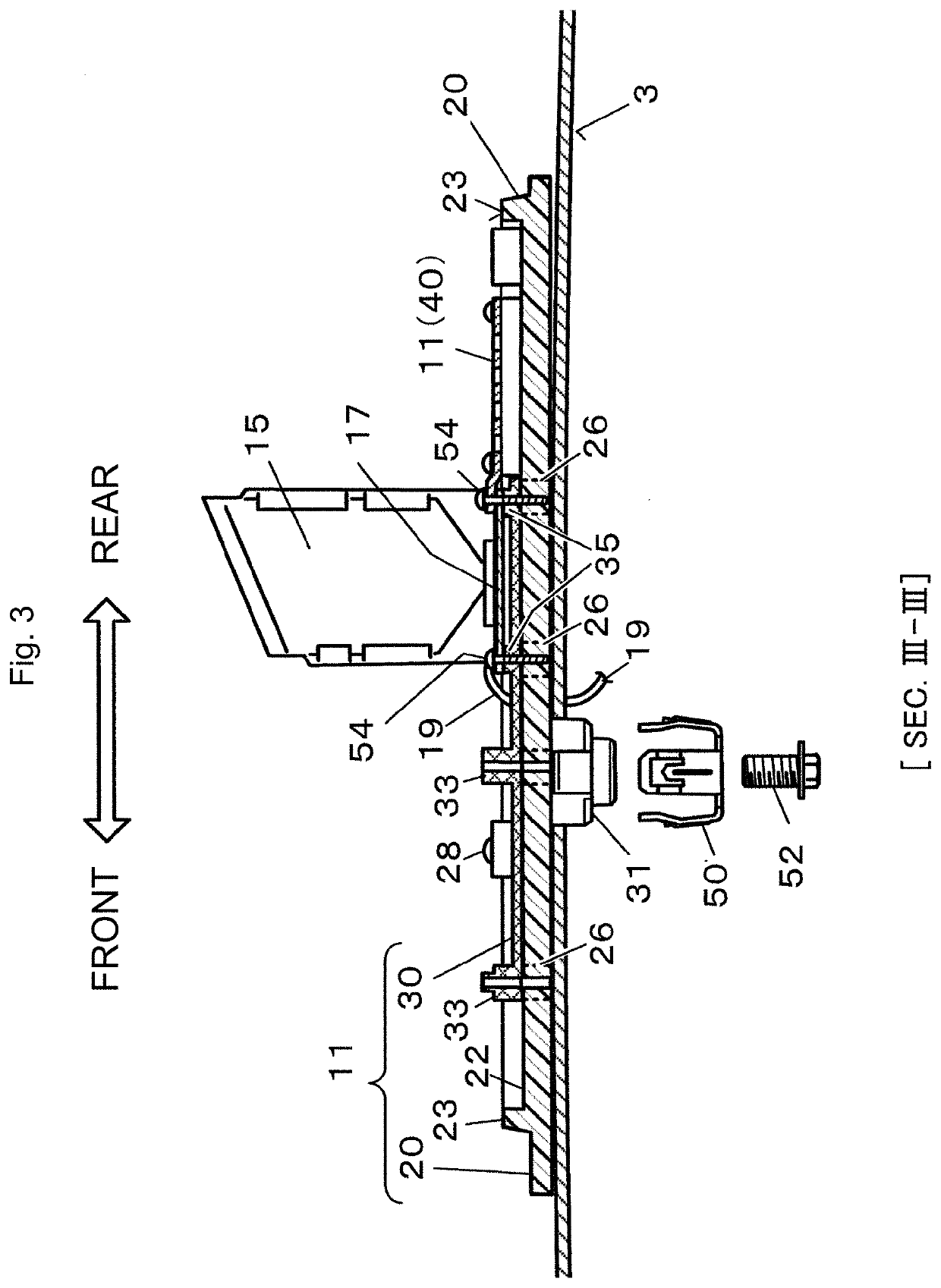
Figure 3
Abstract
Description
TECHNICAL FIELD
[0001] The present invention relates to an antenna device for vehicle that is attached to a roof of a vehicle.BACKGROUND ART
[0002] An antenna device for vehicle that is attached to a roof of a vehicle such as an automobile has been known, the antenna device for vehicle accommodating an antenna element in a streamlined case in consideration of fluid resistance. In general, the antenna device for vehicle is mounted on a center in a rear portion of the roof and may be referred to as “shark fin antenna”, “dolphin antenna”, or the like because of the figure of the vehicle with the antenna device for vehicle mounted and the appearance of the antenna device for vehicle.
[0003] For example, Patent Literature 1 specifically discloses an antenna device for vehicle in which an antenna case is put on a resin base and a space for accommodating a metal base functioning as a ground plate, an antenna element, and so forth is thereby defined. Patent Literature 1 describes a structure whic...
Examples
first embodiment
[0059]FIG. 1 is a side perspective view that illustrates a configuration example of an antenna device 10 of this embodiment. FIG. 2 is a plan view of a state where an antenna case 13 of the antenna device 10 of this embodiment is detached, that is, an internal plan view. FIG. 3 is a cross-sectional view taken along line III-III in FIG. 2.
[0060]As illustrated in FIG. 1, the antenna device 10 is an antenna device designed on the assumption that it is mounted on an exterior structure that corresponds to a roof 3 of a vehicle 5 (such as a passenger vehicle, a truck, or an agricultural machine, for example) and is an antenna device that incorporates an antenna element and so forth in a case. “Front and rear” in the antenna device 10 denote the same directions as front and rear of the vehicle 5 in which the antenna device 10 is mounted on the roof 3 and mean the directions illustrated in FIG. 1. That is, those are the front-rear direction along a streamlined external appearance, the side ...
second embodiment
[0090]Next, a second embodiment to which the present invention is applied will be described.
[0091]In the first embodiment, the method that lowers the resonance frequency of the unnecessary resonance, is employed. However, in this embodiment, a method that conversely raises the resonance frequency of the unnecessary resonance, is employed. In the following, a description will mainly be made about differences from the first embodiment, the same reference numerals are provided to similar configuration elements to the first embodiment, and duplicated descriptions thereof will be omitted.
[0092]FIG. 6 is a plan view of a state where an antenna case of an antenna device 10B of this embodiment is detached. In an antenna base 11B of the antenna device 10B, a metal base 30B is made shorter in the longitudinal direction (front-rear direction) than the antenna base 11 of the first embodiment. Specifically, a metal plate 40B is provided with a gap which is provided on a front end side of the met...
modification examples
[0097]In the above, the examples of the embodiments to which the present invention is applied are described. However, forms to which the present invention is applicable are not limited to the above forms, but appropriate addition, omission, and alterations of the configuration elements may be conducted.