
Method of securitizing a portfolio of at least 30% distressed commercial loans
a distressed commercial loan and portfolio technology, applied in the field of asset securitization, can solve the problems of significant near-term risk that the borrower will ultimately default on its obligations, subject the lender to increased capital requirements and regulatory scrutiny, and the credit facility is considered “distressed”, so as to save valuable economic and regulatory capital, outsource the time-intensive and resource-intensive workout effort, and save costs
Patent Information
- Authority / Receiving Office
- US · United States
- Patent Type
- Applications(United States)
- Current Assignee / Owner
- Publication Date
- 2011-02-10
- Estimated Expiration
- Not applicable · inactive patent
Smart Images
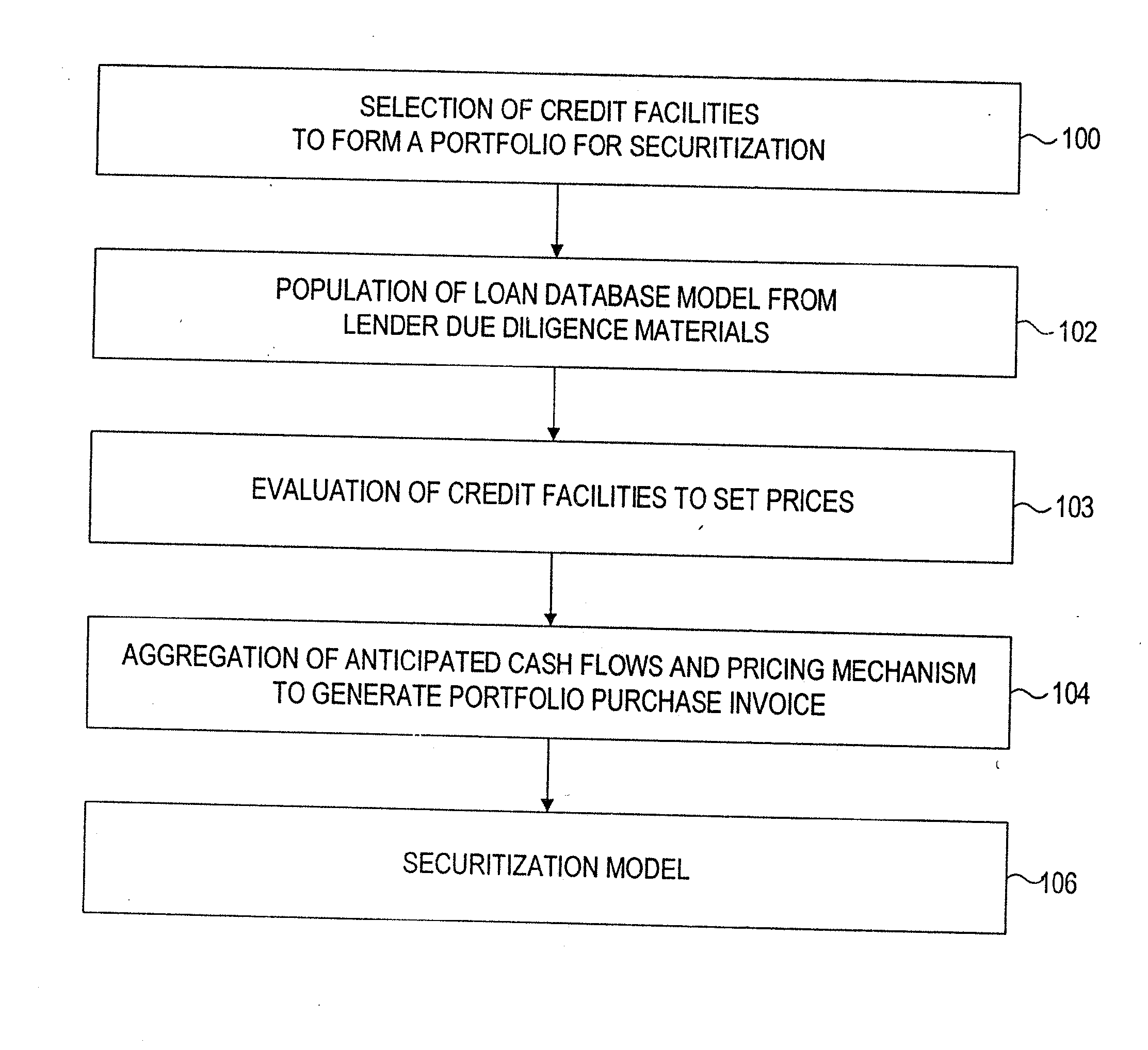
Figure 1 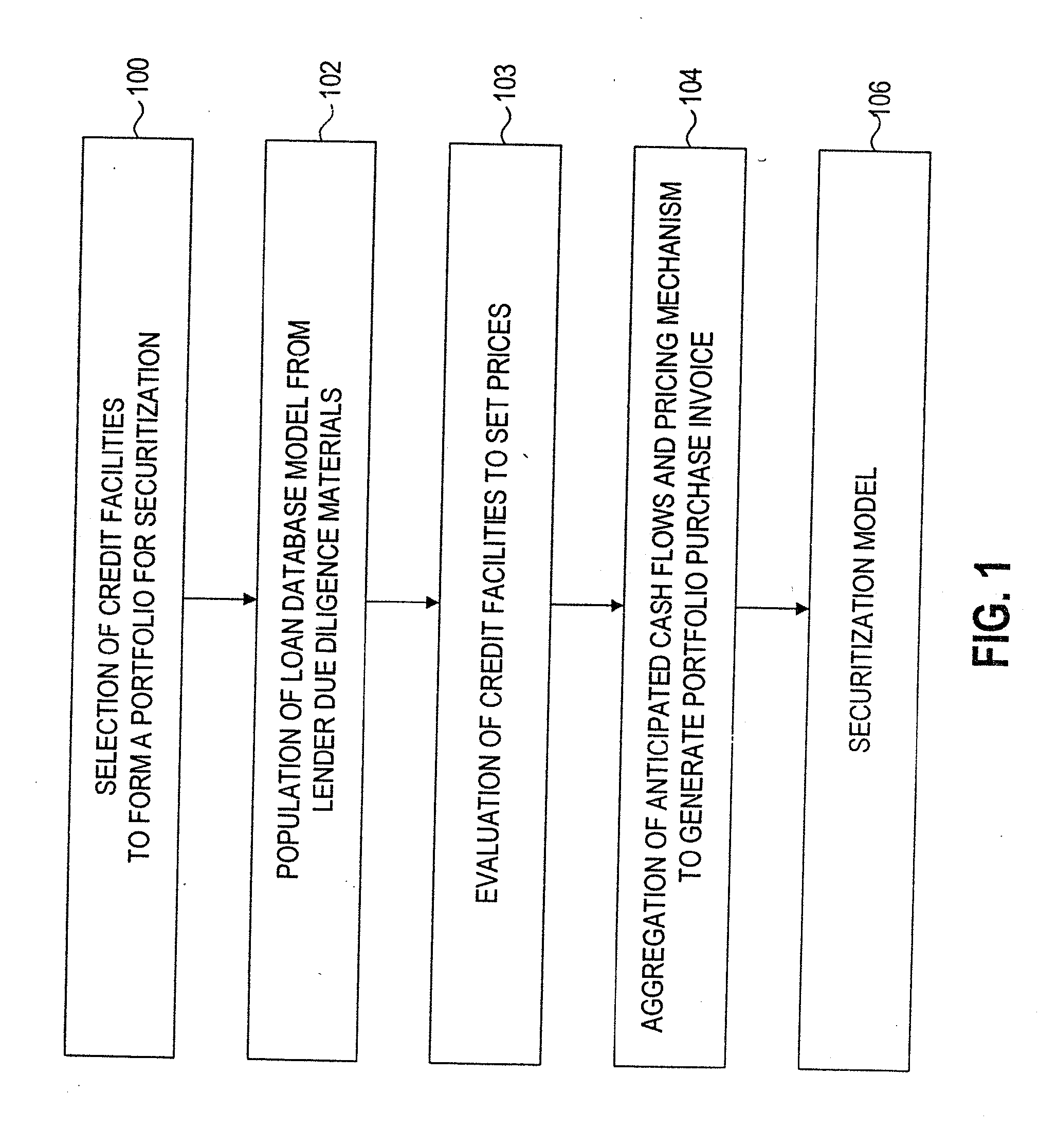
Figure 2 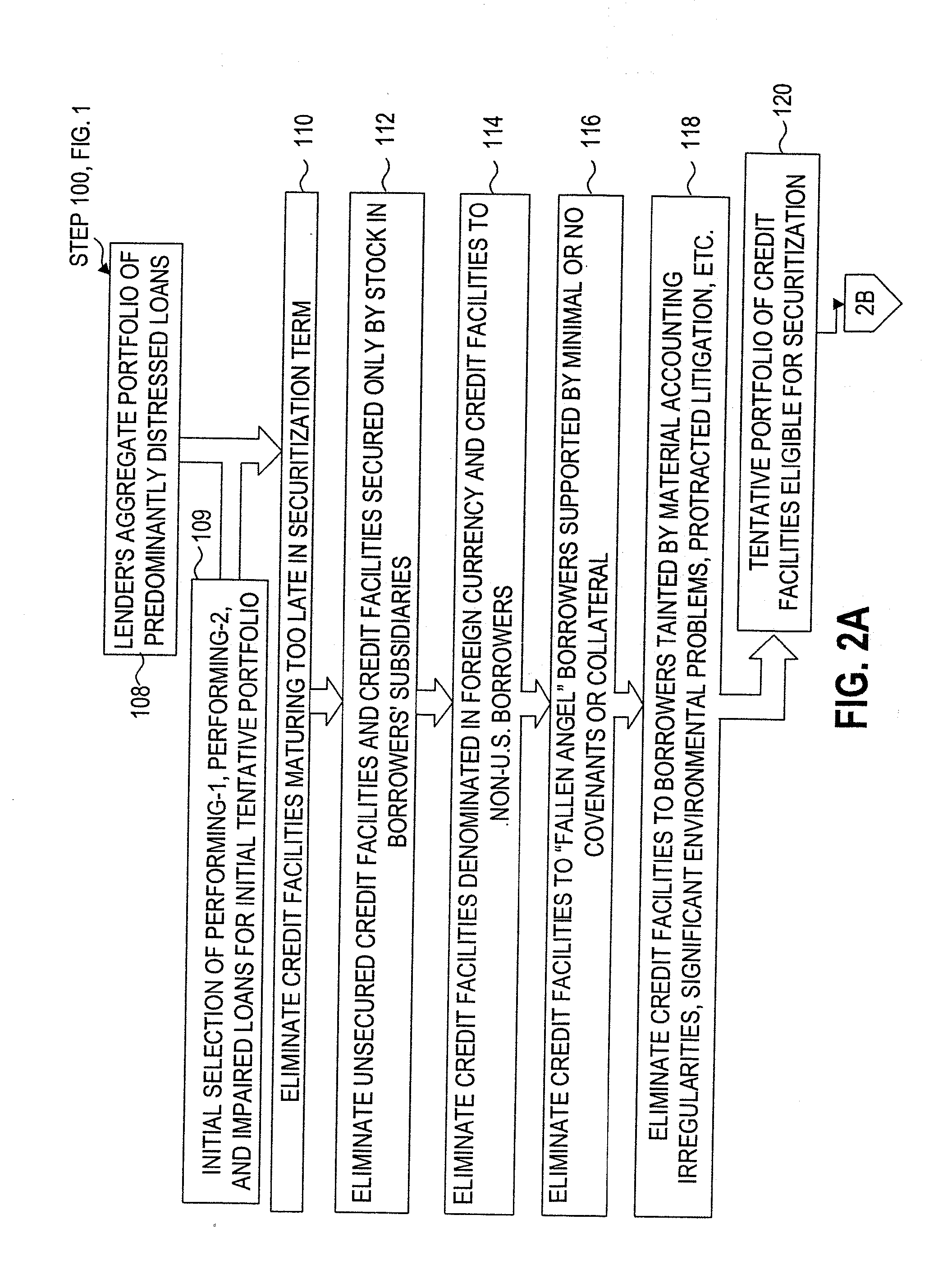
Figure 3
Abstract
Description
CROSS REFERENCE TO RELATED APPLICATIONS
[0001] This application is a continuation of U.S. patent application Ser. No. 10 / 621,443, filed Jul. 18, 2003, which is a continuation of U.S. patent application Ser. No. 10 / 053,925, filed Jan. 18, 2002 (now U.S. Pat. No. 6,654,727, issued Nov. 25, 2003), and claims priority of U.S. Patent Application No. 60 / 334,344, filed Nov. 29, 2001, the contents of all incorporated herein by reference.BACKGROUND OF THE INVENTION
[0002] 1. Field of the Invention
[0003] The present invention relates generally to asset securitization and, more particularly, to a system and method for use in securitizing a portfolio of at least 30% (and up to 100%) distressed commercial credit facilities, such that all of the securities above the equity or equity-like tranches issued by a bankruptcy-remote special purpose entity to finance the acquisition of the portfolio of distressed commercial credit facilities are eligible to receive investment grade ratings.
[0004] 2. Descriptio...
Examples
Embodiment Construction
Overview of the Process
[0044]The methodology of the present invention includes: (1) a portfolio of performing (if any) and at least 30% distressed commercial credit facilities selected to meet predetermined borrower and industry diversity criteria; (2) a self-amortizing and static SPE; (3) a mechanism to fund any unfunded revolver commitments; (4) a methodology to provide additional liquidity to certain borrowers; (5) a model and structure that aggregates the anticipated cash flows and which facilitates the requisite credit rating agency stress tests premised upon multiple default and recovery assumptions; (6) a methodology for the determination of optimum levels of interest reserves that ensure the timely repayment of interest on the investment grade debt issued in connection with the securitization of the underlying portfolio of distressed credit facilities; and (7) a capital structure designed in classes (or “tranches”) and sized for receipt of investment grade ratings on all of ...