
Intelligent music selection in vehicles
a technology for intelligent music and vehicles, applied in knowledge representation, instruments, computing models, etc., can solve the problems of fatiguing and impairing the driving experience, increasing the driver's cognitive load, and requiring cognitive effort to operate the radio
Patent Information
- Authority / Receiving Office
- US · United States
- Current Assignee / Owner
- Publication Date
- 2011-02-17
- Estimated Expiration
- Not applicable · inactive patent
Smart Images
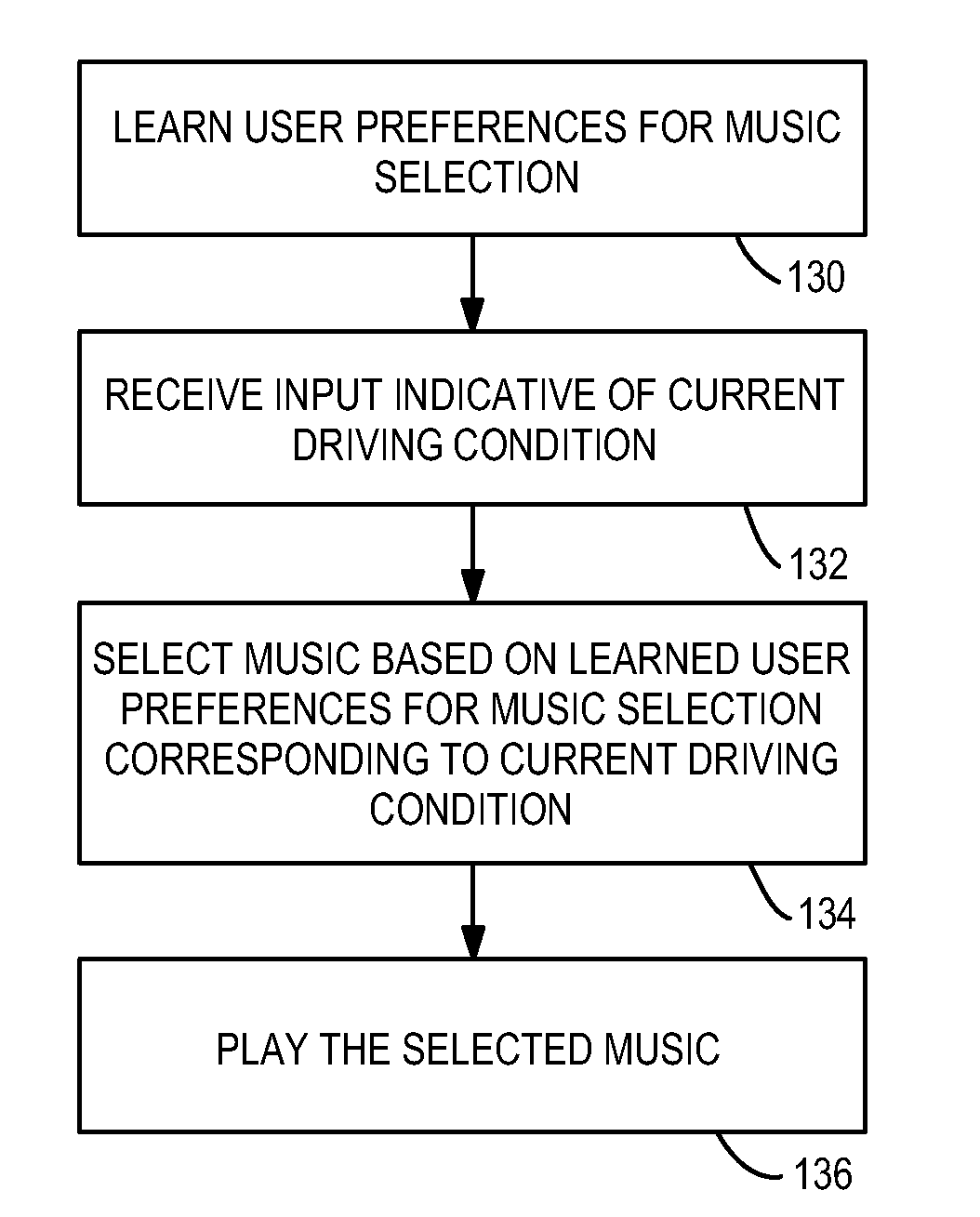
Figure 1 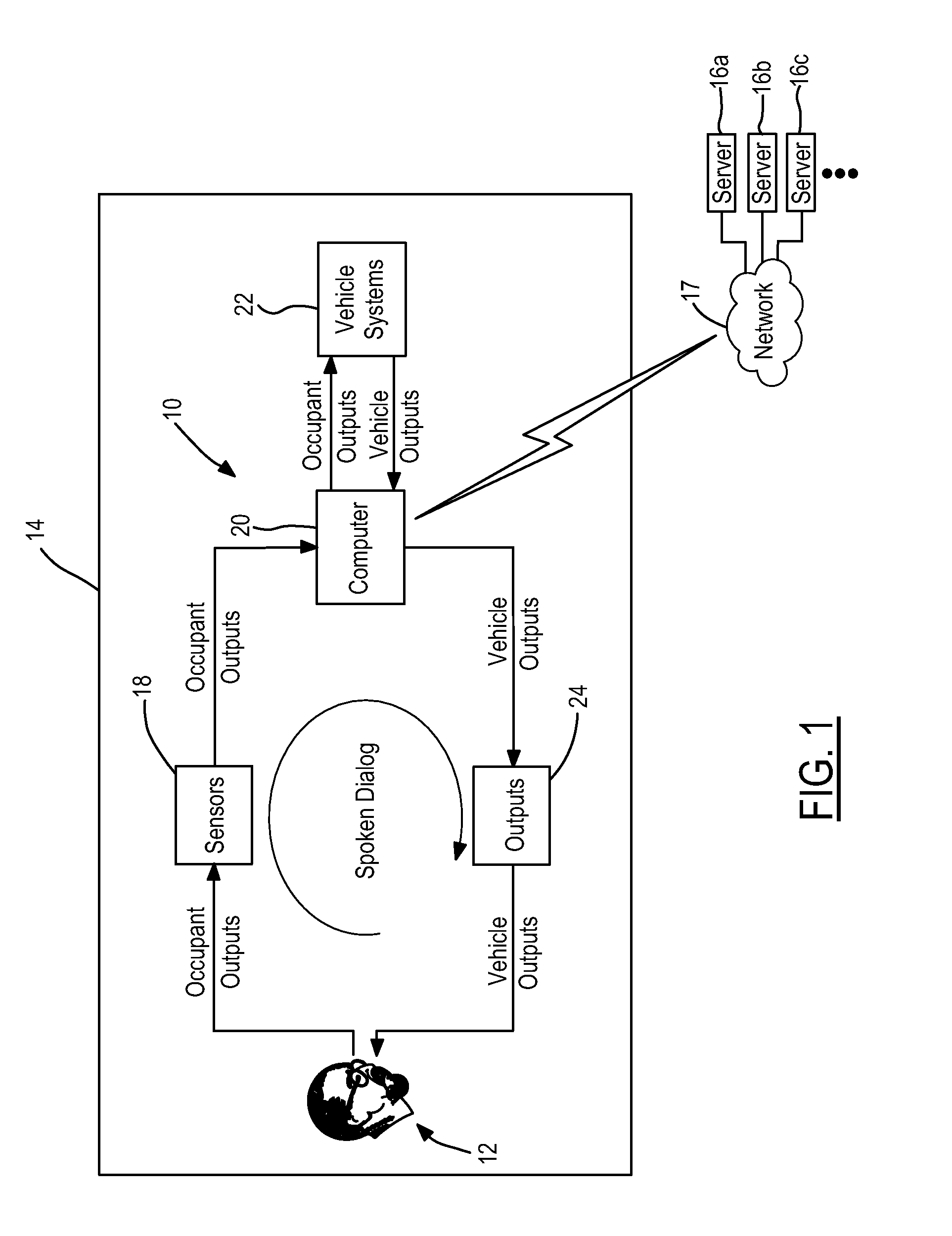
Figure 2 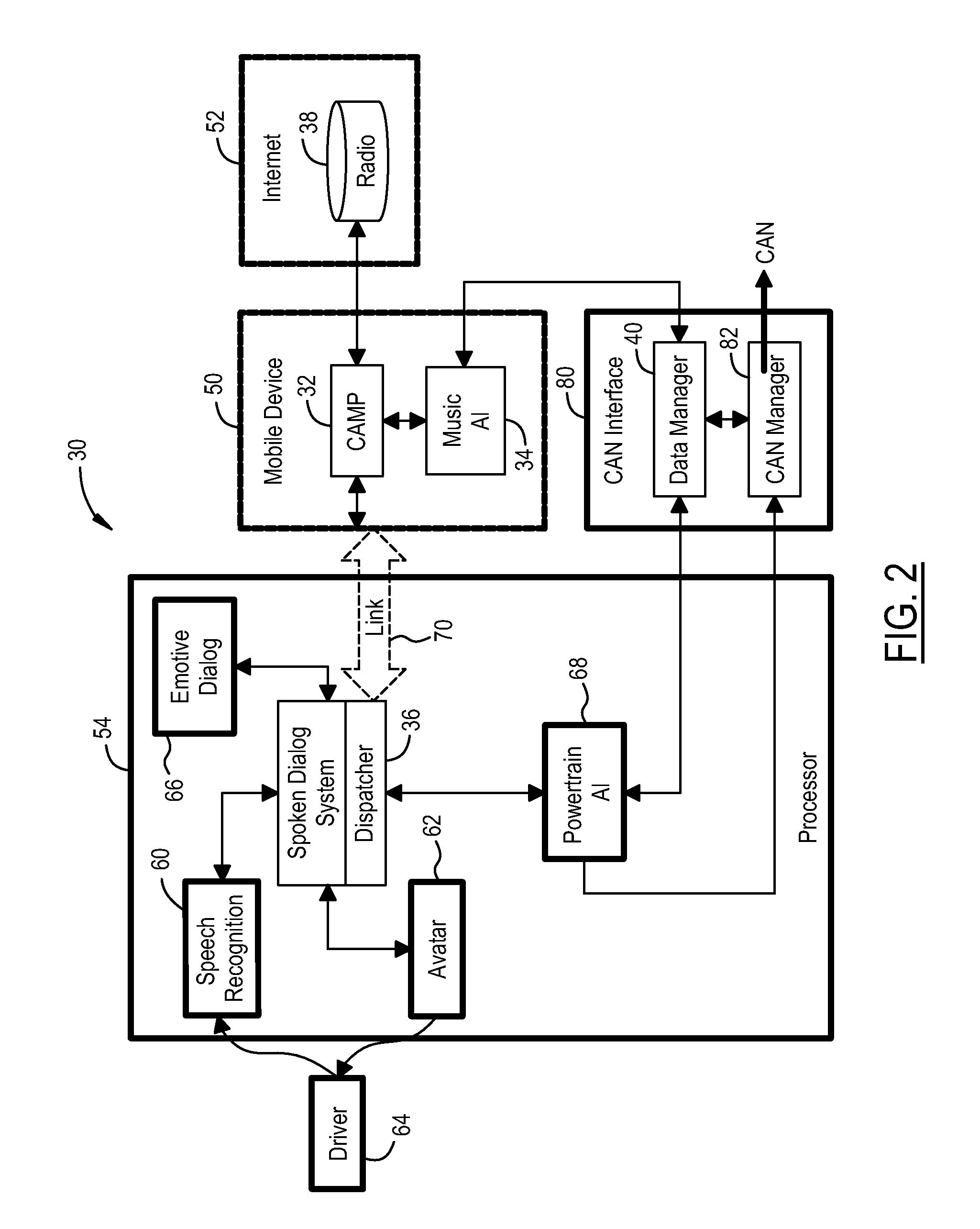
Figure 3
Abstract
Description
BACKGROUND
[0001] 1. Technical Field
[0002] The invention relates to intelligent music selection in vehicles based on user preferences and driving conditions.
[0003] 2. Background Art
[0004] Historically, major audio technology has migrated from the domestic market to the automotive market. Examples are AM radio, FM radio, Stereo, Compact Disks, etc. The latest trend in domestic audio is Internet radio, which transforms the broadcast industry.
[0005] Listening to music on the radio while driving is common practice for drivers in the United States; however, this can become a safety concern when a driver's attention is diverted from the road to the radio controls. Since traditional radio stations play music for commercial purposes, listeners may find themselves frequently changing stations to search for a song that fits their preferences. In addition, it has long been known that tempo can influence a listener's actions. Consequently, drivers subconsciously increase their driving speed due to th...
Examples
Embodiment Construction
[0026]Embodiments of the invention comprehend intelligent music selection in vehicles based on user preferences and driving conditions. In one approach to implementing the intelligent music selection, various media interfaces in an automotive vehicle are consolidated into a single interface in an emotive advisory system (EAS). It is appreciated that embodiments of the invention are not limited to automotive vehicles or to emotive advisory systems.
[0027]In general, the emotive advisory system (EAS) for the automotive vehicle emotively conveys information to an occupant. The system receives input indicative of an operating state of the vehicle, transforms the input into data representing a simulated emotional state and generates data representing an avatar that expresses the simulated emotional state. The avatar may be displayed. The system may receive a query from the occupant regarding the emotional state of the avatar, and respond to the query. An example emotive advisory system an...