
Liquid crystalline polyester composition, method for producing the same, and connector
a technology of polyester composition and liquid crystalline polyester, which is applied in the direction of inorganic insulators, synthetic resin layered products, transportation and packaging, etc., can solve the problems of connector surface blistering and high temperature blistering,
Patent Information
- Authority / Receiving Office
- US · United States
- Patent Type
- Applications(United States)
- Current Assignee / Owner
- Publication Date
- 2011-08-04
- Estimated Expiration
- Not applicable · inactive patent
Smart Images
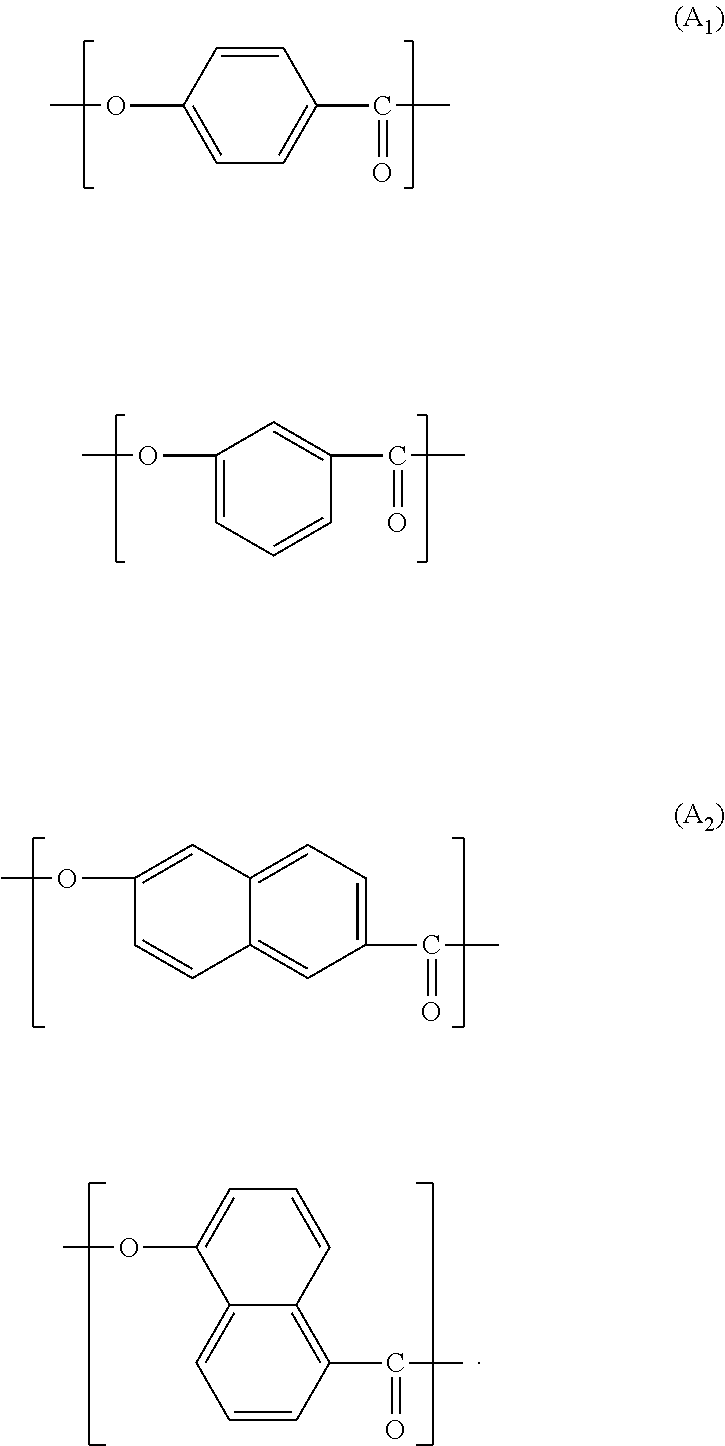
Figure 1 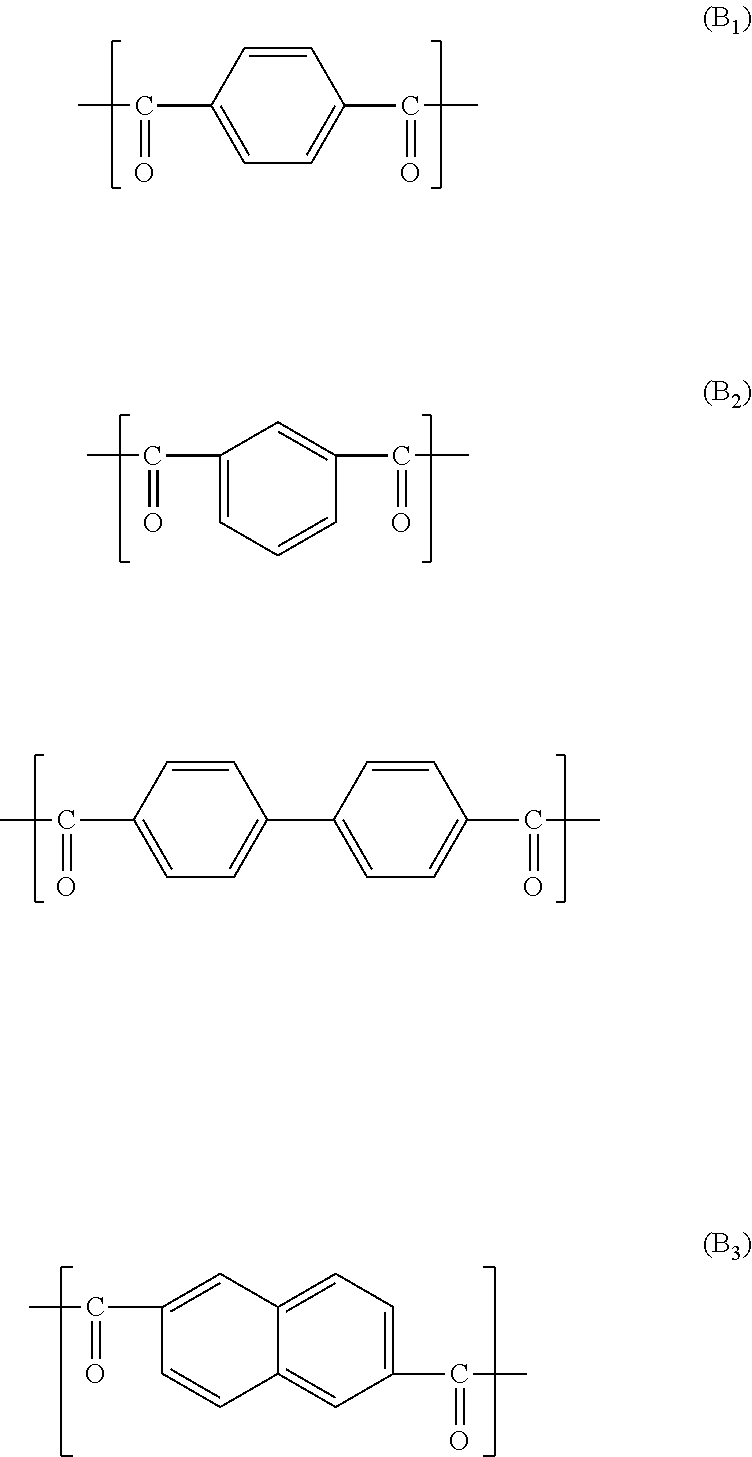
Figure 2 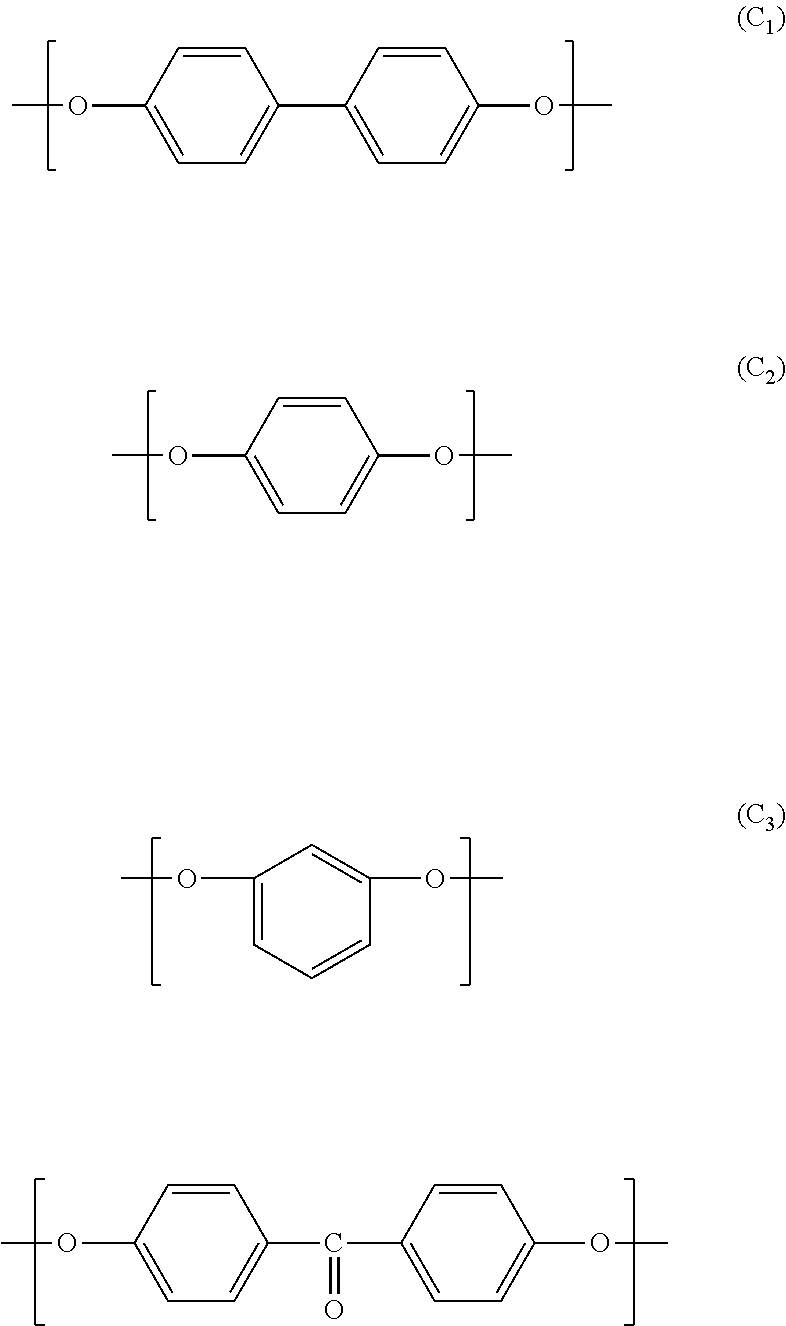
Figure 3
Abstract
Description
BACKGROUND OF THE INVENTION
[0001] (1) Field of the Invention
[0002] The present invention relates to a liquid crystalline polyester composition. The present invention also relates to a method for producing a liquid crystalline polyester composition and further relates to a connector obtained by molding a liquid crystalline polyester composition.
[0003] (2) Description of Related Art
[0004] With the progress of miniaturization and light-weighting / thinning of an electrical and electronic equipment, a pitch of a connector used therefor has recently become narrower. Therefore, a liquid crystalline polyester is preferably used as a molding material thereof since it is excellent in melt fluidity, heat resistance, and mechanical properties. In the liquid crystalline polyester, molecular chains are likely to be oriented in a flow direction upon molding, and anisotropy on a mold shrinkage ratio or mechanical properties is likely to occur in a flow direction and a direction perpendicular to the flow...
Examples
production example 1
[0065]In a reactor equipped with a stirrer, a torque meter, a nitrogen gas introducing tube, a thermometer and a reflux condenser, 994.5 g (7.2 mol) of p-hydroxybenzoic acid, 446.9 g (2.4 mol) of 4,4′-dihydroxybiphenyl, 299.0 g (1.8 mol) of terephthalic acid, 99.7 g (0.6 mol) of isophthalic acid and 1347.6 g (13.2 mol) of acetic anhydride were charged. After sufficiently replacing the atmosphere in the reactor with a nitrogen gas, 0.18 g of 1-methylimidazole was added and the temperature was raised to 150° C. over 30 minutes under a nitrogen gas flow, and then the mixture was refluxed for 30 minutes while maintaining the temperature. After adding 2.4 g of 1-methylimidazole, the temperature was raised to 320° C. over 2 hours and 50 minutes while distilling off acetic acid distilled as a by-product and the unreacted acetic anhydride. When an increase in torque was recognized, contents were taken out and then cooled to room temperature. The obtained solid was ground by a coarse grinder...
examples 1 to 6
, Comparative Examples 1 to 4
[0067]A liquid crystalline polyester, mica and carbon black were mixed in each proportion shown in Table 2 or 3, and the mixture was fed in a twin-screw extruder having a vent section and then melt-kneaded while maintaining the vent section at the degree of pressure reduction shown in Table 1 to obtain a pellet-like composition. This composition was molded at a cylinder temperature of 350° C., a mold temperature of 130° C. and an injection rate of 60% using an injection molding machine (“PS40E1ASE”, manufactured by Nissei Plastic Industrial Co., Ltd.) to obtain JIS K7113 (1 / 2) dumbbell specimens (thickness: 1.2 mm). Ten specimens were immersed in a solder bath heated at 270° C. for 60 seconds. After taking out, the presence or absence of blister on a surface of the specimen was observed. A value (%) obtained by dividing the number of specimens with blister by total numbers (10) of specimens was taken as an occurrence percentage of blister. Then, the occu...