
Phloroglucinol derivatives from ecklonia cava having Anti-hiv-1 inhibitory activity
a technology of ecklonia cava and glucinol, which is applied in the field of glucinol derivatives from ecklonia cava having anti-hiv-1 inhibitory activity, can solve the problems of failure of anti-aids treatment in more than 50% of patients and the path of virus depletion of the immune system
Patent Information
- Authority / Receiving Office
- US · United States
- Patent Type
- Applications(United States)
- Current Assignee / Owner
- Publication Date
- 2011-11-24
- Estimated Expiration
- Not applicable · inactive patent
Smart Images
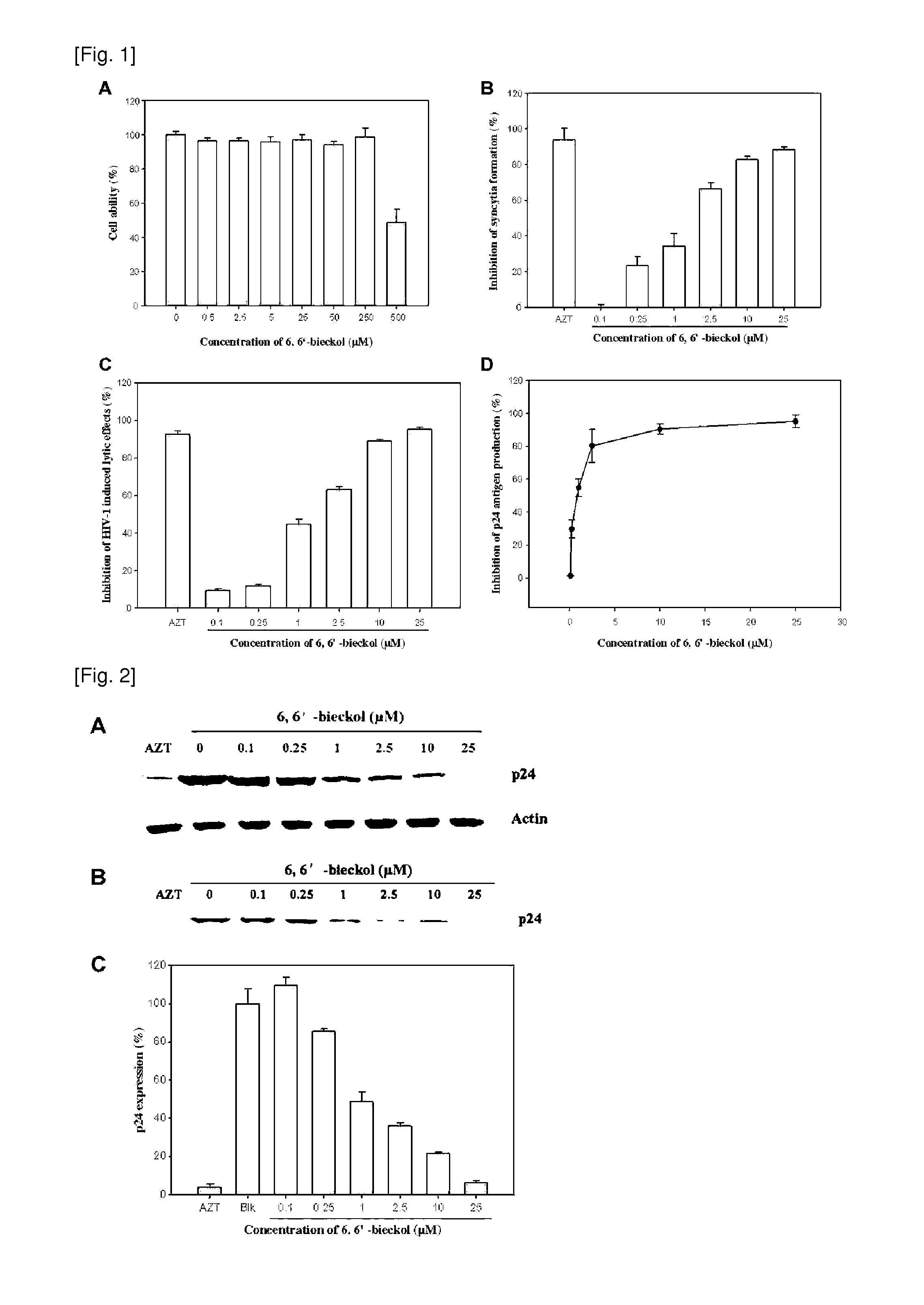
Figure 1 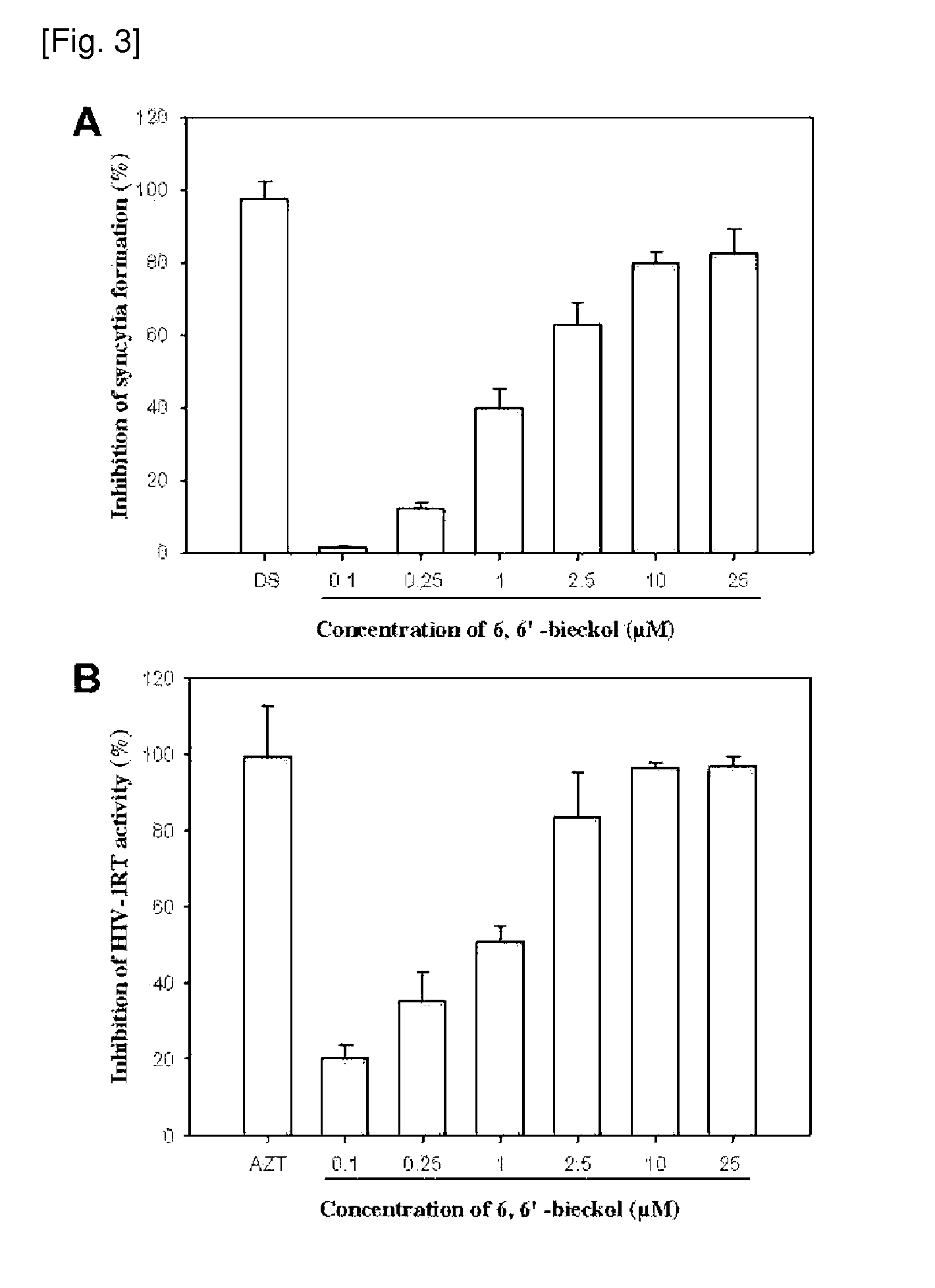
Figure 2 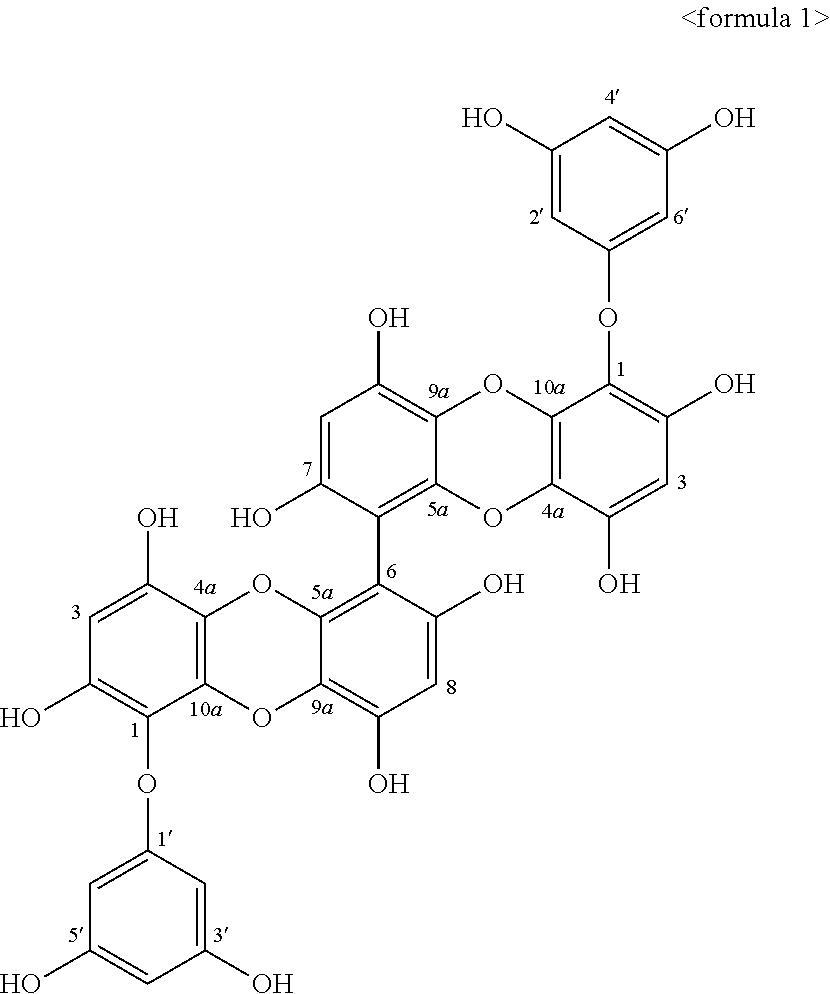
Figure 3
Abstract
Description
TECHNICAL FIELD
[0001] The present invention relates to phloroglucinol derivatives from Ecklonia cava having anti-HIV-1 inhibitory activity, more specifically to a pharmaceutical composition and health functional food having anti-HIV-1 inhibitory activity containing phloroglucinol derivative, 6,6′-bieckol as an effective ingredient.BACKGROUND ART
[0002] Human immunodeficiency virus type-1 (HIV-1) is identified as the causative agent of acquired immunodeficiency syndrome (AIDS) which is one of the most important diseases with about 33.2 million people infected worldwide up to now. In 2007, 2.1 million people died of AIDS related diseases and 2.5 million new HIV infections occurred. According to UNAIDS estimations, every day 6800 people become newly infected with HIV and 5700 people die of AIDS and related disorders. However, the pathway by which the virus depletes the immune system is not fully identified.
[0003] After the introduction of AIDS in early 1980s, the first generation anti-HIV ...
Examples
example 1
Extraction and Purification of Phloroglucinol Derivative from EC
[0040]The marine edible brown seaweed, EC, was collected from Jeju Island coast of Korea during the period from October 2004 to March 2005. Fresh EC was washed three times with water to remove salt. The lyophilized EC was ground into powder before extraction. The dried EC powder (10 kg) was extracted by stirring extraction unit with MeOH (35 L) for 10 days. The methanol extract (273 g) was suspended in water and partitioned with n-hexane (35.92 g), CH2Cl2 (20.49 g), EtOAc (24.87 g) and n-BuOH (106 g), in sequence. The EtOAc fraction (24.87 g), which exhibited the most potent anti-HIV activity on H9 and H9 / HIV-1IIIB human cells, was subjected to a silica gel flash chromatography and eluted with a gradient solvent system of Hexane / EtOAc / MeOH to yield ten subfractions (F110). The F5 (378.39 mg) with the highest activity on anti-HIV was further purified by Sephadex LH-20 with only MeOH to afford the phloroglucinol derivativ...
example 2
[0044]H9 and H9 / HIV-1IIIB cell lines were obtained through American Type of Culture Collection (Manassas, Va., USA). CEM-SS cell line from Dr. P. Nara and C8166 cell line from Dr. G. Farrar were provided by the EU Programme EVA Centre for AIDS Reagents, NIBSC, UK. CEM-SS, C8166, H9 and H9 / HIV-1IIIB cell lines were grown in RPMI 1640 medium supplemented with 10% FBS, 100 μg of streptomycin per ml and 100 U of penicillin per ml. HIV-1IIIB virus stock was obtained from the culture supernatant of chronically infected H9 / HIV-1IIIB cells. Cell-free virus was harvested from the supernatants by centrifugation and filtration through 0.22 μM filter. The virus stocks were stored as small aliquots at 80° C. until use.
[0045]The cytotoxic concentrations of 6,6′-bieckol were determined by MTT assay, a method based on the reduction of 3-(4,5-dimethylthiazol-2-yl)-2,5-diphenyltetrazolium bromide (MTT). Four hundreds of microliters of medium containing CEM-SS or H9 cells were cult...
example 3
Measurement of Anti-HIV Activity
Example 3-1
Inhibition of Syncytia Formation
[0046]1×10⁵ C8166 cells in aliquots of 300 μl were seeded in triplicate to a 48-well plate containing 100 μl of serial dilutions of compound in complete medium. After 2 h of incubation, the cells were infected with 100 μl of stock supernatant of HIV-1IIIB diluted in complete medium at 200 CCID50. The plates were incubated at 37° C. for 72 h and the number of syncytia was determined microscopically.