
Nanochanneled device and related methods
a channel device and channel technology, applied in the direction of transportation and packaging, intravenous devices, other medical devices, etc., can solve the problem of still a challenge in the creation of therapeutic agent delivery devices capable of delivering therapeutic agents in controlled ways, and achieve high flow rate, high mechanical strength, and high molecule transport rate
Patent Information
- Authority / Receiving Office
- US · United States
- Patent Type
- Applications(United States)
- Current Assignee / Owner
- Publication Date
- 2012-04-19
Smart Images
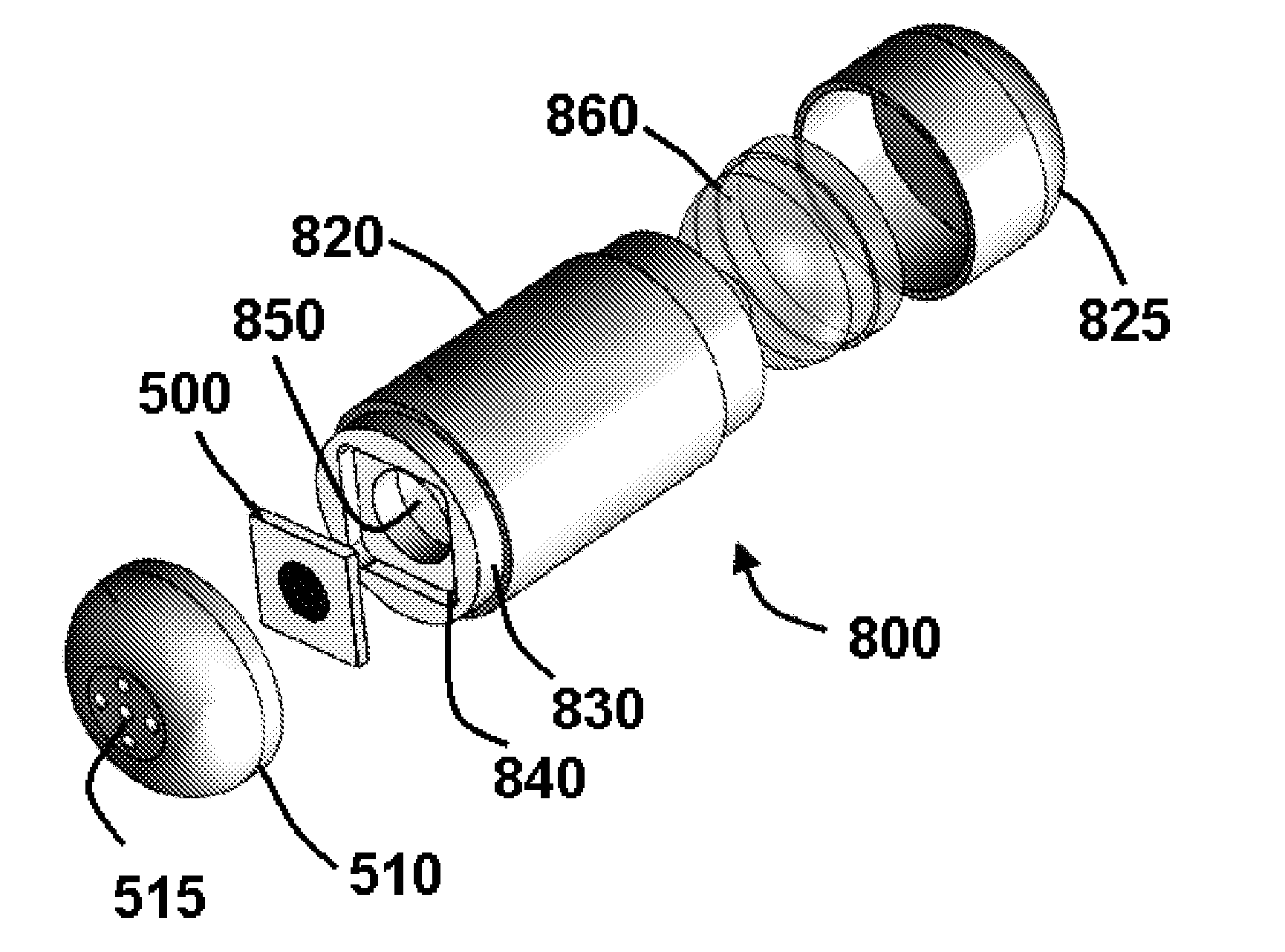
Figure 1 
Figure 2 
Figure 3
Abstract
Description
CROSS-REFERENCE TO RELATED APPLICATIONS
[0001] This application claims priority to U.S. Provisional Patent Application Ser. No. 61 / 168,844, filed Apr. 13, 2009, and U.S. patent application Ser. No. 12 / 618,233, filed Nov. 13, 2009, entitled “Nanochanneled Device and Method of Use”, the entire disclosures of which are specifically incorporated herein by reference.BACKGROUND INFORMATION
[0002] This invention was made with government support under contract NNJ06HE06A awarded by NASA. The government has certain rights in this invention.
[0003] Considerable advances have been made in the field of therapeutic agent (e.g. drug) delivery technology over the last three decades, resulting in many breakthroughs in clinical medicine. The creation of therapeutic agent delivery devices that are capable of delivering therapeutic agents in controlled ways is still a challenge. One of the major requirements for an implantable drug delivery device is controlled release of therapeutic agents, ranging from sm...
Examples
example 1
[0206]The capsule as described herein is used to administer leuprolide acetate for the treatment of prostate cancer. Leuprolide acetate (USP 31) is a synthetic nonapeptide agonist analog of luteinizing hormone-releasing factor (LNHR). The leuprolide acetate molecule is approximately 1209 Daltons in weight and two to three nanometers in size. It is soluble in aqueous media at a level of approximately 10 mg / mL. An existing method of administering leuprolide via extended release is disclosed in U.S. Pat. No. 5,728,396 filed Jan. 30, 1997 and incorporated herein by reference.
[0207]The nanochannel delivery device chip is installed in a capsule as described herein and filled with a 5 mg / mL leuprolide acetate solution (NDC number 0703-4014-18) for use in the treatment of prostate cancer. The capsule is sized to approximately 2.8 mL, so that the filled capsule contains approximately 14 mg of leuprolide acetate. If stronger concentrations of leuprolide acetate solution are used, the capsule ...
example 2
[0210]The capsule and nanochannel delivery device are configured and implanted as described in Example 1. However, instead of administering leuprolide acetate, the capsule and nanochannel delivery device administer letrozole for the treatment of breast cancer. The limited success of chemotherapy for the treatment of breast cancer emphasizes the need of novel preventive strategies to minimize the cancer occurrence. Recent studies have highlighted that aromatase inhibitors are promising chemopreventive agents for breast cancer through inhibition of estrogen biosynthesis. In particular, research has suggested that letrozole is an ideal candidate for chemoprevention for women in high risk group such as BRCA1 positive. However, the low efficacy and the side effects associated with the conventional systemic administration of letrozole are limiting factors for its long term usage.
[0211]Breast cancer growth is highly dependent on estrogen, and thus inhibition of estrogen is highly effective...
example 3
[0216]The capsule and nanochannel delivery device are configured and implanted in a patient as described in Example 1. However, instead of administering leuprolide acetate, the capsule and nanochannel delivery device administer lapatinib for the treatment of breast cancer.