
Conductive paste composition and method for producing multilayer ceramic capacitor using the same
a multi-layer ceramic capacitor and composition technology, applied in the direction of capacitors, variable capacitors, fixed capacitors, etc., can solve the problem of limited sintering temperature range for producing multi-layer ceramic capacitors, and achieve excellent electrode connection and dielectric characteristics
Patent Information
- Authority / Receiving Office
- US · United States
- Patent Type
- Applications(United States)
- Current Assignee / Owner
- Publication Date
- 2012-05-10
Smart Images
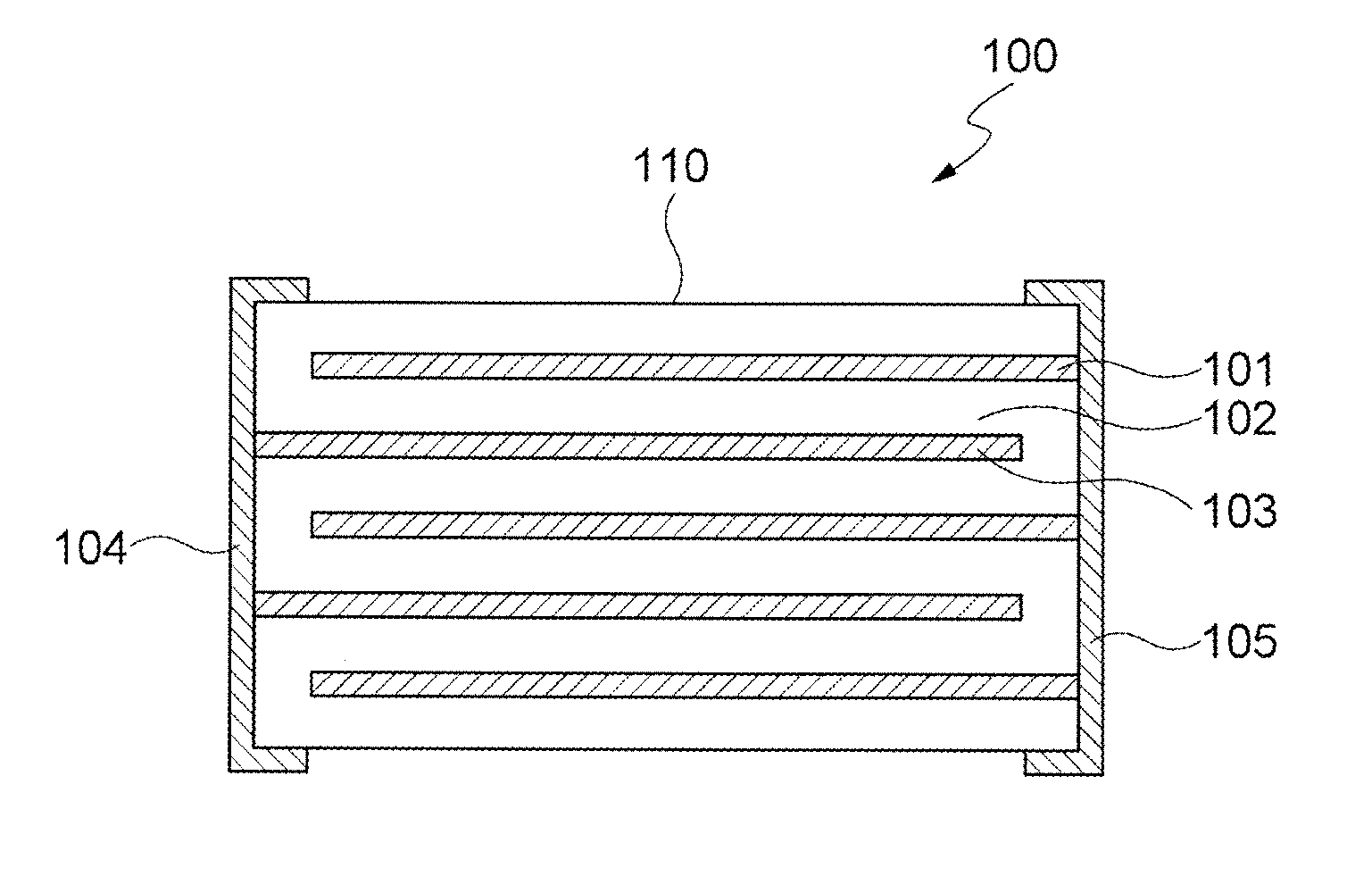
Figure 1 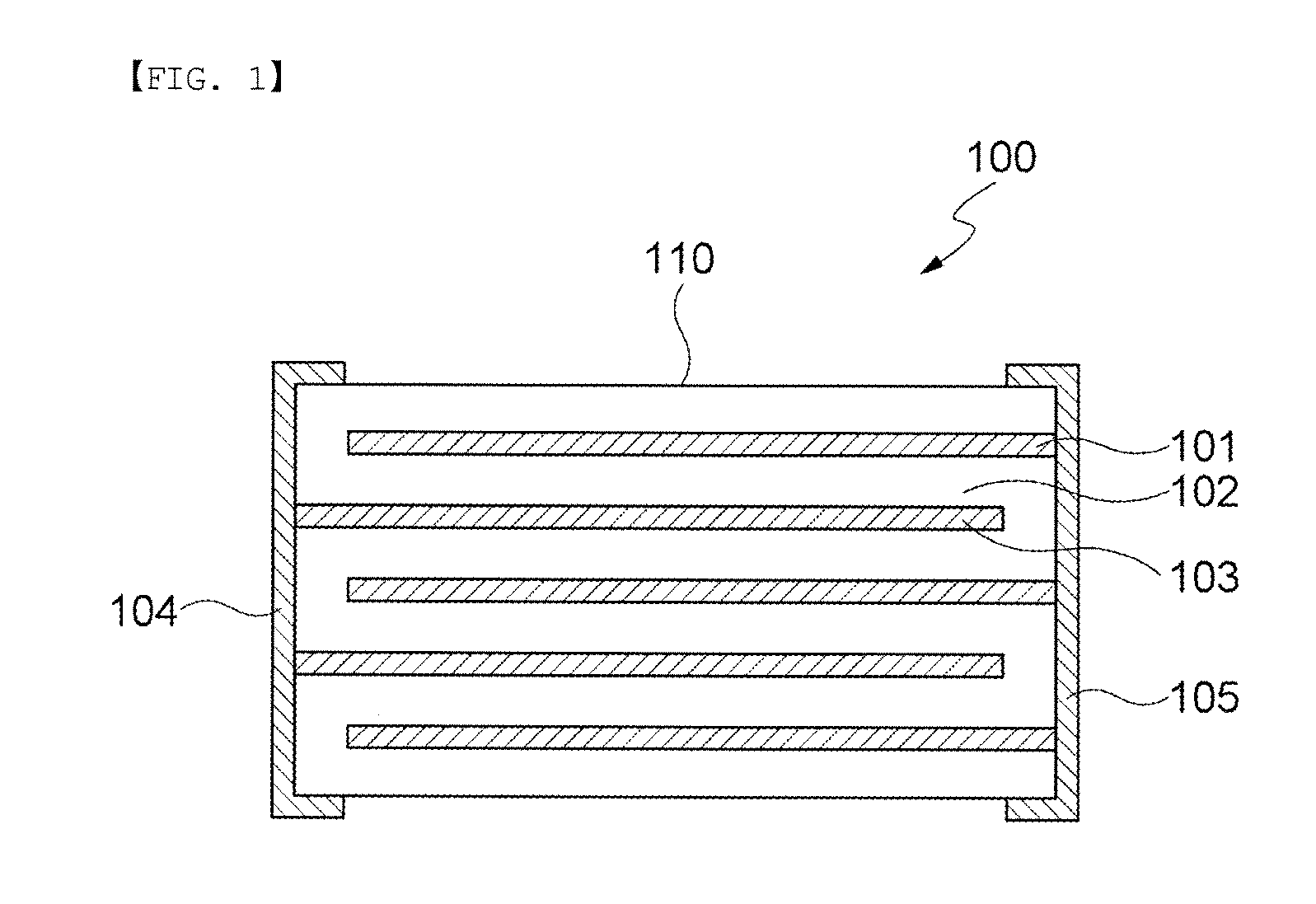
Figure 2 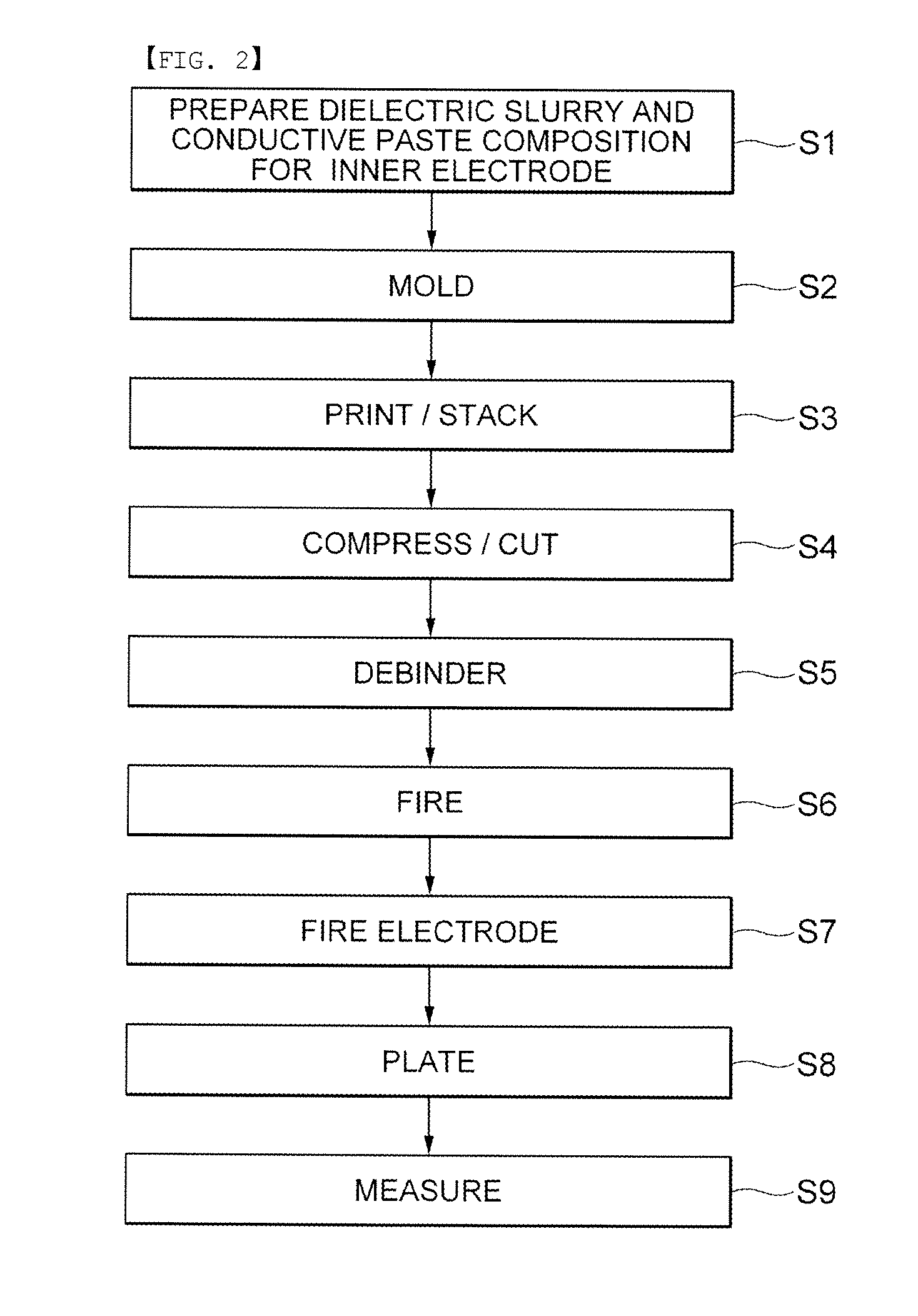
Figure 3
Abstract
Description
CROSS REFERENCE(S) TO RELATED APPLICATIONS
[0001] This application claims the benefit under 35 U.S.C. Section [120, 119, 119(e)] of Korean Patent Application Serial No. 10-2010-0110366, entitled “Conductive Paste Composition And Method For Producing Multilayer Ceramic Capacitor Using The Same” filed on Nov. 8, 2010, which is hereby incorporated by reference in its entirety into this application.BACKGROUND OF THE INVENTION
[0002] 1. Technical Field
[0003] The present invention relates to a conductive paste composition and a method for producing a multilayer ceramic capacitor using the same, and more particularly, to a conductive paste composition including a glass composition having specific compositions in a conductive paste for an inner electrode to increase firing shrinkage starting temperature and discharging an inhibitor to a dielectric layer during a firing process to improve dielectric characteristics while being fired together with a dielectric, and a method for producing a multila...
Examples
example
[0066]In order to produce the glass composition having Chemical Formula of aLi2O-bK2O-cCaO-dBaO-eB2O3-fSiO2 (a, b, c, d, e, and f satisfy a+b+c+d+e+f=100, 2≦a≦10, 2≦b≦10, 0≦c≦25, 0≦d≦25, 5≦e≦20, 50≦f≦80), each element was estimated to satisfy the compositions of 7 mol % of Li2O, 3 mol % of K2O, 10 mol % of CaO, 10 mol % of BaO, 5 mol % of B2O3, and 65 mol % of SiO2, sufficiently mixed, melted at 1400° C., rapidly cooled passing through a twin roller to obtain the glass plate, perform the dry grinding on the glass plate, and perform the vapor heat treatment thereon, thereby producing the glass composition of the ultra-fine spherical powder shape having a grain size of 100 to 300 nm.
[0067]The produced glass composition was mixed with nickel and BaTiO3 inhibitor as compositions listed in Table 1 to produce the conductive paste for the inner electrode and then, printed on the dielectric layer. Further, each dielectric sheet printed with the inner electrode was stacked to form 10 layers ...