
Enhancing critical current density of cuprate superconductors
a superconductors and critical current technology, applied in the field of superconductors, can solve the problems of high cost and complexity of producing these materials in a form suitable for large-scale use, low critical current, and high cost of manufacturing processes
Patent Information
- Authority / Receiving Office
- US · United States
- Patent Type
- Applications(United States)
- Current Assignee / Owner
- Publication Date
- 2012-06-07
- Estimated Expiration
- Not applicable · inactive patent
Smart Images
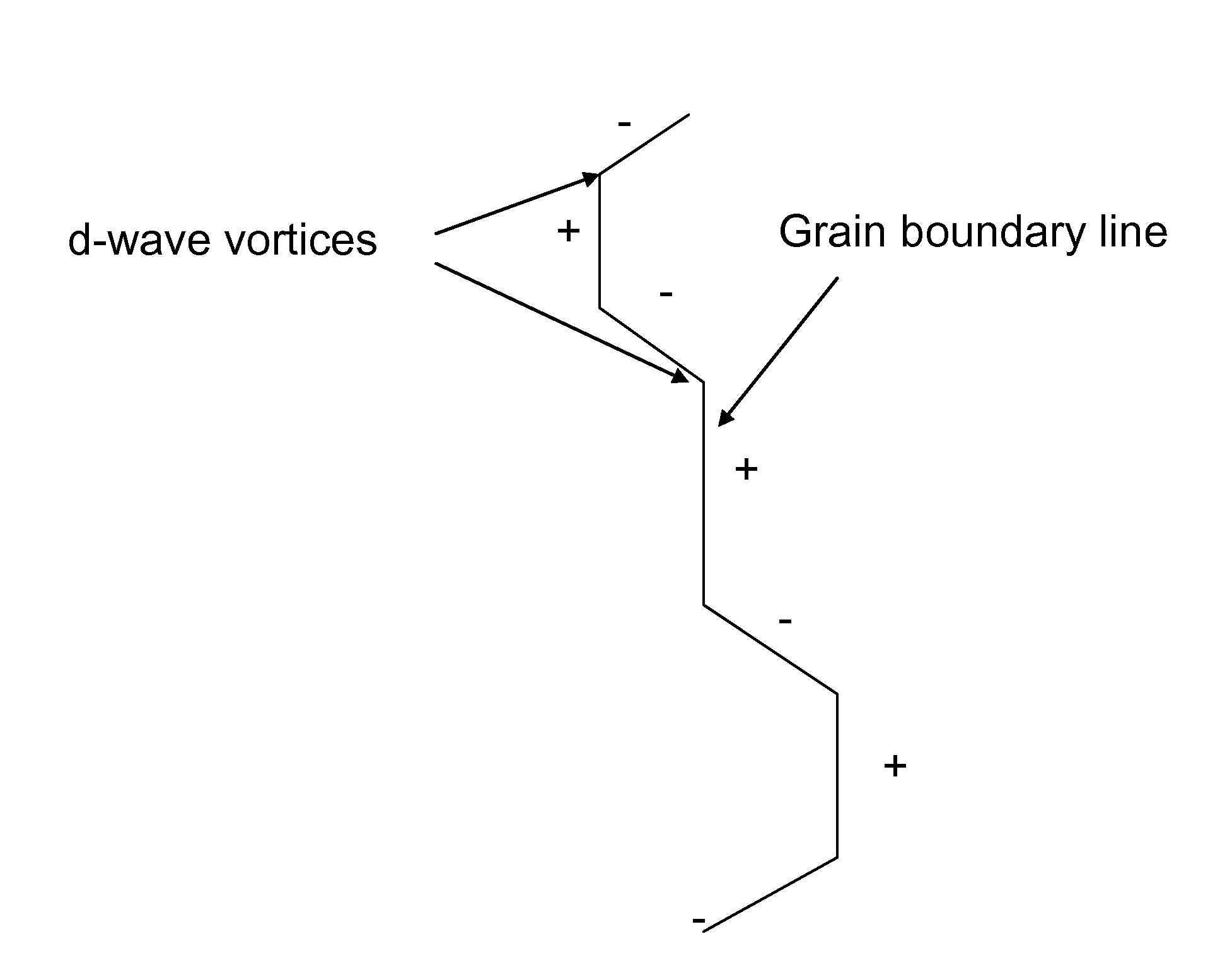
Figure 1 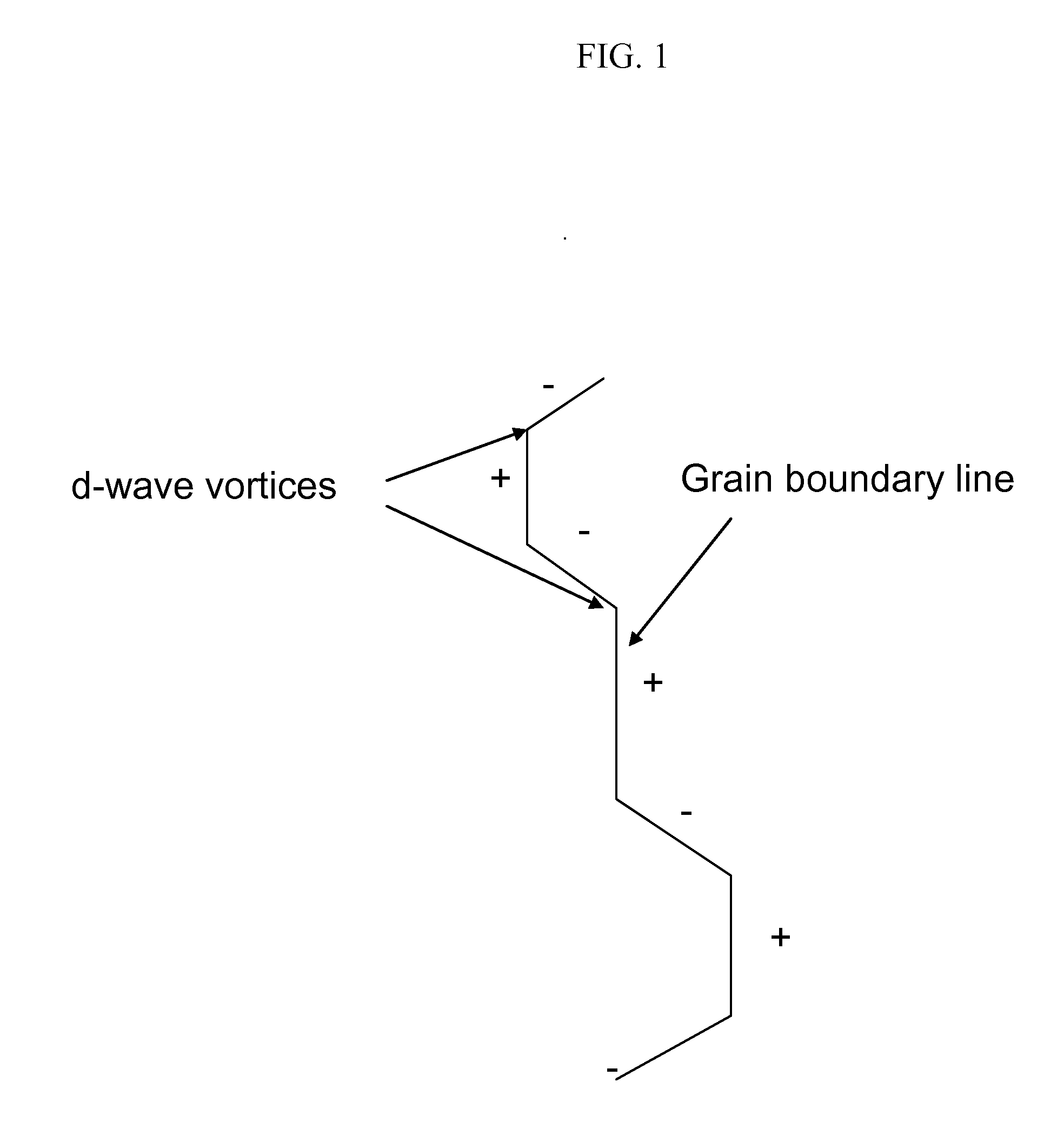
Figure 2
Abstract
Description
PRIORITY AND RELATED APPLICATION
[0001] This application claims priority to U.S. Provisional Patent Application Ser. No. 61 / 444,457 filed Feb. 18, 2011 entitled “ENHANCING CRITICAL CURRENT DENSITY OF CUPRATE SUPERCONDUCTORS” which is hereby incorporated by reference in its entirety.STATEMENT REGARDING FEDERAL SUPPORT
[0002] This invention was made with U.S. Government support under contract number DE-ACO2-98CH 10886, awarded by the U.S. Department of Energy. The Government has certain rights in the invention.FIELD OF THE INVENTION
[0003] The present invention relates to superconductors, particularly to the current carrying capabilities of superconductors.BACKGROUND OF THE INVENTION
[0004] The role of high temperature superconductivity in energy related fields is widely accepted. A serious limitation to the wide spread use of these materials is the cost and complexity of producing these materials in a form suitable for large scale uses. It is already known that the critical current densities...
Examples
Embodiment Construction
[0009]The present invention provides a method to enhance the critical current density by using fundamental properties of the cuprate superconductor and impeding the motion of Abrikosov (A) vortices, Josephson (J) vortices, or Abrikosov-Josephson (A-J) vortices. The fundamental properties of the cuprate superconductor that are employed herein include wave function symmetry such as d-wave associated vortices. The grain boundary of cuprate superconductors is a planar defect. The way to introduce d-wave vortices is to produce grain boundaries in which the plane of the grain boundary meanders by plus or minus π / 4 angle. Four d-wave associated are introduced at each such meander. These are spatially and temporally locked in place. If a large enough number of this type of meandering is present the critical current of this boundary can approach its thermodynamic limit. FIG. 1 shows a grain boundary line along with its meandering structure to illustrate how and where the d-wave vortices are ...