
Compositions and Methods for Modulating Hemostasis
a technology of coagulation factor and modulation method, which is applied in the field of medicine and hematology, can solve the problems of bleeding complications, severe problems in hemophilia management, and the development of inhibitors of the administered proteins, and achieve the effect of modulating hemostasis
Patent Information
- Authority / Receiving Office
- US · United States
- Patent Type
- Applications(United States)
- Current Assignee / Owner
- Publication Date
- 2014-09-04
Smart Images
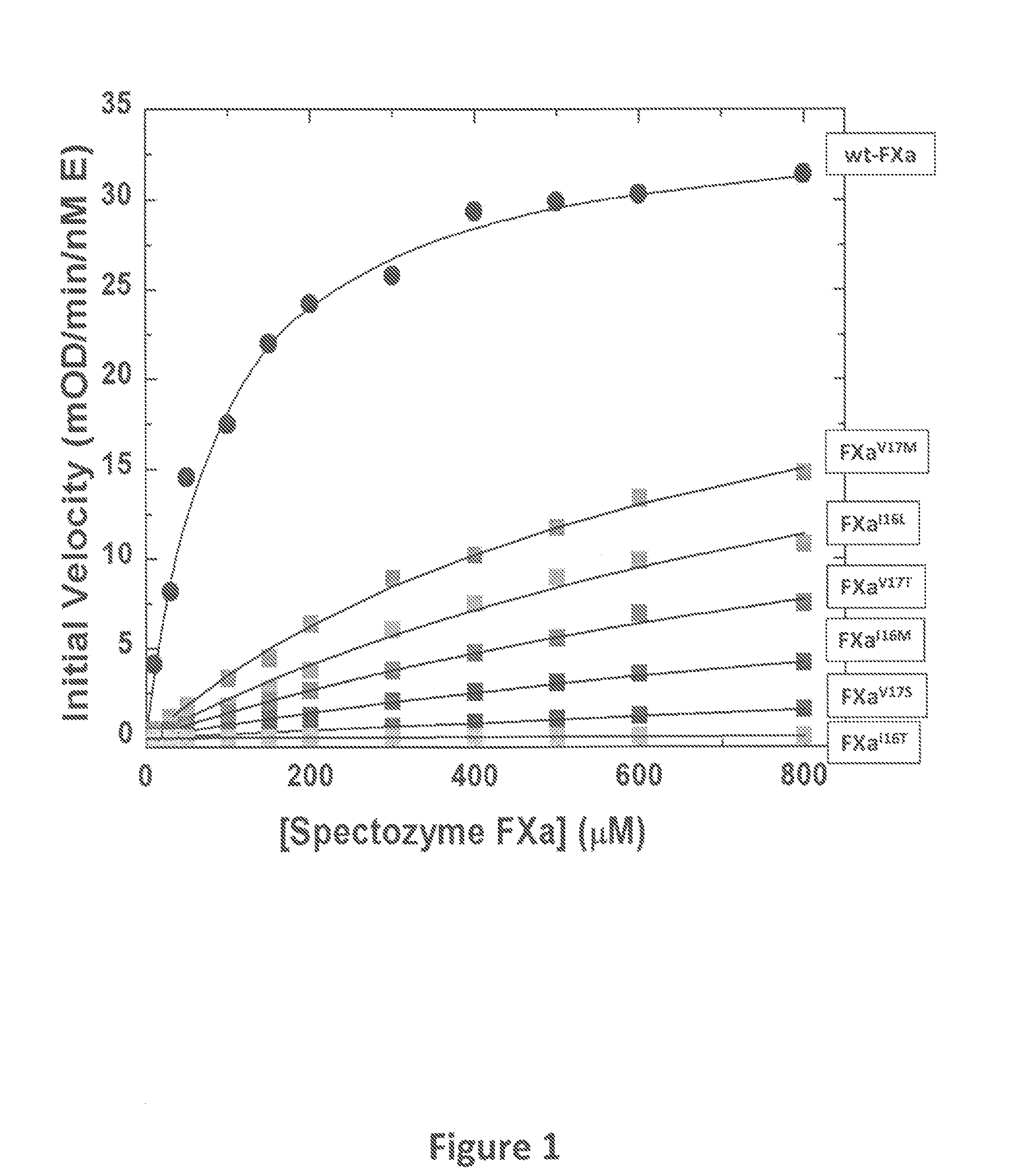
Figure 1 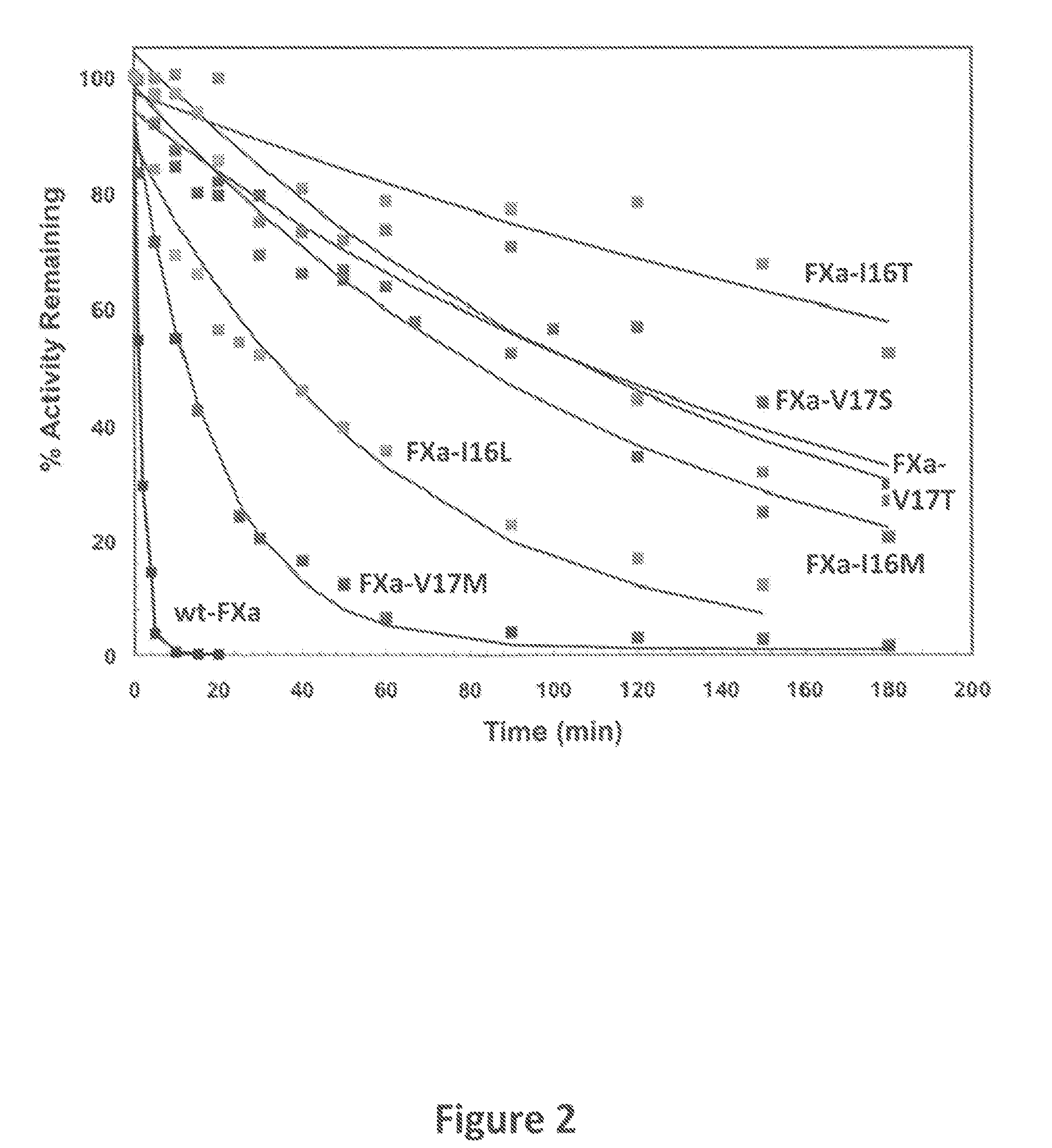
Figure 2 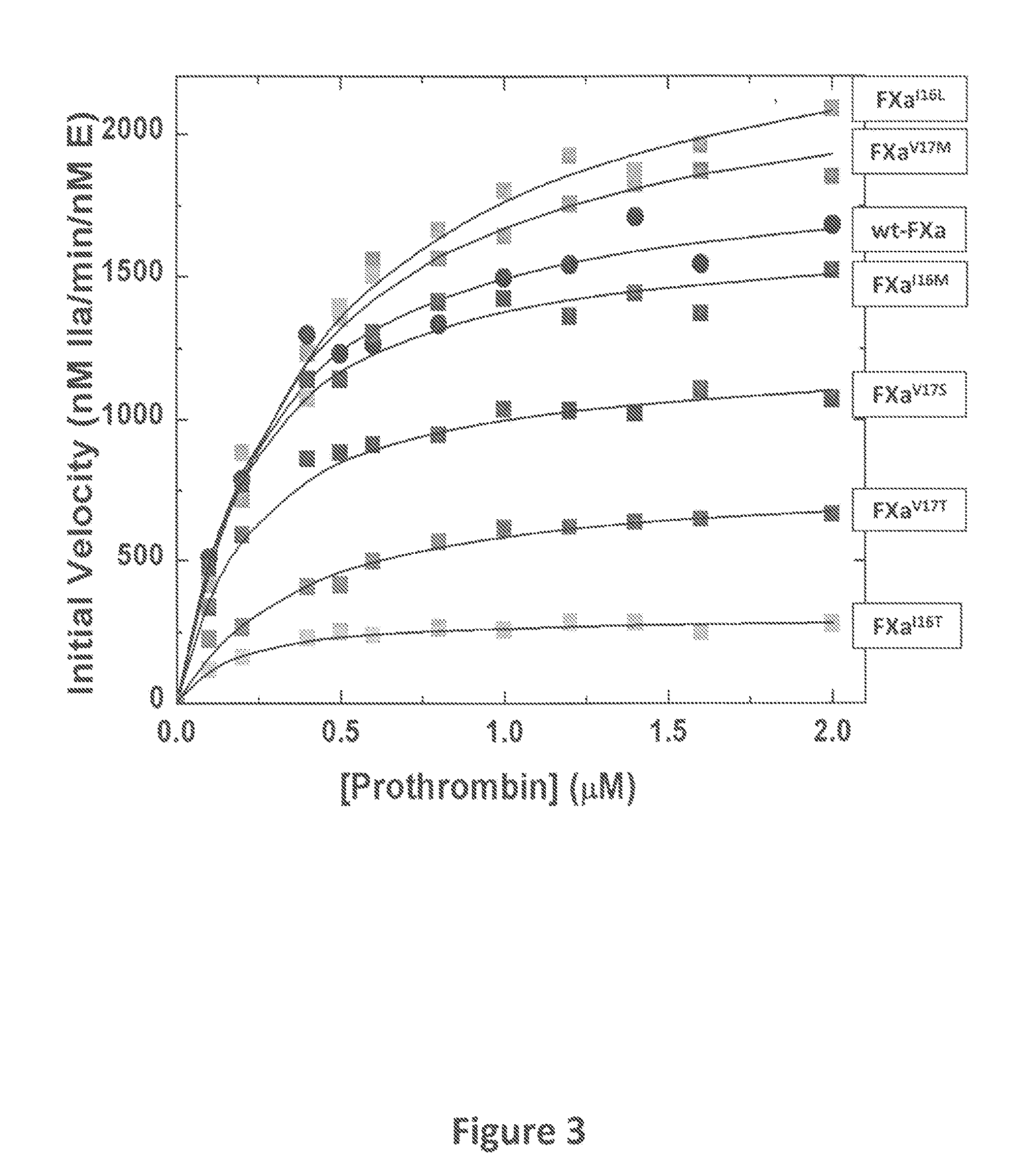
Figure 3
Abstract
Description
[0001] This application claims priority under 35 U.S.C. §119(e) to U.S. Provisional Patent Application No. 61 / 541,412, filed Sep. 30, 2011. The foregoing application is incorporated by reference herein.
[0002] This invention was made with government support under Grant Numbers P01 HL-74124 awarded by the National Institutes of Health. The government has certain rights in the invention.FIELD OF THE INVENTION
[0003] The present invention relates to the fields of medicine and hematology. More specifically, the invention provides novel coagulation Factor X / Xa variants and methods of using the same to modulate the coagulation cascade in patients in need thereof.BACKGROUND OF THE INVENTION
[0004] Several publications and patent documents are cited throughout the specification in order to describe the state of the art to which this invention pertains. Each of these citations is incorporated herein by reference as though set forth in full.
[0005] In vertebrates with a closed circulatory system, an e...
Examples
example
[0084]The zymogenicity of the FXa variants of the instant invention was determined Specifically, FXa chromogenic substrate activity was measured from initial rates of hydrolysis of Spectrozyme® FXa as previously described (Camire, R. M. (2002) J. Biol. Chem., 277:37863-37870). Briefly, kinetic measurements were performed in 20 mm Hepes, 0.15 m NaCl, 0.1% (w / v) polyethylene glycol 8000, 2 mm CaCl2, pH 7.5 (assay buffer). Wild-type or mutant FXa was incubated with Spectrozyme® FXa. Chromogenic activity was assessed by monitoring the increase in absorbance at 405 nm over time. The kinetics of peptidyl substrate hydrolysis was measured using increasing concentrations of substrate and initiated with FXa. Kinetic parameters were determined by least-squares fitting of the initial rate data to appropriate equations.
[0085]As seen in FIG. 1, the FXa variants of the instant invention are less active than wild-type FXa. The relative activity of the FXa variants was determined to be: FXa-V17M>FX...