
Laundry detergents
a technology of laundry detergent and detergent, applied in the field of laundry detergent, can solve the problems of paradoxically being undesirable during rinsing, reducing the amount available for other possible, and not yet cleaning clothes, so as to reduce the number of rinses, save time, and reduce the level of cleaning
Patent Information
- Authority / Receiving Office
- US · United States
- Patent Type
- Applications(United States)
- Current Assignee / Owner
- Publication Date
- 2014-12-04
- Estimated Expiration
- Not applicable · inactive patent
Smart Images
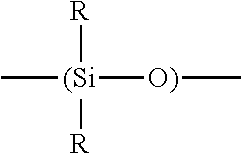
Figure 1 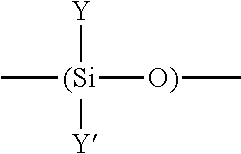
Figure 2 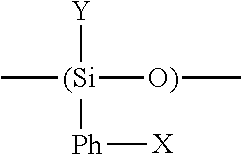
Figure 3
Abstract
Description
FIELD OF THE INVENTION
[0001] The present invention relates to laundry detergents. Specifically, the present invention relates to laundry detergents containing granulated foam control compositions comprising silicones.BACKGROUND OF THE INVENTION
[0002] Laundry detergents, which contain surfactants and typically anionic surfactants for cleaning fabrics such as clothing have been known for many years. Laundry detergents typically create suds during their use including hand-wash use. During hand washing of clothes and fabrics, where the user is very involved with the washing process, a large volume of suds is initially desirable as it indicates to the user that sufficient surfactant is present, working and cleaning the fabrics. However, during the rinse cycle, a typical hand wash laundry detergent user tends to believe that if suds are still present then there is surfactant residue that remains on the clothes, and therefore believe that the clothes are not yet “clean”. They thus tend to ri...
Examples
example 1
[0177]Six percent (6%) by weight treated precipitated silica available under the name Sipernat D10 from Evonik and 1% partially hydrophobic silica available under the name R972 from Evonik are dispersed in 86.3% polydiorganosiloxane fluid having a degree of polymerisation of 65 and comprising 80 mole % methyl ethyl siloxane groups, 19 mole % methyl 2-phenylpropyl (derived from α-methylstyrene)siloxane groups and 1 mole % divinyl crosslinking groups. 6.7% by weight of a 60% by weight solution of an organosiloxane resin having trimethyl siloxane units and SiO2 units in a M / Q ratio of 0.65 / 1 in octyl stearate (70% solid) is added. The mixture is homogenized through a high shear mixer to form a foam control agent FC1.
[0178]Thirteen point five (13.5) parts of above foam control agent FC1 is mechanically mixed with 9 parts of glyceryl tribehenate provided by Oleon. The FC1 and motlen glyceryl tribehenate are mixed at 70° C. The glyceryl monobehenate and polydiorganosiloxane fluid are misc...
example 2
[0180]Another similar foam control agent FC2 is prepared, which is essentially the same as FC1, except that polydiorganosiloxane fluid is different from that in FC1. In FC2, 86.3% polydiorganosiloxane fluid having a degree of polymerisation of 65 and comprising 80 mole % methyl dodecyl siloxane groups, 20 mole % methyl 2-phenylpropyl (derived from [alpha]-methylstyrene)siloxane groups are used instead.
[0181]Fourteen (14) parts of above foam control agent FC2 is mechanically mixed with 9 parts of glyceryl tristearate provided by Oleon. The FC2 and motled glyceryl tristearate are mixed at 70° C. The glyceryl tristearate and polydiorganosiloxane fluid are miscible and the mixture has a melting point of 62° C. The mixture of glyceryl tristearate and FC2, and 4 parts of a 1% aqueous solution of Polyquaternium-10 JR 30M cationic polymer, are poured slowly into a mixer where 73 parts of sodium sulfate powder is already being stirred. The mixture is stirred continuously until a granular par...
example 3
[0183]Twelve point five (12.5) parts of above foam control agent FC2 is mechanically mixed with 7.5 parts of glyceryl tribehenate provided by Oleon. The FC2 and motled glyceryl tristearate are mixed at 70° C. The glyceryl tribehenate and polydiorganosiloxane fluid are miscible and the mixture had a melting point of 65° C. The mixture of glyceryl tribehenate and FC2, and 5 parts of a 6.2% aqueous solution of a copolymer PAM / MAPTCAC having a molecular weight of 1,100,000 Da from Nalco, comprising 88 parts of polyacrylamide monomer units (PAM) and 12 parts of methacrylamidopropyl trimethylammonium chloride monomer units (MAPTCAC), are poured slowly into a mixer where 75 parts of sodium sulfate powder is already being stirred. The mixture is stirred continuously until a granular particulate material is obtained. The water contained in this granulated foam control composition is removed in a fluidized bed using air at 30° C.
[0184]A granulated foam control composition is achieved.