
Wearable obstacle-detection device, and corresponding method and computer program product
Patent Information
- Authority / Receiving Office
- US · United States
- Current Assignee / Owner
- Publication Date
- 2016-01-28
Smart Images
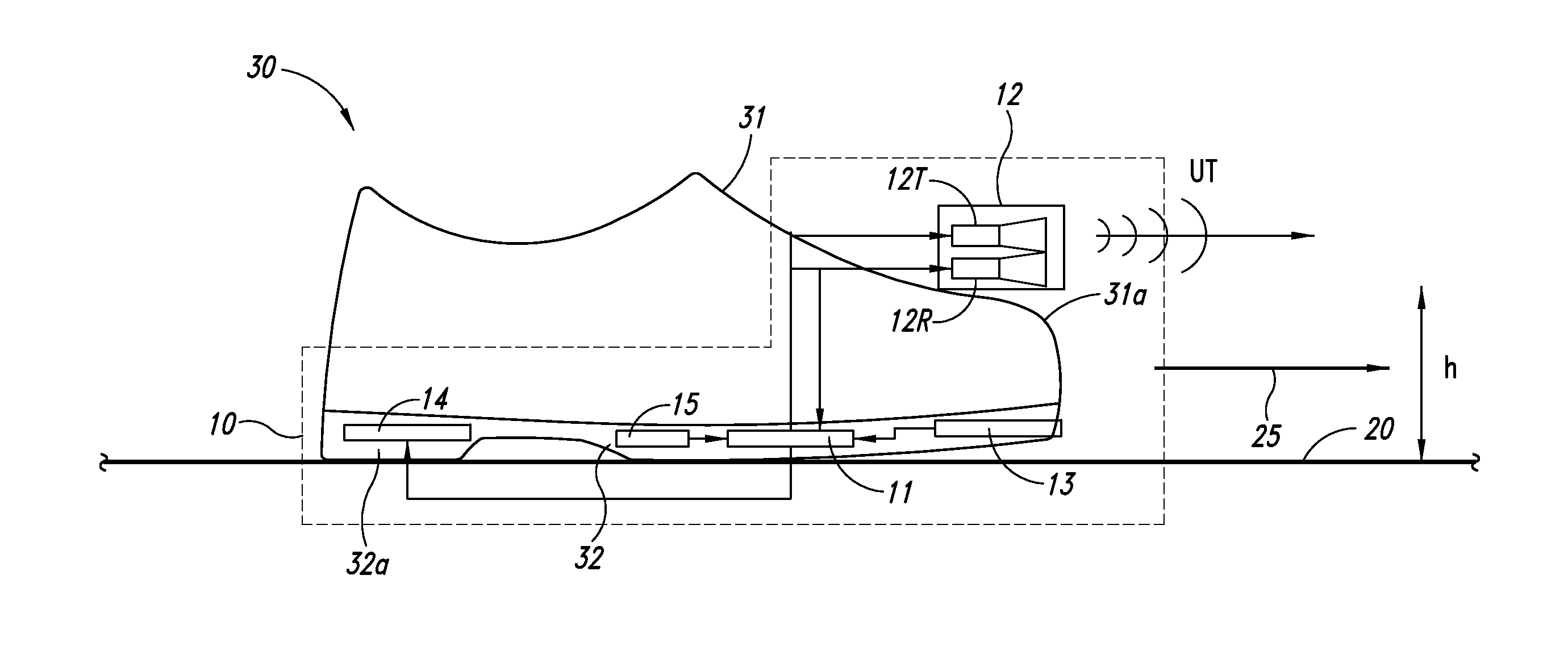
Figure 1 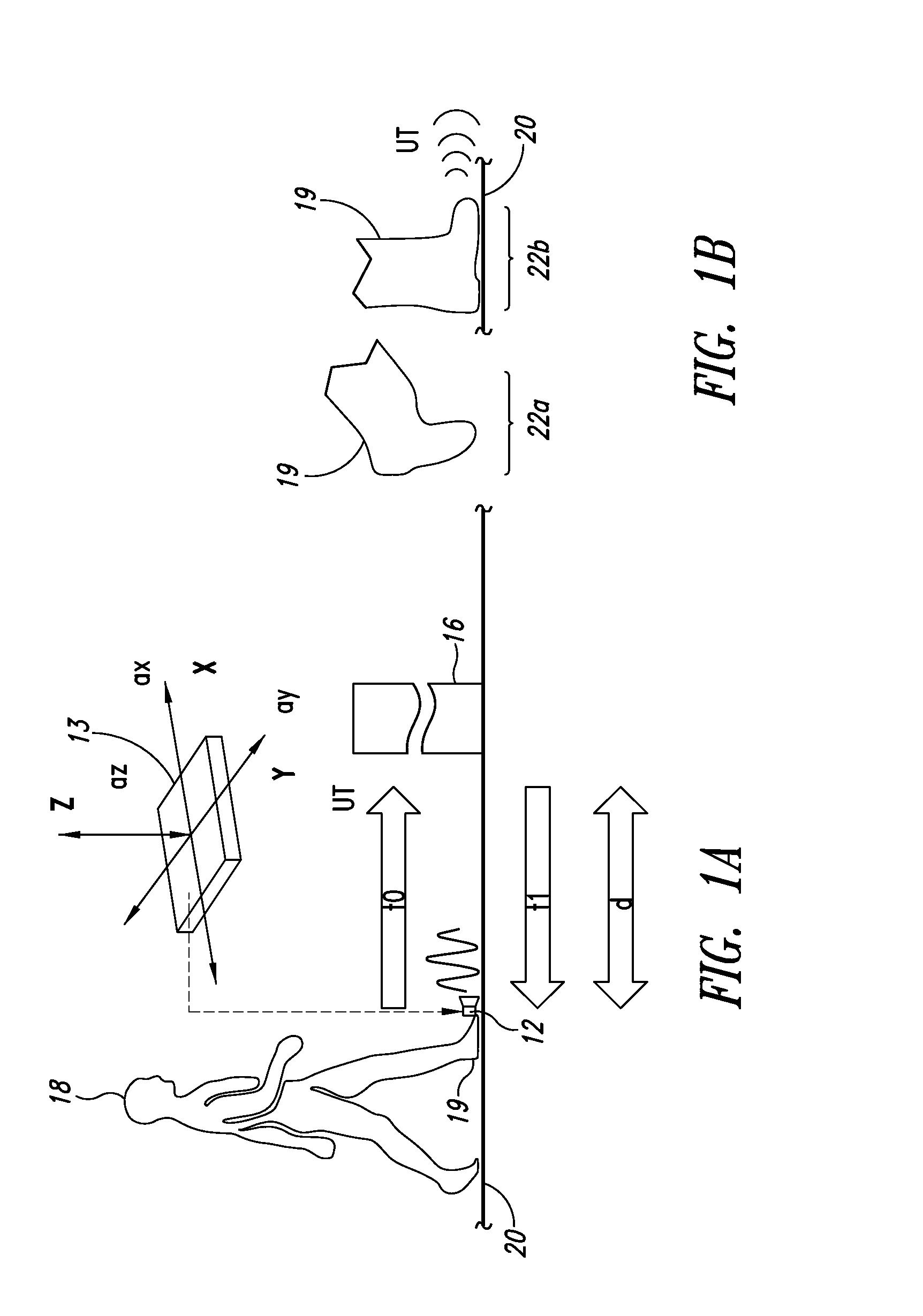
Figure 2 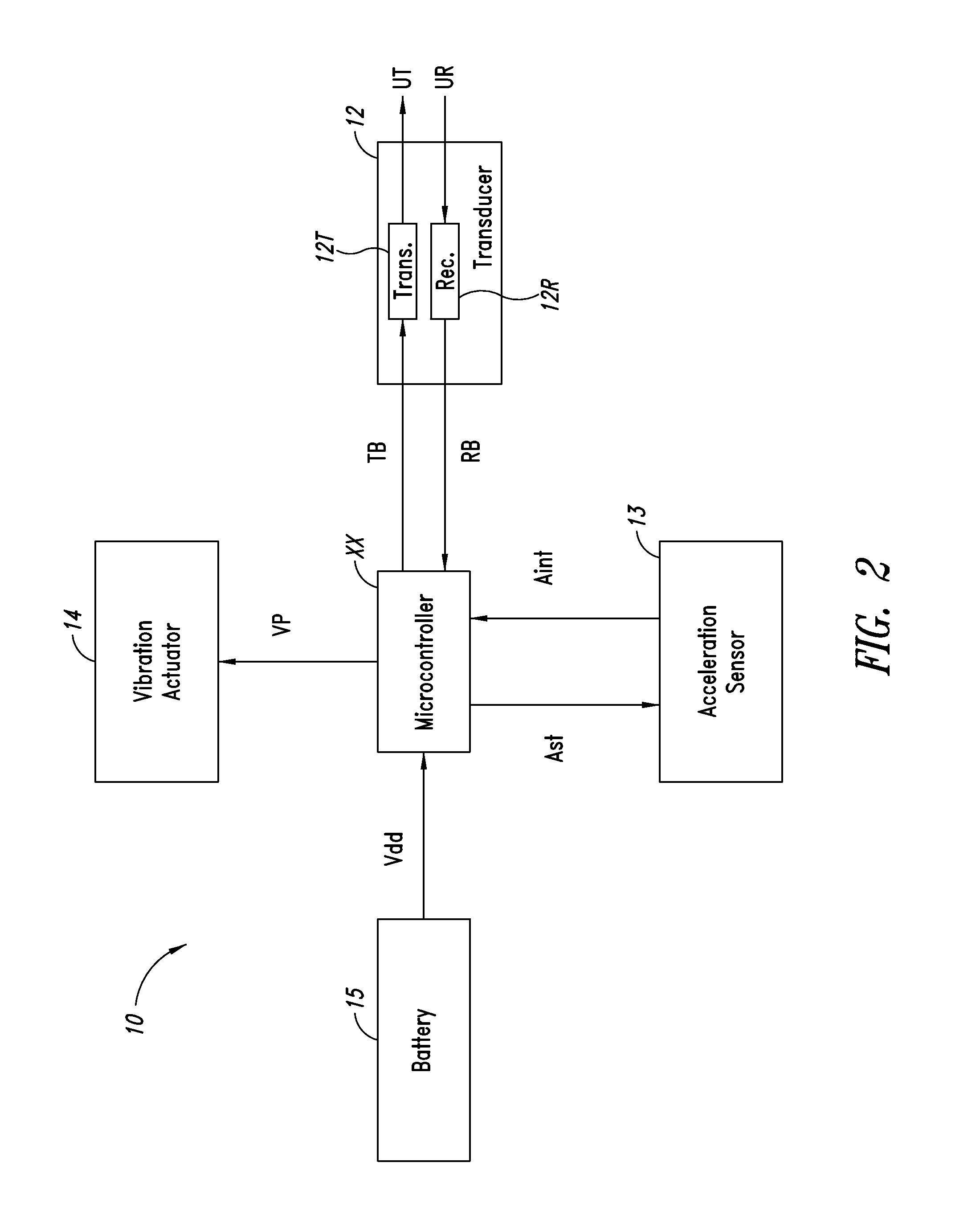
Figure 3
Abstract
Description
BACKGROUND
[0001] 1. Technical Field
[0002] The present description relates to a device for detecting obstacles that is wearable by a subject, such as on his or her foot and integrated in an item of footwear. In one embodiment, the device includes at least one ultrasound source for emitting an ultrasound transmission signal, an ultrasound receiver for receiving a corresponding ultrasound signal reflected by an obstacle, and a control module for measuring a time of flight between emission of the ultrasound transmission signal and reception of the corresponding ultrasound signal reflected by the obstacle and calculating, on the basis of said time of flight, the distance at which said obstacle is located.
[0003] Various embodiments may be applied to detection of obstacles for people who are blind or have weak eyesight or in conditions of poor lighting.
[0004] 2. Description of the Related Art
[0005] Known in the prior art are wearable devices integrated in an item of footwear that provide inform...
Examples
Embodiment Construction
[0022]In the ensuing description, numerous specific details are provided to enable an in-depth understanding of the embodiments provided by way of example. The embodiments may be implemented with or without specific details, or else with other methods, components, materials, etc. In other circumstances, well-known structures, materials, or operations are not illustrated or described in detail so that the aspects of the embodiments will not be obscured. Reference in the course of the present description to “an embodiment” or “one embodiment” means that a particular detail, structure, or feature described in connection with the embodiment is comprised in at least one embodiment. Hence, phrases such as “in an embodiment” or “in one embodiment” that may be present in various points of the description does not necessarily refer to one and the same embodiment. Furthermore, the peculiar details, structures, or characteristics may be combined in any convenient way in one or more embodiments...