

Electromagnetic Tow System For Nonpowered Ultralight Aircraft
Patent Information
- Authority / Receiving Office
- US · United States
- Current Assignee / Owner
- Publication Date
- 2016-04-07
- Estimated Expiration
- Not applicable · inactive patent
Smart Images
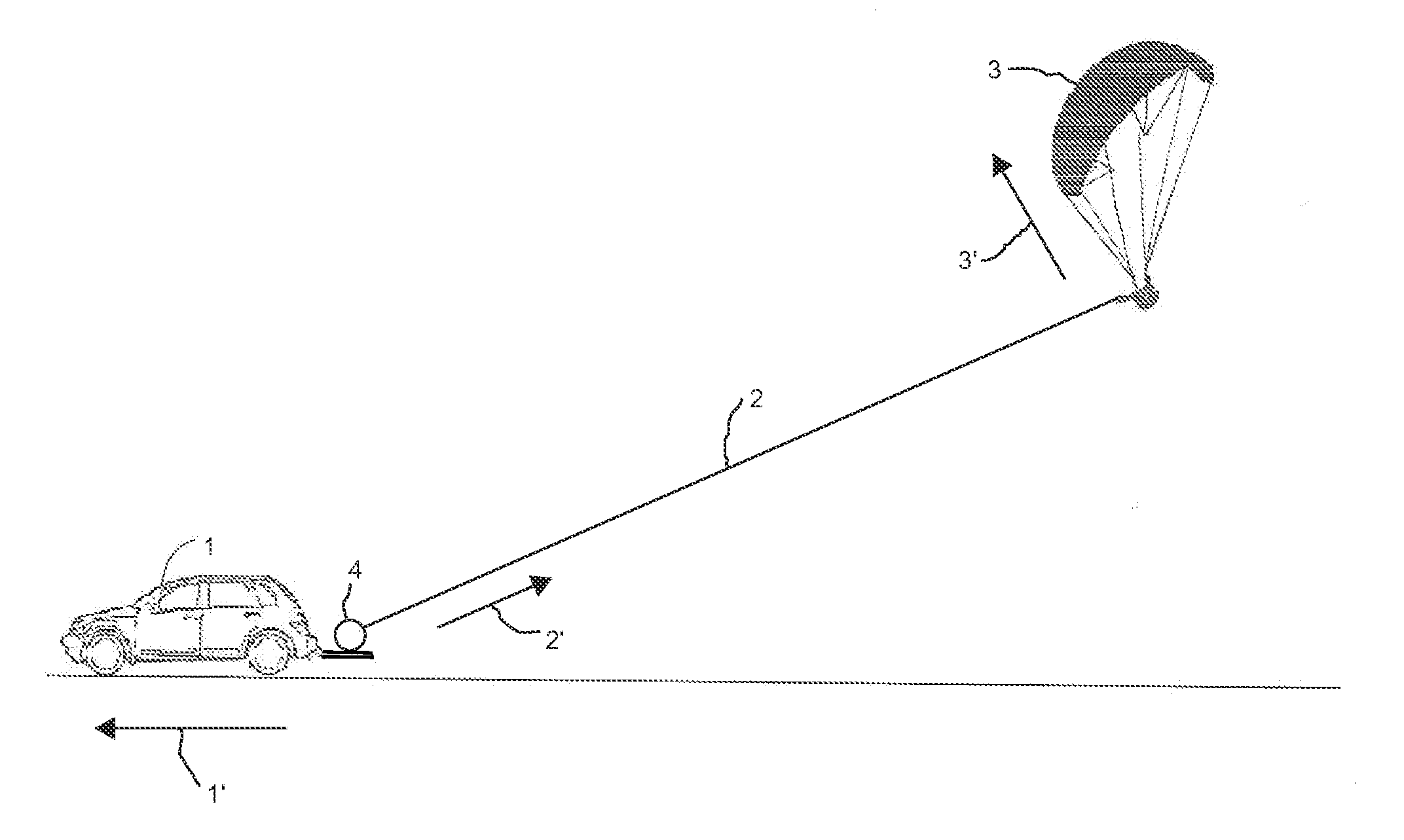
Figure 1 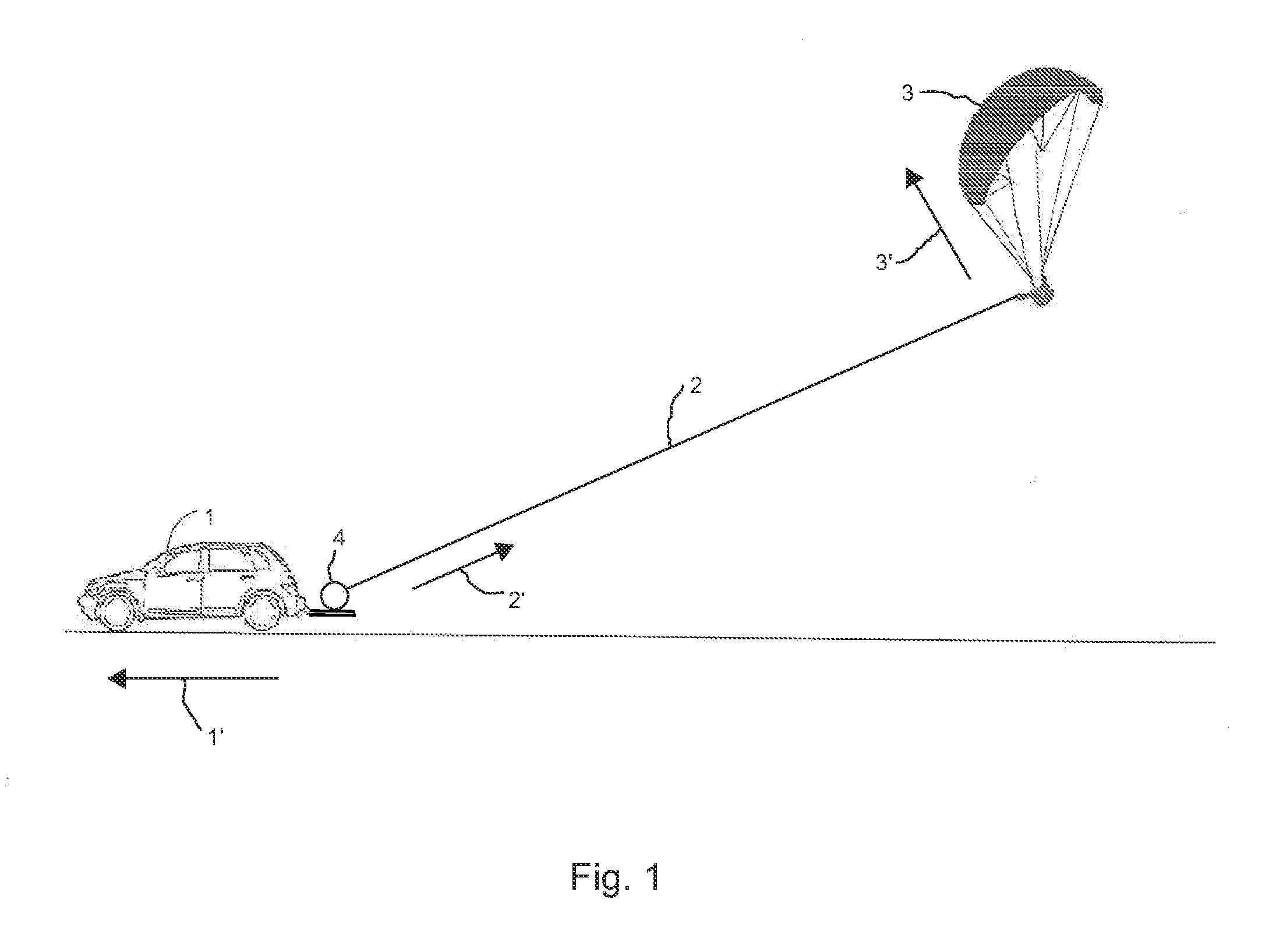
Figure 2 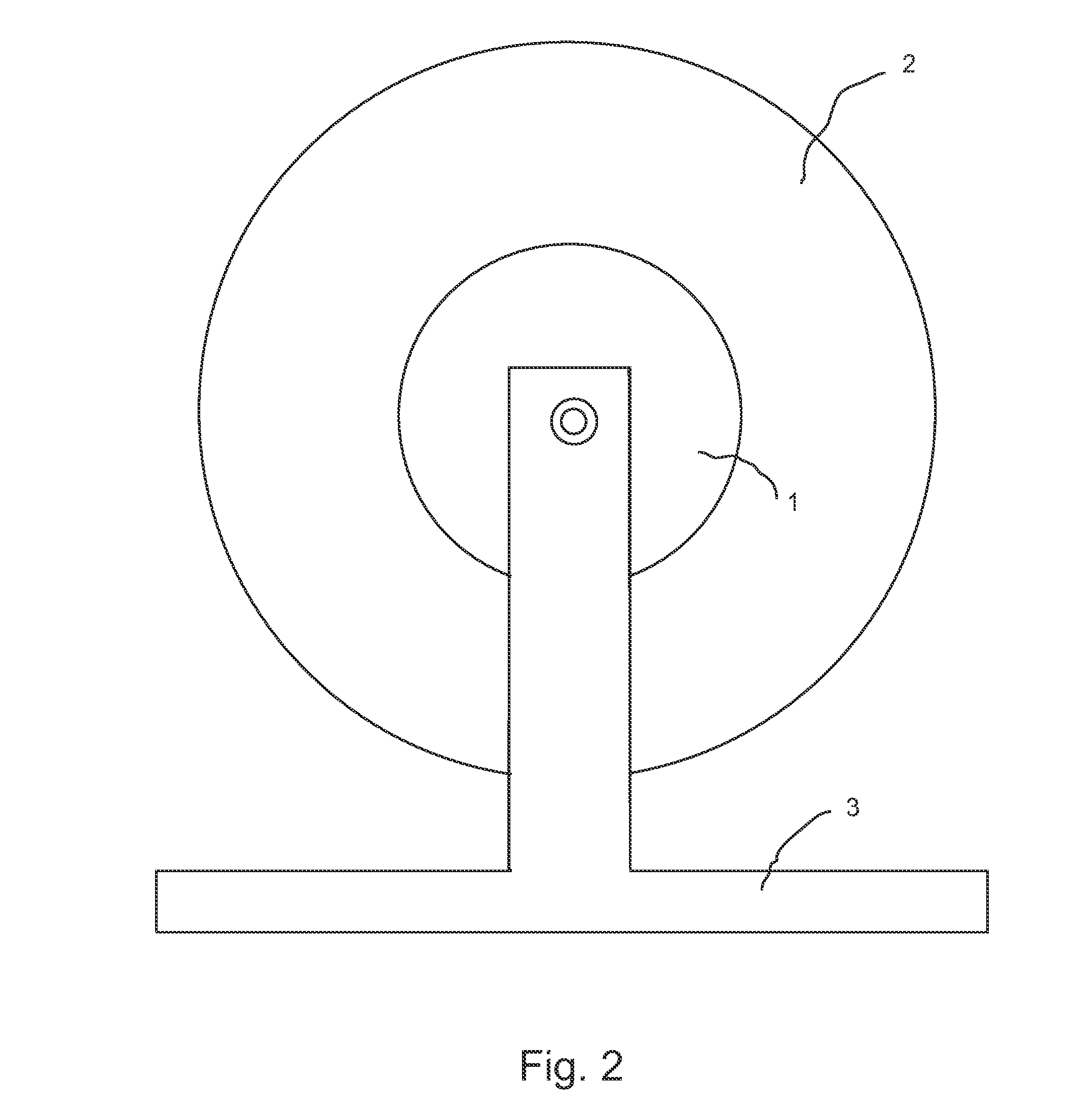
Figure 3
Abstract
Description
BACKGROUND OF INVENTION
[0001] The instant invention relates to the field of aviation. In geographical areas without mountains, often known as flat lands, nonpowered ultralight aircraft (such as paragliders and hang gliders) must be launched into flight by towing aloft. During such towing, the aircraft is connected to several thousand feet of tow line held by a winch drum. By pulling on the line, the aircraft is towed aloft to target altitude, whereby the line is released by the pilot to commence free flight.
[0002] The two primary methods used for towing nonpowered ultralight aircraft aloft are known as a “pay-in” method and a “pay-out” method. Under the pay-in method, several thousand feet of tow line is first stretched out on the ground, with one end connected to the pilot and the other to the winch. The winch then pays the tow line in spooling it onto the drum (hence the name, pay-in), thus pulling the aircraft and towing it aloft. By contrast, under the pay-out method, the pilot is...
Examples
Embodiment Construction
[0012]FIG. 1 illustrates a typical tow of a paraglider 3 using a payout method and employing a moving tow vehicle 1 on which the tow system 4 is mounted, with the tow line 2 being paid out during a tow. Arrow 1′ indicates the direction of the tow vehicle's motion. Arrow 2′ indicates the direction in which the tow line is paid out from the tow system 4. Arrow 3′ indicates the direction of the flight of the towed paraglider 3 during the tow.
[0013]FIG. 2 and FIG. 3 illustrate a close-up of the electromagnetic tow system itself in its preferred configuration. A DC permanent magnet hub motor 1 is mounted on a frame 3 and is connected to a power supply (not shown). The round aluminum side plates 2 comprising the winch drum are mounted directly onto the sides of the hub motor 1 to form the winch drum. The drum holds the tow line (not shown), and its side plates 2 double up as heat sinks for the hub motor 1.
[0014]FIG. 4 illustrates the electrical circuit that facilitates the operation of th...