
Smartphone with front camera and maximized display screen
a front-facing camera and display screen technology, applied in the field of smart phones, can solve the problems of reducing the light sensitivity of the front-facing camera located beneath the display screen, clouding the resultant picture, and limiting the transmission efficiency of unpolarized light, so as to maximize the remaining screen area
Patent Information
- Authority / Receiving Office
- US · United States
- Patent Type
- Applications(United States)
- Current Assignee / Owner
- Publication Date
- 2018-08-02
- Estimated Expiration
- Not applicable · inactive patent
Smart Images
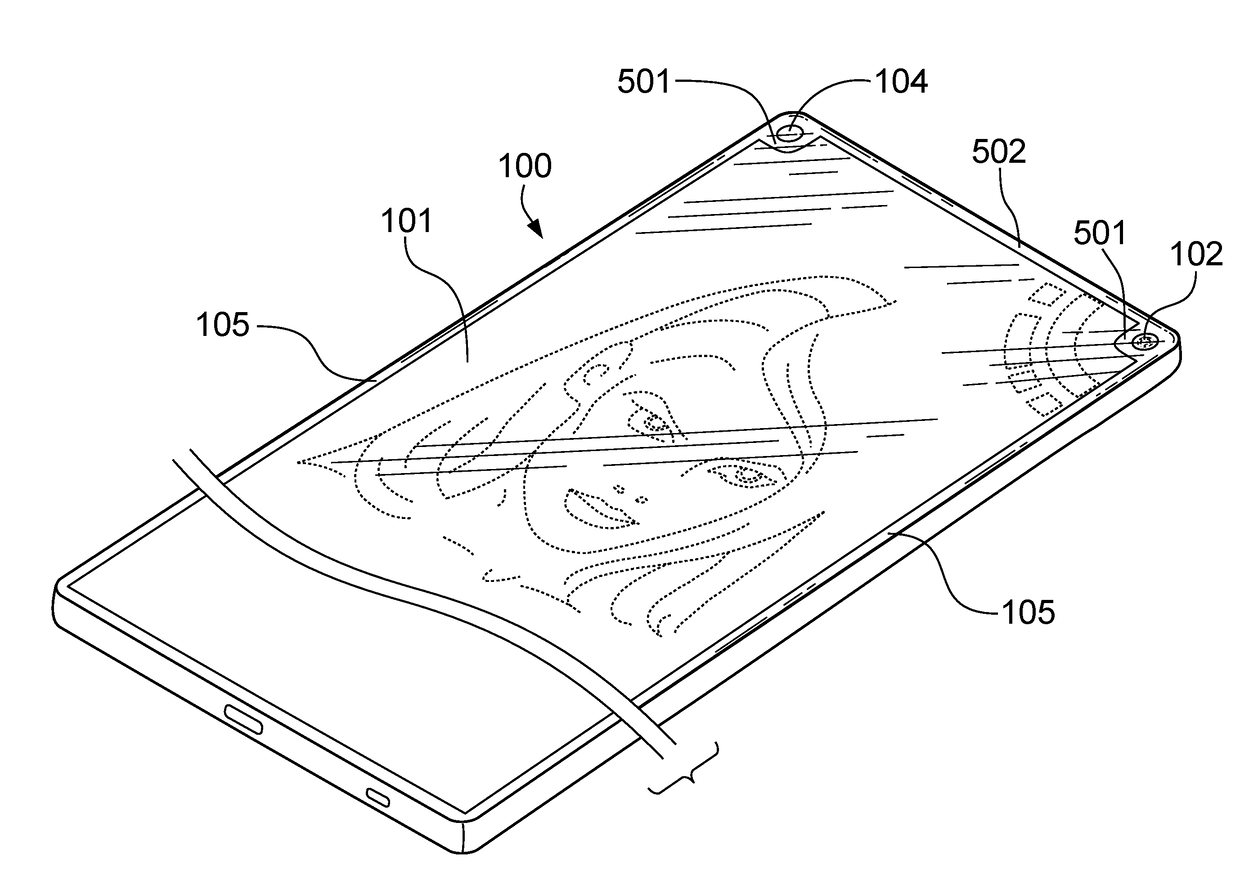
Figure 1 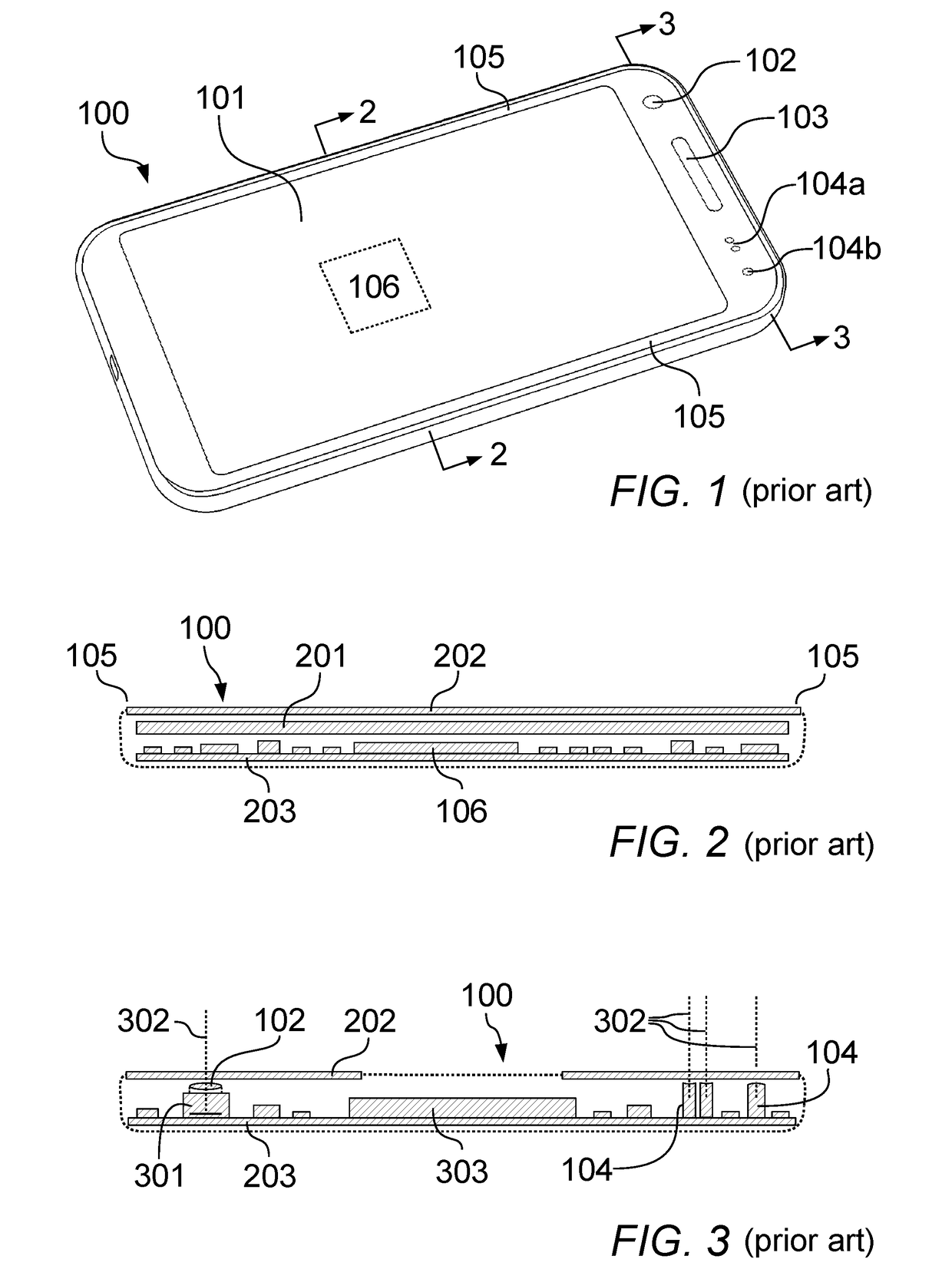
Figure 2 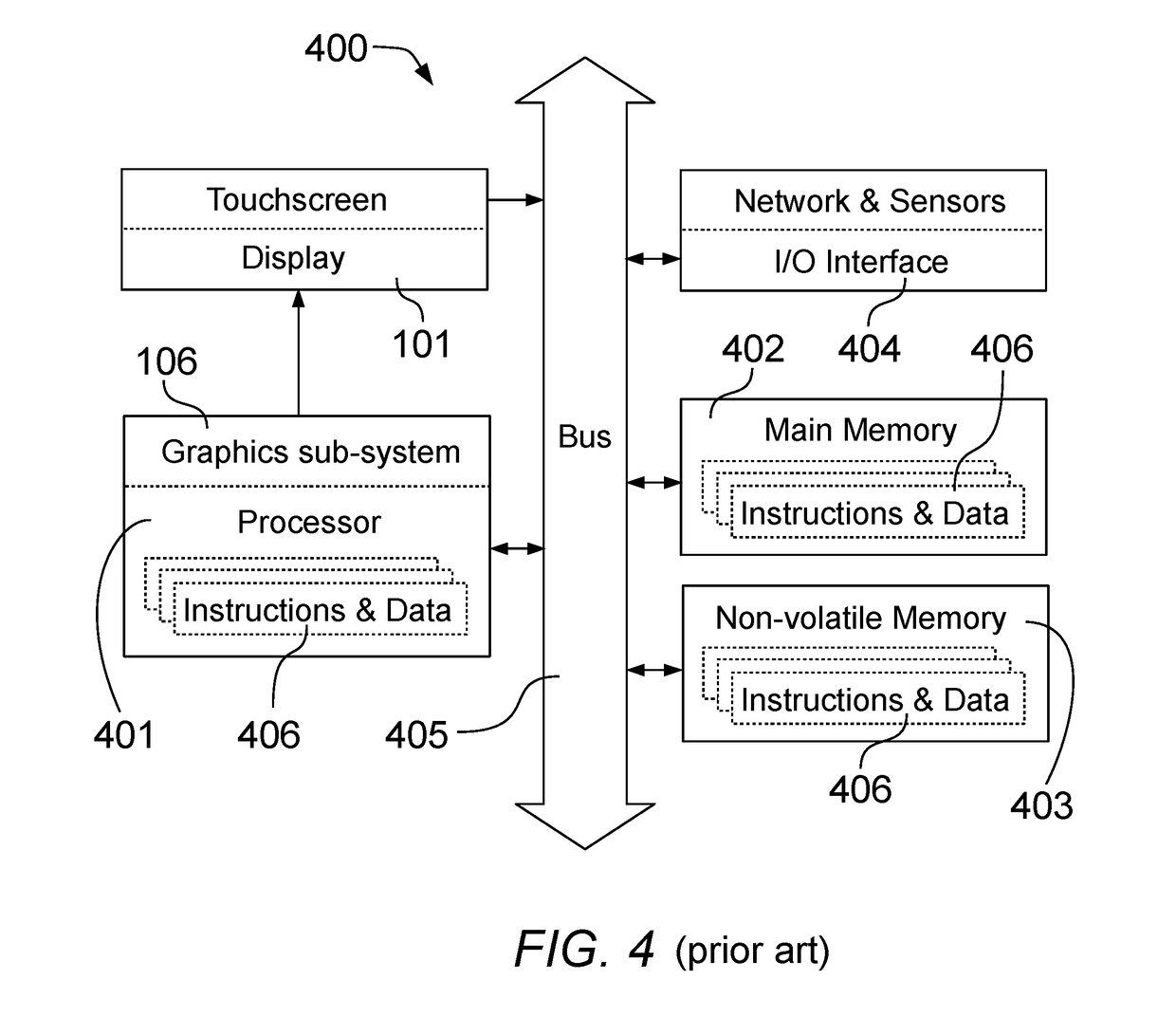
Figure 3
Abstract
Description
CROSS-REFERENCE TO RELATED APPLICATIONS
[0001] This application is a continuation of U.S. application Ser. No. 29 / 539,390, filed Sep. 14, 2015. The benefit of the above prior application is claimed and the entire disclosure of the prior application, including the unabridged description, as originally filed on Sep. 14, 2015, is expressly incorporated herein by reference.TECHNICAL FIELD
[0002] The present invention relates to smartphones and, in particular, to methods and systems that maximize the display screen of a smartphone while providing a high-quality, front-facing camera.BACKGROUND OF THE INVENTION
[0003] Common smartphones, phablets, or comparable mobile electronic devices contain a front-facing camera placed on the front side of the mobile electronic devices. The front side of the mobile electronic devices also contains a display screen, using a display technology such as liquid-crystal display (LCD) or active-matrix organic light-emitting diode (AMOLED).
[0004] For example, the dis...
Examples
Embodiment Construction
[0046]FIG. 1 (labeled “prior art”) shows a conventional smartphone 100 as an example of a mobile electronic device. The drawing illustrates a display screen 101 with touchscreen functionality, the lens 102 of a front-facing camera, an earpiece 103 (ear speaker for telephone calls), and optical sensors and / or emitters 104. An optical sensor 104a may be, for instance, a combined proximity and light sensor and an optical emitter 104b may be, for instance, a flash LED or an infrared (IR) LED to illuminate the face of the user. Alternatively, the optical emitter 104b may be a status LED that indicates operating states, such as “on / off” or “charging battery.” A graphics sub-system 106 (integrated into the smartphone 100 and shown in dotted lines in FIG. 1) is responsible for generating the screen content displayed on the display screen 101.
[0047]As can be seen in FIG. 1, conventional smartphones 100 typically feature a thin border 105 at the left and right edge of the display screen 101. ...