
Method and apparatus for trajectory-planning
Patent Information
- Authority / Receiving Office
- US · United States
- Current Assignee / Owner
- Publication Date
- 2020-12-10
Smart Images
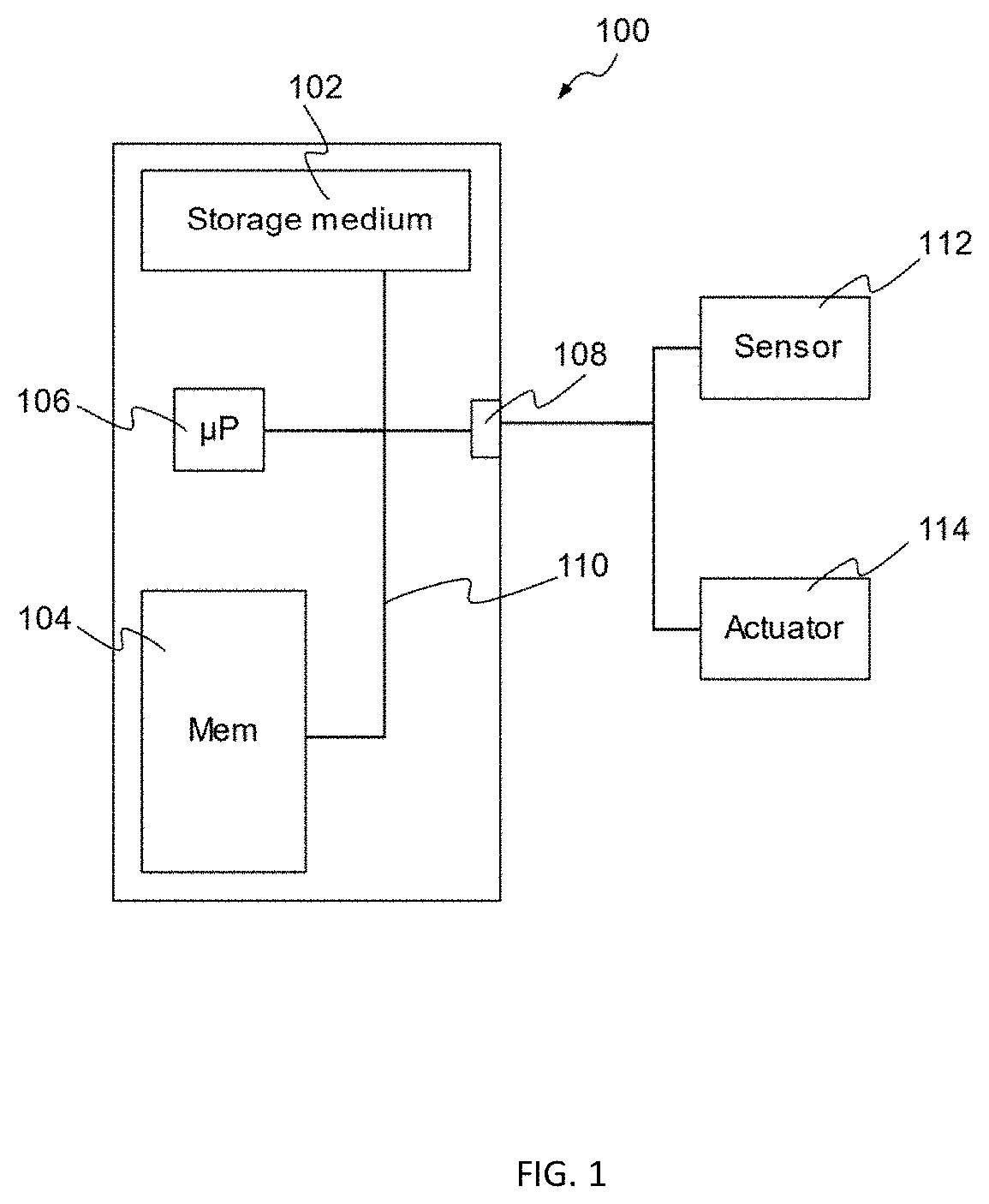
Figure 1 
Figure 2 
Figure 3
Abstract
Description
FIELD OF THE INVENTION
[0001] This invention relates to a controller and a method for planning a trajectory for an object that is capable of controlled movement in one or more degrees of freedom. It is particularly relevant to planning time-optimal, jerk-limited trajectories, for example for robots.BACKGROUND OF THE INVENTION
[0002] A fundamental problem in robotics is how to calculate the best trajectory for a robot to follow, to move a part, tool, end effector, or other object from a current or starting position to a target position. In many scenarios, it is desirable to plan a smooth trajectory, in order to minimise forces or torques acting on actuators or motors, and reduce wear on mechanical components. At the same time, it is typically necessary to respect certain motion constraints, for the planned trajectory to be physically realisable and acceptable. These constraints may include velocity limits and acceleration limits in each degree of freedom. They may be fixed constraints of...
Examples
Embodiment Construction
[0125]FIG. 1 of the accompanying drawings schematically illustrates an exemplary computer system 100. This computer system may be configured as a controller according to an embodiment of the invention, and / or may be configured to carry out a method according to an embodiment. The exemplary computer system 100 comprises a computer-readable storage medium 102, a memory 104, a processor 106 and one or more interfaces 108, which are all linked together over one or more communication busses 110. The exemplary computer system 100 may take the form of a conventional computer system, such as, for example, a desktop computer, a personal computer, a laptop, a tablet, a smart phone, a smart watch, a virtual reality headset, a server, a mainframe computer, and so on. Alternatively, it may take the form of an embedded controller, for example in a robotics system, or a guidance system, for example for a land-going or sea-going vehicle, an aircraft or spacecraft, a missile, or other machine capabl...