
Three-dimensional display system: apparatus and method
Patent Information
- Authority / Receiving Office
- US · United States
- Current Assignee / Owner
- Publication Date
- 2001-10-16
- Estimated Expiration
- Not applicable · inactive patent
Smart Images
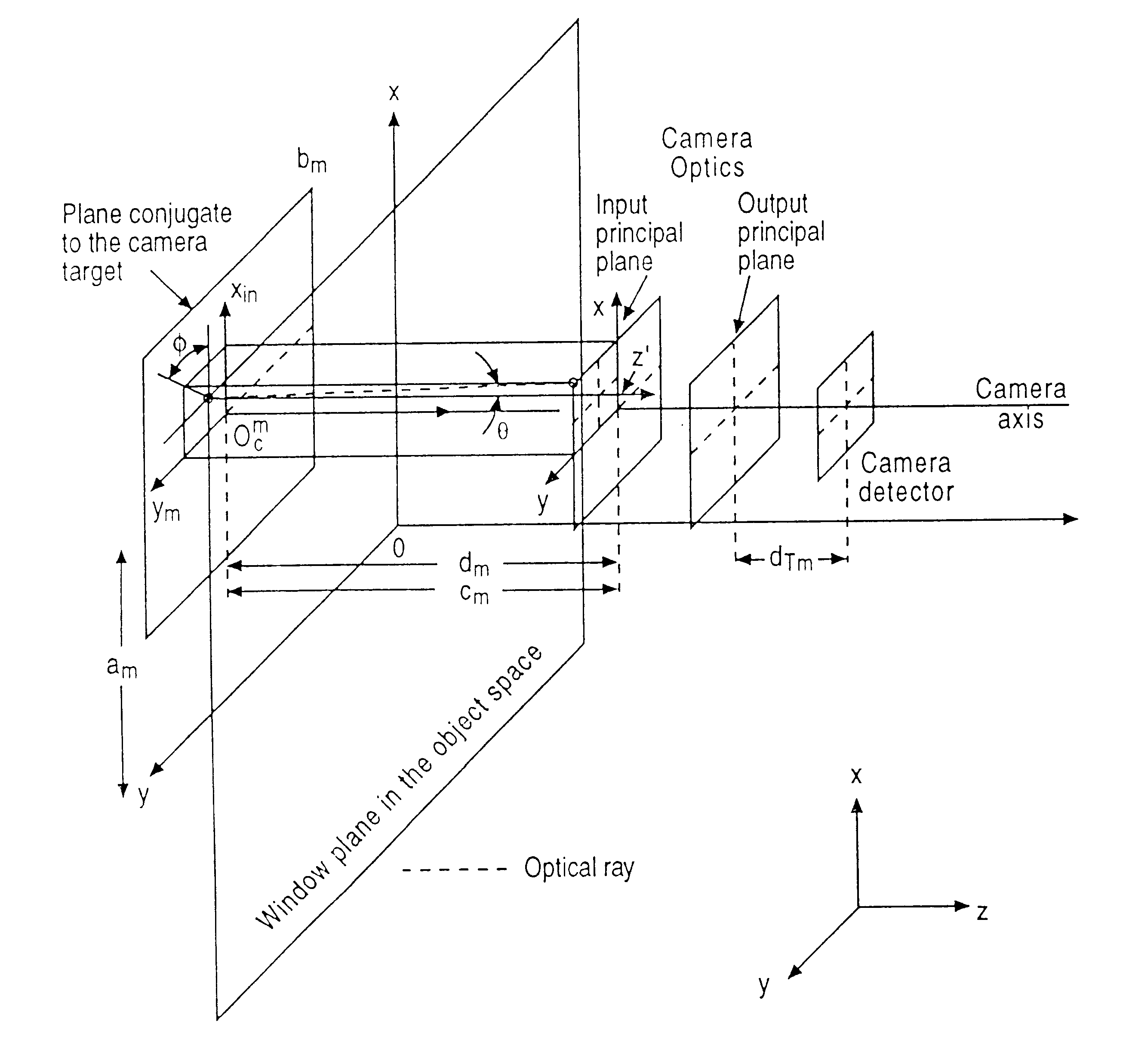
Figure 1 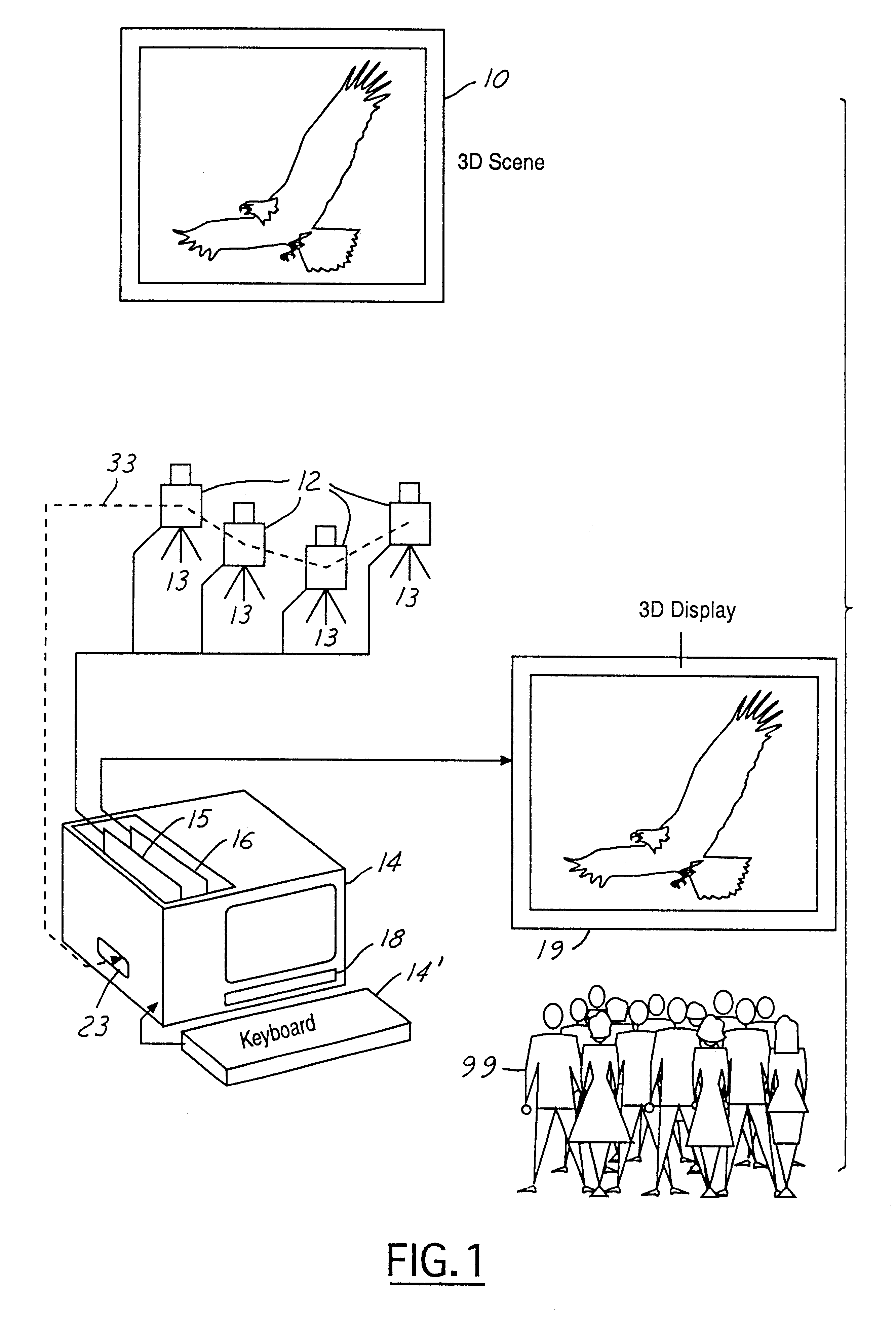
Figure 2 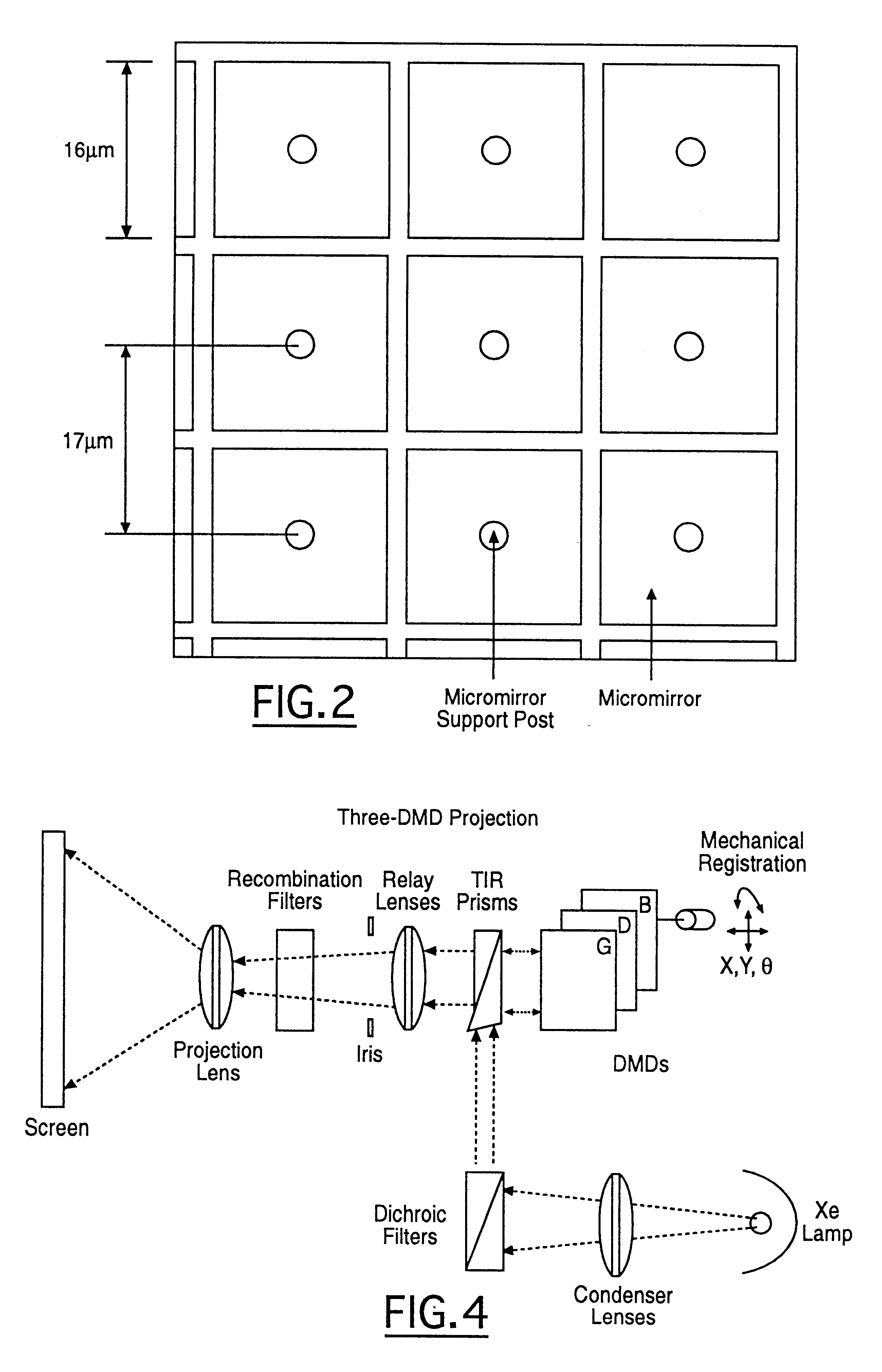
Figure 3
Abstract
Description
The invention pertains to apparatus and method for three-dimensional display of three-dimensional objects and scenes.In recent years, various attempts have been made to create three-dimensional displays for various applications, particularly three-dimensional television. Because of the inherent mathematical and practical complexities in the three-dimensional imaging problem, as well as the ad hoc nature of previous approaches, the degree of success thus far has been rather limited.Most developments in three-dimensional display systems have been primarily in stereoscopic techniques, and incorporating a set of discrete multiviews of the three dimensional scenes. These have included both binocular parallax and autostereoscopic three-dimensional systems. Stereoscopic techniques typically require the observer to use a viewing device. In contrast autostereoscopic techniques, which include for example, holographic, lenticular screens and parallax barriers, produce three-dimensional appeara...
Examples
Embodiment Construction
specifically for this application. In one alternative embodiment, the functions R.sub.p (i,j), p=1, . . . ,N, for each pixel i,j, as given for example in Eq. 11, are assumed to be known. Then, any planar view, m, of the original 3D scene can be re constructed using the "forward solution," as given by Eq. 11, repeated here: ##EQU37##
In this equation, L.sub.m is one pixel of the particular planar view (i.e., the m.sup.th view) desired of the 3D scene, while G.sub.mp represents a set of functions which are independent of the original 3D scene itself and thus can be computed a priori. The G.sub.mp are given by Eqs. 12-14, and include the specific position from which it is desired to view the 3D scene. Eq. 11 must be repeated for each pixel i,j, of the desired view. In a presently preferred embodiment, i=1, . . . ,480, and j=1, . . . ,512. Thus it should be understood that the entire 3D scene, i.e., the entire set of graphical information of the original scene, is represented by the set ...