
Composition and method for curing a resorcinol resin
a technology of resorcinol and resin, applied in the field of composition and method of curing a resorcinol resin, can solve the problems of off-gassing or "fuming" of formaldehyde vapors from the adhesive, a significant health risk, and widespread acceptance in the marketplace, and achieves superior bonding performance of oxazolidine/methylolurea, reduce noxious emissions, and improve the bonding performan
Patent Information
- Authority / Receiving Office
- US · United States
- Patent Type
- Patents(United States)
- Current Assignee / Owner
- Publication Date
- 2003-04-01
- Estimated Expiration
- Not applicable · inactive patent
Smart Images
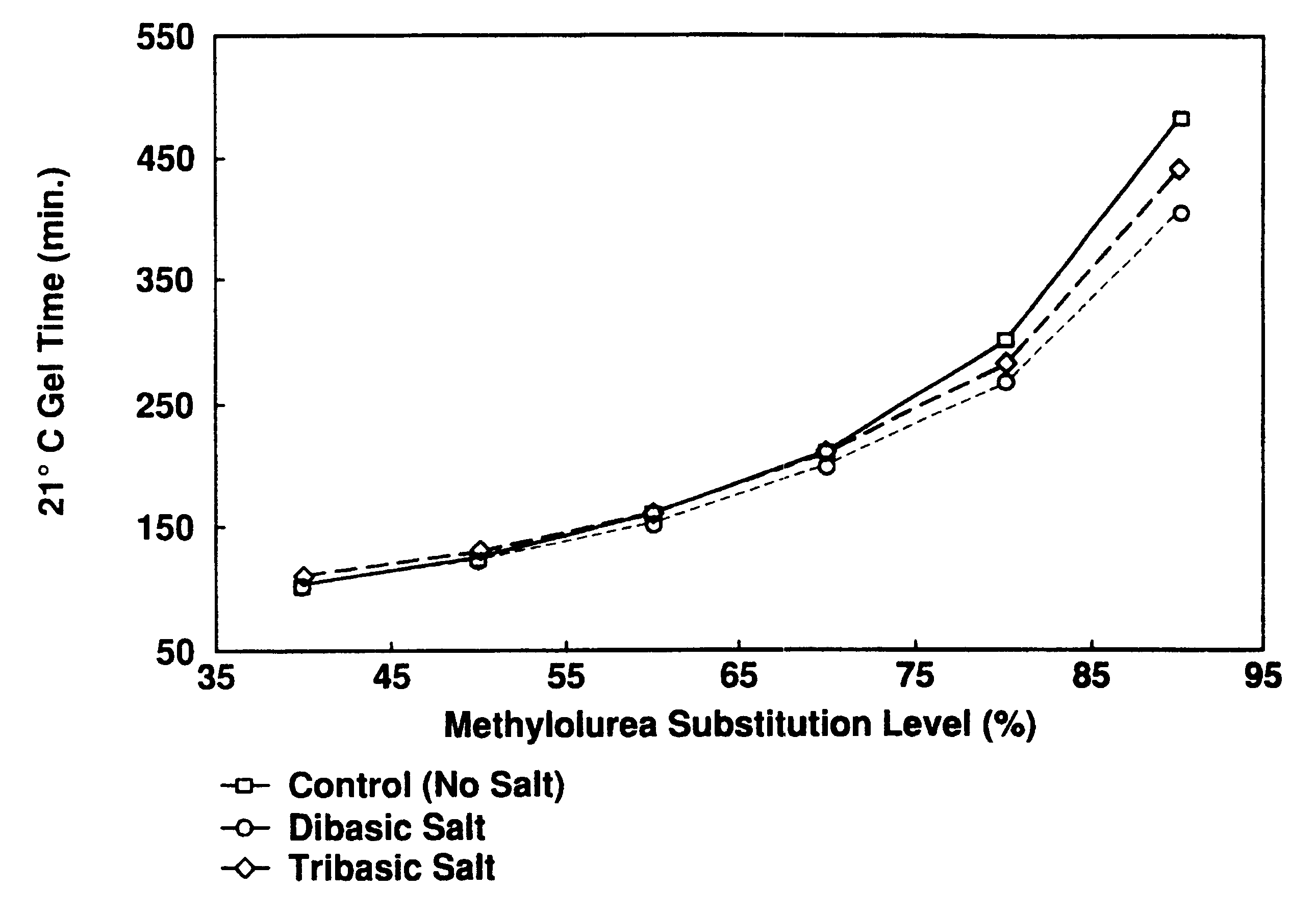
Figure 1 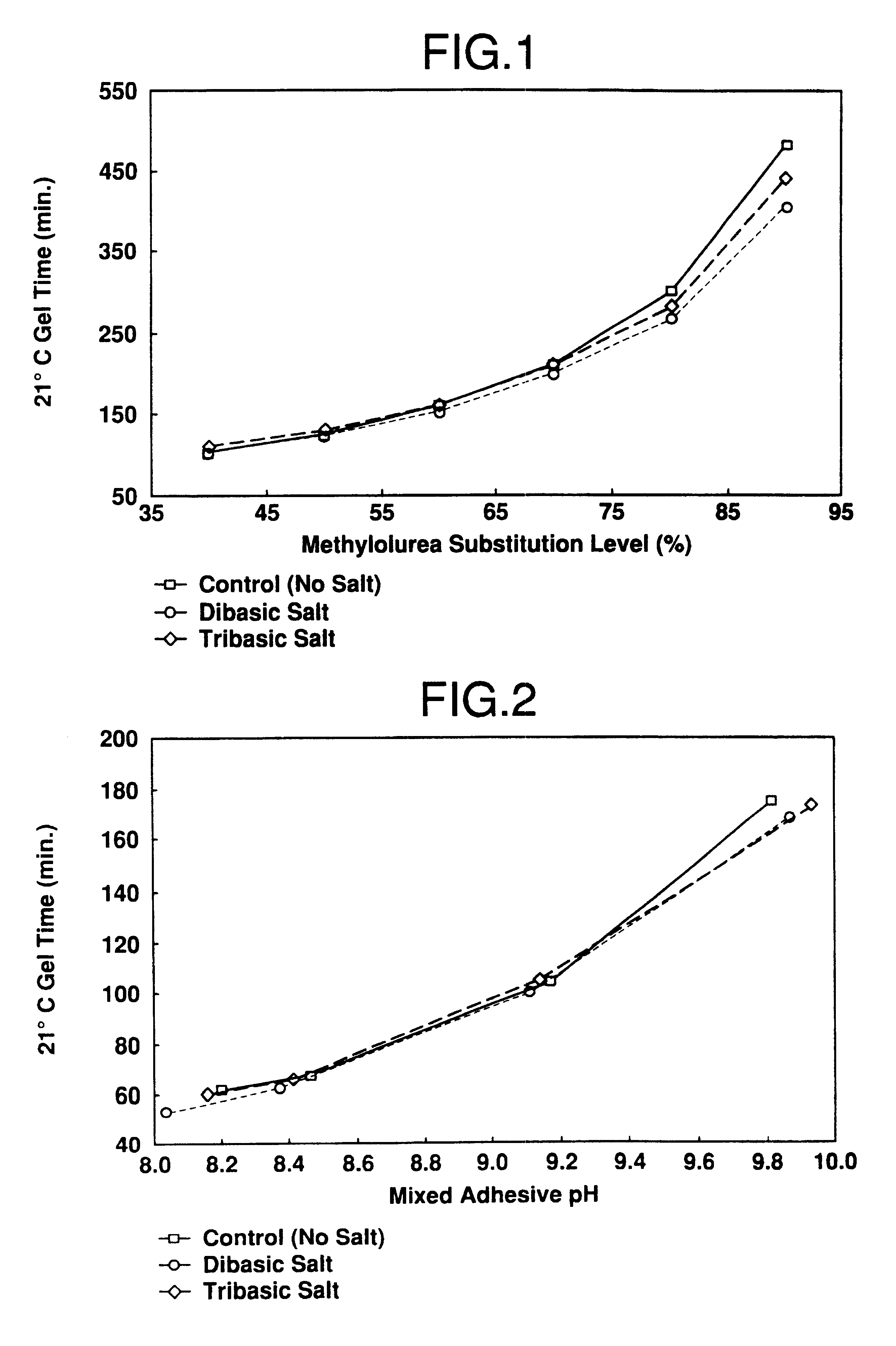
Figure 2 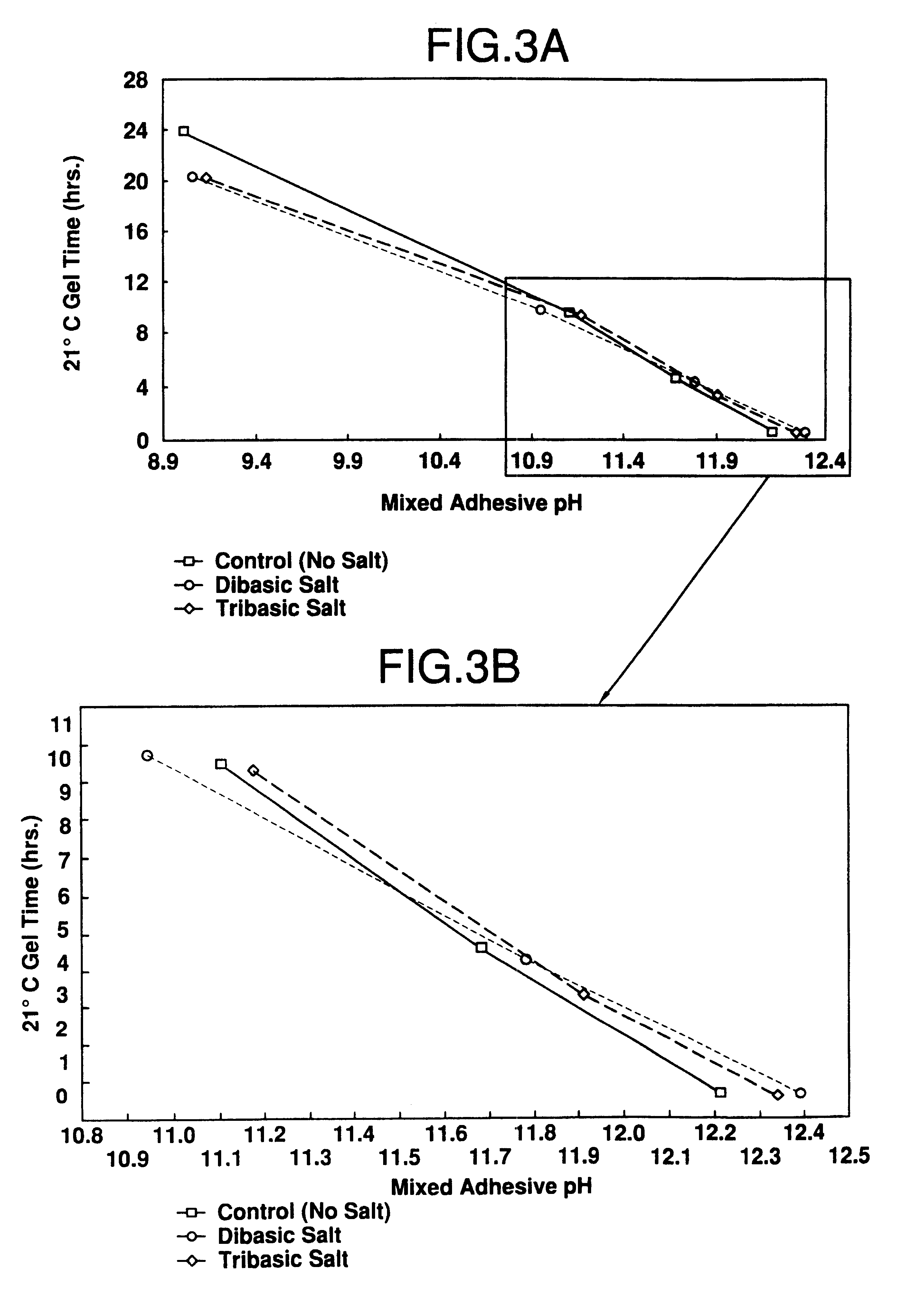
Figure 3
Abstract
Description
1. Field of the InventionThe present invention is directed to a catalyst curing system and method of using the same to reduce emissions or "fuming" of formaldehyde in resorcinol-formaldehyde or phenol-resorcinol-formaldehyde resins. The present invention replaces a portion of oxazolidine, normally used for crosslinking of a resorcinol or phenol-resorcinol resin with a class of compounds normally called methylolureas, which are reaction products of formaldehyde and urea chemicals.2. Description of the Related ArtResorcinol-formaldehyde and phenol-resorcinol-formaldehyde resins are used as adhesives, such as in the wood products industry, to manufacture a variety of exterior rated laminated wood items. They are noted for their excellent exterior bonding properties, and their ability to fully crosslink and cure at temperatures as low as 60.degree. F. The latter is important since most items produced with these adhesives in the wood products industry do not lend themselves to heated cur...
Examples
example 1
A solution of methylolurea was prepared by dissolving 200 grams of urea in 150 grams water, adding 100 grams 50% formaldehyde solution, and adjusting pH with 1 gram of 50% sodium hydroxide solution. This was then used as catalyst to determine gel time with a phenol-resorcinol resin (Borden Cascophen.RTM. LT-5210). A comparison was made to the same resin catalyzed with an oxazolidine (Zoldine.RTM. ZT-55) slurry.
These data show that methylolurea solution is not a very effective crosslinking catalyst for phenol-resorcinol resin when used alone. The data also indicate the expected gel time of the resin when catalyzed with oxazolidine crosslinker.
example 2
Catalyst slurries were made with an oxazolidine (Zoldine.RTM. ZT-55) and different substitution levels of methylolurea (MU). These were then mixed with a phenol-resorcinol resin (Cascophen.RTM. LT-5210) for gel time determination.
As illustrated in FIG. 1, these data show that there is a proportional increase in gel time as the oxazolidine is replaced with methylolurea in the adhesive mix. All gels were equivalent in hardness, and gave no indication of having insufficient crosslinking.
example 3
The adhesive mixes from Example 2 were subjected to testing as per ASTM D2559-90, standard specification for Adhesives For Structural Laminated Wood Products For Use Under Exterior (Wet Use) Exposure Conditions. The glued beams were cured at 70-75.degree. F. Block shear specimens were tested for compression strength and percent wood failure, and delamination was determined after cyclic delamination testing. In the case of the block shear tests, high breaking strength and high wood failure are desirable, indicating that the glued wood and not the cured glue is failing in the destructive testing. A low value in the delamination test is desirable, indicating that the glued wood specimen is resisting the effects of cyclic soaking and drying.
The shear breaking strength mainly reflects the breaking strength of the wood if percent wood failure is good. The minimum shear strength allowed is 1075 psi average, and all four adhesives exceeded this. The depth of adhesive penetration of the cont...