
Method for simultaneous extraction of essential oils and antioxidants from Labiatae species and the extract products thereof
a labiatae and antioxidant technology, applied in the field of simultaneous extraction of essential oils and antioxidants from organic materials, can solve the problems of thermal degeneration of essential oils, difficult to dissolve dry powder into preferred carriers, etc., and achieve the effect of high purity and high yield
Patent Information
- Authority / Receiving Office
- US · United States
- Current Assignee / Owner
- Publication Date
- 2005-02-15
- Estimated Expiration
- Not applicable · inactive patent
Smart Images
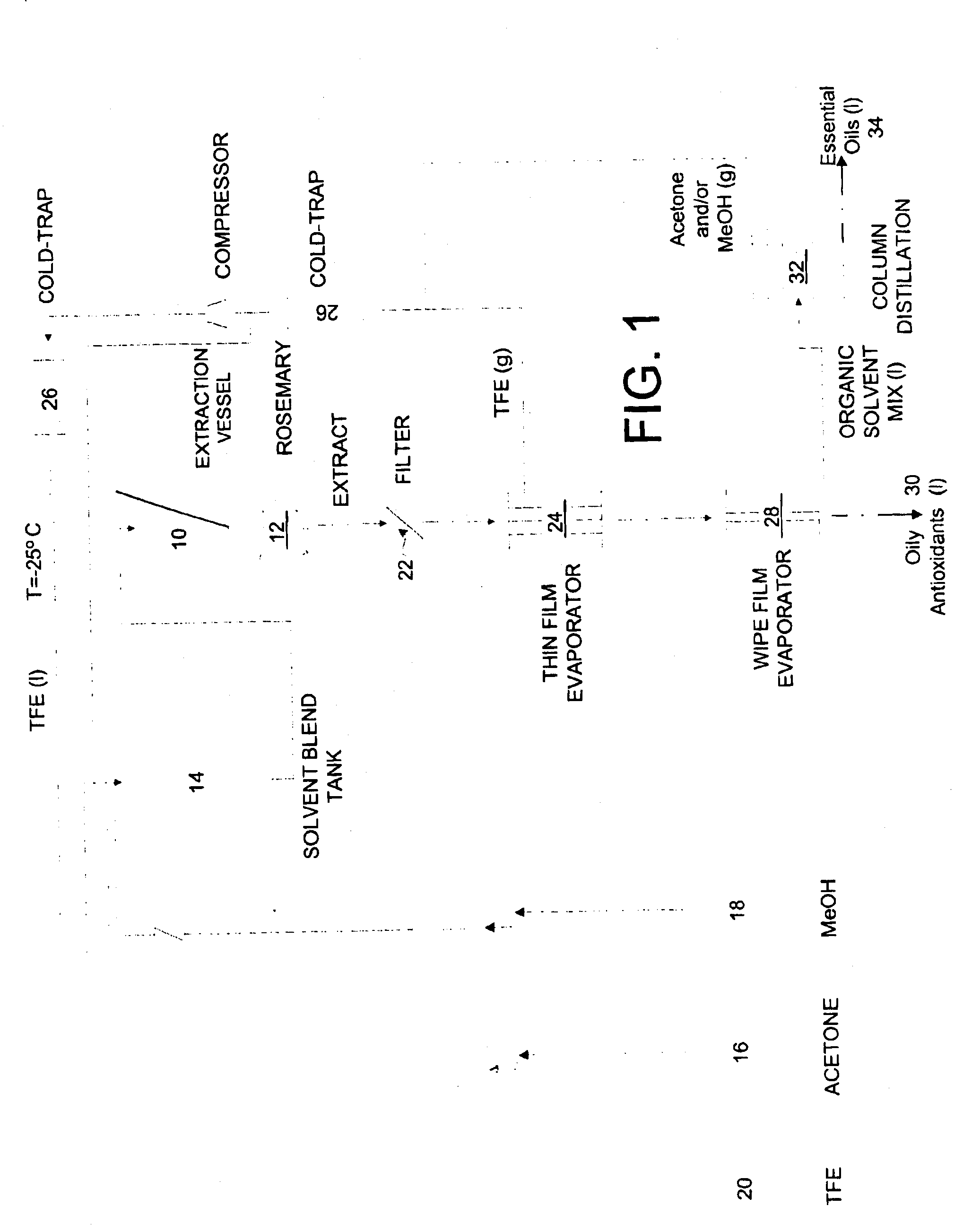
Figure 1 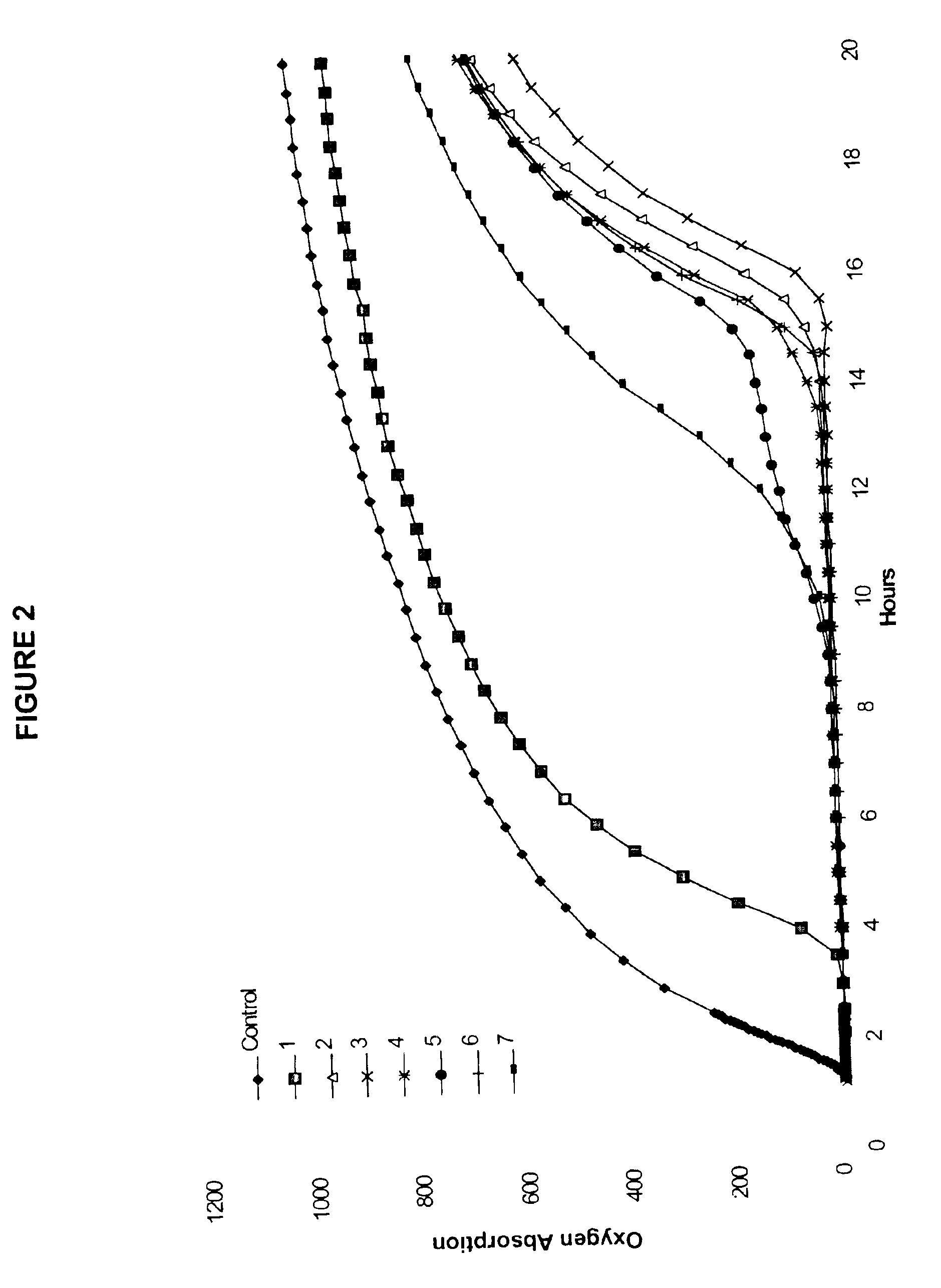
Figure 2 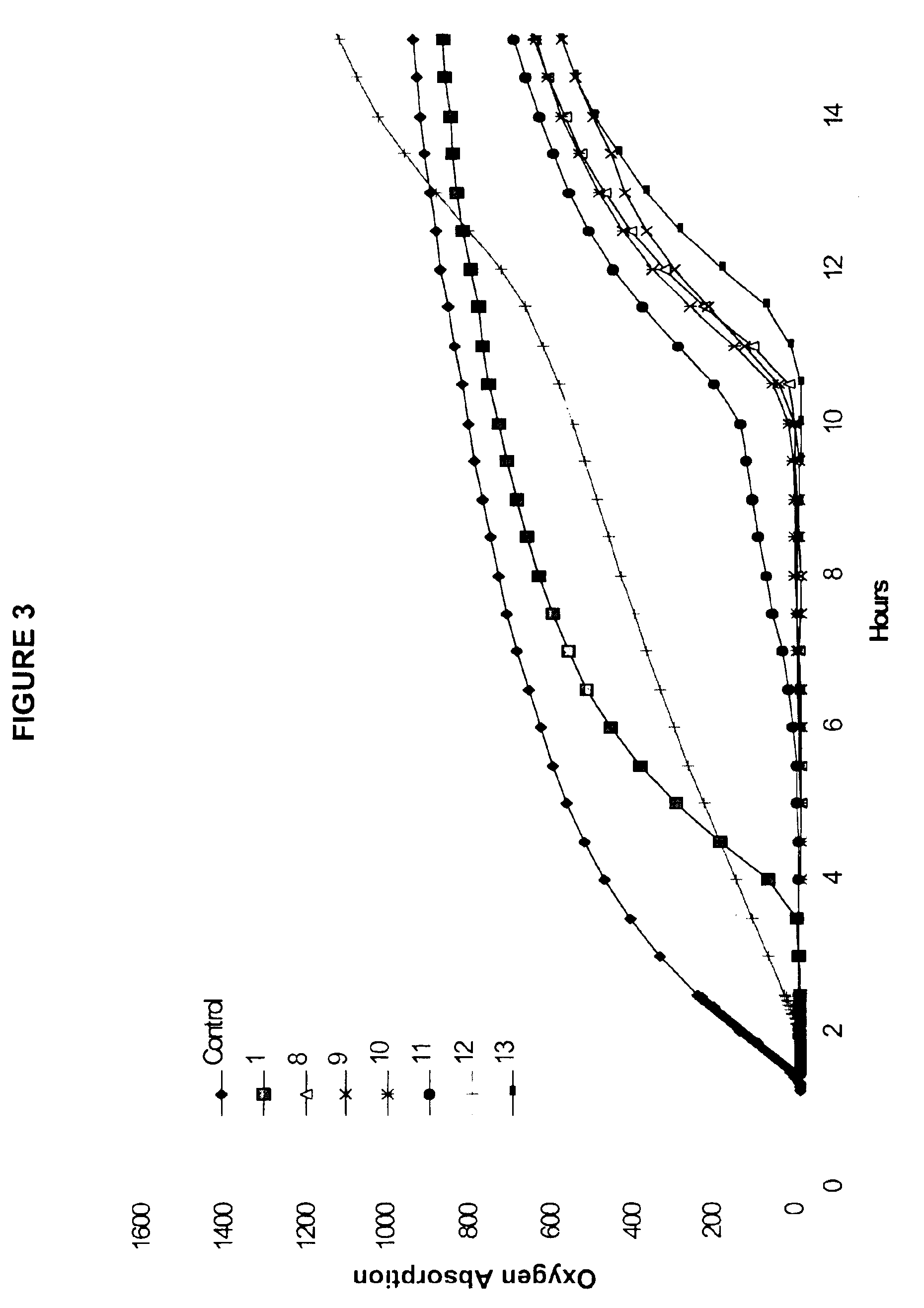
Figure 3
Abstract
Description
BACKGROUND OF THE INVENTION1. Field of the InventionThe invention relates generally to a method for simultaneous extraction of essential oils and antioxidants from organic material, more particularly organic material from the Lamiaceae (or Labiatae) family, including rosemary (Rosemarinus officinalis) and, more specifically, to a method of simultaneous extraction of essential oils and antioxidants from species of the family Labiatae, in particular, rosemary, using solvent blends and which yields a liquid, oily extract containing antioxidants and a liquid extract containing essential oils. The extract containing antioxidants is readily mixed with an edible oil for addition to animal feeds and human food. The essential oils are pharmaceutical grade.2. Background of the Prior ArtWorldwide demand for natural antioxidants has been rising due to safety concerns about synthetic food and feed additives and the public perception that natural food and feed supplements provide certain health b...
Examples
example 1
The invention identifies methods of extracting rosemary with different TFE-based solvents and define preferred extraction conditions. A total of 17 different solvent blends, individually and combined, were used. Data presents the results of the analysis of extracts of rosemary produced from the Arp variety in terms of extraction yield (%) and percent efficacy when compared to 100% mixed tocopherols at equal applications of 500 ppm tested in chicken fat, and rosemary extract / tocopherols equivalency.
All samples were tested in untreated chicken fat at a treatment level of 500 ppm. These samples were then placed into an oxygen bomb pressurized to 50 psi with oxygen, placed in silicon oil at 100° C. and allowed to oxidize. All samples were compared against the induction time of fat treated with 250 ppm 100% mixed tocopherols at a calculated equal concentration level of 500 ppm.
In the data tables, the sample number, the solvent used, percent yield, percent efficacy of tocopherols, and equ...
example 2
Essential Oils Analysis
A sample of 1.8 kg of dried, finely ground rosemary was extracted for 1 hour at a temperature of 25-26° C. at a pressure of 7 bar using 18 kg of a solvent blend of 80% TFE, 12% methanol, and 8% acetone. After removal of the TFE, the extract was subjected to distillation to pull off the acetone and methanol. Analysis of the distillate by gas chromatography followed by mass spectroscopy showed the presence of the essential oils α-pinene, camphene, β-pinene, β-myrcene, eucalyptol, camphor, and caryophyllene.