
Acoustic echo cancellation
Patent Information
- Authority / Receiving Office
- US · United States
- Current Assignee / Owner
- Publication Date
- 2005-09-20
Smart Images
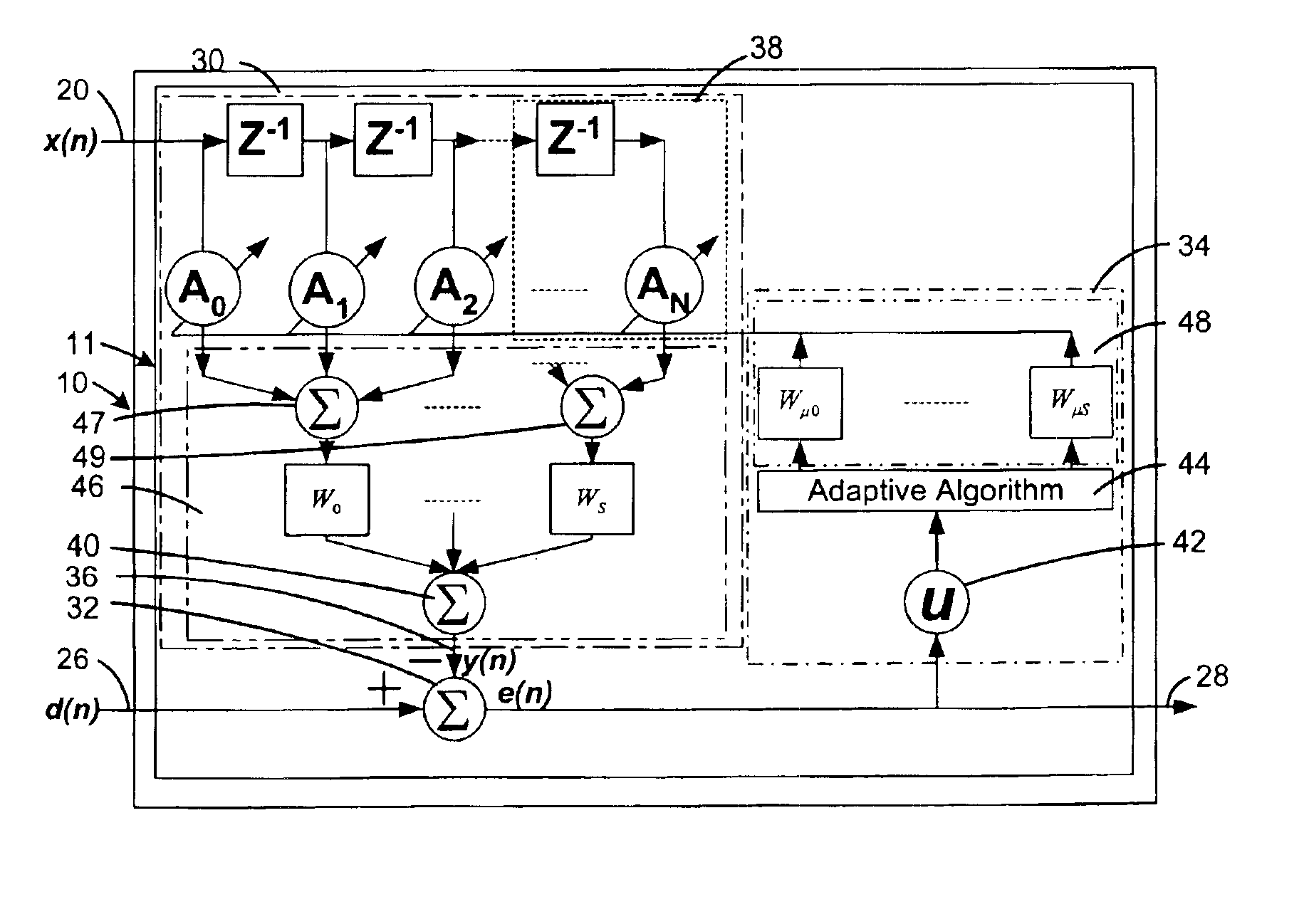
Figure 1 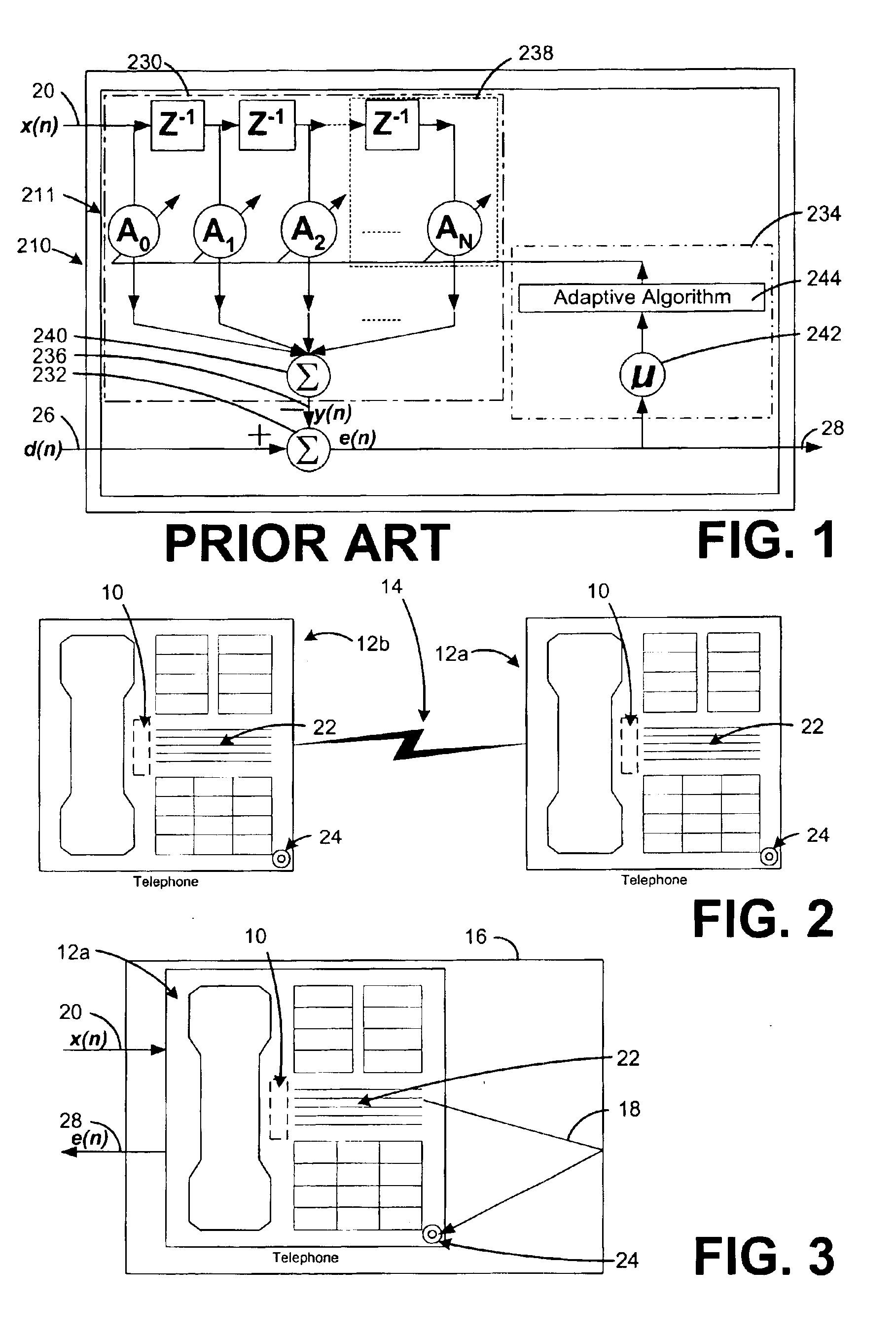
Figure 2 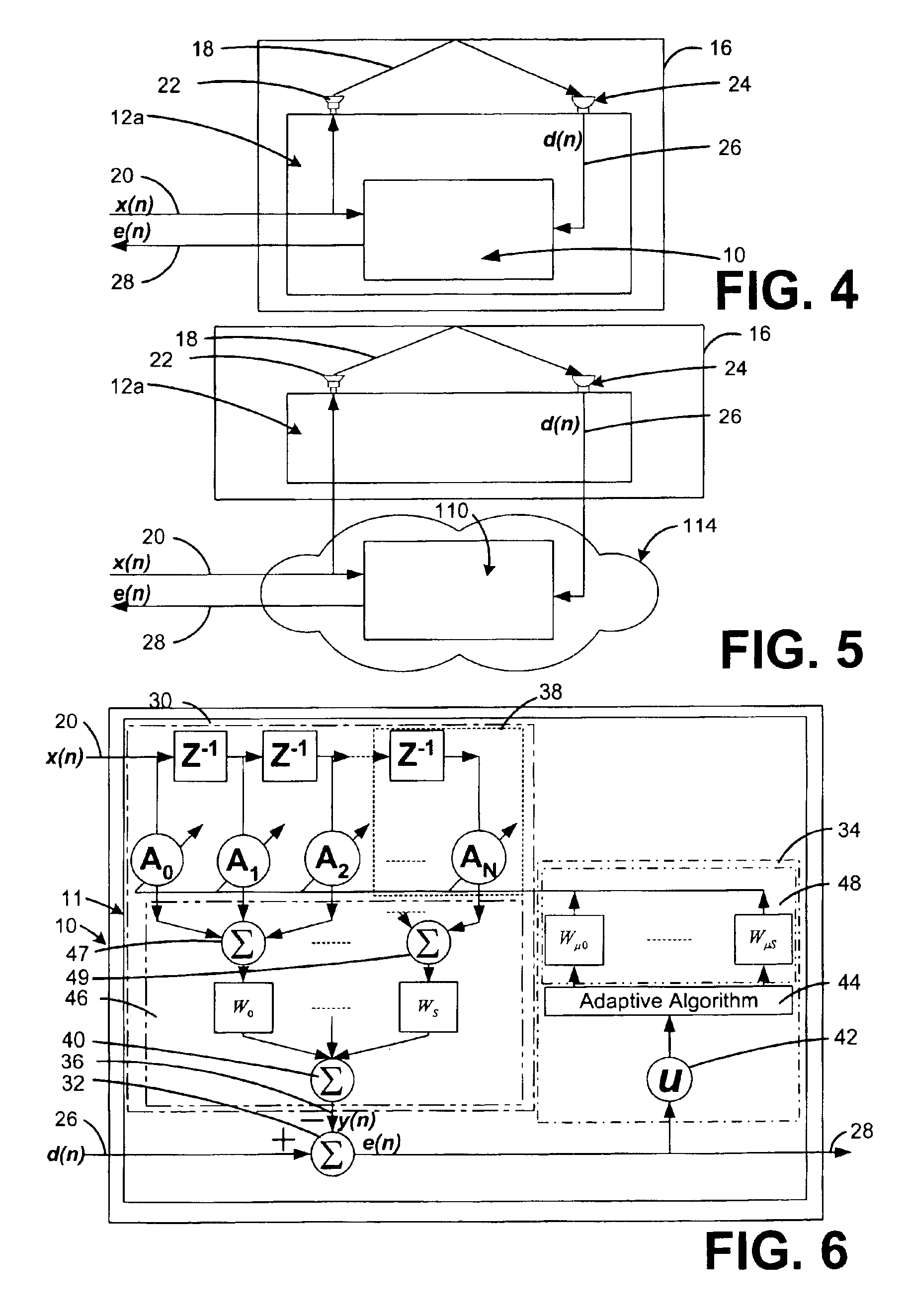
Figure 3
Abstract
Description
TECHNICAL FIELD
[0001] The present invention generally relates to an adaptive acoustic echo cancelling device for communication networks. In particular, the present invention relates to an improved acoustic echo cancellation and a method for implementing the same.BACKGROUND
[0002] In a typical telephone network, two types of echoes may be present: acoustical echo and electrical echo. Acoustical echo may occur in a telecommunication network when a hands-free telephone terminal is used. The speech signal generated from the speaker in the terminal propagates in the form of an acoustic wave through an acoustic environment (air) and part of it is reflected back into the microphone of the terminal. This reflected signal will be transmitted back to the talker thereby creating an echo. In some instances, an acoustical echo may occur in a telephone with poor voice coupling between the earphone and the microphone. Therefore, two different components may make up the acoustical echo. The first is t...
Examples
Embodiment Construction
[0049]The present invention provides an improved echo cancelling device that is particularly well suited for use in communication networks where an echo occurs as a result of an acoustic feedback taking place at one end of the communication link (acoustical echo).
[0050]FIGS. 2-4 illustrate an exemplary embodiment for an adaptive echo cancelling device 10. In this exemplary embodiment, the adaptive echo cancelling device 10 is located within a telecommunication terminal 12a, for example. The telecommunication terminal 12a may be a plain old telephone (POT), a VoIP (Voice-over Internet Protocol) phone, a cell phone, or the like. The telecommunication terminal 12a is part of a telecommunication network 14. It should be understood by those skilled in the art that the telecommunication network 14 may be a PSTN network, a VoIP network, a wireless network, or the like.
[0051]The telecommunication terminal 12a may be placed in a room 16 (illustrated in FIGS. 2-3) where an acoustical echo pat...