
Brake rotor attachment assembly that promotes in plane uniform torque transfer distribution
a technology of torque transfer and rotor, which is applied in the field of brake assembly, can solve the problems of thermal distortion of the rotor, high cost and time consumption, and the drawbacks of the hat rotor, and achieve the effects of promoting uniform torque transfer, reducing bending stress, and reducing bending stress
Patent Information
- Authority / Receiving Office
- US · United States
- Patent Type
- Patents(United States)
- Current Assignee / Owner
- Publication Date
- 2006-02-14
- Estimated Expiration
- Not applicable · inactive patent
Smart Images
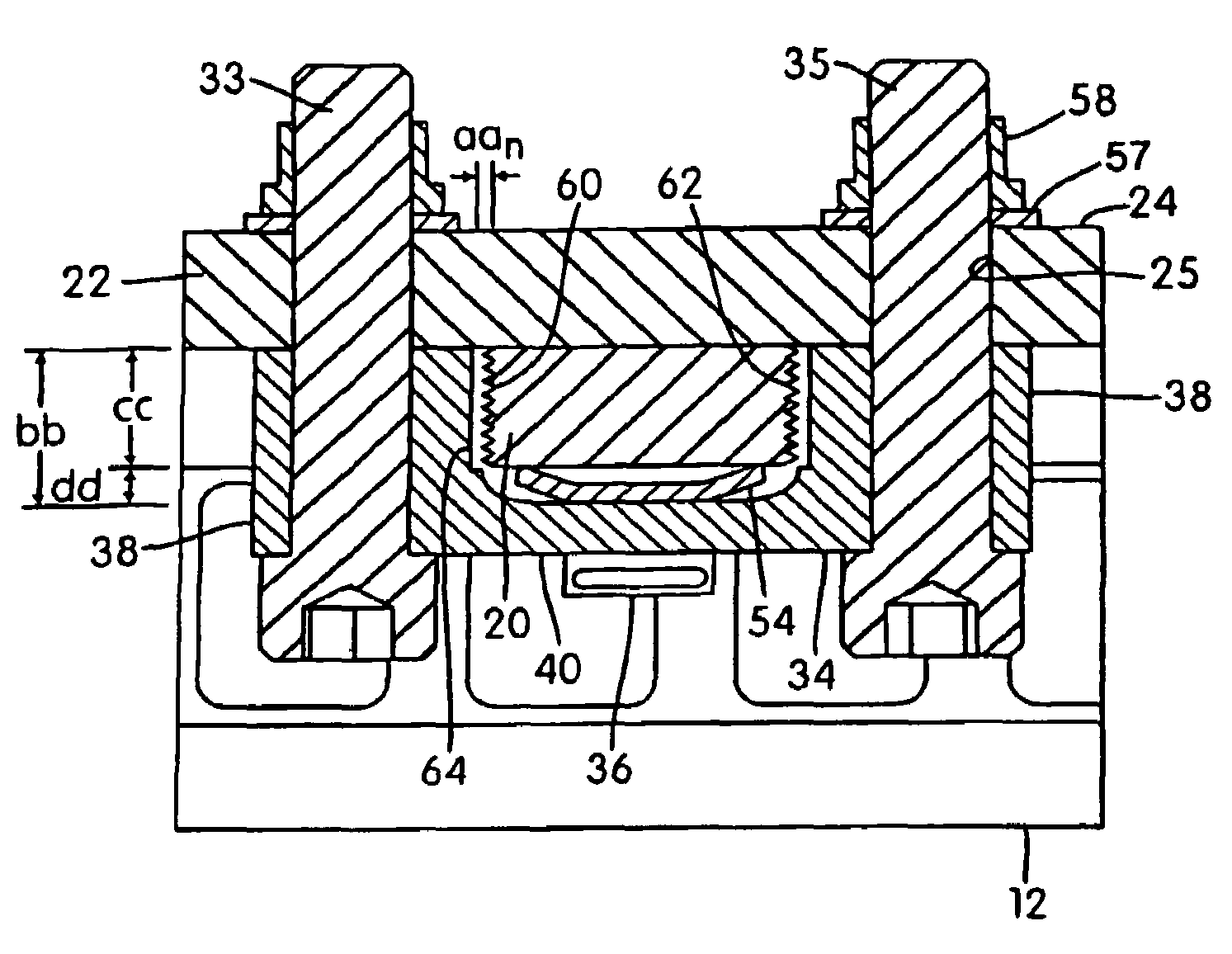
Figure 1 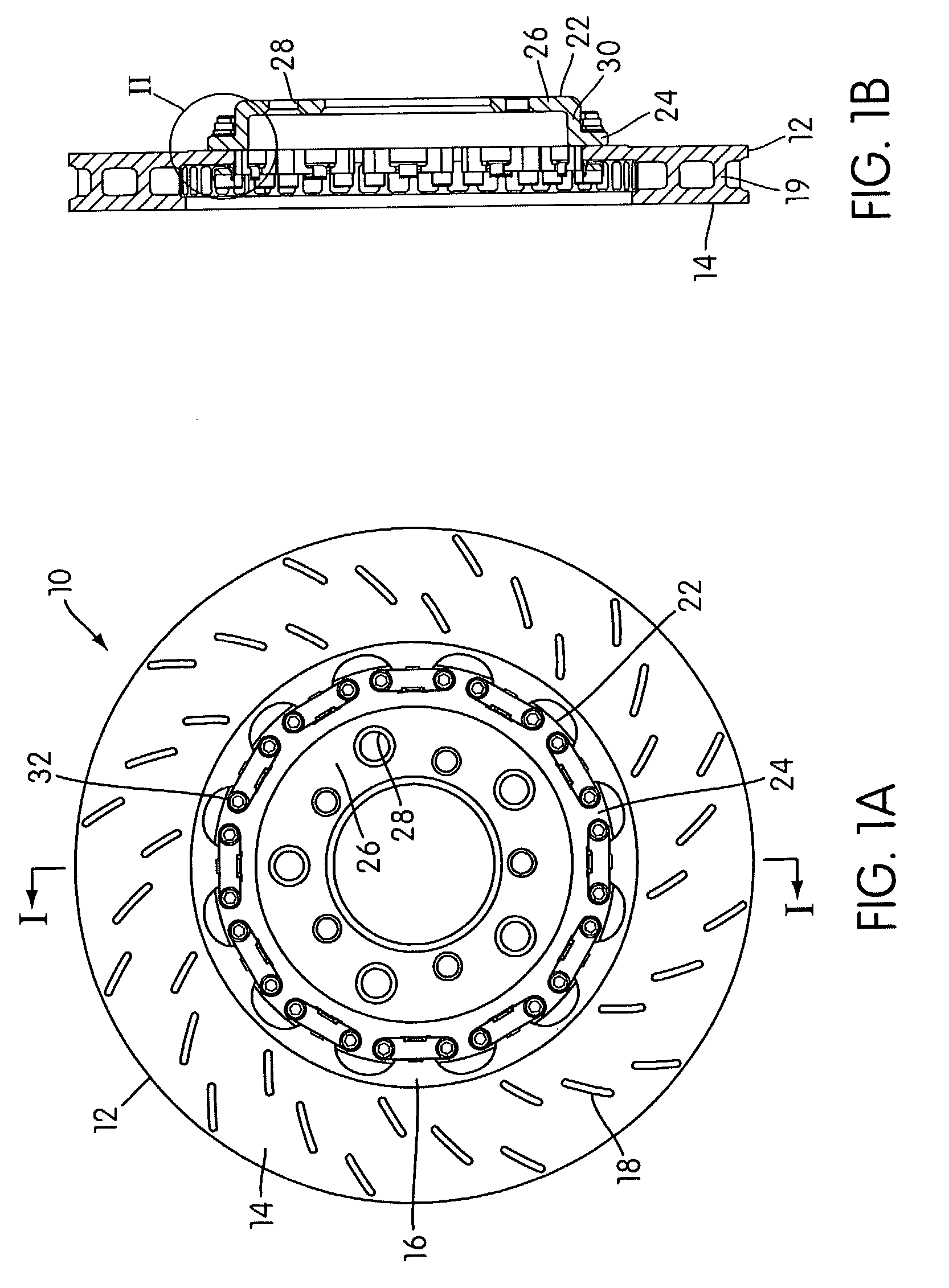
Figure 2 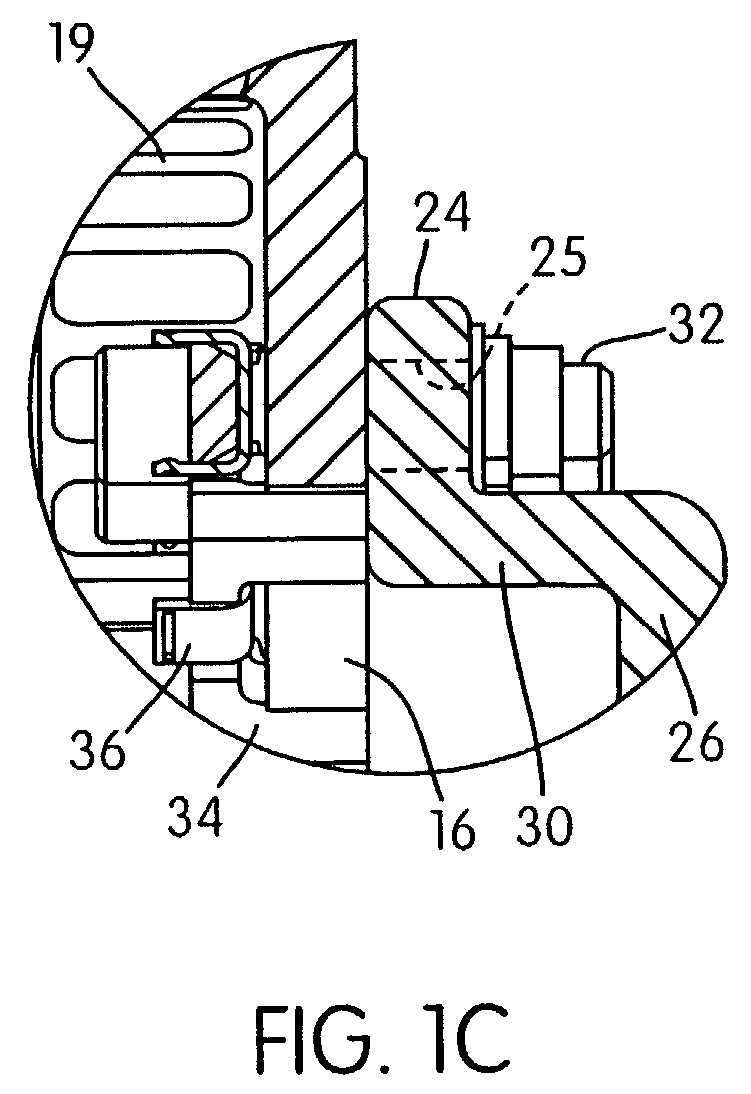
Figure 3
Abstract
Description
[0001] This application claims priority from provisional application No. 60 / 440,611 filed Jan. 17, 2003, and No. 60 / 453,519 filed Mar. 12, 2003, the contents of each of which are hereby incorporated herein by reference.BACKGROUND OF THE INVENTION
[0002] 1. Field of the Invention
[0003] The invention relates to brake assemblies, especially vehicular brakes including brake rotors attached to wheel hubs.
[0004] 2. Description of Related Art
[0005] One type of common prior art brake design for vehicles is a two piece hat rotor and hub in which a hat rotor that carries the braking surface is detachably connected to a wheel hub. Another common type of brake design is an integrated one-piece rotor and hub assembly.
[0006] Integrated one-piece rotor and hub assemblies have the advantage that no fasteners are required between the rotor and the hub. As a result, the integrated assemblies do not face problems associated with fasteners such as wear and fatigue near fastener openings and potential misalign...
Examples
Embodiment Construction
[0068]The brake assembly 10 seen in FIG. 1A is preferred for use on vehicles, including automobiles, racing vehicles, trucks, heavy duty trucks, motorcycles and the like. The vehicles suitable for use with this invention can include those vehicles having a gross vehicle weight of less than about 5,000 pounds, a gross vehicle weight of about 5,000 pounds to 12,000 pounds, and a gross vehicle weight of more than about 12,000 pounds, for example 30,000 pounds. However, the inventive concepts discussed herein can be used in any type of application that uses rotary brakes, including automotive, other types of motorized vehicles, or railcars.
[0069]FIG. 1A shows a rotor disc 12 formed as an annular plate having a braking surface 14 and an attachment flange 16. As known, the braking surface 14 preferably carries a high friction material or can be specially treated. The braking surface 14, as seen, has a plurality of shallow grooves 18 formed therein. These grooves 18 enhance braking, but ar...