
Device and method for controlling engine
a technology of engine control and control device, applied in the direction of electrical control, process and machine control, instruments, etc., can solve the problems of impairing driving comfort, increasing noise rapidly, and slowing down the change in combustion noise, so as to achieve the effect of preventing the rapid change of combustion noise and slowing down the change of combustion nois
Patent Information
- Authority / Receiving Office
- US · United States
- Patent Type
- Patents(United States)
- Current Assignee / Owner
- Publication Date
- 2008-03-04
- Estimated Expiration
- Not applicable · inactive patent
Smart Images
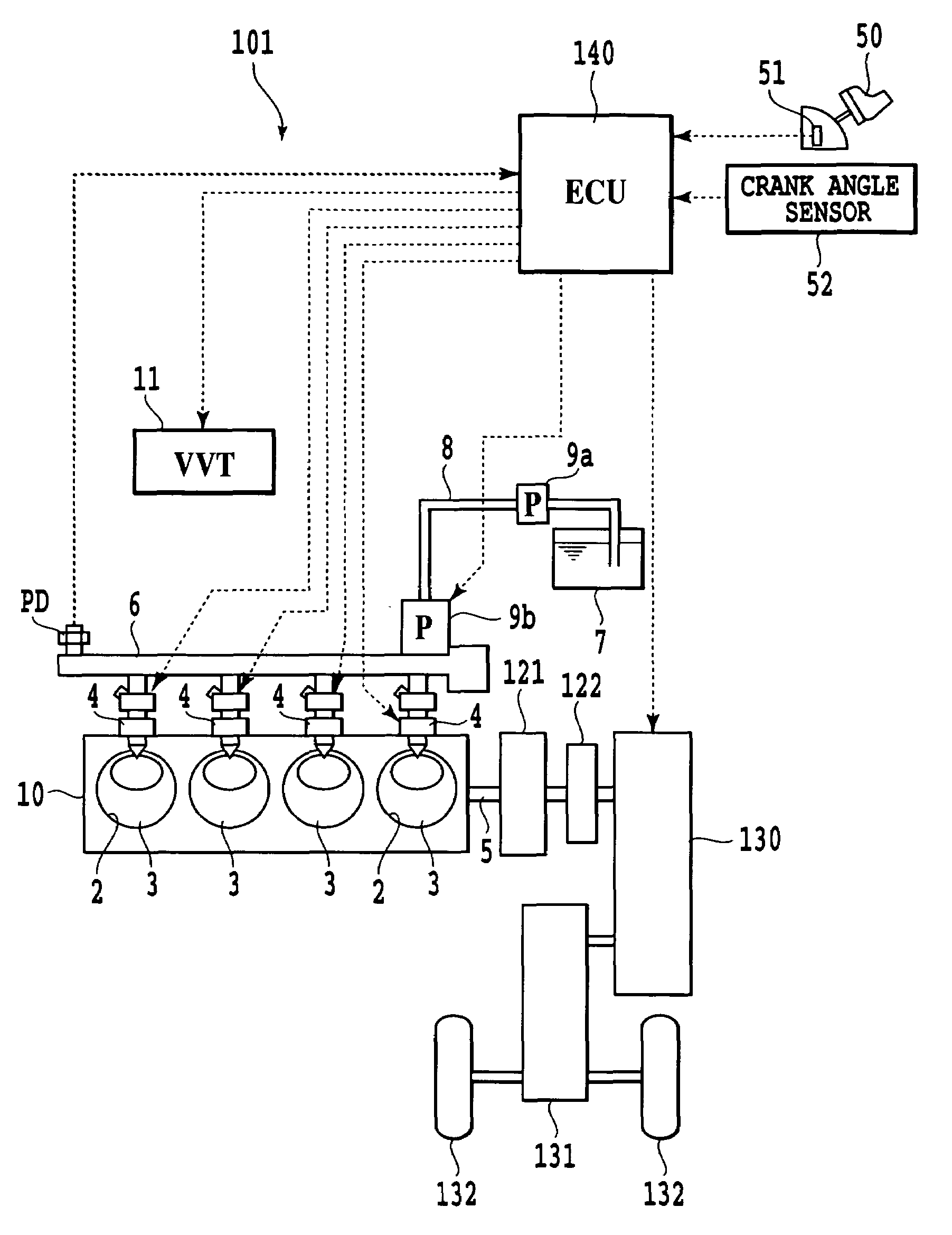
Figure 1 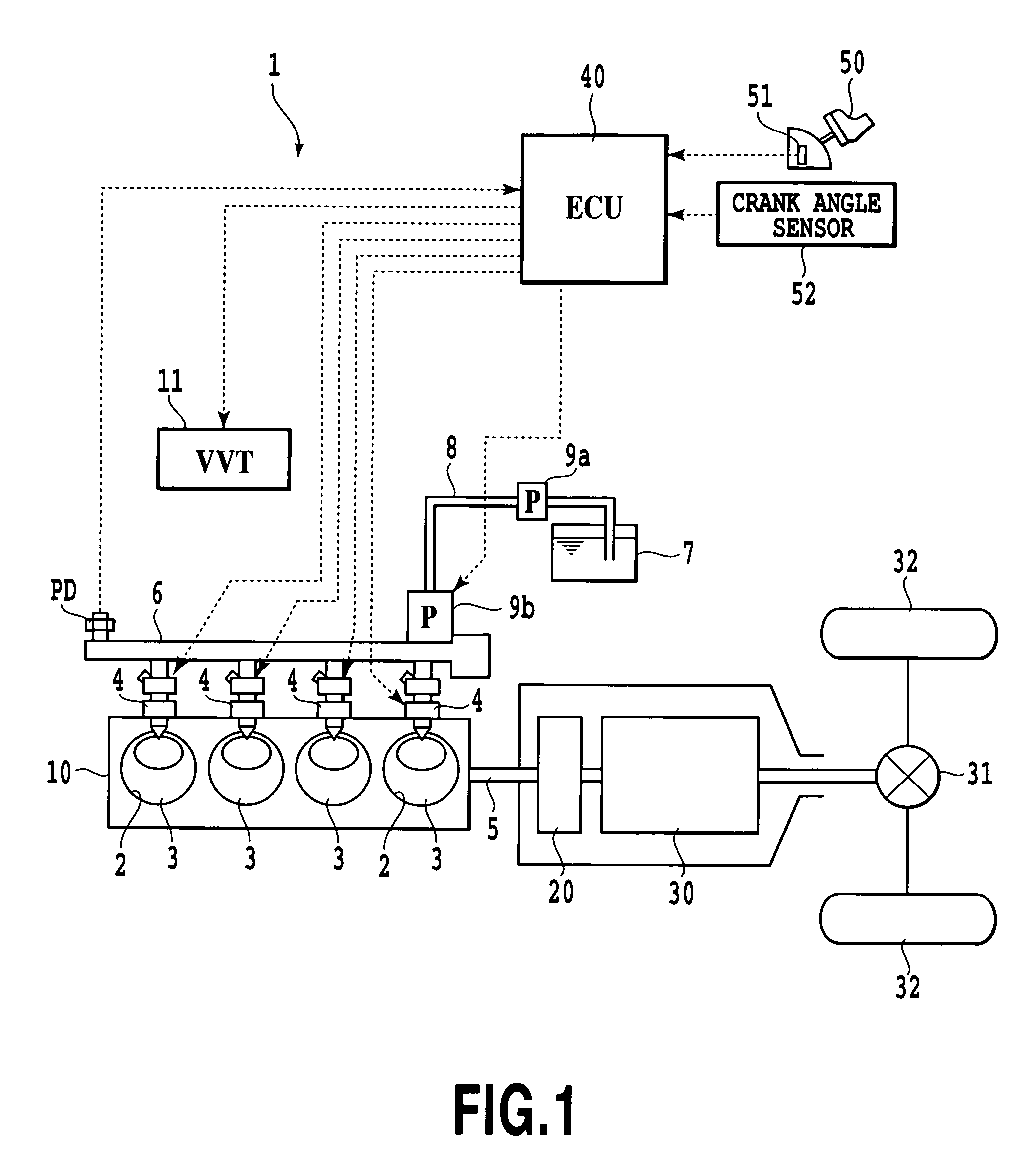
Figure 2 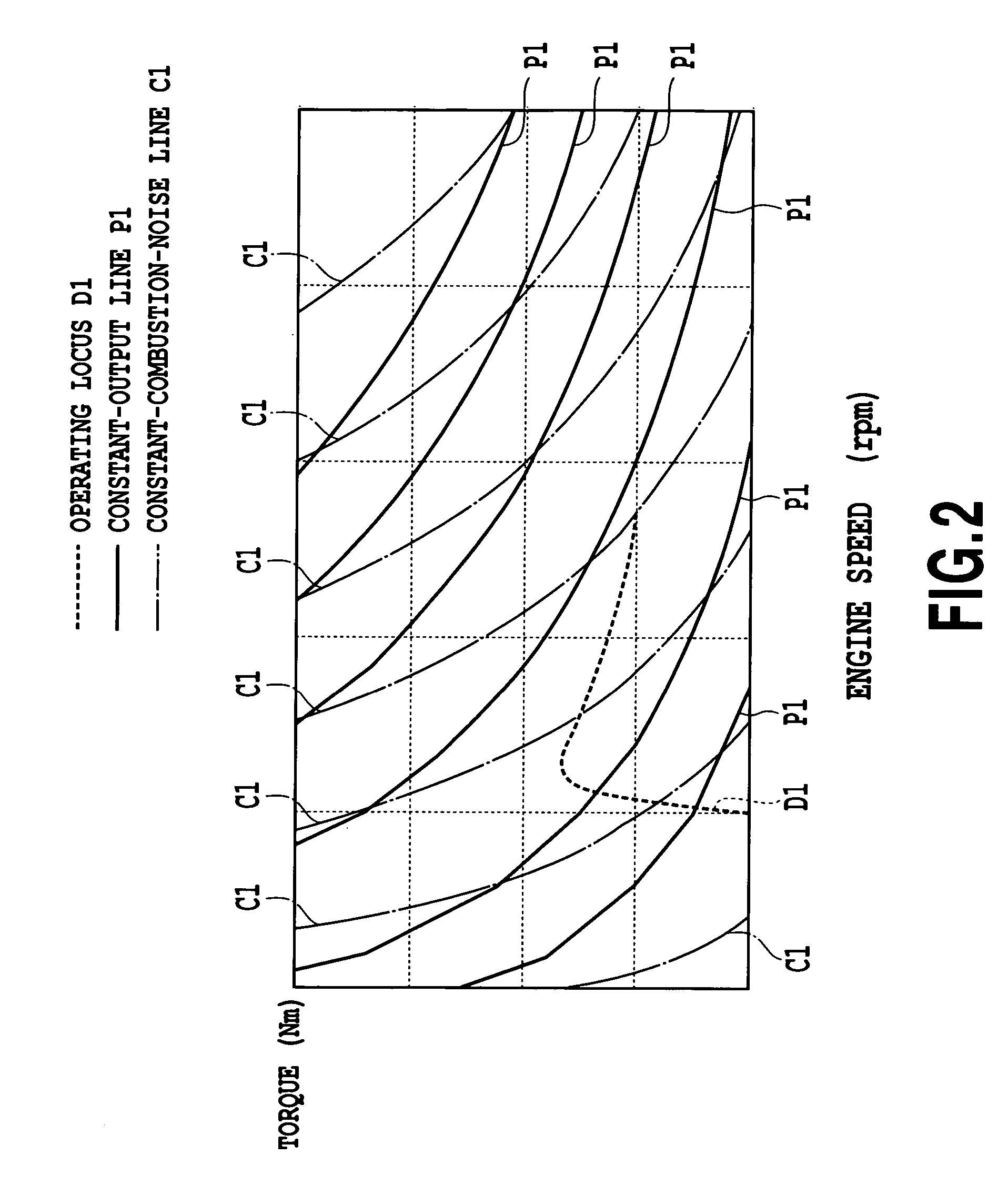
Figure 3
Abstract
Description
TECHNICAL FIELD
[0001] The present invention relates to a device and method for controlling an engine, and particularly to one adapted to prevent a rapid change in combustion noise.BACKGROUND ART
[0002] Combustion noise characteristics of an engine are said to generally correspond to an output, which is a product of torque and speed. That is to say, as shown in FIG. 9, output contours and combustion noise contours of an engine on a speed-torque plane, i.e., constant-output lines Pp and constant-combustion-noise lines Cp correspond to each other within a predetermined range, i.e., virtually overlap with each other with a generally common peak point existing at central sides of the approximately arc-shaped constant-output lines Pp and constant-combustion-noise lines Cp, thus providing substantially similar characteristics.
[0003] On the other hand, in a vehicle equipped for example with manual transmission means, an operating locus Dp when an accelerator pedal is depressed without any gear ...
Examples
Embodiment Construction
[0034]Preferred embodiments of the present invention will hereinafter be described. Referring to FIG. 1, a vehicle 1 according to a first preferred embodiment of the present invention is equipped with an engine 10, which is a cylinder direct injection internal combustion engine, such as a diesel engine or a gasoline engine. The engine 10 includes cylinders 2 formed inside a cylinder block, into which pistons 3 are slidably inserted. A combustion chamber is defined by the cylinders 2, the pistons 3, and a cylinder head block (not shown).
[0035]The pistons 3 are coupled to a crankshaft 5 by a connecting rod (not shown). Inside the cylinder head, an intake port and an exhaust port (not shown) are formed for each cylinder, in which an intake valve and an exhaust valve (not shown) are set respectively. A part of an intake passage upstream of the intake port is provided with a throttle valve or an intake throttle valve (not shown) controlled by a throttle actuator.
[0036]A fuel injection va...