
Method for regulating the torque of a control surface actuator with a controlled angular position on an aircraft with mechanical flight control
a technology of mechanical flight control and actuator, which is applied in the direction of vehicle position/course/altitude control, process and machine control, instruments, etc., can solve the problems of actuator disengagement, solution does not take into account the increase in actuator torqu
Patent Information
- Authority / Receiving Office
- US · United States
- Patent Type
- Patents(United States)
- Current Assignee / Owner
- Publication Date
- 2015-03-31
Smart Images
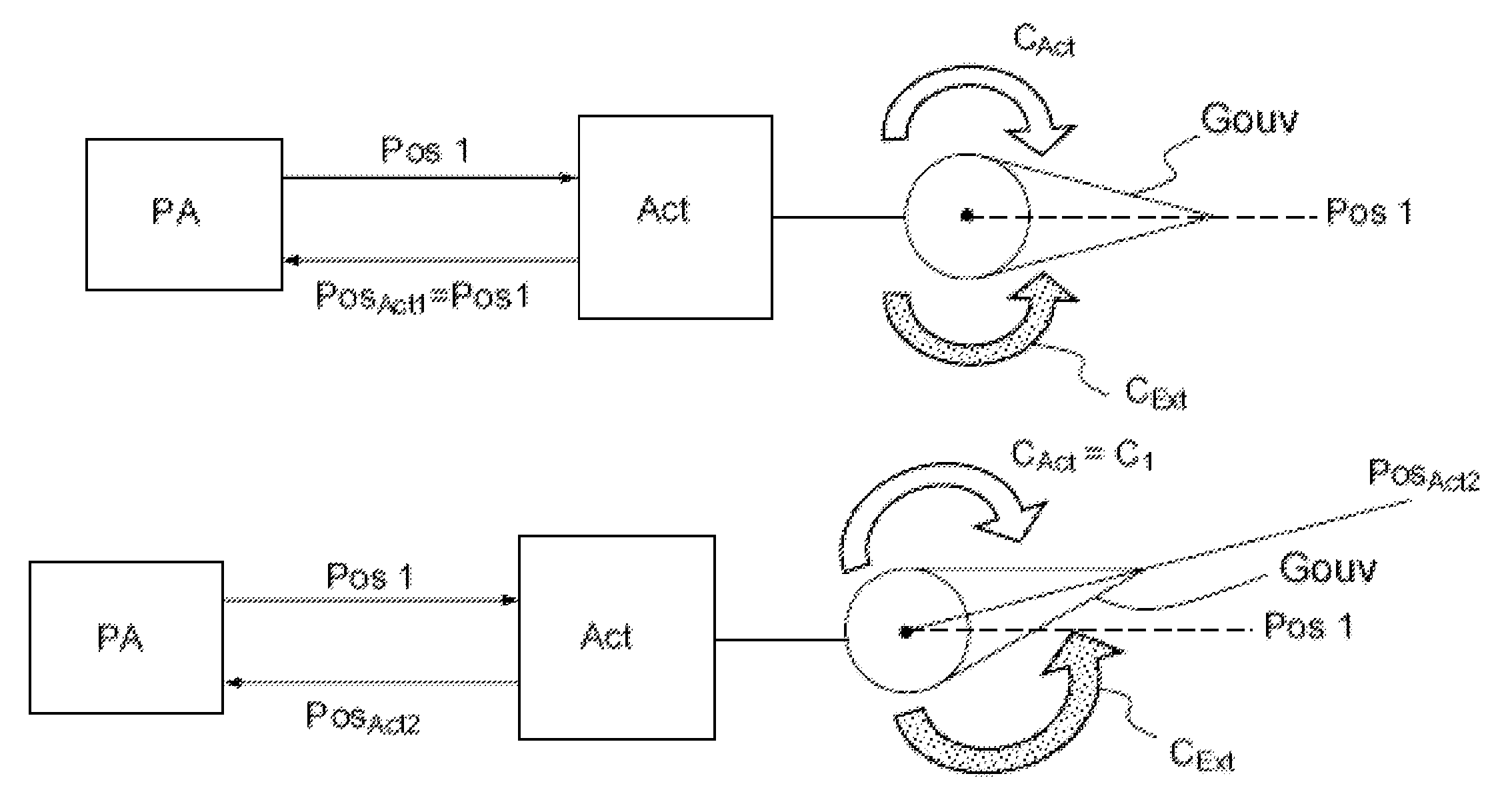
Figure 1 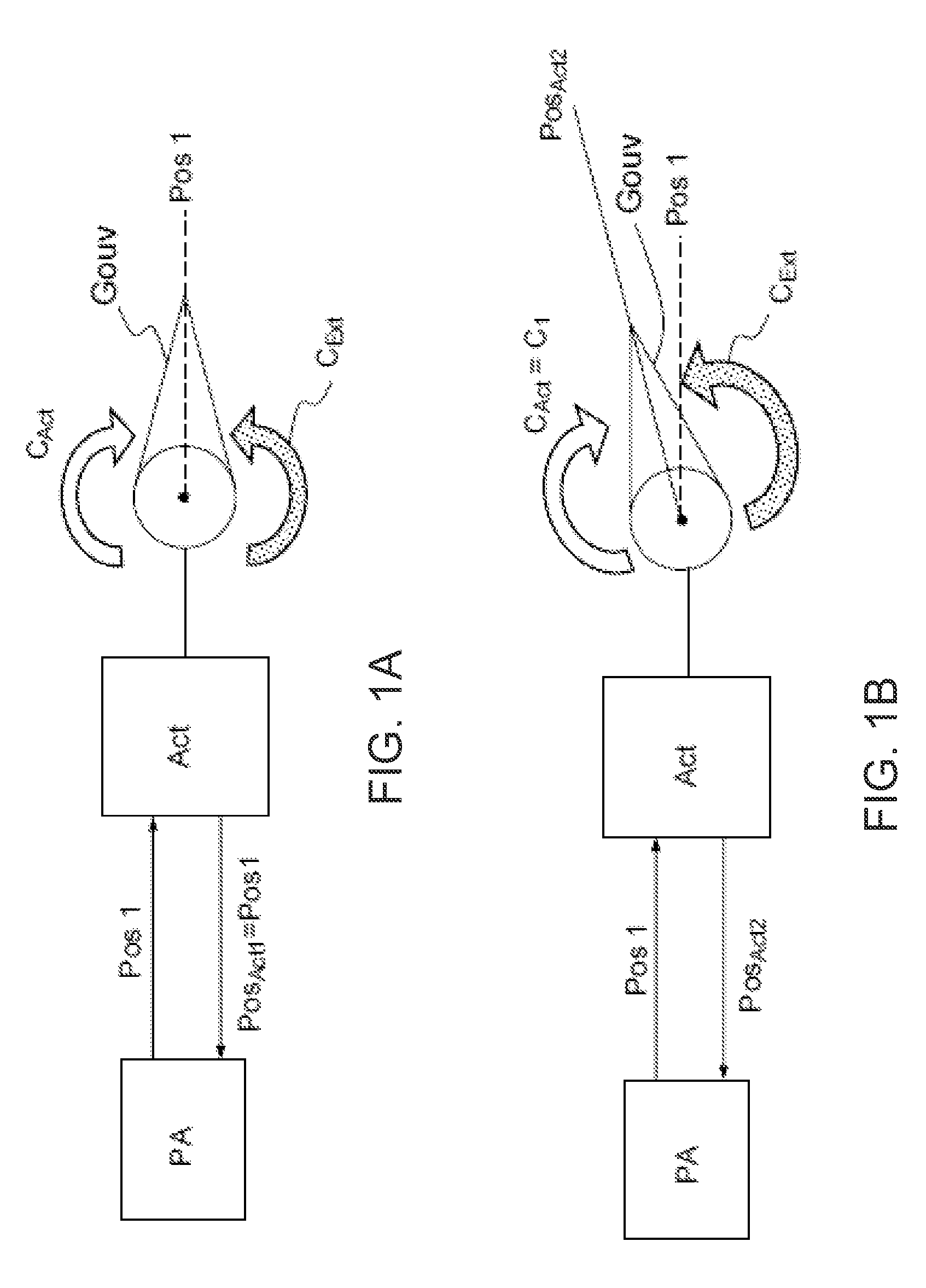
Figure 2 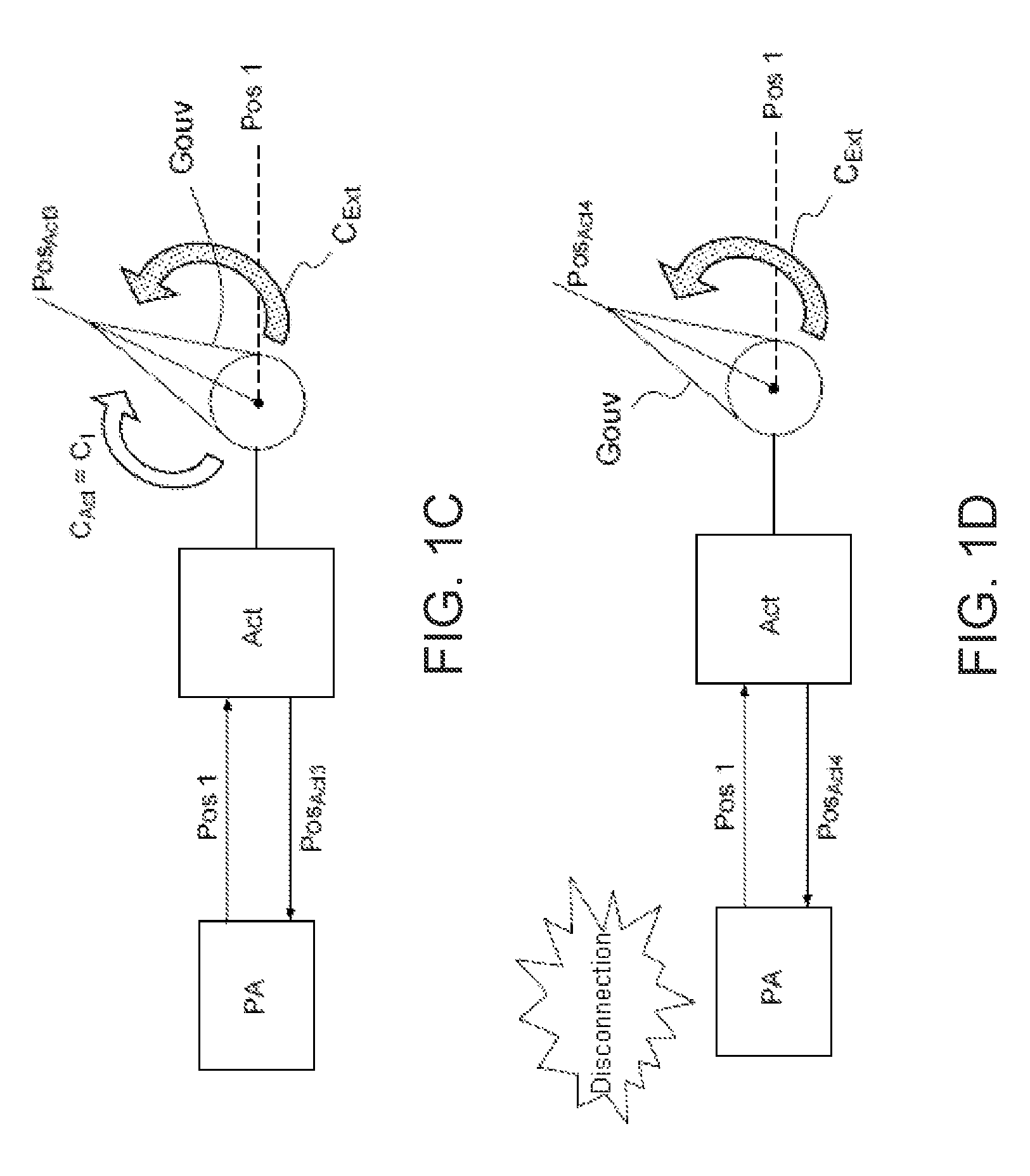
Figure 3
Abstract
Description
CROSS-REFERENCE TO RELATED APPLICATION
[0001] This application claims priority to foreign French patent application No. FR 1202129, filed on Jul. 27, 2012, the disclosure of which is incorporated by reference in its entirety.FIELD OF THE INVENTION
[0002] The field of the invention concerns the regulation of a control surface actuator, said control surface being controlled by the autopilot of an aircraft with mechanical flight control.BACKGROUND
[0003] Flight controls are systems linking the pilot or autopilot module and the control surfaces that allow the trajectory of the aircraft to be modified. Flight controls notably comprise a steering element such as a joystick and a mechanical system for actuating the control surfaces. In this case, the mechanical system comprises an actuator, the actuator being an electric motor of rotary type generating a torque which compensates for the torque exerted on the control surface by external forces of aerodynamic type.
[0004] The certification authoriti...
Examples
Embodiment Construction
[0030]FIG. 1 show the operating principle of a control surface actuator regulated in terms of position on an aircraft with mechanical flight control.
[0031]FIG. 1A illustrates an autopilot module PA, an actuator Act comprising a position control loop and a control surface Gouv. The autopilot module PA orders a first setpoint angular position Pos1 for the actuator, making it possible to follow a direction of the aircraft. The control surface Gouv is then moved by the actuator Act. In this case, the first setpoint angular position Pos1 corresponds to a nominal position of the control surface Gouv, defined previously, i.e. during configuration of the autopilot module PA.
[0032]A torque CExt, represented by a shaded arrow, is exerted on the control surface Gouv by external forces. The external forces are generally aerodynamic forces. A torque CAct, represented by a white arrow, exerted by the actuator Act compensates for the torque due to the external forces, which makes it possible to ma...