
Method and system for secure distribution of subscription-based game software
a subscription-based game and software technology, applied in the computer system of securely distributing game software, can solve the problems of stealing the intellectual property of the game player, affecting both the playability of the game, and the download process typically takes a long tim
Patent Information
- Authority / Receiving Office
- US · United States
- Patent Type
- Patents(United States)
- Current Assignee / Owner
- Publication Date
- 2008-08-05
Smart Images
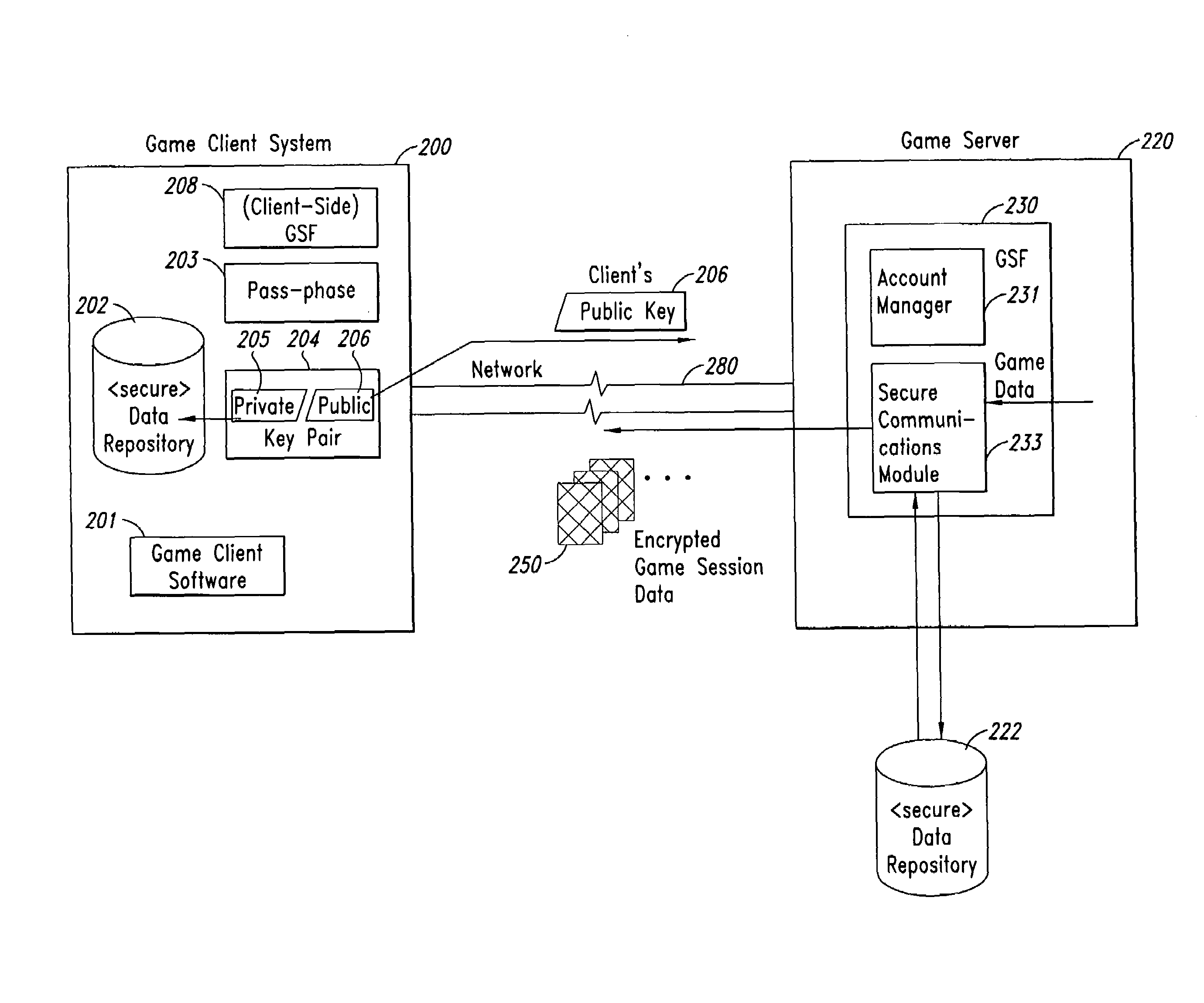
Figure 1 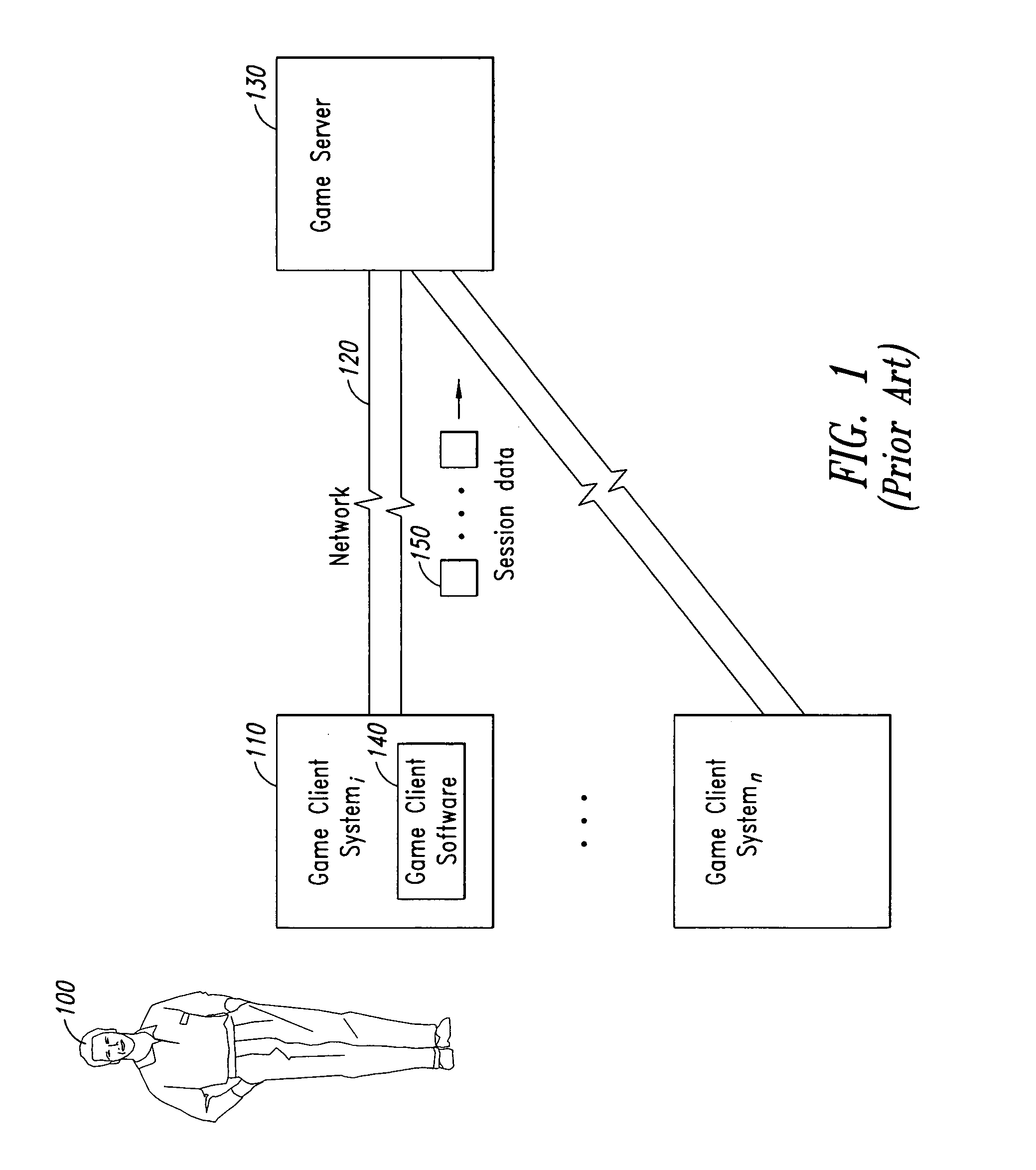
Figure 2 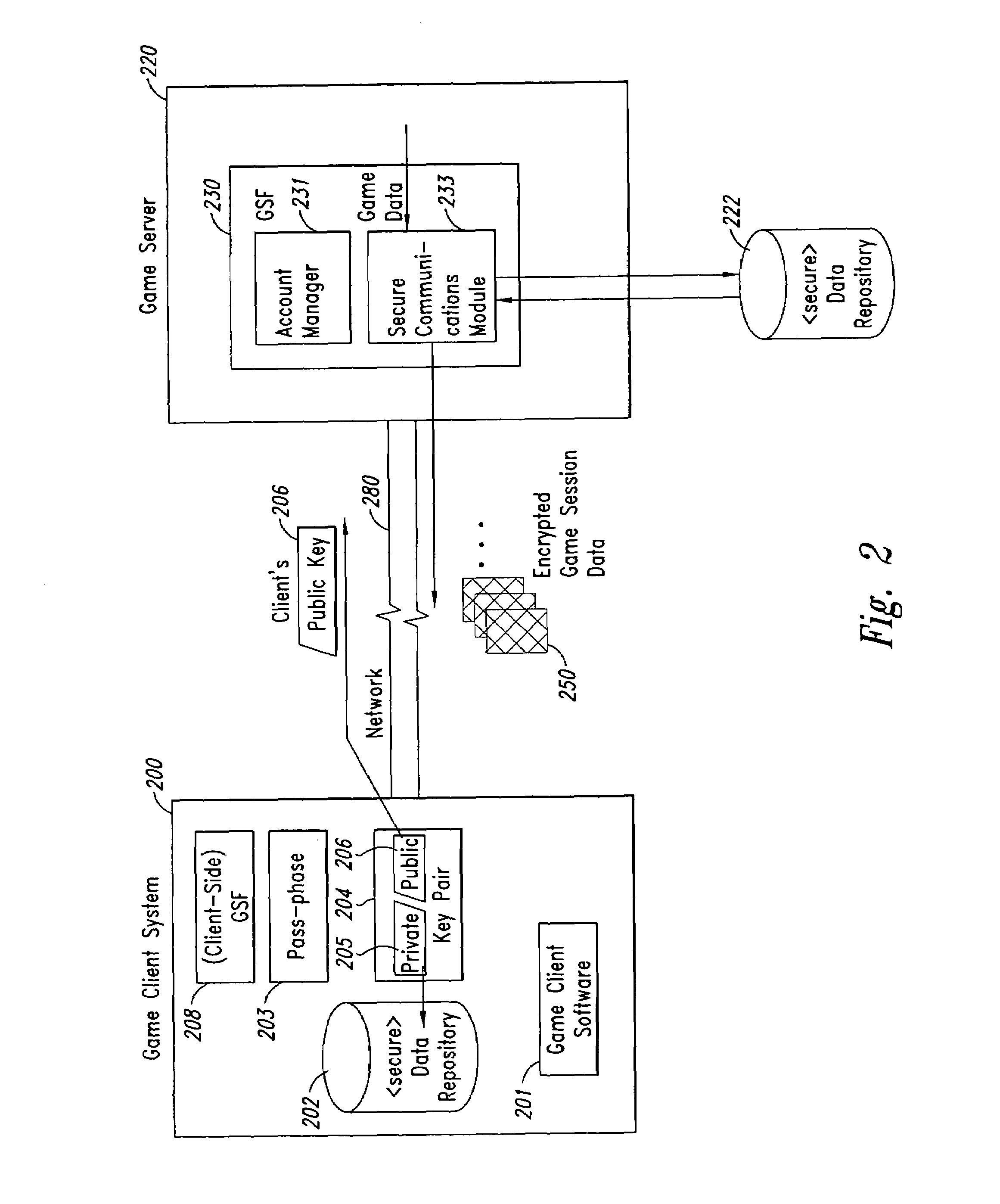
Figure 3
Abstract
Description
BACKGROUND OF THE INVENTION
[0001] 1. Field of the Invention
[0002] The present invention relates to distributing subscription-based software and, in particular, to a computer system for securely distributing game software.
[0003] 2. Background Description
[0004] In a gaming environment, it has been typical to have network-based games, called Massive Multiplayer Role Playing Game (MMRPG), which are paid for by means of a subscription fee for some time interval or fixed usage. In these games, thousands of players, each having their own Internet connection, interact on a world server or set of servers. Players can see and interact with one another and with the machine controlled characters, such as monsters and other permanent characters, etc., that are in the game. Some of the more popular MMRPGs are Ultima Online by Electronic Arts, Inc., Everquest by Sony Online Entertainment, Asheron's Call by Turbine Games, and Half-life by Valve.
[0005] FIG. 1 is an example block diagram of a typical MMRP...
Examples
Embodiment Construction
[0021]Embodiments of the present invention provide methods and systems for securely distributing software in a subscription-based environment, specific examples of which are computer game systems such as Massive Multiplayer Role Playing Games (MMRPGs). Example embodiments of the present invention provide a Game Security Facility for enabling the secure distribution of game client software (such as game client software 140 in FIG. 1) and secure communication of game session data between a game client system and the game server or associated other server systems. For example, the concurrently filed patent application entitled “Method and System for Dynamically Incorporating Advertising Content into Multimedia Environments,” which is herein incorporated by reference in its entirety, describes a game environment where ad servers communicate with game client systems and game servers to dynamically insert advertisements into games. In that environment, event messages describing the ads th...