
Remote reagent ion generator
a technology of reagent ion and generator, which is applied in the field of remote reagent ion generator, can solve the problems of no existing technology having such positional and potential independence of the source, and achieve the effect of small cross-sectional area and slow reaction kinetics
Patent Information
- Authority / Receiving Office
- US · United States
- Patent Type
- Patents(United States)
- Current Assignee / Owner
- Publication Date
- 2009-08-04
- Estimated Expiration
- Not applicable · inactive patent
Smart Images
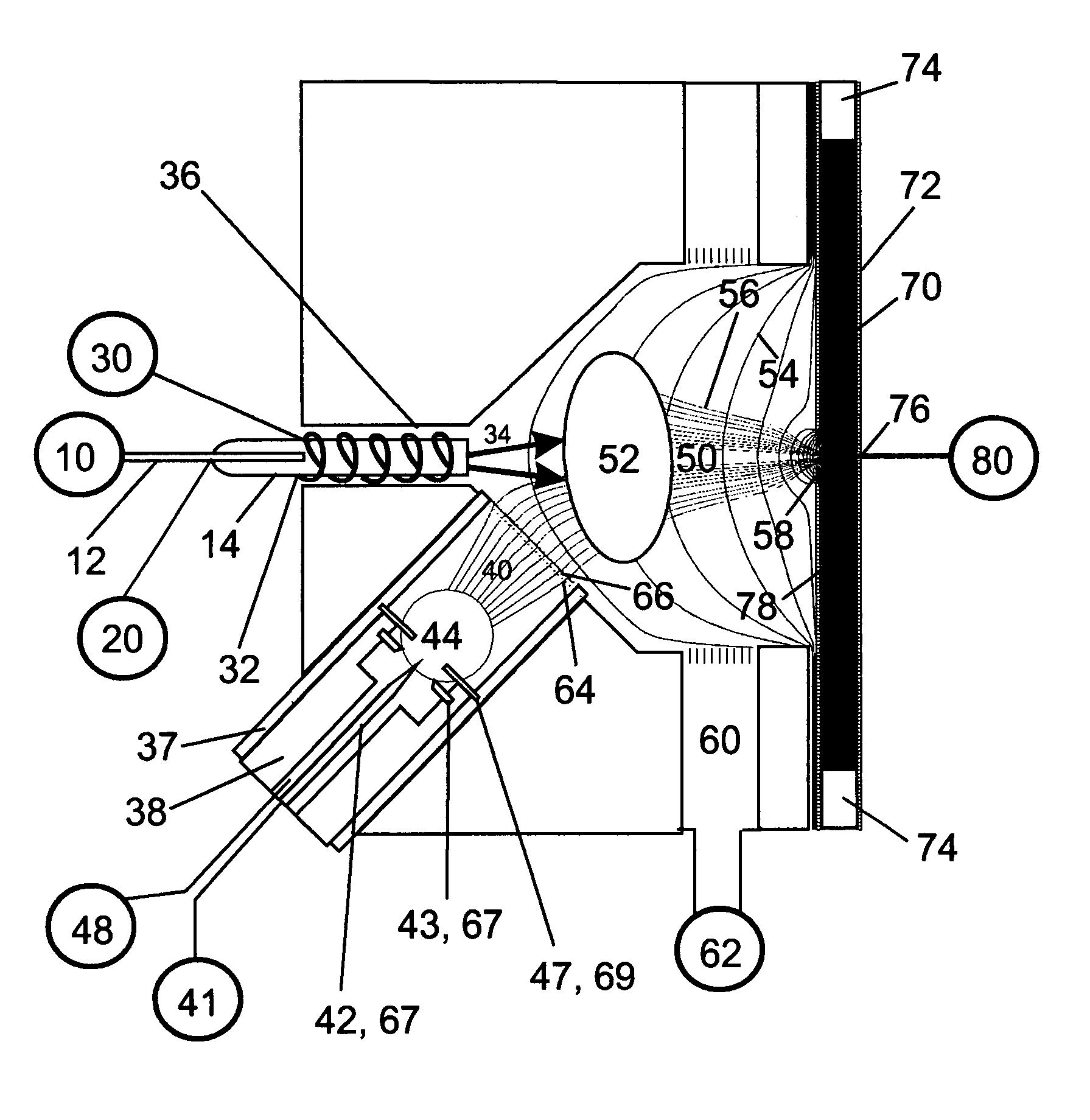
Figure 1 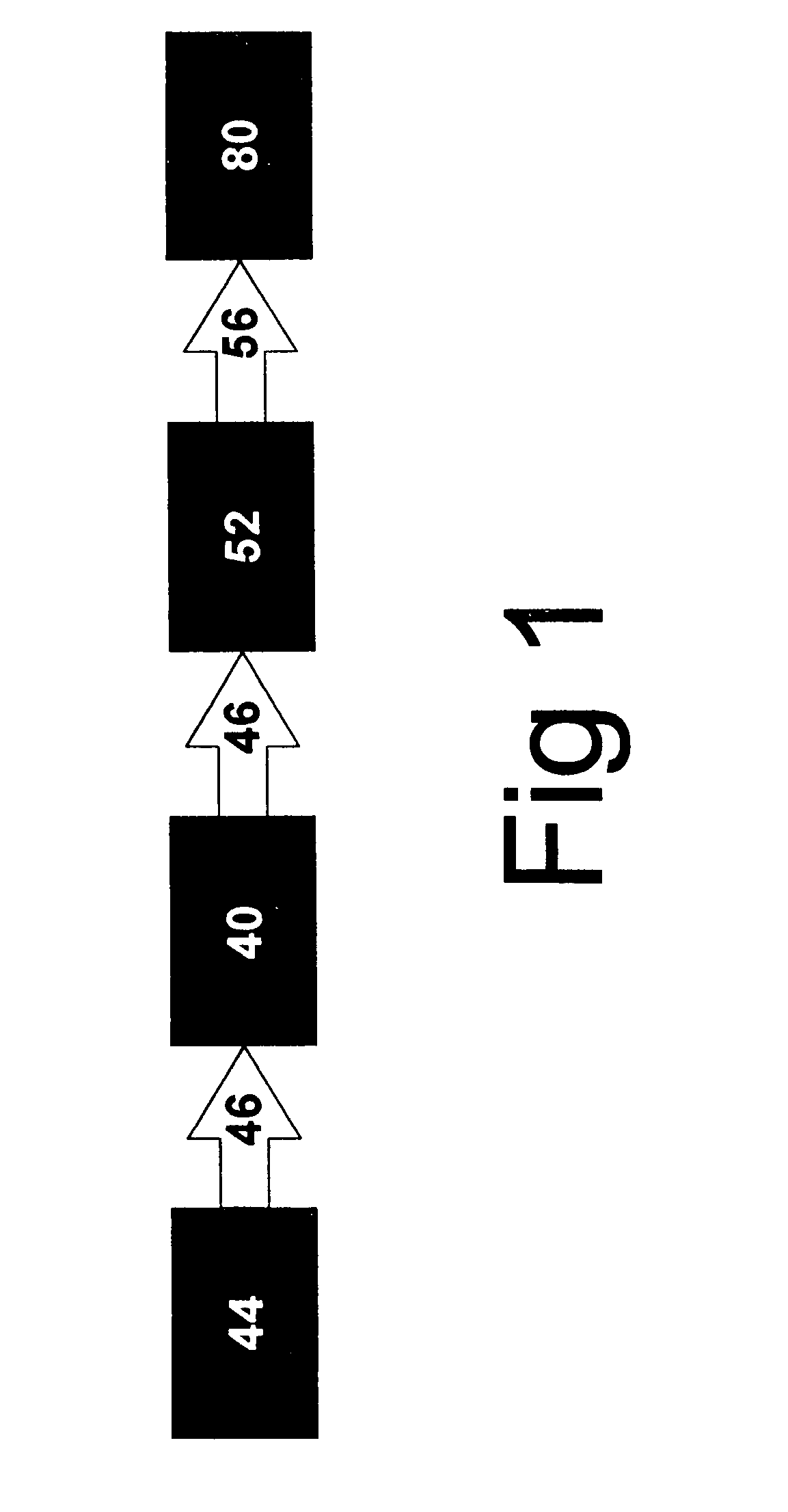
Figure 2 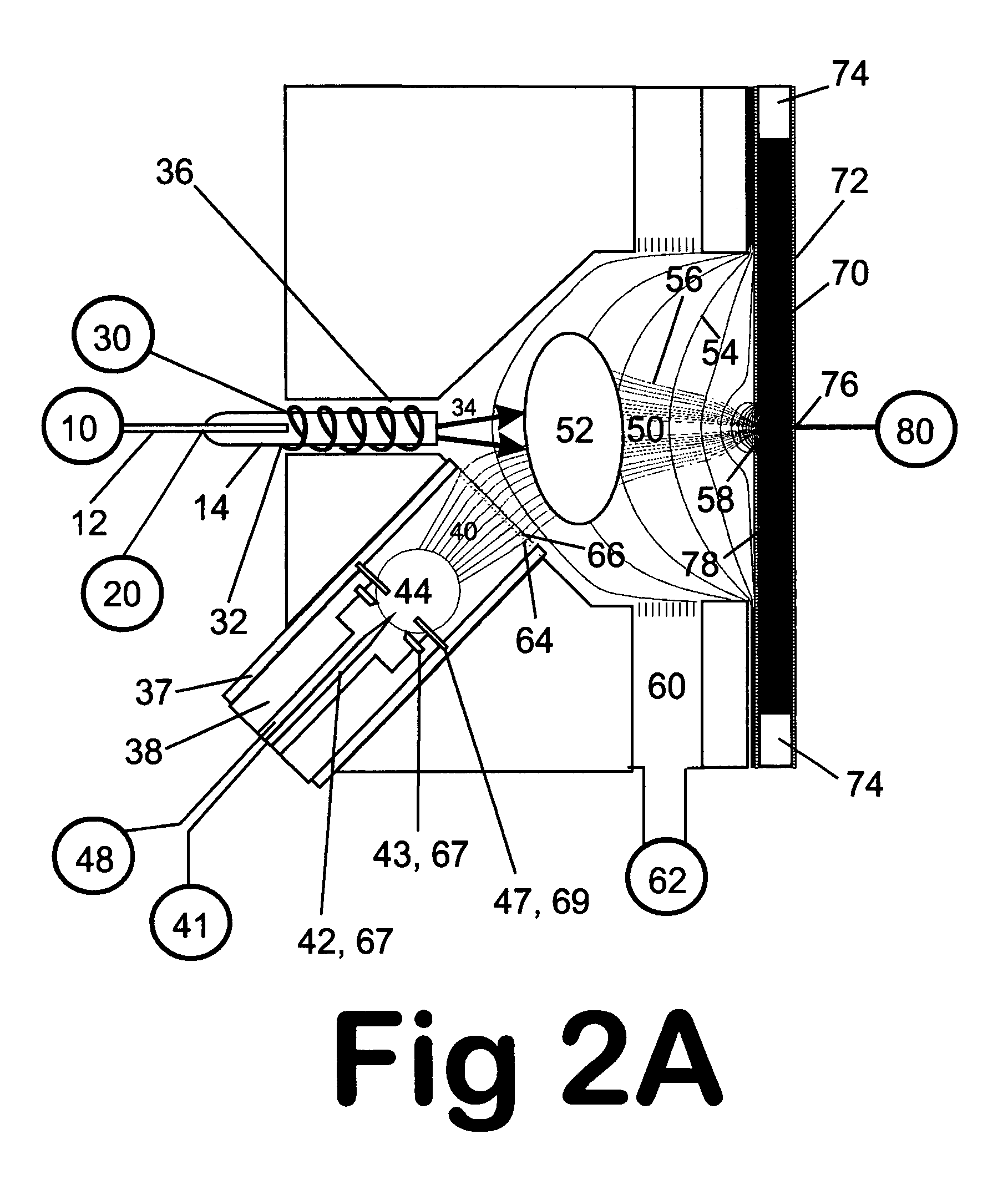
Figure 3
Abstract
Description
REFERENCE TO RELATED APPLICATIONS
[0001] This application claims the benefit of U.S. Provisional Patent Application No. 60 / 724,399 that was filed on Oct. 7, 2005.
[0002] This patent also relates to the following commonly owned patents and patent applications: U.S. Pat. No. 6,888,132, granted May 3, 2005 and continuation Ser. No. 11 / 120,363, filed May 2, 2005 now U.S. Pat. No. 7,095,019. This application is also related to application Ser. No. 08 / 946,290, filed Oct. 7, 1997, now U.S. Pat. No. 6,147,345, granted Nov. 14, 2000; application Ser. No. 09 / 877,167, filed Jun. 8, 2001, now U.S. Pat. No. 6,744,041, granted Jun. 1, 2004; application Ser. No. 10 / 449,147, filed May 31, 2003, now U.S. Pat. No. 6,818,889, granted Nov. 16, 2004; application Ser. No. 10 / 785,441, filed Feb. 23, 2004, now U.S. Pat. No. 6,878,930, granted Apr. 12, 2005; application Ser. No. 10 / 661,842, filed Sep. 12, 2003, application Ser. No. 10 / 688,021, filed Oct. 17, 2003, application Ser. No. 10 / 863,130, filed Jun. 7, ...
Examples
Embodiment Construction
[0059]The invention will be described with reference to the drawing Figures in which FIGS. 1, 2A, 2B, and 2C illustrate a basic preferred embodiment of the invention that employs a Remote Reagent Chemical Ionization Source, hereafter referred to as a R2CIS.
[0060]FIG. 1 shows the general sequence of hardware and events. Reagent ions are created in the R2CIS reagent ion source region 44 and move along ion trajectory 46 to a field-free transfer region 40. Passage of reagent ions into a reaction or sample ionization region 52 causes sample ions to be produced, which move via sample ion trajectories 56 to a sample ion collection region 80.
[0061]Referring now to FIG. 2A, reagent ion species are generated in the R2CIS reagent ion source region 44 by discharge ionization from a first electrode (needle) 42 biased relative to a second electrode 43. The voltage differential applied between the two discharge electrodes is supplied by a conventional high voltage supply source 67. Reagent gas is ...